
How to Get Accurate Quotes for Blind Road Brick Making Machines from China
Introductio
Cities worldwide are embracing inclusivity, and accessible infrastructure is at the heart of this movement. Tactile paving, commonly known as blind road bricks, provides critical navigation cues for the visually impaired, transforming public spaces. To meet this surging global demand, many municipalities and construction firms turn to the world’s manufacturing powerhouse: China. The country produces a vast array of specialized brick making machinery, offering compelling potential for cost-efficiency and advanced features.
However, the journey from initial inquiry to a machine arriving at your port is fraught with complexity. Buyers often encounter a maze of price opacity, wildly varying specifications between suppliers, confusing quotes with hidden costs, and the daunting task of comparing apples to oranges. A low initial quote can quickly become a high-cost nightmare if due diligence is skipped.
This comprehensive guide cuts through the noise. We provide a structured, expert-backed approach to navigating the Chinese market for blind road brick making machines. You’ll learn how to define your needs, identify credible suppliers, decode quotations, and implement essential risk mitigation strategies. This outline is built on years of industry procurement experience, deep technical knowledge of block-making machinery, and a proven methodology for vetting international manufacturers. Let’s ensure your investment builds accessible pathways, not procurement problems.
Understanding Blind Road Brick Making Machines: Specifications Before Quotes
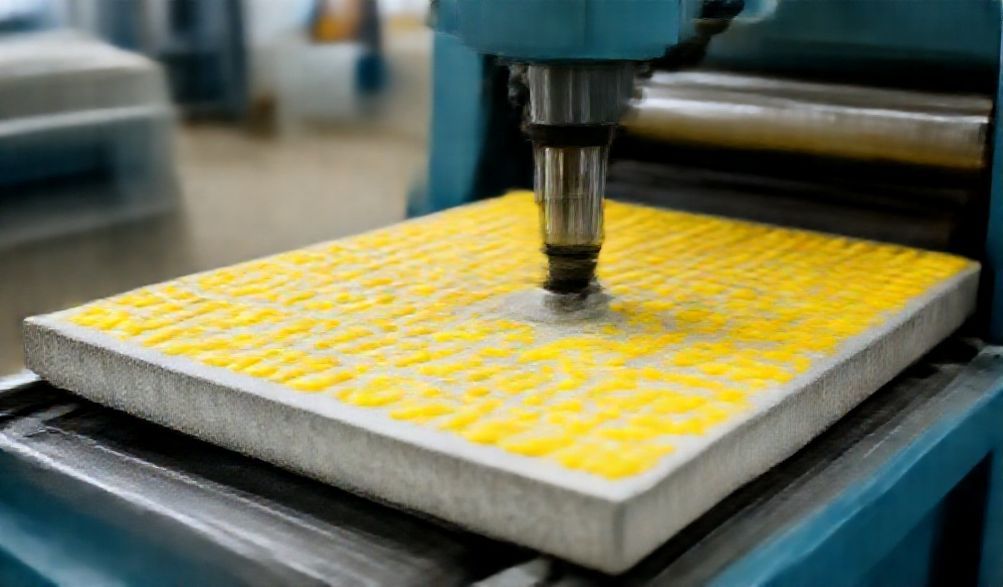
You cannot request an accurate quote if you don’t understand what you’re buying. A blind road brick machine is a specialized type of concrete block making machine. Its primary function is to produce tactile paving units with specific surface patterns (like truncated domes or directional bars) that meet stringent accessibility standards. The quote you receive is a direct reflection of the specifications you provide.
Key Technical Specifications That Influence Price
These factors are the primary drivers of cost. Clearly defining them is your first and most crucial step.
- Productio Capacitas: Measured in blocks per hour or per 8-hour shift. A machine rated for 2,000 bricks/day will be priced significantly lower than one rated for 10,000 bricks/day. Your project scale dictates this choice.
- Brick Type & Mold Compatibility: Specify the exact tactile pattern you need (e.g., detectable warning surfaces per ADA standards, blister paving per UK guidelines). Each pattern requires a specific mold. The machine must be compatible with the mold size and design.
- Automationis Gradus: This is a major cost differentiator.
- Manuale: Lowest cost, high labor intensity, lower consistency.
- Semi-Automaticus: A balanced choice. The machine handles vibration and compression, while operators feed material and remove finished bricks. Offers good control and medium output.
- Omnino Automata: High-output, turnkey systems with automatic feeding, mixing, pressing, curing, and stacking. Highest upfront cost but lowest labor cost per brick.
- Power Source & Consumption: Most are electric-powered with hydraulic systems. Specifications for voltage (e.g., 380V/50Hz or 220V/60Hz) and total power (in kW) must match your local grid. More powerful machines consume more energy but produce higher density bricks.
- Machine Dimensions & Raw Materials: Provide the physical space you have for installation. Also, specify the raw material mix design (cement grade, aggregate size, potential use of pigments) as it affects mold wear and machine pressure requirements.
Quality Benchmarks for Durable Tactile Paving
The machine must produce bricks that last. Your quote should reflect quality that ensures longevity.
- Normae Observantia:Themachine itself should have relevant certifications like CE (for European safety standards) or ISO 9001 for quality management. More importantly, you must confirm the supplier can provide molds that produce bricks compliant with your local accessibility standards (ADA, AS 1428.4, etc.).
- Qualitas Partis Clavis: A cheap machine often cuts corners here. Inquire about:
- Hydraulic system brand and pump quality.
- Power of vibration motors.
- Grade and thickness of steel used in the frame and pallets.
- Brand and programmability of the PLC (Programmable Logic Controller).
- Expected Lifespan & Maintenance: A reputable supplier will provide an expected operational lifespan (e.g., 10+ years) and a clear maintenance schedule. Ask for the list of recommended spare parts and their costs.
The Chinese Supplier Landscape for Construction Machinery
Understanding who you’re dealing with is key to assessing a quote’s credibility. The Chinese market is diverse and layered.
Types of Manufacturers in China
- Large-Scale OEMs with R&D: These are industry leaders. They invest in innovation, have comprehensive quality control, and often offer the latest automation technology. Their quotes may be higher, but they come with strong brand reputation, better documentation, and integrated after-sales support.
- Specialized Medium-Sized Factories: These are the “hidden champions.” They often focus specifically on block making machines and may offer excellent value—good quality at a competitive price. They can be more flexible with custom orders but may have limited English-speaking staff.
- Trading Companies vs. Direct Manufacturers: This is a critical distinction.
- Societates Mercatoriae: Act as middlemen. They can simplify communication and handle export logistics, but they add a markup. Their technical knowledge may be limited.
- Direct Manufacturers: You deal with the factory. This typically means lower prices and direct technical communication. However, you are responsible for managing the export process. Always verify they are a true factory by requesting a live video tour of their production floor.
Key Industrial Hubs for Brick Making Machinery
Manufacturing is clustered. Knowing the hubs helps in vetting suppliers.
* Fujian Province (especially Quanzhou): Known as a major hub for block making and brick making machinery, with a dense concentration of suppliers.
* Provincia Shandongensis A powerhouse for heavy construction machinery, hosting many large and medium-sized equipment manufacturers.
* Henan Province: Another significant region for construction and brick making equipment, often associated with competitive pricing.
A Step-by-Step Guide to Requesting and Comparing Quotes
With your specs defined and market knowledge in hand, you can now engage suppliers systematically.
Preparing Your RFQ (Request for Quotation)
A vague inquiry gets a vague quote. A detailed RFQ gets a comparable, accurate one. Include:
- Clear technical specifications (as outlined above).
- Desired quantity (e.g., 1 machine, or 2 machines + 5 sets of molds).
- Your target price range (to filter out mismatched suppliers).
- Port of destination (e.g., Los Angeles, Rotterdam, Sydney).
- Expected timeline for production and delivery.
- Request for a detailed proforma invoice and catalog.
How to Source and Contact Reliable Suppliers
- Platforms: Use established B2B platforms like Made-in-China, Alibaba.com, and Global Sources. Filter for “Verified Suppliers” or “Gold Suppliers.” Also, search industry-specific directories and use Google with precise keywords.
- Vetting Profiles: Scrutinize the company’s online presence. Look for:
- Years in business (preferably 5+).
- Authentic factory videos and photos, not stock images.
- Client testimonials, especially from your region.
- Detailed product descriptions and downloadable specifications.
Decoding the Quote: Line-Item Analysis
A professional quote should be transparent. Break it down:
- Basis Machinae Pretium: For the exact model and configuration.
- Mold Costs: Separate cost for standard molds. Custom mold design and manufacturing will be an additional, often significant, fee.
- Shipping & Incoterms: This is where costs hide.
- EXW (Ex Operis): Price at the factory gate. You handle and pay for everything else (shipping, insurance, export duties).
- FOB (Liberum In Tabula): Price includes delivery to the Chinese port and loading onto the ship. You pay for sea freight and insurance.
- CIF (Pretium, Securitas, et Vectura): Price includes delivery to your destination port. This simplifies things but gives the supplier control over freight choice.
- Other Costs: Insurance premium, export documentation fees, and any charges for optional installation or training services.
- Red Flags: A quote that is 30% lower than all others, refuses to provide a line-item breakdown, or pressures for immediate payment.
Ensuring Trustworthiness: Due Diligence and Risk Mitigation
Before any payment, you must verify and protect your investment.
Verifying Supplier Credentials
- Business Licenses: Request a copy of their official business license (Business License of Enterprise Legal Person) and any product certifications.
- Factory Audits: An in-person audit is ideal for large orders. For most, a live video audit is effective. Demand a real-time walkthrough of the assembly line, warehouse, and quality control area.
- Clientium Testimonia: Ask for contact information for 2-3 previous international clients. Follow up and ask about machine performance, after-sales service, and any issues faced.
Protecting Your Transaction
- Secure Payment: Avoid 100% upfront payments. Use secure methods like:
- Letter of Credit (L/C): A bank-guaranteed payment upon presentation of shipping documents.
- Escrow Services (via B2B platforms): Funds are held by a third party until you confirm receipt and satisfaction.
- Staged payments (e.g., 30% deposit, 40% before shipment, 30% after successful installation).
- Detailed Contract: The contract must include all technical specifications, payment terms, delivery timeline, warranty details, and liability clauses. Consider involving a legal professional familiar with international trade.
- Pre-Shipment Inspection: Hire a third-party inspection company (e.g., SGS, Bureau Veritas) to inspect the machine at the factory before it’s packed. They check for quality, workmanship, and compliance with your order.
Beyond the Initial Quote: Long-Term Cost Considerations
The cheapest machine can become the most expensive. Evaluate the Total Cost of Ownership (TCO).
After-Sales Service and Parts Availability
- Cautio: Standard is 12 months for parts (excluding wear parts like molds). Clarify what is covered, who pays for shipping defective parts, and the process for claims.
- Parts & Support: Ask for a spare parts price list. Check the availability of critical components. How quickly can they provide remote technical support (via video call)? Do they have agents or partners in your region?
Operational Costs and ROI Calculation
Factor in the running costs of the machine you are quoting:
* Efficacia Energiae: A more efficient hydraulic system may have a higher price tag but lower daily electricity costs.
* Laboris Requisita: A semi-automatic machine may save $50,000 upfront vs. a fully automatic one, but require 4 more operators, significantly increasing long-term payroll costs.
* Sumptus Sustentationis: Robust components break less often. Calculate potential downtime costs.
A slightly higher upfront quote for a superior machine from a reputable supplier almost always yields a lower TCO and a faster, more reliable return on investment.
FAQ Section
Q1: What is the typical price range for a semi-automatic blind road brick machine from China?
A: Prices vary dramatically based on capacity and features. A basic semi-automatic model can start around $15,000 – $20,000. More robust, higher-capacity models with better components can range from $30,000 to $50,000+. A fully detailed RFQ is the only way to get an accurate price for your needs.
Q2: How long does it usually take from receiving a quote to machine delivery?
A: Expect a timeline of 3 to 5 months: Finalizing specifications and quote (1-2 weeks), production (4-8 weeks), sea shipping and customs clearance (4-6 weeks). Express air freight is possible but prohibitively expensive for heavy machinery.
Q3: Can Chinese suppliers provide machines that meet our local country’s accessibility standards?
A: Absolutely. Reputable manufacturers regularly customize molds to produce bricks compliant with ADA (USA), BS 7997 (UK), AS 1428.4 (Australia), and others. You must provide the exact dimensional and pattern specifications from your local standard in your RFQ.
Q4: What are the most common hidden costs I should watch out for?
A: Key areas are: 1) High costs for custom mold design and manufacturing, 2) Expensive spare parts quoted after purchase, 3) Unclear shipping documentation and local port handling fees, 4) Optional accessories (like automatic pallet feeders or mixers) presented as essential add-ons later.
Q5: Is it necessary to visit the factory in China before purchasing?
A: For a single machine order, a well-executed virtual audit is often sufficient and cost-effective. For large orders or turnkey plant setups, an in-person visit is highly recommended to build the relationship and inspect capabilities firsthand.
Conclusion
Navigating quotes for blind road brick making machines from China is a process that rewards diligence. It begins with a deep understanding of your own technical requirements and extends through meticulous supplier research, detailed RFQs, and rigorous due diligence. Remember, the goal is not merely to find the lowest price, but to secure the best value—a reliable partnership with a manufacturer who delivers a quality machine that will produce compliant, durable tactile paving for years, supporting inclusive infrastructure in your community.
Use this guide as your checklist. For your specific project, consider consulting with a local import agent or an industry expert who can provide tailored advice. By taking a structured approach, you transform a complex international procurement challenge into a strategic investment in accessibility and quality.
<