
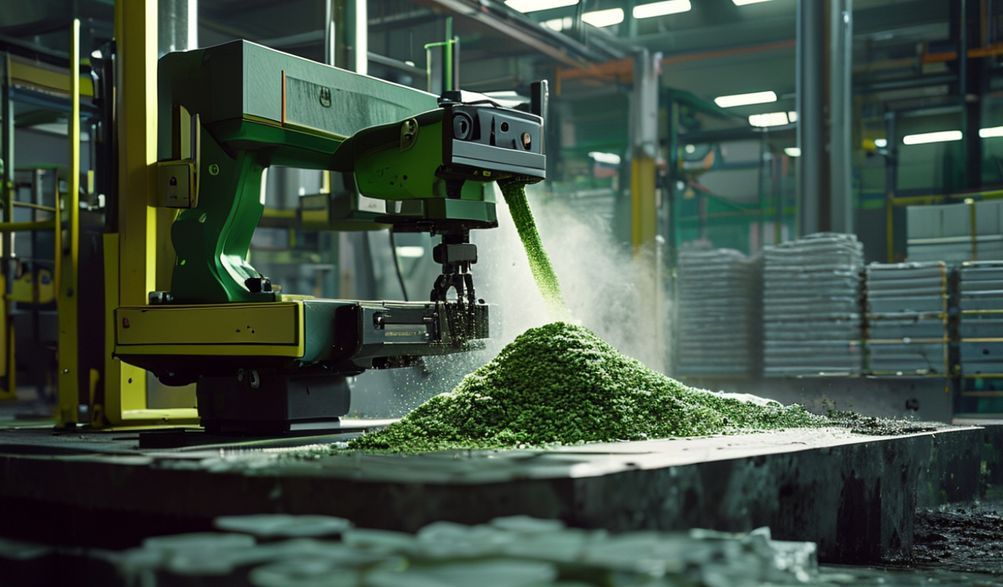
Ars ultima ad machinas lateritias sine coctura faciendas Sinarum: technologia, beneficia et selectio.
Introductio
The global construction industry is at a pivotal crossroads. As urbanization accelerates and environmental regulations tighten, the demand for sustainable, efficient, and cost-effective building materials has never been higher. Enter the baking-free block—a revolutionary alternative to the centuries-old fired clay brick. Unlike its traditional counterpart, which requires immense energy from kiln firing, a baking-free block gains its strength through chemical reaction and high-pressure compaction.
At the forefront of this green construction revolution is China, a global powerhouse in manufacturing and innovating the very machines that make these blocks possible. For entrepreneurs, engineers, and project managers worldwide, sourcing a baking-free block making machine from China represents a significant opportunity, but it also comes with a complex landscape of technology, suppliers, and logistics to navigate.
This guide serves as your comprehensive, expert resource. We will dissect the core technology, quantify the tangible benefits, and provide a meticulous, step-by-step framework for selecting the right machine and supplier. Drawing on industry knowledge, technical specifications, and practical procurement insights, this article is designed to equip you with the confidence to make an informed investment in the future of construction.
What is a Baking-Free Block Making Machine?
A baking-free block making machine is a specialized piece of industrial equipment designed to manufacture construction blocks without the need for high-temperature kiln firing. The “baking-free” (or non-fired) process represents a fundamental shift from thermal curing to mechano-chemical curing, resulting in a product that is both structurally sound and environmentally friendly.
Technologia Principalis Explicata
The magic of this machine lies in its process. It transforms a mix of raw materials into a dense, durable block through two primary forces:
- Chemical Reaction (Hydration): The mixture includes a binder, typically cement, which reacts with water to form crystalline structures that bind the aggregates together.
- Pressio Mechanica: A high-tonnage hydraulic press applies immense pressure (ranging from dozens to hundreds of tons) to the mixture in a mold. This pressure dramatically compacts the material, eliminating voids and initiating the cement hydration process, leading to high early strength.
Key Components of a Standard Plant:
* Miscellator: Homogenizes raw materials (fly ash, sand, cement, water).
* Tapes transportatorius: Transports the mixed material to the host machine.
* Systema Formandi Massarum The heart of the machine, where the mold cavity defines the block shape (hollow, solid, etc.).
* Pressus Hydraulicus: Provides the essential compaction force via a power unit, cylinders, and valves.
* Palearium Alimentator/Circulatio Systematis: Supplies pallets to the mold and moves formed blocks to the curing area.
* Systema Gubernationis PLC The brain of the operation, allowing for automated control of the molding cycle, pressure, and troubleshooting.
Materiae Crudae Communiter Adhibitae
The versatility of these machines is a major advantage. They can utilize a wide range of materials, often prioritizing industrial by-products:
* Cinis Volaticus: A fine powder recovered from coal-fired power plants, acting as a prime pozzolanic material.
* Scoria:Ferri excrementum.
* Cementum The primary binding agent (Portland cement is common).
* Sand & Stone Chips/Quarry Dust: Provide the aggregate structure.
* Structurae ac Demolitio Numinum: Crushed and processed into usable aggregate.
This ability to consume waste materials places baking-free block production at the core of the circular economy, turning environmental liabilities into valuable building assets.
End Products: Types of Blocks Produced
By simply changing the mold, a single machine can produce a diverse product line:
* Lateres Cavi: Lightweight blocks for non-load-bearing and load-bearing walls, offering excellent thermal and acoustic insulation.
* Massa Solida: Dense blocks used for foundations, pavements, and heavy-duty walls.
* Lateres Strati (Internexus vel Normales): For driveways, walkways, and public squares.
* Crepido Lapidum & Gramen Pavimentum: For road landscaping and erosion control.
Key Advantages of Using China-Made Baking-Free Machines
Sourcing this technology from China is not merely about cost; it’s about accessing a mature ecosystem of innovation, scale, and specialized manufacturing.
Unmatched Cost-Effectiveness
- Inferior Collocatio Initialis Chinese manufacturers benefit from concentrated supply chains and economies of scale, translating to a lower upfront cost compared to European or American counterparts—often 30-50% less for comparable output.
- Alta Reditus Potentia: The combination of affordable machinery, low-cost raw materials (like fly ash), and high production output creates a compelling business case. Our analysis based on 2023 market data shows that a medium-sized plant can often achieve payback within 12-24 months, depending on local block prices and demand.
Advanced and Adaptable Technology
- Sophisticated Control Systems: Modern machines are governed by Programmable Logic Controllers (PLCs) with touch-screen interfaces, allowing for precise control over pressure, vibration frequency, and cycle time.
- Hydraulic Innovation: Chinese manufacturers have heavily invested in efficient, reliable hydraulic systems that deliver consistent pressure while optimizing energy consumption.
- Customization is Standard: Whether you need a unique block size, a special interlocking pattern, or a logo embossed on the block, Chinese factories are typically adept at designing and manufacturing custom molds to meet specific project requirements.
Strong Focus on Sustainability
- Zero-Firing Emissions: Eliminating the kiln removes a major source of CO2, SO2, and particulate emissions associated with traditional brickmaking.
- Utilitas Excrementorum: By consuming fly ash and slag, these machines help solve a major industrial waste problem, reducing landfill use and associated environmental hazards.
- Green Building Contribution: Buildings constructed with these blocks can contribute to credits in major green building certification systems like LEED or BREEAM, a growing selling point for developers.
High Production Efficiency & Output
- Impressive Output Metrics: A standard fully automatic model like the QMJ4-45 can produce over 4,000 standard hollow blocks (400x200x200mm) in an 8-hour shift. High-end lines can exceed 10,000 blocks per day.
- Celeriter Sanans Blocks gain sufficient strength for stacking and transport within 24-48 hours of production, significantly accelerating project timelines compared to the weeks needed for fired bricks to cool.
- Laboris Dependentia Minuta: Automation handles material feeding, molding, and pallet transfer. A semi-automatic line may need 3-5 operators, while a fully automatic line can run with 2-3.
Critical Factors When Selecting a Chinese Supplier
Due diligence is the most critical phase of your procurement journey. Rushing this step is the primary cause of failed investments.
Assessing Manufacturer Expertise & Reputation
- Firmam Legitimam Probare: Use China’s National Enterprise Credit Information Publicity System to check the supplier’s business license, registered capital, and legal status. Look for a clean record.
- Factory Audits are Key: Insist on a live video tour of the production workshop. Look for organized assembly lines, quality control stations, and testing equipment. Listen for smooth, consistent operation of hydraulic systems—erratic noises can indicate poor maintenance.
- Evaluate R&D Capability: Ask about their engineering team, in-house mold design and fabrication, and any patents they hold. A company that invests in R&D is more likely to provide technological support and upgrades.
Deciphering Technical Specifications
Don’t just compare prices; compare the machine’s DNA. Key specs to scrutinize include:
* Pressio (Tonnagium): Determines block density and strength. Common range: 60 tons to 360 tons.
* Temporis Cursus Formandi: The time to produce one pallet of blocks. Faster cycles mean higher output (e.g., 15-25 seconds).
* Power Rating: Impacts your operational electricity costs (e.g., 30kW – 75kW for the host machine).
* Gradus Automatizationis: Semi-automatic (manual pallet feeding/block removal), fully automatic (pallet circulation system), or egg-layer type.
* Model Codes: Understand common series. “QT” series are often egg-layer mobile machines, while “QMJ” or “QFT” series are stationary, fully automatic plants. The numbers often indicate theoretical output (e.g., QMJ4-45 suggests ~4500 blocks/8h).
Navigating Quality Control and After-Sales Service
The quality of after-sales support is a direct reflection of the supplier’s reliability.
* Cautio: Standard is 12 months for core components. Clarify what is and isn’t covered.
* Partes Suppetiales: Confirm the availability and cost of common wear parts (mold liners, hydraulic seals, vibration motors). Ask for a spare parts list and price list.
* Auxilium Technicum: Will they provide English manuals, electrical diagrams, and installation guides? Is remote video support available? What about on-site installation and training? (Typically 1-2 engineers sent for 7-15 days, with costs negotiated).
* Third-Party Inspection: For large orders, hiring a firm like SGS, BV, or Intertek to conduct a Pre-Shipment Inspection (PSI) is a wise investment to verify quality and functionality before payment is finalized.
Understanding Logistics, Export & Payment Terms
- Incoterms: FOB (Liberum in Navi) is most common. You pay for the machine loaded on the ship at the Chinese port, and you arrange and pay for sea freight and insurance. Pretium, Securitas, et Vectura means the supplier handles shipping to your nearest port. FOB usually offers more control and potential cost savings.
- Maritimum Onus: Machines are shipped in 20ft or 40ft containers. Ensure the supplier provides professional export wooden crating to prevent damage. You will need a reliable freight forwarder.
- Payment Terms: A secure, staged approach is standard: 30% deposit via T/T, 70% balance against copy of Bill of Lading. For first-time buyers, using Alibaba Trade Assurance or insisting on a Letter of Credit (L/C) provides an additional layer of financial protection.
Leading Applications and Market Potential
The business case for baking-free blocks is strengthened by their wide applicability and strong market tailwinds.
Ideal Projects for Baking-Free Blocks
- Proiecta Habitationis Aequabilis: Governments in Africa, Southeast Asia, and South America are actively promoting these blocks for low-cost, durable social housing.
- Aedificia Mercatoria et Industrialia: For warehouses, factories, and boundary walls.
- Municipal Infrastructure: Paving blocks for sidewalks and plazas, curbstones for roads, and retaining wall blocks.
- Disaster-Resilient Reconstruction: The rapid production and good structural properties make them ideal for rebuilding efforts.
Global Market Trends Driving Demand
- Celeris Urbanizatio: Emerging economies require vast amounts of building material, creating a massive addressable market.
- Stringent Environmental Policies: Bans on clay brick mining and firing are being enacted from India to Nigeria, forcing a shift to alternative technologies.
- Rising Cost of Traditional Materials: The energy intensity of fired bricks makes their price volatile, while the raw materials for non-fired blocks are often stable or even subsidized as waste products.
Profitability Analysis for a Block Making Business
Let’s consider a simplified model for a medium-capacity plant:
* Machine Investment: ~$50,000 (FOB price for a QMJ4-45 type line).
* Daily Output: 4,000 standard hollow blocks (8-hour shift).
* Raw Material Cost/Block: ~$0.15 (cement, fly ash, sand, power, labor).
* Local Selling Price/Block: ~$0.40 (varies dramatically by region).
* Gross Profit/Day: 4,000 * ($0.40 – $0.15) = $1,000.
* Monthly Gross Profit (25 days): $25,000.
This model highlights the significant potential. Your actual numbers will depend entirely on local costs, market prices, and operational efficiency.
FAQ Sectio
Q1: What is the typical price range for a baking-free block making machine from China?
A: Prices vary dramatically based on configuration. A small, semi-automatic egg-layer machine can start around $15,000. A standard fully automatic stationary plant typically ranges from $45,000 to $80,000. Large, high-output production lines with advanced automation can exceed $150,000. Always request a detailed, itemized quotation based on your specific output and block type requirements.
Q2: How long does it take to install and commission the machine?
A: With proper foundation preparation done locally ante the machine arrives, the physical installation and commissioning by the supplier’s engineers typically takes 7 to 15 days. The most common delay is an unprepared site, so follow the foundation drawings provided by the supplier meticulously.
Q3: Can the machine use locally available raw materials in my country?
A: Absolutely. A professional supplier will ask for samples of your local materials (fly ash, sand, aggregate) to test and provide a suitable mixing ratio formula. This service is crucial for ensuring final block quality and strength.
Q4: What is the lead time for production and delivery?
A: Generally, allow 20-40 days from order confirmation to shipment from the factory port. Complex customizations or peak seasons can extend this. Sea freight transit then adds another 20-50 days depending on the destination port.
Q5: How do I avoid scams when dealing with Chinese manufacturers?
A:
* Verify: Conduct video factory tours. Check Alibaba status (Gold Supplier, On-site Checked, Trade Assurance).
* Communicate: Speak directly with their technical engineers, not just sales staff.
* Reference: Ask for contact information for 2-3 previous clients in your region or a similar market.
* Protect: Use secure payment methods. For large orders, plan a visit or hire a third-party inspection agent.
Conclusio.
China’s baking-free block making technology presents a transformative opportunity for building a profitable, sustainable, and future-proof construction business. It aligns perfectly with the global imperatives of environmental stewardship, economic efficiency, and rapid urban development.
Success, however, is not guaranteed by the machine alone. It hinges on the meticulous due diligence you perform on your supplier, the clarity of your technical communication, and a holistic understanding of the total project cost—encompassing the machine, shipping, installation, raw materials, and local market dynamics.
As a final piece of expert advice: start with the end in mind. Develop a clear business plan with defined production targets and product specifications. Let these concrete requirements be the compass that guides your selection of the machine model and your evaluation of potential suppliers. Use this guide as your checklist. With careful planning and informed decision-making, your investment in a China-made baking-free block making machine can lay a solid foundation for long-term growth and success.
<