
The Ultimate Guide to Interlocking Compressed Earth Block (ICEB) Machines
Introductio
The global construction industry stands at a crossroads. With a soaring demand for housing and infrastructure, we are simultaneously confronted by the escalating costs of conventional materials and the undeniable urgency of the climate crisis. Traditional fired clay bricks and concrete blocks come with a heavy environmental price tag—significant carbon emissions, high energy consumption, and resource depletion. On the other end of the spectrum, age-old adobe construction, while sustainable, is often seen as too labor-intensive and inconsistent for modern building needs.
What if there was a solution that bridged this gap? A method that harnessed the timeless benefits of earth as a building material but delivered it with the precision, strength, and efficiency required today?
Enter the Interlocking Compressed Earth Block (ICEB) machine. This innovative technology is revolutionizing sustainable construction by transforming locally sourced soil into high-performance building blocks. It’s not merely a return to mud huts; it’s the fusion of ancient wisdom with modern engineering to create a viable, affordable, and eco-conscious building system.
This guide is crafted from a foundation of industry research, mechanical engineering principles, and practical field insights. Whether you are a builder, a developer, an architect, or an eco-entrepreneur, this comprehensive resource will equip you with a deep understanding of ICEB machines. We will explore what they are, how they work, their profound benefits, and the critical factors to consider when choosing one. Let’s delve into how this technology is shaping a more resilient and sustainable future for construction.
What is an Interlocking Compressed Earth Block (ICEB) Machine?
Definitio et Munus Nuclei
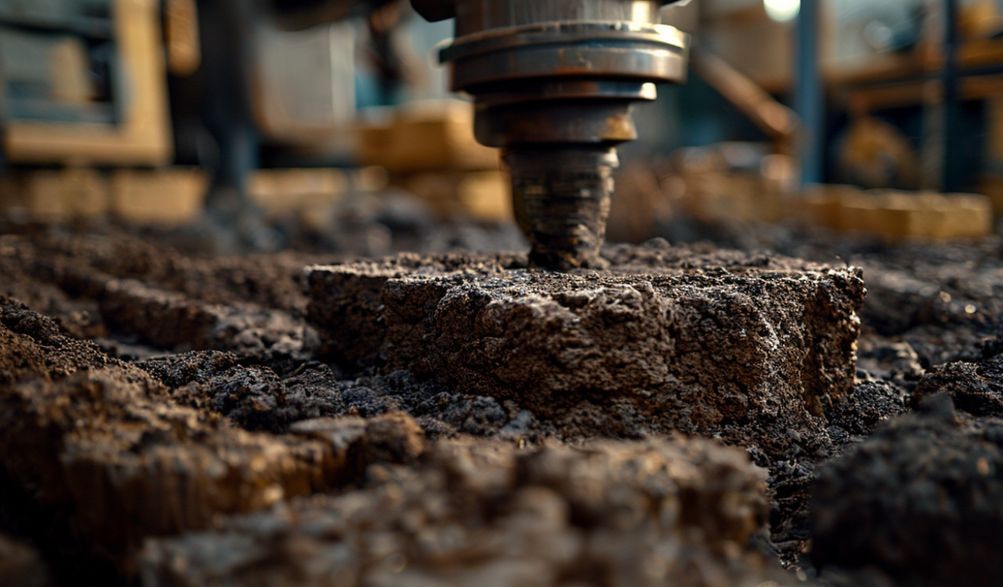
An Interlocking Compressed Earth Block (ICEB) machine is a specialized press—either mechanical or hydraulic—designed to compact damp, subsoil into incredibly dense, geometrically precise blocks. Its defining feature is the integrated mold that shapes the blocks with interlocking male and female keys (tongues and grooves) on their top, bottom, and sometimes sides.
It’s crucial to understand that an ICEB machine is a production tool, not a simple mold. It applies significant, calibrated force to achieve structural integrity, setting it apart from manual rammed earth techniques or simple casting.
Scientia Post Compressionem
The magic of the ICEB lies in compression. By applying high pressure—typically measured in PSI (pounds per square inch) or MPa (Megapascals)—the machine forces soil particles into intimate contact, drastically reducing voids and increasing density.
- Pressure Creates Strength: This process creates strong mechanical bonds, resulting in a block with high compressive strength, often rivaling that of fired bricks.
- The Role of Moisture: The soil must have optimal moisture content (determined by standards like the Proctor test). This “water of hydration” acts as a temporary lubricant during compression and helps create cohesion, binding the particles together as the block cures and dries.
Key Components of a Typical ICEB Machine
While designs vary, most ICEB machines share these core components:
- Compages & Structura: A heavy-duty, welded steel frame that provides the stability needed to withstand repeated high-pressure compression without deformation.
- Forma/Stampi The heart of the machine. This removable chamber defines the block’s final shape and creates the intricate interlocking patterns. Molds are often made from hardened steel for longevity.
- Compressio Mechanismus: This is the system that generates the force. It can be a manual lever system (for small-scale machines), a mechanical press, or a hydraulic ram (for higher output and pressure).
- Systema Eiectionis: Once compressed, a mechanism—often a hydraulic arm or a manual plate—pushes the finished block out of the mold cleanly and without damage.
Benefits of Building with Interlocking Compressed Earth Blocks
Structural and Performance Advantages
- Alta Resistensia Compressiva: When produced correctly, ICEBs can achieve compressive strengths ranging from 2 MPa to over 10 MPa. This makes them suitable for load-bearing walls in single and even multi-story buildings, per many national building codes.
- Internexus Designatio: This is a game-changer. The keys and grooves allow blocks to lock together vertically and horizontally.
- Mortar-Less Joints: Eliminates the need for wet mortar in bed joints, saving material, labor, and time.
- Faster, Simpler Construction: Blocks snap into place like LEGO®, ensuring alignment and speeding up the building process significantly.
- Seismic Resilience: The interlocking design and the inherent flexibility of earth allow for slight movement during seismic events. The friction between blocks can help dissipate energy, offering good performance in earthquakes for well-designed, low-rise structures.
- Optima Massa Caloris: Earth has a high capacity to absorb, store, and slowly release heat. ICEB walls act as a thermal battery, absorbing heat during the day and releasing it at night, naturally regulating indoor temperatures and reducing reliance on heating and cooling systems.
Economic and Practical Benefits
- Ultra-Low-Cost Material: The primary ingredient—soil—is often available directly on-site or sourced locally for minimal cost. Stabilizers like a small amount of cement (5-10%) may be added, but material costs remain a fraction of those for fired bricks or concrete.
- Reduced Construction Time & Labor: The mortar-less laying system can cut wall construction time by up to 50% compared to conventional bricklaying. The uniform block shape simplifies the process.
- Low Skill Barrier: Training laborers to lay interlocking blocks is faster and easier than training skilled masons for traditional bricklaying, opening up job opportunities in local communities.
Beneficia Circumiectorum et Sustentabilitatis
- Prope Nulla Carbonii Vestigium The process requires no firing. The only significant energy input is the mechanical compression, which is minimal compared to the 24-48 hours of kiln firing needed for clay bricks. This results in dramatically lower embodied carbon.
- Fully Recyclable and Non-Toxic: At the end of a building’s life, the blocks can simply be crushed and returned to the earth or remixed to form new blocks. They contain no volatile organic compounds (VOCs) and naturally regulate indoor humidity, contributing to healthier living spaces.
- Circular Economy Model: ICEB production epitomizes a circular economy: using local materials for local construction, creating local jobs, and producing minimal waste.
How to Choose the Right ICEB Machine for Your Project
Assessing Your Project Scale and Needs
Your choice of machine is primarily dictated by your production goals.
- Manual Lever Machines:Idoneus adsmall-scale projects, community builds, NGOs, or DIY enthusiasts. Production is labor-intensive but low-cost, with an output of 100-500 blocks per day. Perfect for proving the concept or building a single home.
- Semi-Automatic/Hydraulic Machines: The workhorse for small-to-medium enterprises (SMEs) and commercial block yards. These often feature hydraulic compression and may include a conveyor or shuttle system. Output ranges from 500 to 3,000+ blocks per day, suitable for supplying multiple housing projects.
- Fully Automatic Stations: Designed for large-scale industrial production. These are complete systems with automated soil feeding, mixing, compression, and block handling. They represent a major capital investment but produce thousands of blocks per hour with minimal labor.
Critical Technical Specifications to Compare
When evaluating machines, look beyond the price tag and scrutinize these specs:
- Productio Capacitas: Don’t just look at “blocks per hour” under ideal conditions. Ask about sustainable daily output. Match this to your project’s demand and timeline.
- Block Size and Shape Options: Can the machine produce different block sizes (e.g., half-blocks, corner blocks)? This versatility is crucial for efficient construction and complex designs.
- Compression Force: This directly determines the potential strength of your blocks. Machines typically offer between 10 to 30+ tons of force. Higher force generally means denser, stronger blocks.
- Fons Potestatis: Options include manual, electric motor, or diesel engine. Consider your site’s access to reliable electricity and the associated running costs.
- Structurae Qualitas: Inspect the quality of welding, the thickness of the steel frame, and the material of the mold (hardened steel is best). A robust machine minimizes downtime and lasts for decades.
Supplier Evaluation Checklist
Choosing the right supplier is as important as choosing the right machine.
- Reputation & Experience: How long has the manufacturer been in business? Can they provide verifiable customer testimonials or case studies from your region?
- Training and Support: A reputable supplier will offer comprehensive training on machine operation, soil mix design, and block production. Post-sales technical support is non-negotiable.
- Warranty and Spare Parts: What is covered under warranty, and for how long? Ensure that critical spare parts (like mold liners, seals, hydraulic hoses) are readily available and affordable.
- Cost vs. Value Analysis: The cheapest machine may be the most expensive in the long run due to poor output, high breakdown rates, and lack of support. Calculate the cost per block over the machine’s expected lifespan to understand true value.
The ICEB Production Process: From Soil to Building Block
Step 1: Soil Sourcing and Testing
Not all dirt is created equal. The ideal soil is a mix of:
* Argilla Provides cohesion.
* Lutum Fills voids.
* Arena Provides skeletal structure and reduces shrinkage.
* Gravel: Adds compressive strength.
Simple Field Tests:
* Jar Test: Fill a clear jar with 1/3 soil and 2/3 water, shake, and let settle. The layers will show the approximate proportions of gravel, sand, silt, and clay.
* Ribbon Test: Moisten soil and try to roll it into a thin ribbon. If it holds together, clay content is sufficient.
For critical projects, professional lab testing (sieve analysis, Proctor test) is recommended to determine the optimal mix and moisture content.
Step 2: Material Preparation and Mixing
- Cribratio: Pass the soil through a screen (e.g., 10mm or 1/4″) to remove rocks, roots, and organic matter.
- Miscens: Blend the soil with the correct amount of water. If stabilization is required for wet climates or higher strength, a small percentage (3-10%) of Portland cement or lime is added at this stage. A rotary drum mixer or a simple concrete mixer ensures a homogeneous blend.
Step 3: Compression and Block Ejection
- Onus. The prepared mix is fed into the machine’s mold chamber.
- Compressio. The operator activates the press, applying high pressure for a few seconds.
- Eiectio: The newly formed, solid block is ejected onto a pallet or rack. It is stable enough to be handled immediately.
Step 4: Curing and Quality Control
- Sanatio: Blocks are stacked in a shaded, well-ventilated area and kept slightly damp (often covered with plastic sheeting) for 7-14 days if cement-stabilized. Full strength is achieved in 21-28 days. They must be protected from rain and direct sun during this period.
- Qualitatis Moderatio: Perform simple checks:
- Weight & Dimension Consistency: Blocks from the same batch should be uniform.
- Drop Test: From waist height, a good quality block should not break or crumble excessively.
- Water Absorption Test: A good block will not disintegrate when submerged in water for a short period.
Frequently Asked Questions (FAQ) About ICEB Machines
Q1: Do I need to add cement to the soil mix?
A: Not always. For dry climates and single-story structures, a well-graded, stabilized earth mix (clay and sand) is often sufficient. Adding a small percentage (3-10%) of Portland cement or lime is recommended for areas with high rainfall, for multi-story buildings, or to achieve higher and more consistent compressive strength and water resistance.
Q2: How strong are interlocking earth blocks compared to fired bricks?
A: Properly produced ICEBs can achieve compressive strengths of 5-10 MPa or more, which is comparable to, and often exceeds, that of many common fired clay bricks. Their structural performance is enhanced by the interlocking design, which provides excellent in-wall stability.
Q3: Can I start a business with an ICEB machine?
A: Absolutely. ICEB production is the foundation of many successful social enterprises and construction material businesses worldwide. It offers a relatively low-capital entry into a high-demand market, providing an affordable, eco-friendly alternative to conventional bricks. A solid business plan focusing on local housing needs is key.
Q4: What is the maintenance like for these machines?
A: Maintenance is straightforward and minimal. It involves regular cleaning after use, checking and tightening bolts, lubricating all moving parts (pivots, bearings), and periodically inspecting wear items like mold liners and hydraulic seals. A reliable supplier will provide a clear maintenance schedule.
Q5: Are buildings made with ICEBs safe in earthquakes?
A: When designed and built properly, ICEB structures can exhibit good seismic resistance, particularly for low-rise buildings. The interlocking design and the slight flexibility of the material allow for energy dissipation through friction between blocks. As with any construction, a proper reinforced concrete foundation (ring beam) and a lightweight, well-connected roof are essential for seismic safety.
Conclusio.
The Interlocking Compressed Earth Block machine is more than just a piece of equipment; it is a catalyst for change. It empowers communities and entrepreneurs to turn the very ground beneath their feet into durable, comfortable, and beautiful homes. This technology directly addresses the triple challenge of affordable housing, sustainable development, and climate-conscious construction.
As the world seeks scalable solutions to reduce the built environment’s carbon footprint, ICEB technology stands out as a proven, practical, and powerful answer. It moves sustainable building from a niche alternative to a mainstream, economically logical choice.
The logic is compelling: lower material costs, faster construction, superior thermal comfort, and a radically smaller environmental impact. The path forward begins with understanding your local soil and engaging with reputable experts in the field.
Your next step? Conduct a simple soil test on your intended site. Reach out to established ICEB machine manufacturers with your project specifics. Connect with the global network of earth builders and advocates. The future of building is not only sustainable—it can be interlocked, compressed, and risen from the earth itself.
<