
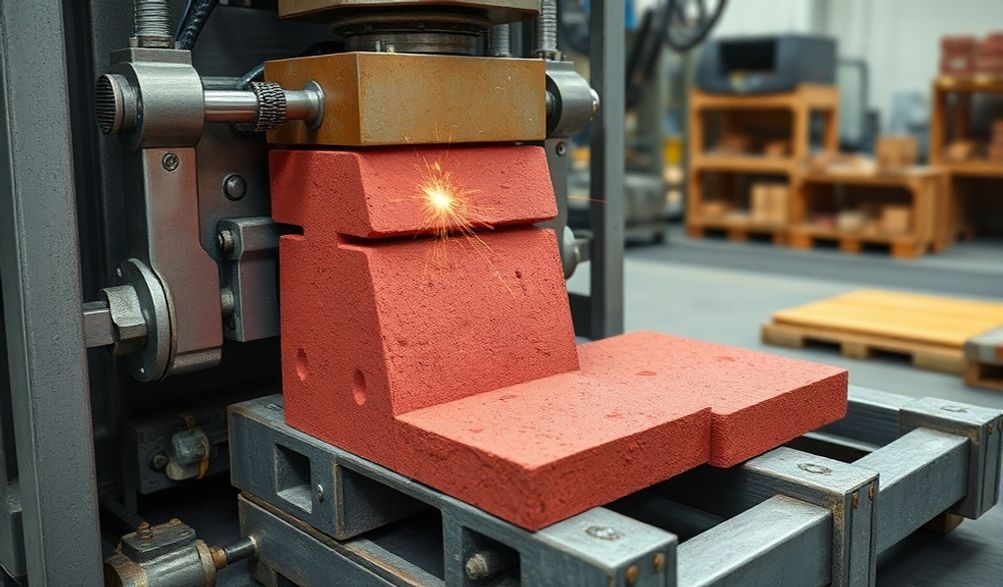
Ultima Ductor ad Machinas Laterum Straturae: Electio, Operatio et Reditus Investitionis
Introductio
Gratiante crepitu glareae sub pedibus reponatur solidus elegansque superficies novae viae. Publica platea imaginare intricatis coloratisque figuris animata, aut semitam horti quae structuram et pulchritudinem agro addat. Hae mutationes communem potentemque originem habent: laterem pavimentum.
Sed quid acervum harenae, caementi, et aggregati in has durabiles et uniformes structurae moles convertit? Pro redemptoribus, topiariis, et negotiatoribus qui ultra manualem laborem vel sumptuosam a suppeditatoribus dependentiam progredi cupiunt, responsum est machinaLateris sternendi machinaNon est tantum instrumentum; sed cor est operis moderni et efficacis sternendi.
Hic liber universalis constitutus est ut tibi incorruptum peritumque subsidium sit. In scientia industriali, in specificationibus technicis, in perspicientiis practicis operandi fundatus, verba venalia secamus. Sive veterator es conductor qui opes auget, sive negotiator qui novum quaestum explorat, disces quomodo machinam aptam eligas, eius usum domineris, eam ad summam efficacitatem conserves, et, quod maximum est, verum reditum investitionis tuae computes. Aedificemus igitur illud fundamentum scientiae.
Intellectus de Machinis Laterum Straturae: Genera et Technologia Fundamentalis
Before diving into specifications and prices, it’s crucial to understand the fundamental engineering behind these machines. The type of machine you choose dictates the products you can make, their quality, and your production speed.
Hydraulic Press Machines vs. Vibrating Press Machines
The core battle in paving brick technology is between two primary forces: static pressure and vibration.
-
Machinae Pressurae Hydraulicae: These machines use immense, static hydraulic pressure to compress dry concrete or clay mix within a mold. Imagine a powerful, slow-acting vise.
- Output: They produce extremely high-density, sharp-edged bricks with superior compressive strength and low water absorption. Think of classic clay bricks or high-end, architectural concrete pavers.
- Applicatio. Ideal for producing standard bricks, facing bricks, and solid pavers where ultimate strength and a fine, smooth finish are priorities.
-
Vibrating Press Machines: These machines combine vibration (from a powerful vibrating table) with simultaneous pressure (often hydraulic) to consolidate a semi-wet concrete mix.
- Output: This process is perfect for creating Pavimenta internexa, hollow blocks, kerbstones, and garden slabs. The vibration ensures the mix fills the mold completely, even complex shapes, resulting in a textured, non-slip surface.
- Applicatio. The go-to choice for the vast majority of paving stone production, especially for landscaping, driveways, and pedestrian zones where interlocking design and surface texture are key.
In practice, if your business plan focuses on traditional, high-strength bricks, a hydraulic press is your champion. If you aim to produce the wide variety of interlocking pavers seen in modern landscaping, a vibrating press machine is the industry standard.
Key Components of a Paving Brick Machine
Understanding the main parts demystifies the machine and helps with troubleshooting and maintenance discussions with suppliers.
- Hopper & Feeder: Where the raw concrete mix is loaded. In automatic systems, a conveyor or feeder system doses the exact amount of mix into the mold.
- Mold (or Die): The heart of the operation. This steel block is precision-machined with the cavity that shapes the brick or paver. Molds are interchangeable to produce different products.
- Systema Compressionis This is the “muscle.” In a hydraulic machine, it’s a powerful hydraulic cylinder. In a vibrating machine, it’s the combination of a vibrating table and a press head.
- Tabula Moderatoria: The “brain.” This houses the PLC (Programmable Logic Controller) or simpler controls that manage the machine’s cycle, pressure, and vibration time.
- Systema Palearum Alimentans: Pallets (steel or wooden plates) are fed into the machine. The freshly pressed brick is ejected onto this pallet, which is then moved to a curing area.
- Unitas Potentiae Hydraulicae (HPU) The system containing the hydraulic oil, pump, valves, and filters that power the press cylinders.
Automation Levels: Manual, Semi-Automatic, and Fully Automatic
Your labor costs and desired output are directly tied to the level of automation.
- Machina Manualia: Every step—feeding mix, initiating the press cycle, removing the finished brick—is done by an operator. Output is low (100-500 bricks per day), but the cost and skill barrier to entry are minimal.
- Semiautomaticae Machinae: The most common choice for small to mid-sized businesses. The operator feeds the mix (or a feeder does it), but the pressing, ejection, and pallet movement are automated. One operator can manage 1,000-4,000 bricks per 8-hour shift.
- Machinamenta Plena Automata: These are production lines. Robotic arms, conveyor belts, and automated mix feeders handle everything. They require significant investment and space but can produce 10,000+ bricks per shift with minimal direct labor.
How to Choose the Right Paving Brick Machine for Your Project
Selecting a machine is a balance between your ambitions and practical constraints. This decision should be driven by data, not guesswork.
Assessing Your Production Needs and Scale
Start with the end in mind. Ask yourself:
* What is my current or projected demand? Are you supplying a single large development, multiple landscaping contractors, or a retail yard?
* Calculate your required daily output. If a project needs 10,000 pavers and you have a 10-day window, you need a machine capable of 1,000+ pavers per day, accounting for curing time.
* Project Type: A business focused on custom, high-margin residential work may thrive with a versatile semi-automatic machine. A company targeting municipal or large commercial contracts will likely need the consistent high volume of a fully automatic line.
Critical Specifications to Compare
When reviewing supplier brochures, focus on these key metrics:
- Pressure Capacity (Tonnes): This directly correlates to brick strength. For standard pavers, machines from 150 to 300 tonnes are common. Higher pressure (e.g., 400+ tonnes) is needed for ultra-high-strength products or thicker blocks. The finished brick must meet relevant standards like ASTM C936 for concrete pavers.
- Tempus Cycli & Productio Effecta: Cycle time is how long it takes to produce one brick (e.g., 15-20 seconds). Multiply this by the number of cavities in the mold. A 4-cavity mold with a 20-second cycle can theoretically produce 720 bricks per hour (4 bricks/cycle * 180 cycles/hour). In practice, factor in downtime for mold changes, maintenance, and operator breaks for a realistic daily figure.
- Potestatis Postulata: Most industrial machines require a 3-phase electrical supply (380V/415V). Ensure your workshop can support this. A typical semi-automatic machine may need a 15-25 kW connection.
- Vestigium Machinae: Don’t just measure the machine. You need space for the machine, raw material storage, a curing rack area (which can be substantial), and finished product storage. Request the machine’s layout plan from the supplier.
Material Considerations: From Concrete Mix to Finished Paver
The machine is only as good as the mix you feed it. A consistent, well-graded mix is non-negotiable.
- Optimal Mix Design: A typical paver mix might be 1 part Portland cement, 2 parts fine sand, and 3 parts coarse aggregate (3/8″ or smaller). The water-cement ratio is critical—too wet, and bricks slump; too dry, and they won’t compact properly. Based on typical workshop feedback, a semi-dry mix (just enough water to hold its shape when squeezed) works best for vibrating presses.
- Color & Texture: For colored bricks, iron oxide pigments are added to the mix (integral coloring) or applied to the surface (casting). Many machines offer a “color feeder” attachment. Surface textures (smooth, exposed aggregate, tumbled) are often achieved with secondary processes after initial curing or by using special mold liners.
Operating and Maintaining Your Machine for Longevity
A machine is a capital asset. Proper operation and diligent maintenance protect that investment and ensure consistent, profitable output.
Step-by-Step: The Standard Operating Procedure
Safety and consistency are paramount. Follow a strict SOP:
- Pre-Start Check: Verify hydraulic oil levels, check for loose bolts or visible leaks, and ensure the mold and hopper are clean and clear.
- Power On & System Check: Engage power, start the hydraulic system, and let it run for a few minutes. Check pressure gauges.
- Load & Cycle: Feed the prepared mix into the hopper. Initiate the automatic cycle (or manual press). Observe the first few bricks for consistent shape and density.
- Safe Shutdown: After the final cycle, clear all material from the hopper and mold. Run a final cycle to eject any residue. Turn off the main power and implement lockout/tagout (LOTO) procedures if performing any maintenance.
PPE (Personal Protective Equipment) for operators is mandatory: safety glasses, hearing protection (vibrating machines are loud), steel-toe boots, and gloves.
Essential Daily and Weekly Maintenance Checklist
Preventative maintenance is far cheaper than emergency repairs and production downtime.
Daily:
* Lubricate all guide rods and moving parts as per the manual.
* Visually inspect hydraulic hoses and connections for leaks.
* Thoroughly clean the mold, hopper, and pallets with a brush and air gun—caked-on concrete is the enemy.
* Check and tighten any bolts on the mold and frame.
Weekly:
* Check hydraulic oil level and condition (look for cloudiness or contamination).
* Inspect the vibrator motors (on vibrating machines) for secure mounting and unusual noise.
* Examine the mold for wear or damage to the cavities.
* Clean or replace hydraulic and air filters as scheduled.
Troubleshooting Common Issues
- Bricks Sticking in the Mold: Usually caused by a worn mold, insufficient mold release agent (a light oil spray), or a mix that is too wet. Clean the mold thoroughly and check the mix consistency.
- Inconsistent Brick Height/Weight: This points to an inconsistent feed of raw material. Check that the feeder is delivering the same volume each cycle or that the operator is being consistent with manual feeding.
- Hydraulic Leaks or Loss of Pressure: Identify the source of the leak (fitting, hose, cylinder seal). A loss of pressure can indicate a failing pump, clogged filter, or internal valve issue. For major hydraulic problems, call a certified technician.
The Business Case: Analyzing Cost and Return on Investment (ROI)
This is the bottom line. Let’s address the financials with clear-eyed realism.
Upfront Costs vs. Long-Term Value
The purchase price is just the beginning. Your total startup investment includes:
* Machine Price (varies from ~$15,000 for a manual to $150,000+ for a full auto line)
* Shipping, Customs, and Installation
* Foundation/Workshop preparation
* Initial stock of raw materials (cement, aggregates, pigments)
* Spare parts kit and initial molds (extra molds cost $1,500-$5,000+ each)
Contrast this with the long-term value:
* Constantia et Qualitatis Moderatio: You control the product from start to finish.
* Brand Independence: Build your own brand instead of reselling a supplier’s.
* Margin Expansion: You capture the full manufacturing margin.
* Flexibilitas Operativa: Produce what you need, when you need it.
Calculating Your Potential ROI
Use this simplified framework to model your business:
ROI Timeframe = (Total Investment Cost) / (Monthly Gross Profit from Machine)
Example Simplified Calculation:
1. Machine Investment: $50,000 (semi-automatic machine + one mold + installation)
2. Monthly Output: 30,000 pavers (realistic for 1-shift operation).
3. Revenue: 30,000 pavers x $0.80/paver wholesale = $24,000
4. Cost of Goods Sold (Materials, Direct Labor, Machine Power): 30,000 pavers x $0.40/paver = $12,000
5. Monthly Gross Profit: $24,000 – $12,000 = $12,000
6. Other Overheads (allocated rent, admin, sales): Estimate $4,000
7. Monthly Net Profit from Machine: $12,000 – $4,000 = $8,000
8. ROI Timeframe: $50,000 / $8,000 = ~6.25 months.
This is a simplified model. Variables like local market demand, your selling price, operational efficiency, and maintenance costs will dramatically affect your actual ROI.
Enhancing Profitability with Your Paving Brick Machine
Maximize your asset by expanding your product line and optimizing operations:
- Value-Added Products: With additional molds, the same machine can produce:
- Different paver shapes (herringbone, circle kits)
- Garden edging and retaining wall blocks
- Decorative stone veneer
- Grass grid pavers for permeable surfaces
- Efficient Operations: Implement just-in-time production to reduce inventory costs. Use standardized mix designs to minimize waste. Train your operator to also handle basic maintenance.
Frequently Asked Questions (FAQ)
Q1: What is the average production capacity of a mid-range paving brick machine?
A mid-range semi-automatic vibrating press machine, with a 4-6 cavity mold, can typically produce between 2,500 to 4,000 standard pavers in an 8-hour shift, depending on cycle time and operator efficiency.
Q2: Can one machine produce different sizes and styles of paving bricks?
Yes, absolutely. This is a key advantage. By changing the mold (the steel block that forms the brick), you can produce countless designs. Mold changeover can take 30 minutes to a few hours and is a standard operator task. Investing in multiple molds increases your product flexibility.
Q3: What is the typical lead time for delivery and installation?
For standard models, expect 4-8 weeks for manufacturing and 2-4 weeks for sea freight, depending on your location. Installation and commissioning by a technician usually take 3-5 days. Always confirm this timeline with your supplier.
Q4: How much skilled labor is required to operate a semi-automatic machine?
One primary operator is needed to manage the mix feeding and monitor the machine. This person should be mechanically inclined and trainable on basic operation, safety, and daily maintenance. They do not need to be a highly skilled engineer.
Q5: What are the most common maintenance mistakes to avoid?
The top three are: 1) Neglecting daily cleaning (leading to wear and poor-quality bricks), 2) Using the wrong grade of hydraulic oil or not changing it regularly, and 3) Ignoring small leaks or unusual noises, which turn into major, costly breakdowns.
Q6: Are there financing options available for this equipment?
Yes, many equipment dealers and manufacturers offer financing plans, leases, or loan referrals. This can help spread the upfront cost over 2-5 years, making the investment more accessible. Local business development banks may also have programs for capital equipment.
Conclusion
Choosing and investing in a Lateris sternendi machina is a significant decision that hinges on a clear understanding of technology, an honest assessment of your business scale, and a solid financial plan. It’s the balance between the technical prowess of a hydraulic press and the versatile output of a vibrating machine, matched to your specific market needs.
The most trustworthy path forward is to do your homework. Consult with multiple reputable manufacturers, request detailed specifications and references, and, if possible, ask for a live demonstration or to speak with current owners of their machines. Their hands-on experience is invaluable.
Ready to move from consideration to specification? Download our free, detailed Machine Comparison Checklist to systematically evaluate models, features, and supplier offers to ensure you make a confident, informed investment.
Ultimately, a paving brick machine is more than an expense; it’s an investment in your business’s capacity, quality control, and future growth. With the right machine and knowledge, you’re not just making bricks—you’re building the foundation for lasting success.
<