
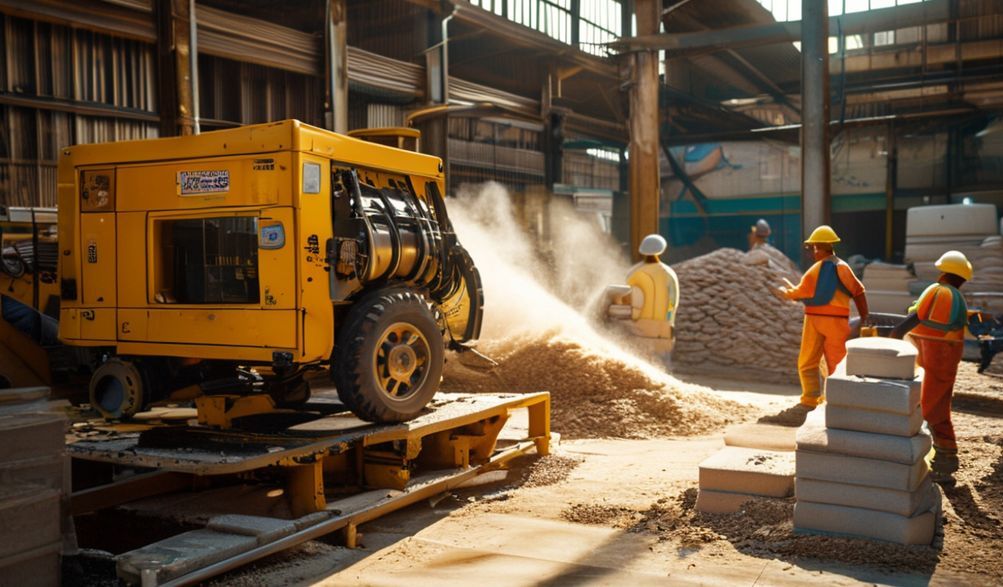
Your Ultimate Guide to Buying a Block Moulding Machine in Lagos (2026)
Introductio
Imagine driving through any neighborhood in Lagos—from Lekki to Ikeja—and seeing the unmistakable signs of progress: scaffolding, piles of sand, and stacks of concrete blocks. The city’s construction industry is not just booming; it’s the lifeblood of urban development and a major economic driver. At the heart of every building site lies a fundamental component: the humble concrete block. Its quality, consistency, and availability can make or break a project’s timeline and budget.
For decades, many small-scale builders and startups have relied on manual labor to produce blocks. This method, while low-cost to start, is fraught with challenges. Inconsistency in size and strength, back-breaking labor, and painfully slow output are common frustrations. These bottlenecks don’t just delay a single project; they cap your growth potential and profitability in a market that demands speed and reliability.
The solution to these age-old problems is a technological workhorse: the block moulding machine. For the savvy contractor, the ambitious entrepreneur, or the large-scale developer, this machine is the engine of efficiency. It transforms raw materials into standardized, high-strength blocks at a pace manual labor can never match. But navigating the purchase of such a critical piece of equipment in a dynamic market like Lagos can be daunting.
This guide is built on a foundation of deep industry knowledge and practical, on-the-ground experience within Lagos’s unique manufacturing and construction ecosystem. Our goal is not to sell you a machine, but to be your trusted resource, empowering you with the insights needed to make a confident, informed investment. We will walk you through everything: from the types of machines humming in workshops across the state, to key buying considerations, trusted supplier landscapes, operational mastery, and a clear-eyed cost analysis. Let’s build your knowledge, so you can build everything else.
Understanding Block Moulding Machines: Types and How They Work
Not all block moulding machines are created equal. Your choice depends on your scale, budget, and ambition. Understanding the core types available in Lagos is your first step.
Machinae Manuales ad Formandas Massas
These are the simplest entry point into block production. A manual machine typically consists of a steel mould box that you fill with a wet concrete mix. You then use a lever to compress the mix manually before lifting the mould to release the “green” block onto the ground.
- Casibus Usus Optimis: Perfect for very small-scale projects, individual builders producing blocks for personal use, or entrepreneurs testing the business waters with minimal capital.
- Pros:
- Lowest upfront investment cost.
- Nulla electricitate aut oleo diesel opus est.
- Facile intellegere et operari.
- Incommodis:
- Extremely labor-intensive and slow.
- Output is low (typically 100-500 blocks per day).
- High risk of inconsistency in block density and strength.
- Non aptum ad productionem commercialem.
Machinae Semi-Automaticae ad Formandas Massas
This type strikes a crucial balance, offering a significant upgrade from manual processes. Here, the operator manually feeds the mixed concrete into the machine’s hopper. The machine then takes over, using an integrated electric or diesel-powered vibrator to compact the mix thoroughly within the mould. The block is then ejected, often onto a pallet or the ground, ready for curing.
- Casibus Usus Optimis: The go-to choice for small to medium-scale block production businesses, cooperative societies, and contractors with steady project pipelines.
- Pros:
- Higher and more consistent output than manual machines.
- Produces stronger, denser blocks due to mechanical vibration.
- Laboris efficacior usus.
- Moderate investment cost.
- Incommodis:
- Requires a power source (generator or grid).
- Still involves considerable manual feeding.
- Output is limited by the feeding speed.
Machinae Formandi Caementicii Plene Automatae
These are the powerhouses of block production. Fully automatic machines integrate mixing, feeding, high-pressure compaction (often hydraulic), and block ejection into one seamless, continuous process. The iconic “egg-laying” mobile machines common in Nigeria fall into this category, as they produce and deposit blocks directly onto the ground as they move.
- Casibus Usus Optimis: Large-scale block manufacturing plants, major construction firms supplying multiple sites, and high-volume commercial businesses.
- Pros:
- Very high output (can produce thousands of blocks per day).
- Exceptional consistency and quality in every block.
- Dramatically reduced direct labor requirements.
- Maximum efficiency and profitability at scale.
- Incommodis:
- Highest capital investment.
- Significant power consumption (requires robust generator sets).
- More complex maintenance and need for skilled operators.
The Core Production Process Explained
Regardless of type, every quality machine follows a fundamental process that determines the final block’s integrity:
- Miscens: Achieving a homogeneous blend of cement, sharp sand, and gravel/stone dust is crucial. The mix ratio is king.
- Alimentatio: The mixed concrete is introduced into the machine’s mould chamber, either manually or via a conveyor.
- Compressio/Vibratio: This is the heart of the process. High-frequency vibration removes air pockets and compacts the mix, which is what gives the block its load-bearing strength. The quality of the vibrator motors is a critical factor.
- Sanatio: After ejection, the “green” blocks must be kept moist and allowed to cure for a minimum of 14-21 days to achieve their full structural strength.
A machine excels or fails based on how well it executes the compaction stage. This is where investment in quality engineering pays lifelong dividends.
Key Factors to Consider Before Buying in Lagos
Buying a block moulding machine in Lagos requires more than just comparing prices. You must align the machine’s capabilities with your local realities and long-term goals.
Facultas Productionis & Postulata Efficiendi
Start with a clear business plan. Are you supplying a specific housing project? Starting a retail block yard? Your machine’s capacity must match your ambition.
- Computa Necessaria Tua: Estimate the number of blocks required per day or week. A typical 3-bedroom bungalow may use over 5,000 blocks.
- Match the Machine: Machine capacity is rated in blocks per hour (e.g., 500-1000 blocks/hr for a robust semi-auto). Factor in downtime for maintenance, feeding, and curing. Don’t buy a massive automatic machine if you only need 1000 blocks a day—the overhead will cripple your profits.
Machine Type & Level of Automation
Use this simple decision matrix based on your primary constraints:
| Priority | Recommended Type | Key Reason |
| ——————— | ————————– | —————————————————————————— |
| Minimal Budget | Manual | Lowest entry cost, zero operating power. |
| Balanced Start | Semi-Automatic | Optimal blend of improved output, quality, and manageable investment. |
| High Volume/Scale | Fully Automatic | Maximizes output and minimizes per-unit cost, justifying the high initial capex. |
| Unstable Grid Power | Diesel-Powered Semi/Fully Auto | Ensures consistent operation independent of the Lagos grid (PHCN). |
Quality of Construction & Durability
In the bustling Lagos market, some machines are built to last, while others are built to sell cheaply. Your inspection is non-negotiable.
- Ferri Genus & Compages: Look for a robust, heavy-duty frame made from thick-grade steel that won’t warp under constant stress.
- Moldi: The mould cavities should be made of hardened steel with a smooth finish to ensure easy block release and a clean finish. Check the thickness.
- Vibratores: These are the engine. Ask about the brand, power (in HP or kW), and frequency. Quality vibrators are sealed to withstand dust and moisture.
- Lagos Climate: Components should be corrosion-resistant or well-painted to handle humidity and rain, especially if operating in an open yard.
Power Source & Fuel Efficiency
Lagos’s power reality must guide this choice.
- Machinae Dieselianae: The most common and reliable for commercial operations. They offer independence from the grid. Crucially, ask for the fuel consumption rate (e.g., liters per hour). A fuel-efficient model saves thousands in the long run.
- Motores Electrici: Cleaner and quieter, but entirely dependent on your generator or a very stable grid connection—a rarity for consistent industrial use.
- Hybrida Exemplaria: Some machines offer the option to switch between diesel and electric power, providing flexibility.
After-Sales Support: Service, Spares, and Warranty
This is arguably the most critical factor for your long-term peace of mind and machine uptime. A cheap machine with no local support is an expensive paperweight.
- The Non-Negotiables: Your supplier must have a verifiable workshop or technical team within Lagos. You need guaranteed access to spare parts—especially wear-and-tear items like moulds, vibrator motors, and belts.
- Questions for Your Supplier:
- “What is the warranty period and what does it cover?”
- “Do you offer installation and on-site operator training?”
- “Can you provide a list of common spare parts with their prices and availability?”
- “How quickly can your technician respond to a breakdown call in my area (e.g., Badagry, Ajah, Ikorodu)?”
Navigating the Lagos Market: Suppliers, Costs, and Negotiation
The Lagos market is vibrant but requires a careful, discerning approach.
Overview of Major Suppliers and Industrial Clusters
You’ll find suppliers concentrated in industrial areas and major equipment hubs.
- Key Clusters: Ikeja (along Oba Akran Avenue and surrounding streets), Apapa (port-side for imported machinery), Agidingbi, and parts of Isolo. Online marketplaces like Jiji and Facebook Marketplace also list many options.
- Verifying Legitimacy (E-E-A-T Advice): Always insist on visiting the supplier’s physical showroom or workshop. Ask for and contact references from past clients. Check how long they have been in business. A supplier with a long-standing reputation has more to lose and is generally more reliable.
Price Range Breakdown (2026 Estimates)
Prices are highly volatile based on forex rates, import duties, and steel costs. Treat these as guidance ranges and get fresh quotes.
- Machinae Manuales ad Formandas Massas ₦150,000 – ₦400,000
- Semi-Automatic Machines (with vibrator): ₦800,000 – ₦2,500,000
- Fully Automatic / Egg-Laying Machines: ₦3,000,000 – ₦8,000,000+ (depending on capacity and level of automation)
Always confirm what is included in the price (delivery, installation, training).
Smart Negotiation and Purchase Tips
- Demand a Live Demo: Never buy based on pictures or promises. Visit the yard and ask them to run the machine. Better yet, bring a bag of your own cement and sand to see how it performs with tuus intended mix.
- Get a Detailed, Itemized Quotation: This should break down the machine cost, delivery charges, installation fees, and any training costs.
- Secure a Formal Sales Agreement: This document should clearly state the machine model, serial number, warranty terms, and after-sales support agreements. It protects both parties.
Operating Your Machine for Maximum Profit and Block Quality
Owning the machine is only half the battle. Operating it efficiently is what delivers profit.
Optimal Raw Material Mix for Lagos
The right mix is cheap insurance against block failure. Local practitioners swear by these general starting ratios:
- For 9-inch Solid Blocks: 1 bag of cement (50kg) to 4 head-pans of sharp sand and 8 head-pans of gravel/granite dust.
- For 6-inch Hollow Blocks: 1 bag of cement to 6 head-pans of sharp sand.
- Materiae Comparatio: Source sand from reputable pits (e.g., known sources in Ikorodu or Ogijo). Ensure it is clean, sharp, and free of clay. Gravel should be hard and well-graded.
Routine Maintenance Checklist
Preventive maintenance is far cheaper than repairs.
- Daily: Clean the moulds, hopper, and frame thoroughly with water after the last production batch. Check for loose bolts and nuts.
- Weekly: Lubricate all moving parts (pivots, levers) as per the manual. Inspect the vibrator mounts and electrical connections (if electric).
- Monthly: Conduct a thorough inspection of the entire machine. Check for wear on mould liners and the tension of drive belts.
Common Troubleshooting Issues
- Poor Compaction/Weak Blocks: Likely caused by a weak vibrator, incorrect water content in the mix, or a worn-out mould.
- Surface Cracks: Usually due to too much water in the mix or improper curing (drying too quickly in the sun).
- Machine Jamming: Often caused by an overly dry or stony mix, or foreign objects in the hopper.
Business Essentials: Costing and Pricing Your Blocks
To price profitably, you must know your cost per block.
- Cost Calculation Model:
- Material Cost: Cost of cement, sand, gravel for one block.
- Laboris sumptus: Wages for operator and helpers, prorated per block.
- Fuel/Energy Cost: Cost of diesel or petrol per block produced.
- Depreciation & Maintenance: The machine’s cost spread over its lifespan, plus a maintenance fund, prorated per block.
- Pricing: Add your desired profit margin (e.g., 20-30%) to the total cost per block. Research the prevailing market price in your part of Lagos (prices vary between mainland and island) to ensure you are competitive.
Frequently Asked Questions (FAQ) About Block Moulding Machines in Lagos
Q1: What is the total startup cost for a block moulding business in Lagos, including the machine?
Beyond the machine, budget for a working space (yard), a reliable generator (if not diesel-powered), raw material stock for at least 2 weeks, labor costs, and transportation. For a small semi-automatic setup, a realistic total startup budget ranges from ₦2 million to ₦4 million.
Q2: Which is better for a beginner: a manual or a semi-automatic machine?
For a serious beginner aiming for a commercial business, a semi-automatic machine is almost always the better investment. The jump in quality, output, and perceived product value far outweighs the extra cost. A manual machine is only advisable for personal use or micro-trials.
Q3: Where can I find reliable technicians to repair my block moulding machine in Lagos?
This underscores the importance of buying from a supplier with local support. Alternatively, industrial clusters like Ikeja and Agidingbi have independent welding workshops and mechanics familiar with this equipment. Building a relationship with one is key.
Q4: Can one machine produce different block sizes and types (e.g., interlocking stones)?
Yes, but you need interchangeable moulds. When purchasing, discuss the availability and cost of additional mould sets for different block types (9″, 6″, 5″, hollow, interlocking, etc.).
Q5: How many blocks can a standard automatic “egg-laying” machine produce per day?
An 8-hour shift with a well-operated machine can produce between 3,000 to 6,000 blocks, depending on the model, block size, and crew efficiency.
Q6: What are the most trusted brands of block moulding machines available in Nigeria?
While we avoid promotional language, market experience shows that brands with a long-standing presence, known for durability and local parts availability, tend to dominate. Look for suppliers who carry brands that have been in the Nigerian market for 10+ years and ask other block producers for their recommendations.
Conclusio.
Choosing the right block moulding machine in Lagos is a journey that moves from understanding your own needs, to evaluating technical specifications, to navigating a lively local market. It’s a decision that hinges not just on the machine itself, but on the quality of the partnership with your supplier and your commitment to efficient operation.
Remember, this purchase is a foundational investment in your construction business or project capability. It’s not an expense, but a tool for generating revenue, ensuring quality, and building a reputation for reliability. The path to success is paved with thorough research, careful inspection, and a clear-eyed focus on long-term support over short-term savings.
Ready to move from planning to action? Consult with a trusted, established supplier in Lagos for a personalized assessment of your needs. Download our free pre-purchase inspection checklist to ensure you cover every critical point before making your investment. Empower yourself with knowledge, and build with confidence.
<