
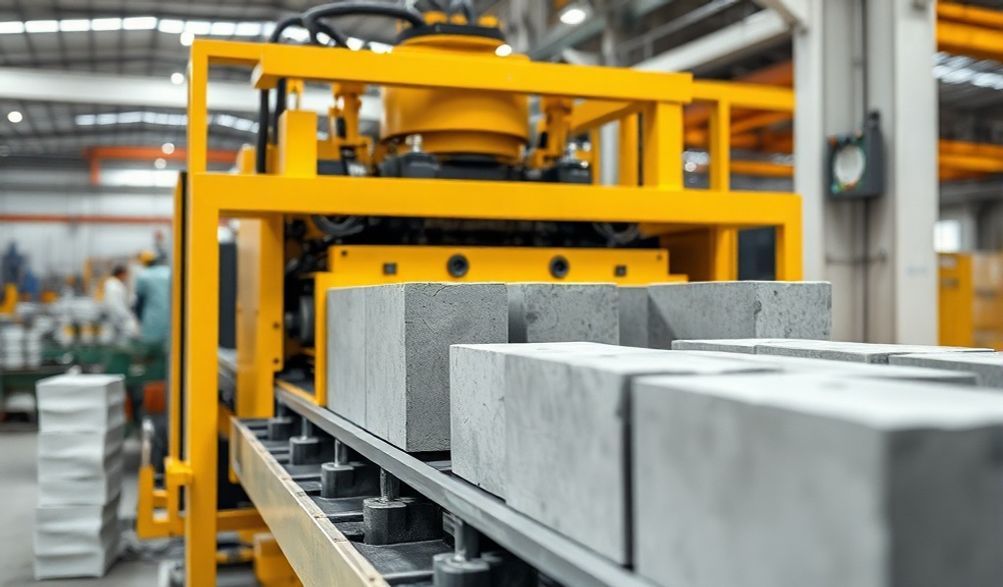
Your Ultimate Guide to Sourcing a China Concrete Block Machine for Sale: Spotlight on FUDA Factory
The global construction boom shows no signs of slowing down. At the heart of this growth lies a constant demand for reliable, affordable building materials, with concrete blocks being a fundamental component. For entrepreneurs and construction companies looking to capitalize on this demand, investing in a concrete block making machine is a pivotal decision. However, navigating the vast landscape of manufacturers, particularly in China—the world’s manufacturing hub—can be a daunting task filled with complexity and risk.
This guide is designed to be your authoritative roadmap. We will demystify the process of sourcing a high-quality block machine from China, providing you with the knowledge to make an informed and confident purchase. To ground this advice in reality, we will use the well-known FUDA Machinarum Fabricandorum Laterum Officina as a detailed case study, examining their operations, products, and reputation. By the end of this post, you will understand not only how to evaluate a supplier like FUDA but also how to apply these principles to any manufacturer, ensuring you secure a machine that delivers on durability, efficiency, and long-term value.
Understanding the China Concrete Block Machine Market
Before zeroing in on a specific supplier, it’s crucial to grasp the broader industry context. China’s dominance in manufacturing isn’t accidental, and understanding its dynamics is key to a successful sourcing journey.
Why China is a Global Hub for Block Machine Manufacturing
China’s position as the world’s factory for machinery, including block making equipment, is built on several pillars:
- Incomparabilis Magnitudo et Catenus Subministrationis: Concentrated industrial clusters mean manufacturers have immediate access to raw materials (high-grade steel, hydraulic components, electrical systems) and skilled labor, driving down costs and speeding up production.
- Technologiae Adoptio: Chinese manufacturers have rapidly evolved from producing basic models to developing sophisticated, fully automatic lines with PLC control systems, rivaling European counterparts in functionality at a more competitive price point.
- Exportandi Peritia: Decades of serving international markets have honed the logistics, documentation, and customization capabilities of leading factories, making them adept at handling overseas orders.
Key Types of Block Machines Available for Sale
Your business needs will dictate the type of machine you require. The primary categories are:
- Machinae Stipitum Stantium: High-output machines fixed in a plant. Ideal for large-scale production. Models like the QT series are industry standards.
- Machinae Mobile Blocorum (Stratificatores Ovorum): Portable machines that move along a concrete slab, laying blocks in place. Perfect for on-site production and smaller operations.
- Lineae Omnino Automatae Integrated systems with automatic mixing, conveying, block making, curing, and palletizing. They represent the peak of efficiency for high-volume plants.
- Semiautomaticae Machinae: A balance of automation and manual operation (e.g., manual feeding or block removal). They offer a lower entry cost and are suitable for medium-scale production.
Common Challenges When Sourcing from China
Acknowledging potential pitfalls is the first step to avoiding them. Common challenges include:
- Qualitatis Variatio: The market ranges from exceptional to substandard. Verifying build quality from afar is difficult.
- Communication & Language Barriers: Technical specifications and service terms can be lost in translation.
- Complicatio Logistica: Navigating shipping, customs clearance, and import duties requires planning.
- Post-Venditio Servitium: The physical distance can raise concerns about warranty support, technical assistance, and spare parts availability.
A Deep Dive into FUDA Block Making Machine Factory
As a frequently cited name in the industry, FUDA serves as an excellent benchmark for what a reputable Chinese manufacturer should offer. Let’s dissect their profile.
Company Profile: History and Market Position
FUDA Machinery Manufacturing Co., Ltd. is a established player with a significant history in the construction equipment sector. Key points that bolster their market position include:
- Years of Operation: With over two decades of experience, they have navigated multiple industry cycles and technological shifts.
- Export Focus: A substantial portion of their business is dedicated to exporting, with a presence in markets across Africa, Southeast Asia, the Middle East, and South America.
- Fama: They have built a reputation as a mid-to-large scale manufacturer, often associated with reliable stationary and automatic block making plants.
Product Range and Technical Specifications
FUDA’s catalog typically encompasses a range to suit different business scales. Common models include:
- QT4-15: A popular stationary machine capable of producing solid blocks, hollow blocks, and pavers. Output can range from 4,320 to 5,760 blocks per 8-hour shift.
- QMJ4-45: A fully automatic block making machine with higher output, often featuring a fully automatic pallet feeder and stacker.
Key Technical Features Demonstrating Engineering Expertise:
- Systema Vibratorium: Utilizes a high-frequency, dual-vibration system mounted on a robust steel frame. This ensures dense, well-compacted blocks with excellent surface finish and structural integrity.
- Systema Hydraulicorum: Employs reliable hydraulic components to provide consistent pressure during the compaction and mold-lifting process, crucial for block uniformity.
- Systema Moderandi: Higher-end models feature Programmable Logic Controller (PLC) systems with touch-screen interfaces, allowing for precise control over vibration time, pressure, and production cycles.
Normae Fabricationis et Moderatio Qualitatis
This is where trust is built. FUDA, like other reputable factories, emphasizes its production standards:
- Materiae Selectio: Use of standardized steel profiles and plates. Critical components often come from recognized international or top-tier Chinese brands (e.g., Schneider or Siemens for electricals, Rexroth for hydraulics).
- QC Process: A structured process typically involves:
- Incoming inspection of raw materials.
- In-process inspection during welding, machining, and assembly.
- Final performance testing where the machine is run with molds to produce sample blocks before disassembly for painting and shipping.
FUDA’s After-Sales Service and Support
A machine’s value is also defined by the support behind it. Prospective buyers should clarify:
- Cautio: Standard terms often cover 12-18 months for core components, excluding wear parts.
- Documentatio. Provision of detailed operation and maintenance manuals in English.
- Auxilium Technicum: Availability of remote support via video call and the potential for sending an engineer for on-site installation and training (usually at an additional cost).
- Partes Suppetiales: Commitment to supplying genuine spare parts, with a clear process for ordering and shipping.
How to Vet Any China Block Machine Supplier
Use the insights from the FUDA analysis as a framework to evaluate any potential supplier.
Essential Due Diligence Checklist
Do not skip this foundational step:
- Firmam Legitimam Probare: Check official business licenses. On platforms like Alibaba, look for “Trade Assurance” and “Assessed Supplier” badges, which indicate verified audits.
- Request Client References: Ask for contact information for past international clients in a region similar to yours. Follow up with them.
- Review Certifications: Look for relevant international certifications like CE (for the European market, indicating safety standards) and ISO 9001 (for quality management systems).
The Critical Role of Factory Audits and Video Tours
In the post-pandemic world, a live video tour is non-negotiable.
- What to Request: Ask for a real-time walkthrough of the workshop, not a pre-recorded marketing video.
- What to Look For: Observe workshop organization, the skill of welders and assemblers, inventory of raw materials, and the testing area.
- Questions to Ask: “Can you show me the QC inspection sheet for a completed machine?” “Which brand of hydraulic pumps are you currently installing?”
Decoding Quotations and Negotiating Terms
A professional quote should be transparent. Understand the breakdown:
- Machine Price: The base cost.
- Impensae Formarum: Specify the mold(s) included. Custom molds are extra.
- Spare Parts List: A basic starter kit of wear parts (springs, seals, etc.) should be itemized.
- Shipping Terms: FOB (Liberum in Navi) means you own the goods once they’re loaded on the ship in China and you handle main shipping/insurance. Pretium, Securitas, et Vectura means the supplier arranges and pays for shipping to your nearest port.
- Payment Terms: Standard terms might be 30% deposit, 70% before shipment. Negotiation may be possible (e.g., 40/60).
Making the Purchase: Logistics and Installation
The work isn’t over once you sign the contract. Proper planning for arrival is critical.
Navigating Shipping, Customs, and Import Duties
- Engage a Freight Forwarder: A reliable forwarder in your country is invaluable. They handle customs clearance, port fees, and inland transportation.
- Prepare Documentation: Ensure you receive the correct Commercial Invoice, Packing List, Bill of LadingetCertificate of Origin from the supplier.
- Understand Duties: Research the HS Code for block making machines in your country and the applicable import duty rate.
Preparation for Machine Arrival and Installation
- Site Preparation Checklist:
- Fundamentum: Pour a level, reinforced concrete foundation as per the machine’s foundation drawing.
- Potestas: Ensure the correct voltage and power supply (e.g., 3-phase) is available at the site.
- Spatium: Allocate ample space for the machine, raw material storage, block curing, and finished product storage.
- Instalatio et Dedication: Plan for the arrival of the machine and, if agreed, the supplier’s technician. Have local labor and tools ready to assist with unloading and placement. The commissioning process involves assembly, leveling, electrical connection, and test runs to train your operators.
Interrogationes Saepius Petitae (ISP)
Q1: What is the typical price range for a FUDA concrete block machine?
A: Prices vary dramatically based on automation and output. A semi-automatic model may start around $15,000 – $25,000, while a large, fully automatic production line can exceed $80,000 – $150,000. Always request a detailed quote based on your specific output and block type requirements.
Q2: Does FUDA provide custom molds for special block designs?
A: Yes, reputable factories like FUDA have in-house mold workshops. You can provide a drawing or sample, and they will engineer and manufacture the mold. Lead time is typically 15-30 days extra, with costs depending on the mold’s complexity.
Q3: What is the lead time from order to shipment?
A: For standard models, expect 20 to 45 days after receiving your deposit. This allows for production, testing, and packing. Customized machines or high-demand periods will extend this timeline. Always get a confirmed production schedule.
Q4: How do I handle machine maintenance and source spare parts?
A: The provided manual will have a maintenance schedule. For spare parts, contact the supplier’s after-sales department with the machine model and part number. Keep a small inventory of critical wear parts. Shipping for spare parts usually takes 7-20 days via air freight.
Q5: Can I visit the FUDA factory before ordering?
A: Absolutely. Serious suppliers welcome serious buyers. A factory visit is the best way to assess capability and build trust. Contact them to schedule a visit. If traveling isn’t possible, insist on a comprehensive live video tour.
Conclusio.
Sourcing a concrete block machine from China is a significant investment that, when done correctly, can be the cornerstone of a profitable business. This guide has equipped you with a framework for success: understanding the market, performing deep due diligence on suppliers like FUDA, and meticulously managing the purchase and installation process.
Remember, while our analysis of FUDA provides a concrete example of what to look for in terms of product range, manufacturing ethos, and service structure, your final choice must align with your specific production goals, budget, and the comfort level you gain through direct communication and verification.
Your call to action is clear: Use this guide to create a shortlist of potential suppliers. Request detailed quotations, insist on live factory videos, and speak directly to their past clients. Never compromise on the audit step. By applying this disciplined approach, you will move beyond being just a buyer to becoming an informed partner, ready to build a successful future in block production.
This guide was compiled by our industrial machinery sourcing experts with over a decade of experience connecting global buyers with verified manufacturers in China. Our insights are based on continuous market analysis, factory audits, and buyer feedback to ensure we provide accurate, trustworthy information.
<