
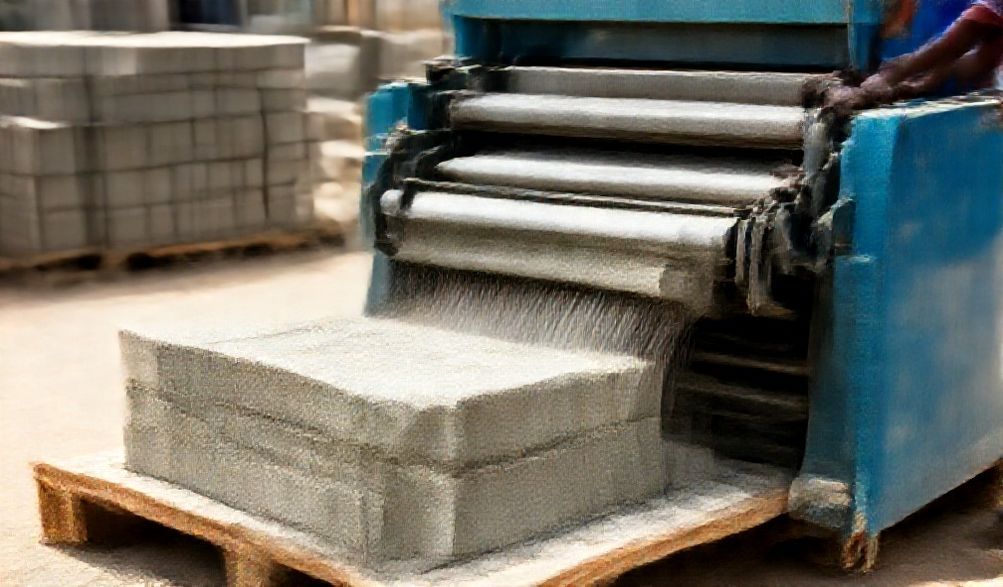
ຄູ່ມືຂອງທ່ານສຳລັບເຄື່ອງຈັກຜະລິດດິນຈີ່ລາຄາຖືກໃນການາ: ໂຮງງານ FUDA ເປັນທາງເລືອກທີ່ຖືກຕ້ອງບໍ?
Ghana’s skyline is a testament to a construction boom that shows no signs of slowing. From bustling Accra to emerging regional hubs, the demand for quality, affordable housing and infrastructure is insatiable. At the very foundation of this growth lies a critical component: the humble block. For developers, contractors, and savvy entrepreneurs, owning the means of production—a reliable brick making machine—can be the key to unlocking significant profit and project control. However, the quest for a genuinely “cheap” machine is fraught with pitfalls. Many buyers face the harsh reality of broken promises, hidden costs, and equipment that fails under the demanding Ghanaian sun.
ຄູ່ມືນີ້ຈະຊ່ວຍທ່ານເຂົ້າໃຈໄດ້ຢ່າງຈະແຈ້ງ. ພວກເຮົາຈະວິເຄາະຕະຫຼາດເຄື່ອງຈັກຜະລິດດິນຈີ່ລາຄາຖືກໃນປະເທດການາແບບລະອຽດອຽງ, ໂດຍບໍ່ພຽງແຕ່ຈ່ອງເບິ່ງທີ່ລາຄາປ້າຍເທົ່ານັ້ນ, ແຕ່ຈະສືບຄົ້ນຫາຕົ້ນທຶນທີ່ແທ້ຈິງຂອງການຄອງຄອງ. ເປັນກໍລະນີສຶກສາ, ພວກເຮົາຈະໃຫ້ຄວາມສົນໃຈຢ່າງເປັນຈິງແຈ້ງແກ່ບໍລິສັດຜະລິດບລັອກ FUDAຊື່ທີ່ມັກພົບເຫັນບ່ອນຜູ້ຊອກຫາທາງເລືອກທີ່ມີລາຄາຖືກ. ການວິເຄາະຂອງພວກເຮົາອີງໃສ່ຄວາມຮູ້ອຸດສາຫະກໍາ, ການປຽບທຽບຜູ້ສະໜອງ, ແລະປັດໃຈສໍາຄັນທີ່ແຍກການລົງທຶນທີ່ສະຫລາດອອກຈາກຄວາມຜິດພາດທີ່ແພງ. ທໍາອິດໃຫ້ພວກເຮົາສ້າງພື້ນຖານຄວາມຮູ້.
"ລາຄາຖືກ" ໃນຕະຫຼາດເຄື່ອງຈັກອິດສະຫຼະກ່ຽວກັບການເຮັດດິນຈີ່
ຄຳວ່າ "ລາຄາຖືກ" ເປັນດັ່ງແມ່ເຫຼັກດຶງດູດຜູ້ຊື້, ແຕ່ໃນໂລກເຄື່ອງຈັກ, ມັນເປັນຄຳທີ່ຕ້ອງການຄວາມຊັດເຈນໃນທັນທີ. ລາຄາຊື້ທີ່ຕໍ່າສາມາດກາຍເປັນການຕັດສິນໃຈທີ່ແພງທີ່ສຸດທີ່ທ່ານເຮັດ ຖ້າຫາກວ່າມັນນຳໄປສູ່ເວລາຢຸດເຊົາງານແບບຊໍາເຮື້ອ, ການຜະລິດບລັອກທີ່ມີຄຸນນະພາບຕໍ່າ, ແລະການຂາດການສະໜັບສະໜູນຢ່າງສົມບູນ.
ລາຄາ ທຽບກັບ ຄ່າໃຊ້ຈ່າຍທັງໝົດຂອງການເປັນເຈົ້າຂອງ
Think of your machine purchase as a long-term partnership, not a one-night stand. The Total Cost of Ownership (TCO) includes every expense from the moment you decide to buy until the machine is retired.
- The Initial Price Tag: This is just the entry fee.
- Hidden & Ongoing Costs: These often cripple budgets.
- Shipping, Customs, and Clearing: For imported machines, these can add 30-50% to the base price.
- Installation & Assembly: Does the price include a technician to set it up?
- Maintenance & Repairs: Regular servicing and unexpected breakdowns.
- Spare Parts: Their cost and, more importantly, their availability in Ghana.
- Operational Costs: Electricity/diesel consumption and the labor required to run it.
- Opportunity Cost: The lost revenue every day the machine is broken.
A machine that costs GHS 10,000 more upfront but runs reliably for 5 years offers far better value than a “cheap” one that spends half its life idle, waiting for a part to be shipped from overseas.
Types of “Cheap” Machines Available in Ghana
The Ghanaian market offers a tiered system of affordable machinery:
- Manual / Egg Layer Machines: These are the true entry-level, low-cost champions. They are simple, mobile, and require significant manual labor for mixing, feeding, and block removal. Ideal for very small-scale projects or start-ups testing the waters.
- Small Semi-Automatic Machines: This is the sweet spot for many small to medium businesses. They use electric or diesel power to automate vibration and compaction, significantly increasing output and consistency while keeping costs manageable. Models like the QMJ4-45 are prevalent here.
- Used/Refurbished Machines: This path offers a lower initial investment but is high-risk. You must have the technical expertise to assess the machine’s true condition. Consider it only if you have a trusted mechanic or the seller offers a meaningful warranty.
Key Specifications to Compare (Beyond Price)
When comparing models, move past the price and scrutinize these specs:
- ກຳລັງການຜະລິດ: Never go by “blocks per day” claims alone. Ask for the cycle time (e.g., 15-20 seconds per cycle) and calculate based on an 8-hour operational day with efficiency losses.
- Power Source: Electric is cleaner and cheaper to run if you have stable grid power. Diesel is essential for sites without reliable electricity. Hybrid models offer flexibility.
- Block Types & Molds: Can it produce the standard 6″, 5″, and 4″ blocks? What about interlocking blocks for estate developments? Check mold compatibility and cost.
- Required Manpower: How many people are needed to operate it efficiently? This directly impacts your labor costs.
Spotlight on FUDA Block Making Factory
FUDA Block Making Factory is a manufacturer, typically based in China, that positions itself as a supplier of affordable block making machinery to markets like Ghana. They are not usually a direct retailer in Ghana; their machines are sold through local dealers, importers, and agents. It is crucial to state that this overview is based on publicly available information, product catalogs, and market positioning. Conducting your own due diligence on the specific local dealer is non-negotiable.
Who is FUDA? Company Overview
FUDA presents itself as a specialized manufacturer with years of experience in producing concrete block machinery. Their market proposition is clear: offering a range of machines at competitive price points to make block production accessible. For the Ghanaian buyer, the relationship is almost never with “FUDA China” directly, but with the Ghana-based company that imports, sells, and (ideally) services their equipment.
Popular FUDA Machine Models for the Ghanaian Market
Through local dealers, several FUDA models are commonly advertised:
- FUDA QMJ4-45: A semi-automatic, electric-powered egg-layer mobile machine. It’s a popular “first step up” from manual machines.
- Est. Output: 1000-1500 solid blocks (6″) per 8-hour shift.
- ເໝາະສົມສຳລັບ: Small construction firms, block yards supplying local communities.
- FUDA QCM4-30: A manual press machine, even more affordable, suitable for very low-budget startups or on-site production for a single project.
- FUDA ZN-900C: A more advanced, stationary semi-automatic machine with a higher production capacity and the ability to produce a wider variety of block types, including some interlocking designs.
Analyzing the Pros and Cons of Choosing a FUDA Machine
Potential Advantages:
- Competitive Upfront Cost: Their primary appeal is a lower purchase price compared to some premium international brands.
- Variety of Models: A range from manual to semi-automatic allows for scalability.
- Local Dealer Availability: Machines are often physically present in Ghana, allowing for viewing before purchase.
Potential Concerns & Critical Questions for Buyers:
The value of a FUDA machine is almost entirely dependent on the local dealer. You must investigate:
- After-Sales Service in Ghana: Is there a dedicated service center with trained technicians? Or is “support” just a phone number to a salesman?
- Spare Parts Availability: Are common wear parts (vibration motor bearings, hydraulic seals, mold liners) kept in stock in Ghana? What is the lead time and cost for parts not in stock?
- Build Quality & Durability: How does the steel thickness, welding quality, and component brand (e.g., Siemens vs. unknown Chinese electrical parts) compare to other brands? Ask for the machine’s weight—a heavier machine often indicates more robust construction.
- Warranty Realities: A “1-year warranty” is meaningless if claiming it requires shipping the machine back to China. Get the warranty terms in writing from the Ghanaian dealer, specifying what is covered, who performs repairs, and where parts come from.
How to Vet Any Supplier (Including FUDA) for Trust
Your research should focus 70% on the supplier and 30% on the machine specs.
Essential Due Diligence Steps
- Visit and Observe: Go to the dealer’s yard. Don’t just see a static machine; insist on seeing the exact model you want running under load, producing blocks.
- Demand Local References: Ask for contacts of at least 2-3 customers in Ghana who have owned the machine for over a year. Call them. Visit their site if possible. Ask about breakdowns and support response time.
- Inspect Documentation: Check for basic certifications. While not always comprehensive for all models, it shows a level of manufacturing standard.
- Decode the Quotation: Ensure your quote is detailed. Is it FOB (you pay all shipping/clearing)? Or CIF (includes sea freight to Tema port)? Or Ex-Works Ghana (machine is already cleared and in their yard)? The final landed cost is all that matters.
Must-Ask Questions Before Buying
- “Can I visit a current customer’s site tomorrow?”
- “Show me your spare parts store. Which parts for this model do you keep in stock?”
- “Who is your technician, and can I meet him? What training has he received?”
- “Walk me through a warranty claim scenario. If the vibration motor fails in month 3, what is the exact process?”
- “What is your most common service call for this model, and why?”
Exploring Alternatives to FUDA in Ghana
A smart buyer shops around. Visit dealers for other brands to benchmark.
- Other Chinese Brands: Companies like Hongfa, Lontto, or Wangda have similar market positions. Compare their local dealer strength.
- Local Assemblers: Some Ghanaian workshops assemble machines using imported components. This can offer fantastic local support but vet their engineering quality meticulously.
- Indian & European Brands: Brands like Zenith (German) or Ammann are premium but have established African networks. Their “cheap” models may be comparable in price to higher-end Chinese machines but with potentially better support.
The deciding factor in Ghana should rarely be the brand name on the brochure, but the service network and parts availabilityຫຼັງມັນ
Maximizing Your Investment: Tips for Success
Smart Financing and Budgeting
Plan your budget around the Total Cost of Ownership. Secure financing that allows you to purchase from a reputable dealer, even if it’s slightly more expensive. Factor in at least 15-20% of the machine cost for initial setup, training, and a spare parts buffer.
Proper Setup, Operation, and Maintenance
- Foundation is Key: Ensure the machine is placed on a perfectly level, solid concrete base as per manual specifications.
- Train Your Operator: A skilled, careful operator will prolong your machine’s life. Have the dealer provide training.
- Preventive Maintenance: Adhere religiously to the lubrication and cleaning schedule. Keep a logbook.
Calculating Your ROI with a Brick Making Machine
A simple framework:
1. Total Investment: Machine landed cost + setup + initial raw material stock.
2. Monthly Operating Cost: Labor + electricity/diesel + maintenance + raw materials (cement, sand, gravel).
3. Monthly Revenue: (Number of blocks produced per month x selling price per block).
4. Gross Profit: Monthly Revenue – Monthly Operating Cost.
5. Break-Even Point: Total Investment / Gross Profit per month = Number of months to recover your investment.
If a machine producing 10,000 blocks a month yields a gross profit of GHS 5,000, and your total investment was GHS 60,000, your break-even point is 12 months. This simple math highlights why machine uptime is profitability.
FAQ Section
Q1: What is the actual price range for a cheap, functional brick making machine in Ghana?
A: Prices vary wildly. A basic manual egg-layer can start from GHS 15,000 – GHS 30,000. A functional semi-automatic machine (like a QMJ4-45) typically ranges from GHS 45,000 – GHS 80,000 fully landed and installed. Large, fully automatic plants go into the hundreds of thousands. These are starting points; always get detailed, all-inclusive quotes.
Q2: Is it better to buy a brick machine directly from China (like FUDA) or from a local Ghanaian dealer?
A: For 99% of buyers, the local dealer is the safer choice. Importing directly might save 10-20% upfront, but you become your own importer, customs agent, and technical support. The local dealer’s premium is your insurance policy for faster service, parts, and local accountability.
Q3: What are the most common problems with budget brick making machines in Ghana?
A: Frequent issues include: failure of the vibration motor bearings due to dust and overuse, hydraulic oil leaks from seals, poor-quality molds that wear out quickly, and electrical control panel faults. A good local supplier should be able to fix all these within days.
Q4: Can FUDA machines produce interlocking blocks popular for estate development in Ghana?
A: Some of their more advanced stationary models (like the ZN series) can be fitted with interlocking block molds. You must confirm this specifically with the dealer, request to see the mold catalog, and ideally, see it producing the desired block type during a demonstration.
Q5: Where can I see a FUDA machine working in Ghana before I buy?
A: Any reputable dealer should be able to arrange a site visit to a current customer. This is a fundamental request. If a dealer cannot or will not provide this, consider it a major red flag and look elsewhere.
ສະຫຼຸບ
Finding a “cheap” brick making machine in Ghana is a balancing act between initial cost and long-term value. The true definition of cheap is a machine that stays running, produces quality blocks, and is backed by accessible support. As our spotlight on ບໍລິສັດຜະລິດບລັອກ FUDA reveals, their machines offer a competitive entry point, but their suitability is almost entirely contingent on the competence and integrity of the local Ghanaian dealer or agent.
The final, trustworthy advice is this: Invest more time in researching the supplier’s reputation within Ghana’s construction industry than you do in comparing brochure specifications. Your goal is not merely to purchase a piece of equipment; it is to secure a productive, profit-generating asset for your business for years to come. Use the due diligence steps and critical questions in this guide as your checklist. Visit multiple dealers, consult with the Association of Ghana Industries, and make a decision that builds your business on a solid foundation.
<