
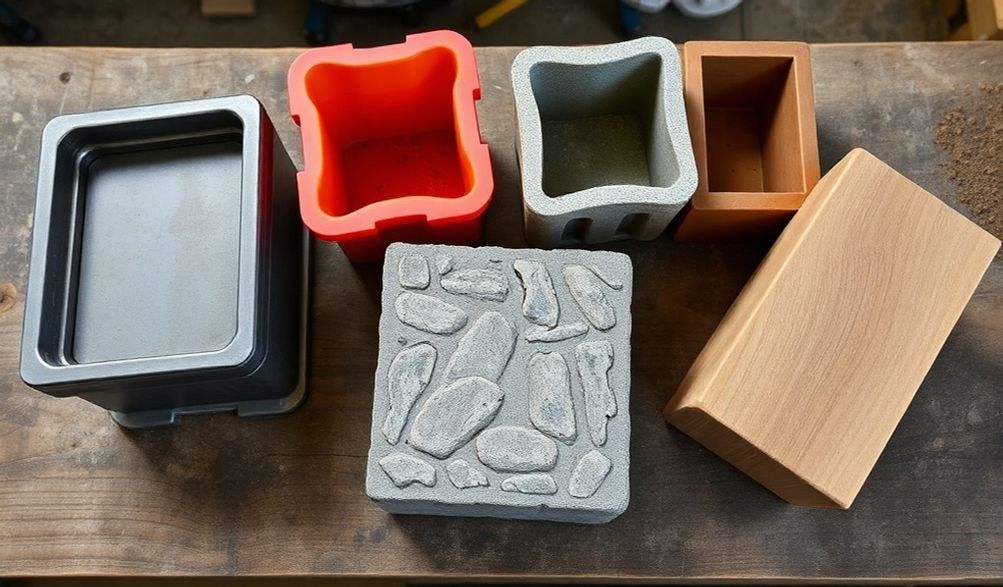
The Ultimate Guide to Cement Block Moulds: Types, Uses, and DIY Tips
From the foundations of our homes to the elegant edges of a garden path, cement blocks are the unsung heroes of the built environment. Their strength, versatility, and affordability make them a cornerstone of construction and landscaping projects worldwide. Yet, behind every perfect block lies a critical, often overlooked tool: the cement block mould.
The quality, shape, and finish of your blocks are directly determined by the mould you use. Choosing the wrong one can lead to frustrating breakages, inconsistent sizes, and a subpar final product. This comprehensive guide, drawn from industry practices and hands-on experience, is designed to be your definitive resource. Whether you’re a DIY enthusiast crafting a patio or a professional seeking efficient production, you’ll learn how to select, use, maintain, and even build the right cement block mould for professional, durable results.
Understanding Cement Block Moulds: More Than Just a Form
A cement block mould is far more than a simple container. It is the defining instrument that transforms a wet, shapeless mixture into a structured, functional building component. Mastering its use is the first step to mastering block-making.
What is a Cement Block Mould?
At its core, a cement block mould is a hollow container or form designed to give shape to concrete or mortar as it cures and hardens. Its primary function is to contain the liquid mix and impose specific dimensions and surface textures until the material gains enough strength to hold its own form.
The evolution of these moulds mirrors the history of construction itself. From simple, hand-crafted wooden boxes used for centuries to the mass-produced, precision-engineered steel and plastic forms of today, the development of moulds has been driven by a quest for efficiency, consistency, and complexity in design.
Why the Right Mould is Critical for Your Project
Selecting the appropriate mould is not a trivial decision; it’s an investment in the success of your entire project.
- Durability & Strength: A well-made mould ensures proper compaction, eliminating weak spots and air pockets that can compromise the block’s integrity.
- ຄວາມຖືກຕ້ອງຂອງຂະໜາດ Consistent block dimensions are vital for straight walls and level surfaces. A warped or flimsy mould leads to blocks that don’t fit together properly.
- ພື້ນຜິວສຳເລັດຮູບ: The interior surface of the mould directly transfers to the block. A smooth mould yields a smooth block; a textured mould imparts that texture. This affects both aesthetics and function.
- Production Efficiency: The right mould speeds up your workflow. Easy-release designs, durability for repeated use, and suitability for your project scale all impact your time and cost-efficiency.
Types of Cement Block Moulds: Choosing Your Tool
The “best” cement block mould depends entirely on your project’s scope, budget, and desired outcome. Here’s a breakdown of the most common types.
Plastic Moulds: Lightweight and Versatile
Ideal for hobbyists and homeowners, plastic moulds are the go-to for many small to medium projects.
- ດີທີ່ສຸດສຳລັບ: DIY garden edging, paving stones, decorative blocks, small retaining wall blocks, and low-volume production.
- ຂໍ້ດີ:
- Affordable: Low upfront cost.
- Lightweight & Easy to Handle: Perfect for frequent moving.
- Good Release: Often flexible enough to pop out blocks easily.
- Variety: Available in numerous shapes and sizes.
- ຂໍ້ເສຍ
- ຄວາມທົນທານ: Can crack or warp under stress or UV exposure over time.
- Finish Limitations: May not achieve the ultra-smooth finish of steel or sealed wood.
- Not for Heavy Duty: Less suitable for high-volume commercial use or very large blocks.
Steel Moulds: For Durability and High Volume
The workhorse of commercial block production and serious large-scale DIY projects.
- ດີທີ່ສຸດສຳລັບ: Commercial block manufacturing, producing heavy-duty building blocks (like standard CMUs), and any project requiring hundreds of identical, precise blocks.
- ຂໍ້ດີ:
- Extreme Durability: Can last for thousands of cycles with proper care.
- Superior Precision: Manufactured to exacting tolerances for perfect dimensional consistency.
- Excellent Surface Finish: Yields very smooth, professional block faces.
- Efficient for Volume: Often designed for mechanical vibration and rapid cycling.
- ຂໍ້ເສຍ
- High Cost: Significant initial investment.
- Very Heavy: Difficult to move and handle without equipment.
- Maintenance: Requires cleaning and oiling to prevent rust.
Rubber/Flexible Moulds: Mastering Complex Designs
When standard shapes won’t do, flexible moulds unlock creative potential.
- ດີທີ່ສຸດສຳລັບ: Ornamental blocks, intricate faux stone or brick textures, custom architectural details, and complex shapes with undercuts.
- ຂໍ້ດີ:
- Unmatched Design Flexibility: Can capture incredibly detailed patterns.
- Easy Demoulding: Flexibility allows the mould to peel away from complex geometries without breaking the block.
- Lightweight: Easy to handle and store.
- ຂໍ້ເສຍ
- Lifespan: Wear out faster than steel under abrasion from the concrete mix.
- ລາຄາ High-quality custom rubber moulds can be expensive.
- Support Needed: Often require an outer “mother mould” or casing to hold their shape during pouring.
Wooden Moulds: The Classic DIY Approach
The original and most customizable option, perfect for one-off projects or those on a tight budget.
- ດີທີ່ສຸດສຳລັບ: Single, custom-sized blocks (e.g., a specific capstone), large landscape features, low-budget projects, and situations where you need a mould now.
- ຂໍ້ດີ:
- Fully Customizable: You can build any size or simple shape.
- Low Material Cost: Can be made from scrap or inexpensive lumber.
- Satisfying to Build: Offers full control from start to finish.
- ຂໍ້ເສຍ
- Time-Consuming: Requires construction and sealing before first use.
- Preparation is Key: Must be perfectly sealed (e.g., with polyurethane) to prevent water absorption and ensure clean release.
- Limited Lifespan: Wood can swell, warp, and degrade with repeated use.
A Step-by-Step Guide to Using a Cement Block Mould
Success with any cement block mould hinges on proper technique. Follow these steps for professional results.
Preparation is Key: Mould Setup and Release Agents
Never skip prep work. It’s the difference between a perfect block and a stuck, broken mess.
- Clean & Inspect: Ensure the mould is completely free of old concrete, dirt, or debris. Check for cracks, warping, or damage.
- Apply Release Agent: This creates a barrier between the wet concrete and the mould. Options include:
- Commercial Mould Release Sprays: Easy and effective.
- Non-Stick Cooking Spray: A common DIY hack.
- Light Motor Oil: Brush on a thin, even coat.
- Specialty Form Oils: For professional steel moulds.
Mixing the Perfect Concrete or Mortar
The mix is the heart of your block. A standard, strong mix for general-purpose blocks is a 1:2:3 ratio (by volume): 1 part Portland cement, 2 parts clean sand, 3 parts gravel or crushed stone.
- Consistency is Crucial: Aim for a mix that holds its shape when squeezed (like thick oatmeal) but is still workable. Too wet = weak blocks. Too dry = poor compaction and voids.
- Additives: Consider integral pigments for color, plasticizers for easier flow, or accelerators for faster curing in cold weather.
Pouring, Compacting, and Curing for Maximum Strength
This is where the block gains its strength.
- Pour in Layers: Don’t fill the mould in one go. Add concrete in 1-2 inch layers.
- Compact Thoroughly: After each layer, tamp vigorously with a rod or use a vibrating table to eliminate air bubbles. This is the single most important step for strength.
- Level the Top: Use a straight-edged trowel or a piece of wood to screed off excess mix, creating a flat, even top surface.
- The Critical Cure: Curing is not just drying; it’s a chemical process requiring moisture.
- Keep the blocks covered with plastic sheeting or damp burlap for at least 24-48 hours.
- Gently demould after this period, then continue to keep the blocks moist and protected from sun and wind for a minimum of 7 days for optimal strength development.
DIY Project: Building a Simple and Effective Wooden Mould
Ready to build your own? Here’s how to create a basic, reusable wooden mould for standard rectangular blocks.
Materials and Tools You’ll Need
- Materials: 3/4″ plywood or MDF (for sides/ends), 1×4 or 2×4 lumber (for bracing), exterior-grade wood screws, waterproof polyurethane sealant.
- Tools: Tape measure, pencil, saw (circular or table saw), drill/driver, sandpaper, paintbrush.
Construction Steps with Visual Cues
Step 1: Cut to Size. Determine your desired internal block dimensions (e.g., 8″x8″x16″). Cut two side pieces and two end pieces from your plywood. Remember: the inside distance between the sides/ends is your block size.
Step 2: Assemble the Box. Screw the end pieces between the side pieces to form a sturdy open-topped box. Pre-drill holes to prevent splitting. Add external bracing with 1x4s around the bottom and top edges for rigidity.
Step 3: Add a Divider (Optional). To make two blocks at once, cut a plywood divider to fit snugly inside the box, positioned at the midpoint.
Step 4: Seal the Interior. This is non-negotiable. Apply 2-3 coats of polyurethane sealant to every interior surface, including the divider. Sand lightly between coats. This creates a waterproof, smooth barrier for easy release.
Tips for Success with Your Homemade Mould
- For an ultra-smooth finish, line the interior with melamine-coated board (the white, hardboard used for shelving).
- Design the mould with removable sides or a tapered shape (slightly wider at the top) to make demoulding easier.
- Use carriage bolts and wing nuts for assembly to allow for complete disassembly and cleaning.
Maintenance, Troubleshooting, and Safety
Protect your investment and yourself with these best practices.
Cleaning and Storing Your Moulds for Longevity
- Clean Immediately: After demoulding, wash off all wet concrete residue with water and a brush before it hardens.
- Material-Specific Care:
- Steel: Dry thoroughly and apply a light oil to prevent rust.
- Plastic/Rubber: Check for abrasions and store out of direct sunlight to prevent UV degradation.
- Wood: Allow to dry completely before storage to prevent rot and warping.
- Storage: Store flat and supported in a dry, temperate location.
Common Problems and How to Fix Them
- Problem: Blocks sticking to the mould.
- Solution: Use more or a different release agent. Ensure your mould (especially wood) is properly sealed.
- Problem: Blocks breaking during removal.
- Solution: Allow a longer initial cure time (up to 48 hours). Check your mix design—it may be too weak (needs more cement) or too dry.
- Problem: Rough or pitted surface finish.
- Solution: Improve compaction to remove air pockets. Slightly increase the water or add a plasticizer to improve the mix’s workability and flow into details.
Essential Safety Practices
- Personal Protective Equipment (PPE): Always wear safety goggles, heavy-duty gloves, a dust mask when mixing dry cement, and sturdy boots.
- Lift Safely: Use your legs, not your back, when lifting heavy moulds or wet blocks. Ask for help.
- Work Environment: Mix and pour in a well-ventilated area. Be mindful of trip hazards from tools, cords, and materials.
Frequently Asked Questions (FAQ)
Q: What is the difference between a cement block mould and a concrete block mould?
A: In common usage, the terms are used interchangeably. Technically, cement is the powdered binding agent (like Portland cement), while ຄອນກຣີດ is the finished mixture of cement, sand, gravel, and water. Therefore, the moulds are designed for the ຄອນກຣີດ mixture. When you search for a cement block mould, you are looking for a mould to form concrete blocks.
Q: Can I use a cement block mould for other materials like plaster or resin?
A: Often, yes—especially flexible plastic or rubber moulds. However, always check the manufacturer’s specifications. The alkaline nature of wet cement/plaster can degrade certain materials over time. Moulds designed specifically for resin casting may not withstand the abrasiveness of concrete.
Q: How many blocks can I make from a single mould before it wears out?
A: It varies dramatically by material and care:
* Steel: Several thousand to tens of thousands of cycles.
* Quality Plastic: Several hundred for DIY-grade, more for industrial-grade.
* Rubber: Depends on design complexity and mix abrasion; can range from 50 to 500+.
* Wood: With excellent sealing and care, 50-100 cycles is a reasonable expectation.
Q: Where can I buy reliable cement block moulds?
A: Start with specialty construction supply stores, masonry product suppliers, and reputable online marketplaces. For custom or high-volume needs, contact manufacturers directly. Always read product reviews and verify the material specifications before purchasing.
ສະຫຼຸບ
Creating durable, professional-looking cement blocks is an achievable goal for anyone, and it all starts with the mould. By understanding the strengths of each cement block mould type—from versatile plastic and rugged steel to flexible rubber and customizable wood—you can select the perfect tool for your project’s scale and style. Remember, success is forged in the details: meticulous preparation, proper mix consistency, thorough compaction, and patient curing are non-negotiable steps that transform a simple mixture into a lasting building component.
Armed with this expert knowledge, you’re ready to move from theory to practice. Start with a small garden project to build your confidence, or dive into building your own custom wooden mould. The skills you develop will pay dividends for countless future projects. Have you made your own blocks before? Share your tips or questions below! Ready for your next step? Explore our guide on designing and building a retaining wall with the blocks you can now create yourself.
<