
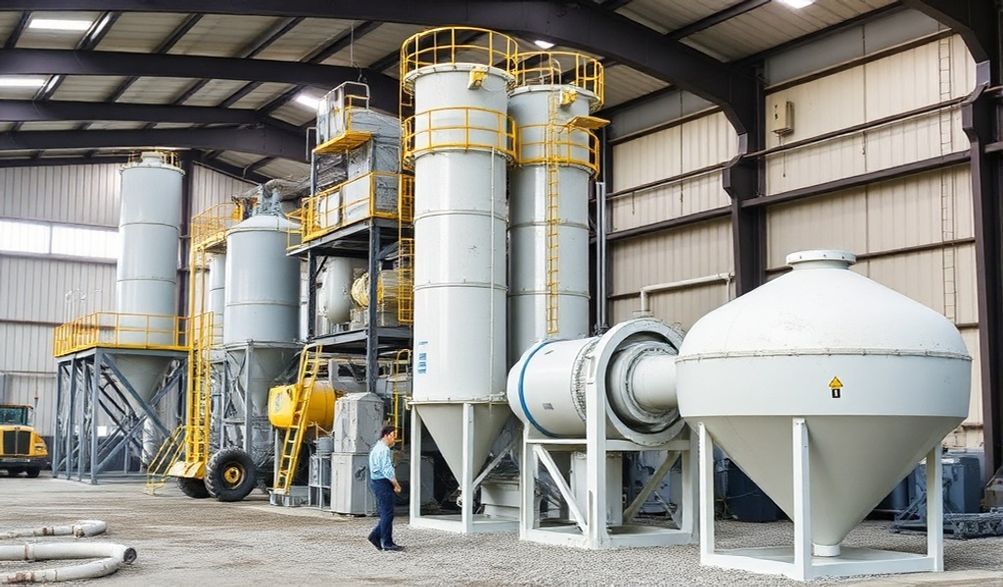
The Complete Guide to Concrete Production Line Equipment: Efficiency, Types & Selection
In the world of construction and infrastructure, concrete is the foundational bedrock upon which modern society is built. The reliability, strength, and consistency of that concrete, however, are not a given. They are the direct result of the machinery that produces it. For plant managers, project engineers, procurement specialists, and business owners, selecting the right concrete production line equipment is a high-stakes decision with profound implications. Poor choices lead to costly downtime, inconsistent batch quality, safety hazards, and eroded profit margins.
This guide serves as your authoritative, comprehensive resource. We will move beyond simple catalogs to provide a system-level understanding of concrete production line equipment. Our goal is to equip you with the knowledge to make informed, strategic decisions—decisions that ensure operational efficiency, product excellence, and long-term business viability. From the core components to smart selection criteria and future-facing innovations, consider this your roadmap to building a more productive and profitable operation.
Understanding the Concrete Production Line: A System Overview
A concrete production line is not merely a collection of machines; it is a precisely orchestrated, interconnected system. Each piece of equipment plays a specific role in a continuous flow, transforming raw, inert materials into the dynamic, plastic concrete ready for placement. Understanding this holistic process is the first step toward mastering equipment selection and optimization.
From Raw Material to Finished Product: The Production Flow
The journey of concrete is a linear, logical progression. Each stage is enabled by specialized equipment:
- Aggregate Feeding & Storage: Crushed stone, sand, and gravel (aggregates) are stored in segregated bins or stockpiles. Equipment like front-end loaders or conveyor systems feed these materials forward.
- Cement Handling & Storage: Cement, the binding agent, is stored in pressurized silos to prevent moisture absorption and clogging. It is transported via airtight screw conveyors or pneumatic systems.
- Batching: This is the critical stage of measurement. Each ingredient—aggregates, cement, water, and chemical admixtures—is precisely weighed or volumetrically dosed according to the specific mix design. Accuracy here is non-negotiable for quality.
- ປະສົມ The batched materials are discharged into a mixer. Here, through mechanical action, they are homogenously blended into uniform, workable concrete. The type of mixer significantly impacts mix quality and cycle time.
- Transporting: The fresh concrete is discharged, often into a truck mixer (agitator) for transit to a job site, or directly into concrete pumps, conveyors, or buckets for placement within a precast facility.
- Placing & Curing: While technically post-production, the line’s efficiency dictates the concrete’s condition for these final stages. Consistent, on-spec concrete is easier to place, finish, and will cure correctly.
Core Components of a Modern Batching Plant
At the center of most production lines is the batching plant, which can be stationary or mobile. Its core components are universal:
- Aggregate Bins & Batchers: Compartmentalized storage for different aggregate sizes, feeding into precise weigh hoppers or batchers.
- Cement Silos: Tall, cylindrical storage units for cement and supplementary cementitious materials like fly ash, equipped with dust filters and discharge mechanisms.
- Conveying Systems: These move materials between stages. This includes:
- Aggregate Conveyors: Typically belt conveyors or radial stackers.
- Cement Conveyors: Usually screw conveyors or pneumatic pumps.
- Mixer Unit: The core where blending occurs. Common types include Twin-Shaft, Pan, and Planetary mixers.
- Water & Admixture Tanks: Storage and precision dosing systems for water and liquid chemical admixtures (plasticizers, accelerators, etc.).
- Control System: The computerized “brain” that automates the weighing, sequencing, and mixing processes, ensuring recipe accuracy and repeatability.
Stationary vs. Mobile Production Lines: Key Differences
The choice between stationary and mobile setups is fundamental and depends entirely on your business model and project scope.
-
Stationary Concrete Batching Plants:
- ດີທີ່ສຸດສຳລັບ: Large-scale, long-duration projects (e.g., dams, major urban developments), high-volume ready-mix suppliers, and permanent precast concrete factories.
- ຂໍ້ດີ: Higher production capacities, greater customization, superior stability and durability, easier integration of advanced automation and environmental controls.
- ຂໍ້ຄຳນຶງ Significant foundation work, higher initial capital investment, fixed location.
-
Mobile Concrete Batching Plants:
- ດີທີ່ສຸດສຳລັບ: Remote infrastructure projects (roads, bridges), multiple short-duration sites, and contractors requiring on-site production to reduce transit time and cost.
- ຂໍ້ດີ: Rapid deployment and teardown (often within a day), lower setup costs, exceptional flexibility to follow projects.
- ຂໍ້ຄຳນຶງ Generally lower capacity than stationary plants, more limited storage and automation options, greater wear from frequent relocation.
In-Depth Look at Essential Equipment & Machinery
Delving into the specifications and applications of each major component reveals the engineering that drives a successful operation.
Batching Systems: Accuracy is Everything
The adage “garbage in, garbage out” applies perfectly. A batching system’s sole purpose is metering each component with extreme precision.
- Weigh Hoppers & Load Cells: Aggregates are weighed in robust hoppers suspended on highly sensitive load cells. Modern digital systems provide accuracy within ±0.5% or better.
- Cement Weighing: Cement is typically weighed in a separate hopper or directly in the mixer using load cells, preventing cross-contamination and ensuring precise water-cement ratios.
- Liquid Dispensers: Water is measured by flow meters or weigh scales. Admixtures, required in tiny but critical amounts, are dosed by precision peristaltic or diaphragm pumps. Automated systems can adjust water content based on aggregate moisture sensors.
Mixers: The Heart of the Line
The mixer is where the concrete’s character is defined. The choice impacts mixing time, energy use, and final quality.
-
Twin-Shaft Mixer: The industry workhorse for high-volume production.
- Action: Two intermeshing shafts with blades create a vigorous, overlapping mixing pattern.
- ດີທີ່ສຸດສຳລັບ: High-intensity mixing of a wide range of consistencies, especially harsh, low-slump mixes. Offers fast, homogeneous mixing (typically 30-45 seconds per batch).
- ຂໍ້ຄຳນຶງ Higher power consumption, more complex maintenance.
-
Pan Mixer: A versatile choice for high-quality and specialty mixes.
- Action: A rotating pan turns materials past one or two stationary star-shaped mixing tools.
- ດີທີ່ສຸດສຳລັບ: Precast concrete, colored concrete, fiber-reinforced concrete, and other mixes requiring gentle yet thorough blending. Excellent for sticky or harsh mixes.
- ຂໍ້ຄຳນຶງ Generally longer mixing cycles, but superior mix uniformity for certain applications.
-
Planetary Mixer: The precision instrument for advanced material science.
- Action: Multiple mixing blades rotate on their own axes while simultaneously orbiting around a central axis inside a stationary drum.
- ດີທີ່ສຸດສຳລັບ: Ultra-high-performance concrete (UHPC), mortars, grouts, and laboratory settings where absolute consistency and shearing action are paramount.
- ຂໍ້ຄຳນຶງ Highest cost and complexity; often used for specific, high-value production lines.
Material Handling & Storage Solutions
Efficient, clean material handling protects your inputs and your operating environment.
- Aggregate Storage: Bins must prevent segregation and allow for free flow. Lining wear plates and using proper hopper angles are critical.
- Conveyors: Radial stackers build organized stockpiles. Enclosed belt conveyors minimize dust and spillage. Regular inspection of idlers, rollers, and belt alignment prevents costly failures.
- Cement Silos: Choose between bolted (easier transport and expansion) or welded (superior long-term seal). Key features include:
- High-Efficiency Dust Filters: To prevent particulate emissions during filling.
- Safety Valves & Pressure Relief: Essential for preventing over-pressurization.
- Aeration Pads: Installed at the bottom to fluidize cement and ensure consistent, clog-free discharge.
Control Systems: The Brain of the Operation
From simple push-button panels to sophisticated networks, the control system dictates operational intelligence.
- Manual/Semi-Automatic: An operator initiates each step. Prone to human error and inconsistent results.
- Fully Automatic PLC Systems: The standard for modern plants. The Programmable Logic Controller (PLC) executes the entire batching cycle from a single start command, storing hundreds of mix designs.
- IoT & Industry 4.0 Integration: The new frontier. Systems now offer:
- Remote Monitoring & Control: View production data and even operate the plant from a tablet or office.
- Data Logging & Reporting: Automatically generate batch tickets, production reports, and inventory usage.
- Predictive Analytics: Monitor motor currents, vibration, and cycle times to predict maintenance needs before failure occurs.
Selecting the Right Equipment for Your Project Needs
Armed with technical knowledge, the selection process must be grounded in your specific operational realities.
Key Selection Criteria: Capacity, Output, and Quality
Build your decision framework around these pillars:
- Required Production Capacity: Calculate your peak demand in cubic meters per hour (m³/hr). Don’t just average it—plan for your busiest days. Factor in mixer cycle time and plant efficiency (typically 70-80% of theoretical max).
- Project Duration & Location: Is this a 3-year dam project or a series of 6-month road jobs? The answer heavily influences the stationary vs. mobile decision.
- Concrete Specifications: The mixes you produce dictate equipment needs. High-strength mixes may demand a more powerful planetary mixer. High-volume standard mixes are ideal for twin-shaft systems.
- Available Space & Layout: Map your site. Is there room for aggregate stockpiles, multiple silos, and truck maneuvering? A compact modular plant might be necessary for tight urban sites.
Evaluating Total Cost of Ownership (TCO)
The purchase price is just the entry ticket. True cost analysis is longitudinal.
- Initial Costs: Equipment purchase, shipping, foundation/installation, commissioning.
- Operational Costs: Energy consumption (mixer motors, conveyors), routine maintenance parts (wear liners, seals, blades), labor.
- Downtime Costs: The most hidden and expensive factor. Evaluate the reliability history of the brand and the local availability of spare parts and service technicians.
- Residual Value: Quality equipment from reputable brands holds its value far better, offering a higher return if you ever upgrade or sell.
Questions to Ask Equipment Manufacturers & Suppliers
Interrogate your potential partners. Their answers reveal their long-term commitment.
- “What is included in your after-sales service package, and what is the response time of your local technical support?”
- “Can you provide a detailed list of recommended spare parts for the first two years of operation and their cost?”
- “What is the warranty period and what specific components does it cover?”
- “Do you provide detailed installation drawings, foundation plans, and on-site operator training?”
- “Can I speak to two or three of your clients with a similar plant configuration operating in my region?”
Maximizing Efficiency & Ensuring Long-Term Reliability
Owership is a commitment to proactive care. A well-maintained line is a profitable line.
Preventive Maintenance Schedules for Critical Components
Adhere to a strict, documented schedule. Here’s a simplified overview:
| Component | Key Maintenance Tasks | Frequency |
| :— | :— | :— |
| ມິກເຊີ | Inspect/blades for wear; check seal integrity; tighten bolts. | Daily / Weekly |
| Aggregate Batcher | Clean load cells; check gate seals and cylinders. | Weekly |
| Conveyor Belts | Check alignment and tension; inspect idlers/rollers; clean spillage. | Daily |
| Cement Silo | Inspect and clean filter elements; check safety valves. | Monthly |
| Pneumatic System | Drain air receivers; check for leaks. | Daily |
| Control System | Backup software/data; clean electrical cabinets. | Weekly / Monthly |
Common Operational Challenges and Troubleshooting Tips
- Inconsistent Batch Quality: Likely causes are inaccurate weighing (calibrate load cells), clogged or inaccurate admixture dispensers, or variable aggregate moisture (install a moisture probe).
- Excessive Mixer Wear: Often due to running the mixer empty, mixing over-sized aggregate, or using mixes with extremely abrasive components. Follow loading sequences and inspect regularly.
- Conveyor Belt Misalignment: Leads to spillage and belt damage. Adjust tail pulley and check that idlers are square to the frame.
- Control System Errors: Frequently stem from faulty sensor inputs (clean and check weigh cell connections) or environmental factors like dust in electrical cabinets.
The Role of Automation and Industry 4.0
Modern automation is the single greatest lever for efficiency.
- Automated Batching: Eliminates human error, ensuring every batch matches the exact digital mix design.
- RFID & Material Tracking: Tag trucks and raw material deliveries. The system automatically assigns mixes, tracks yardage, and manages inventory.
- Predictive Maintenance Analytics: Sensors on motors and gearboxes feed data to software that models failure patterns, allowing you to schedule maintenance during planned downtime, not during a critical pour.
Safety, Sustainability, and Compliance Considerations
Responsible operation is non-negotiable and increasingly a market differentiator.
Essential Safety Protocols for Equipment Operation
- Lockout-Tagout (LOTO): A mandatory procedure before any maintenance or clearing of jams. Physically isolate energy sources (electrical, pneumatic, gravitational).
- Machine Guarding: All moving parts—conveyor nip points, mixer openings, drive shafts—must have permanent, interlocked guards.
- Dust Suppression: Use water sprays at transfer points, ensure silo filters are functional, and consider enclosed conveyors to protect worker respiratory health and the environment.
- Comprehensive Training: Operators must be trained not just on how to run the equipment, but on all associated safety procedures and emergency shutdown protocols.
Eco-Friendly Innovations in Concrete Production
The industry is evolving, and equipment is enabling greener practices.
- Recycled Aggregate Processing: Equipment lines can now integrate crushers and screens to process demolished concrete into high-quality recycled aggregate for new mixes.
- Water Recycling Systems: “Washout” water and slurry from truck mixers and plants can be treated and recycled back into the batching process, achieving near-zero liquid discharge.
- Energy Efficiency: Variable Frequency Drives (VFDs) on mixer and conveyor motors match power to load, reducing electricity use by 20-30%. High-efficiency gearboxes and motors are now standard on better equipment.
Meeting Industry Standards and Regulations
Compliance is a baseline. Look for equipment that is designed and certified to relevant standards, which provides assurance of safety and performance.
- Design Standards: CE Marking (Europe), AS/NZS (Australia/NZ), and other local certifications ensure the machinery meets essential health, safety, and environmental requirements.
- Plant Operation: Adherence to standards like ASTM C94/C94M (for ready-mix concrete) and ISO 9001 (for quality management systems) governs how a production line should be operated and controlled to deliver a certified product.
FAQ Section
What is the average lifespan of a concrete batching plant?
With proper maintenance and reasonable usage, a well-built stationary plant can last 20-25 years or more. Critical components like mixers and conveyors may require major refurbishment after 10-15 years. Mobile plants, due to more frequent relocation stress, may have a slightly shorter operational lifespan.
What’s the difference between a wet and dry batch concrete plant?
In a dry batch plant, all ingredients (including water) are weighed and discharged directly into a truck mixer. The mixing happens entirely during transit in the truck’s rotating drum. In a wet batch plant (or central mix plant), all ingredients are mixed completely in a stationary plant mixer before being discharged into a truck for transport. Wet batch plants offer superior consistency and quality control.
How much does a standard concrete production line cost?
Costs vary enormously. A small mobile plant might start around $100,000. A medium-capacity (120 m³/hr) stationary plant can range from $500,000 to $1.5 million. Large, highly automated systems for major precast or ready-mix facilities can exceed $5 million. Always budget for installation, foundations, and commissioning.
Can I upgrade my existing production line with new automation?
Absolutely. Retrofitting is common. You can upgrade from manual to PLC controls, add moisture probes, automated admixture dispensers, or even full IoT monitoring systems. Consult with your original equipment manufacturer or a specialist automation integrator.
What is the most critical factor in maintaining consistent concrete quality?
Weighing accuracy. Consistent strength and performance stem from precisely hitting the water-cement ratio and the proportions of every material in the mix design. Regular calibration of all weigh scales and dispensers is the most important maintenance task.
How do I calculate the required production capacity for my project?
1. Determine the total concrete volume required.
2. Determine the available working days/hours for the pour.
3. Calculate your average hourly requirement (Total Volume / Total Hours).
4. Add a 20-30% buffer for peak demand and efficiency losses. This final number is your target plant capacity in m³/hr.
What are the advantages of a mobile concrete batching plant?
The primary advantages are flexibilityແລະreduced setup cost/ time. They eliminate long-distance concrete hauling for remote projects, allow production to move with a linear project (like a pipeline or highway), and require minimal permanent infrastructure.
ສະຫຼຸບ
Selecting and operating a concrete production line is a complex, consequential endeavor that sits at the core of any successful construction materials business. As we’ve explored, it involves far more than purchasing a list of machines; it requires a system-level understanding of how aggregate batchers, precision mixers, intelligent controls, and robust material handlers integrate to form a reliable, efficient whole.
The stakes are high—impacting your product quality, project timelines, safety record, and ultimately, your bottom line. By aligning equipment choices with your specific capacity needs, project profile, and quality goals, and by prioritizing total cost of ownership and supplier partnership over initial price alone, you build a foundation for lasting success.
Use this guide as your foundational framework. Let it inform your conversations, shape your checklists, and steer your evaluations. As the industry marches toward greater efficiency, automation, and sustainability, partnering with experienced, reputable manufacturers who offer demonstrable engineering excellence and unwavering technical support is not just a good choice—it’s the most critical mix design decision you will make.
<