
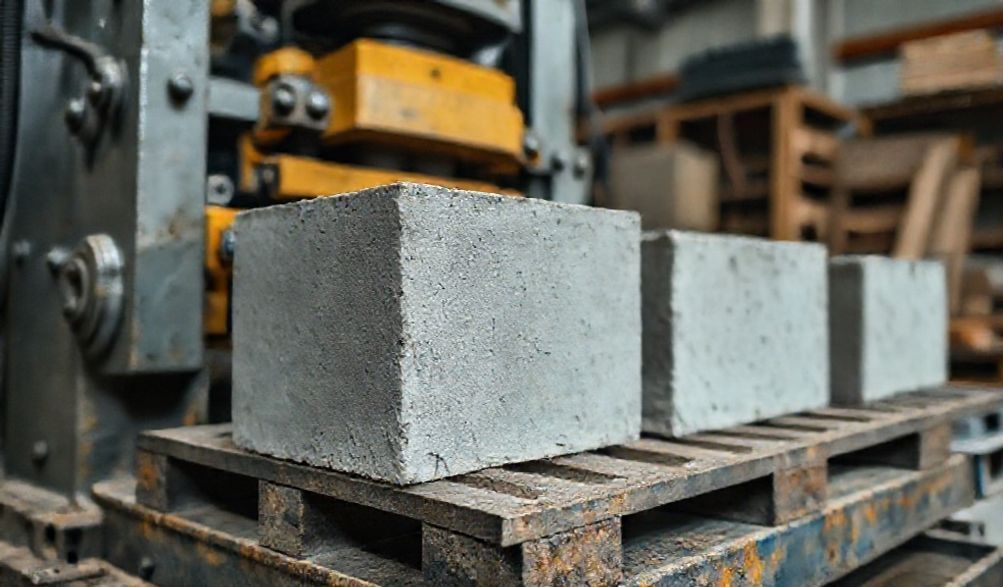
The Ultimate Guide to the QTJ4-35 Block Machine: Mastering Operation, Maximizing Profit
ການແນະນຳ
In the world of construction, the foundation of any great project often starts with a single, high-quality block. For countless small to medium-scale builders and entrepreneurs globally, the machine producing that foundational element is the QTJ4-35 block making machine. Renowned for its rugged simplicity and cost-effective operation, this stationary block machine has become an indispensable workhorse on job sites and in small block yards from rural communities to burgeoning urban centers.
But what truly sets the QTJ4-35 apart in a market filled with automated giants? It is its unparalleled balance of accessibility, reliability, and versatility. This guide moves beyond dry specification sheets to deliver a masterclass in practical application. Drawing on deep industry expertise, we will dissect everything from its core mechanics to the nuanced best practices that separate profitable, smooth operation from frustrating downtime.
Whether you’re a contractor looking to produce materials in-house, an entrepreneur launching a block supply business, or a project manager sourcing equipment for a development initiative, this comprehensive resource is designed to be your authoritative manual. We’ll equip you with the knowledge to not only select the right machine but to install, operate, and maintain it for peak performance, ensuring every block you produce meets the highest standards of quality and consistency.
1. What is the QTJ4-35 Block Making Machine?
At its heart, the QTJ4-35 is a manually operated, stationary “egg-layer” type concrete block machine. It’s engineered for simplicity and durability, focusing on mechanical reliability over complex automation. This design philosophy makes it a perfect fit for environments where technical support is limited, power may be inconsistent, but the demand for sturdy, dependable building materials is high.
1.1. Core Design and Working Principle
The QTJ4-35 operates on a straightforward yet effective mechanical principle.
- Mechanical Operation: The process is cyclical. An operator manually feeds a prepared concrete mix into the machine’s hopper. The mix is then directed into a mold box positioned on a steel pallet. A powerful vibration motor combined with a pressure head compacts the concrete densely. Finally, the machine’s lever is engaged to lift the mold box vertically, “laying” the freshly formed block onto the ground or a curing rack—hence the “egg-layer” nickname.
- Stationary Nature: Unlike mobile block machines that travel on rails, the QTJ4-35 is fixed in place. Blocks are produced directly beneath it, requiring manual removal and pallet placement for the next cycle.
- Key Components Breakdown:
- Mold Box: The heart of customization. This interchangeable part defines the block’s shape and size (hollow, solid, paver, etc.).
- ລະບົບການສັ່ນສະເທືອນ: Typically comprised of a robust electric motor mounted with eccentric weights. This provides the crucial compaction force.
- Pressure Head: Applies downward pressure during vibration to ensure a compacted, uniform block height and smooth top surface.
- Pallet System: Steel pallets act as the moving foundation. They hold the mold during filling and compaction, and become the transport platform for the fresh block.
1.2. Primary Specifications and Technical Data
Understanding the numbers is key to planning.
- ປະລິມານຜົນຜະລິດ A common benchmark is the production of standard 400x200x200mm hollow blocks. A well-operated QTJ4-35 can produce 2,500 – 3,000 blocks in an 8-hour shift. Output varies with block size, mix design, and operator skill.
- Block Sizes and Types: Its versatility shines here. With different molds, one machine can produce:
- Hollow Blocks (4″, 5″, 6″)
- Solid Blocks
- Interlocking Pavers
- Kerbstones
- Garden and landscaping blocks
- ຄວາມຕ້ອງການພະລັງງານ: Most models run on a standard 5.5 kW, 380V/50Hz three-phase electric motor. Always verify specifications with your supplier, especially for regions with 220V/60Hz power grids. A stable power supply is critical for consistent vibration.
- Machine Dimensions and Weight: Typically weighing around 1,000 – 1,200 kg, the QTJ4-35 requires careful handling. Footprint dimensions are usually around 1500mm (L) x 1000mm (W). Planning for this space, plus ample room for material storage and block curing, is essential.
2. Key Features and Advantages of the QTJ4-35 Model
The QTJ4-35’s popularity is no accident. It delivers tangible benefits that directly impact the bottom line and operational ease.
2.1. Operational Efficiency and Ease of Use
- Low Skill Threshold: Its manual operation doesn’t require advanced engineering knowledge. A motivated operator can be trained to run it proficiently within a few days, reducing labor costs and training overhead.
- Minimal Maintenance: With no complex hydraulics or programmable logic controllers (PLCs), maintenance revolves around basic mechanics: lubrication, bolt tightening, and motor care. This translates to lower long-term service costs and less vulnerability to breakdowns.
- Energy Efficiency: Consuming only about 5.5 kW per hour, its energy cost per block produced is exceptionally low, especially when compared to larger, fully automatic plants.
2.2. Economic and Practical Benefits
- Cost-Effectiveness: The QTJ4-35 offers the lowest capital entry point into block manufacturing. Its affordability allows for a faster return on investment (ROI), often within a single construction season for busy yards.
- Versatility in Production: The ability to switch molds quickly means a single machine can service diverse market needs—producing pavers for a driveway project one week and hollow blocks for a house the next. This flexibility mitigates business risk.
- Durability and Longevity: Built with heavy-duty steel plates and cast components, these machines are known to last for decades with proper care. Common wear parts (springs, bolts) are inexpensive and easy to replace.
3. Operational Guide: From Setup to Production
Theory is good, but practice is paramount. Here’s your step-by-step field manual.
3.1. Site Preparation and Machine Installation
A proper setup prevents countless future issues.
- Foundation Requirements: This is non-negotiable. Pour a level, reinforced concrete pad at least 150mm thick. The machine must be bolted down securely to this base. An unstable foundation leads to uneven vibration, poor block quality, and accelerated machine wear.
- Utility Connections: Hire a qualified electrician. Ensure the electrical supply matches the machine’s motor specs and is protected by appropriate circuit breakers. Use a voltage stabilizer if local grid power is fluctuating.
- Initial Calibration and Testing: Before full production:
- Check all bolts are tight.
- Ensure the vibration motor is securely mounted.
- Conduct test runs with a dry mix or soft material to observe the vibration and ejection action without wasting cement.
3.2. Production Process and Best Practices
- Optimal Concrete Mix Design: The mix is 50% of the quality equation. A good starting point for standard blocks is a 1:6:4 ratio (Cement: Sand: Aggregate, 10mm). Use clean, well-graded aggregates and control water content strictly—the mix should be cohesive, not sloppy. Consider plasticizers for better finish and strength.
- Step-by-Step Operating Cycle:
- Place a clean, oiled pallet under the mold.
- Fill the hopper with mixed concrete.
- Pull the feed lever to fill the mold.
- Engage the vibration and pressure head for 5-10 seconds (adjust for mix).
- Release vibration, then engage the lever to lift the mold box.
- Remove the pallet with the fresh block and transfer it to a curing area.
- Return the empty pallet and repeat.
- Quality Control During Production: Continuously check:
- Density: A well-compacted block will feel heavy for its size.
- Edges and Corners: They should be sharp and intact, not crumbled.
- ພື້ນຜິວສຳເລັດຮູບ: Should be smooth without large pores or “honeycombing.” Adjust mix water or vibration time if issues appear.
3.3. Routine Maintenance and Troubleshooting
Proactive care is the cheapest maintenance.
- Daily/Weekly Checklist:
- Lubricate all moving joints and bearings daily.
- Check and tighten all bolts, especially on the vibration frame.
- Clean excess concrete from the mold, pressure head, and pallets after each shift.
- Inspect springs for wear or deformation weekly.
- Common Issues & Solutions:
- Poor Compaction/Weak Blocks: Increase vibration time; check mix design (too dry or too wet); ensure vibration motor is functioning at full power.
- Blocks Sticking in Mold: Apply a thin, even mold release oil; check for damaged mold liners; ensure proper mix consistency.
- Uneven Block Height: Check for worn pressure head pads; ensure the machine is level on its foundation.
- Critical Spare Parts Inventory: Always keep on hand: vibration motor mounting bolts, heavy-duty springs, mold liner bolts, and a spare set of pallets.
4. Comparing the QTJ4-35: Is It Right for Your Project?
An honest assessment of fit is crucial for success.
4.1. Ideal Use Cases and Project Types
The QTJ4-35 excels in scenarios where its strengths are paramount:
* Small-scale Construction Firms: Perfect for producing blocks for your own housing or walling projects, ensuring quality control and reducing material costs.
* Entrepreneurial Block Yards: The ideal starter machine to supply a local market. It allows you to validate demand and generate capital before scaling up.
* Community and Rural Development Projects: Its simplicity, low power needs, and ease of repair make it a sustainable choice for infrastructure projects in areas with limited technical infrastructure.
4.2. Limitations and Considerations
- ຄວາມໄວໃນການຜະລິດ: It cannot match the output of fully automatic machines (which can produce 10,000+ blocks per shift). It is not suitable for supplying large-scale city developments or high-volume tenders.
- Labor Intensity: Requires consistent manual labor for feeding and block handling. Labor costs and availability are a direct operational factor.
- When to Upgrade: Consider moving to a semi-automatic or automatic machine when: demand consistently exceeds your 8-hour production capacity, labor costs rise significantly, or you need to produce more complex products like insulated blocks.
5. Sourcing and Investment: A Buyer’s Checklist
Your supplier relationship is as important as the machine itself.
5.1. Selecting a Reputable Manufacturer or Supplier
- Verifying Credentials: Look for established manufacturers with verifiable business licenses. Certifications like ISO are a good sign of quality management systems.
- After-Sales Support is Key: The best machine is useless without support. Prioritize suppliers who offer clear manuals, video training, accessible technical support (phone/email), and a reliable spare parts pipeline.
- Request References: Ask for contact information for previous buyers in your region or a similar market. Their firsthand experience is invaluable.
5.2. Total Cost of Ownership Analysis
- Beyond the Sticker Price: Budget for:
- Shipping and logistics to your site.
- Import duties and customs clearance (if applicable).
- Foundation construction and electrical hookup.
- Initial stock of raw materials (cement, aggregates).
- Spare parts kit.
- Calculating ROI Framework:
- Estimate your daily production capacity in blocks.
- Determine your cost per block (materials + labor + energy + machine depreciation).
- Research the selling price per block in your local market.
- Your daily profit = (Selling Price – Cost Per Block) x Daily Production.
This simple model will help you project your payback period.
Frequently Asked Questions (FAQ)
Q1: What is the actual production output of a QTJ4-35 per day?
A: With an efficient two-person team, expect a realistic output of 2,000 to 3,000 standard hollow blocks (400x200x200mm) in an 8-hour shift. Output is highly dependent on block type, operator speed, and workflow organization.
Q2: Can the QTJ4-35 produce interlocking paving blocks?
A: Yes. By switching to a paver mold, it can produce a wide variety of interlocking paving stones. Ensure you use a stiffer, zero-slump concrete mix for pavers to achieve sharp edges and high durability.
Q3: How many workers are needed to operate this machine efficiently?
A: A team of 2-3 people is optimal. One focuses on feeding and operating the machine, one or two handle the removal of fresh blocks, pallet return, and stacking/curing. This creates a sustainable, efficient production cycle.
Q4: What are the most common maintenance issues?
A: The most frequent issues are loosening of bolts due to constant vibration and wear on the damping springs. A daily “bolt check” and periodic spring replacement will prevent 80% of operational problems.
Q5: Is professional training required to operate this machine?
A: While simple, formal training from your supplier is a wise investment. It ensures safe operation, teaches optimal machine adjustment for different mixes, and imparts crucial troubleshooting knowledge that protects your investment and boosts productivity from day one.
ສະຫຼຸບ
ພຣະອົງQTJ4-35 block machine is more than just a piece of equipment; it’s a gateway to self-sufficiency, entrepreneurship, and community development in the construction sector. Its enduring legacy is built on a foundation of mechanical simplicity, operational affordability, and steadfast reliability. It empowers individuals and small businesses to create high-quality building materials on their own terms.
Mastering this machine requires a blend of practical knowledge, diligent maintenance, and a strategic approach to production. By following the comprehensive guidance outlined here—from selecting the right supplier and preparing a solid foundation to perfecting your mix design and implementing rigorous quality control—you transform this robust tool into a consistent profit center.
In an age of increasing automation, the QTJ4-35 reminds us that efficiency and success often come from perfecting the fundamentals. It is a machine that builds not only blocks but also capability, resilience, and opportunity.
<