The Four Pillars of Strategic Block Brick Making Scaling
Sustainable scaling is built on interdependent pillars: Operational Leverage, Market Expansion, Organizational Development, and Financial Engineering.
1. Operational Leverage: Optimizing the Production Core
Scaling begins by maximizing output and efficiency from your existing and future assets.
- 1.1. Technological Investment and Automation:
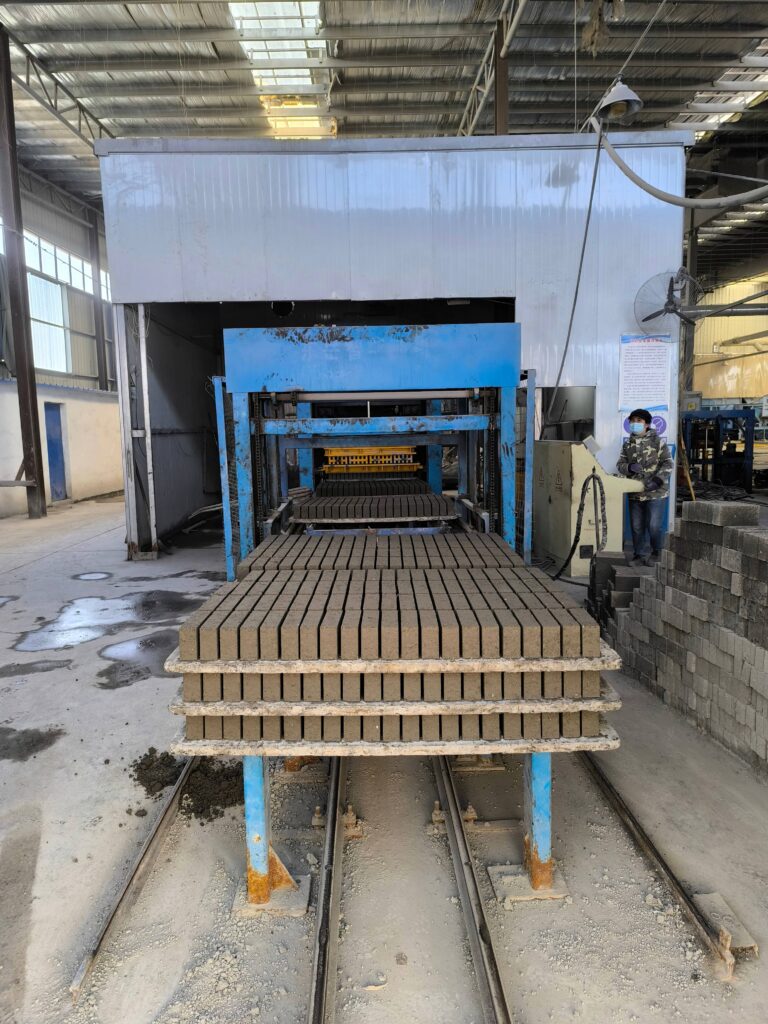
- Upgrading Machinery: Transitioning from semi-automatic to fully automatic production lines is often the first major scaling step. Automation increases output per shift, improves consistency, reduces labor dependency, and lowers the unit cost of production.
- Integrating Ancillary Systems: Scaling requires optimizing the entire flow. This includes investing in automated batching plants with precise moisture control, high-speed mixers, robotic pallet handling, and efficient curing systems (like automated racking or accelerated steam curing). The goal is to create a seamless, high-velocity production pipeline with minimal manual intervention.
- 1.2. Process Standardization and Data-Driven Management:
- Developing Standard Operating Procedures (SOPs): Document every critical process—from raw material inspection to preventive maintenance. This ensures quality and efficiency are not reliant on individual employees and allows for consistent training of new hires.
- Implementing Key Performance Indicators (KPIs): Move from gut feeling to data. Track metrics like Overall Equipment Effectiveness (OEE), cost per block, yield percentage, and on-time delivery rate. Analyzing this data identifies bottlenecks and guides continuous improvement efforts essential for scaling profitably.
2. Market Expansion and Product Diversification
You cannot scale production without concurrently scaling demand. This requires a proactive, multi-pronged market strategy.
- 2.1. Geographic Market Penetration:
- Strategic Logistics: Invest in or partner with a dedicated fleet to reliably serve a wider radius. Analyze the cost-to-serve of new territories against the price premium you can command as an outside supplier.
- Satellite Distribution: For markets beyond a cost-effective trucking distance, consider establishing satellite storage yards or light finishing/packaging facilities to hold inventory closer to new customer clusters.
- 2.2. Product Line Extension:
- Vertical Integration into Related Products: Use your core competency in vibratory compaction to produce paving stones, retaining wall units, and landscaping products. This diversifies your revenue streams, smooths out seasonal demand fluctuations in block sales, and increases your share of wallet with existing contractors.
- Value-Added Specialization: Develop a niche in high-margin, difficult-to-make products such as architectural split-face blocks, custom-colored units, or large-format masonry. This moves you away from competing solely on price in the commodity block market.
3. Organizational Development: Building the Team for Scale
A business scaled on paper will fail without the team to execute it.
- 3.1. Leadership and Management Structure: The owner/operator must transition from a hands-on supervisor to a strategic leader. This requires delegating operational authority to a qualified Plant Manager and empowering department heads for sales, logistics, and finance. Building a competent management layer is non-negotiable.
- 3.2. Systems over Heroes: Scale is stifled by dependency on a few “irreplaceable” employees. Systematize knowledge through training programs, clear job descriptions, and cross-training. Implement an Enterprise Resource Planning (ERP) system tailored for manufacturing to integrate inventory, production scheduling, accounting, and customer relationship management.
4. Financial Engineering and Strategic Capital
Growth consumes cash before it generates returns. Smart financial management fuels the scaling engine.
- 4.1. Capital Planning and Access: Scaling requires significant upfront capital for new equipment and working capital for expanded inventory and receivables. Develop a detailed 3-5 year capital expenditure plan. Explore financing options beyond traditional loans, such as equipment leasing, lines of credit, or strategic investment.
- 4.2. Profitability Analysis by Product and Channel: Not all growth is good growth. Rigorously analyze the true profitability of each product line, customer, and sales channel. Use activity-based costing to understand overhead allocation. Scaling should focus on amplifying your most profitable segments, not just increasing top-line revenue.
Conclusion: Scaling as a Managed Evolution
Scaling a block making business is a deliberate, integrated process, not an event. It requires parallel progress on all fronts: investing in technology to drive down unit costs, strategically expanding markets and products to create demand for increased capacity, building a professional organization capable of managing complexity, and securing the financial fuel to power the journey. The most common pitfall is pursuing one pillar in isolation—such as buying a bigger machine without a sales plan, or hiring a sales team without the production systems to support reliable delivery. Successful scaling is the art of synchronized advancement, where operational capacity, market reach, organizational strength, and financial resources grow in a balanced and reinforcing manner. By adhering to this disciplined framework, a business can transcend its initial constraints and build a foundation for enduring, profitable growth.
FAQ
Q1: Should I buy a second identical machine or one larger, more automated line?
A: The choice depends on risk and flexibility. A second identical machine offers redundancy (if one breaks, you still have production) and allows you to run different products simultaneously. A single, larger automated line is often more efficient and has a lower labor cost per unit but creates a single point of failure. For scaling into new products (like pavers), a dedicated specialized machine is often better than modifying your primary block line.
Q2: When is the right time to hire a dedicated sales manager?
A: The right time is before you feel you have maxed out your own sales capacity. If you, as the owner, are spending more than 50% of your time on production issues and cannot proactively pursue new market opportunities, it’s time. A sales manager allows you to systemize and grow client acquisition while you focus on scaling operations.
Q3: How can we scale without compromising the quality that built our reputation?
A: Quality must be systematized. This is the role of a formal Quality Management System (QMS). Invest in in-process testing, automated quality checks (e.g., block height sensors), and a dedicated QC manager. Scaling quality means building it into the process with checks and balances, not relying on the vigilance of a few key people.
Q4: Is franchising or licensing our brand a viable scaling model?
A: For a proven production and business system, this can be a capital-light way to expand geographically. However, it requires that you have a completely standardized, documented, and trainable system (“the playbook”), strong brand equity, and the capability to support franchisees with training, marketing, and perhaps central mix design. It’s a model for scaling a business system, not just production.
Q5: What is the biggest operational bottleneck when scaling up production?
A: Often, it’s not the block machine itself, but the “front-end” and “back-end” processes. The bottleneck can be the speed of raw material batching and mixing, or the capacity of the curing and storage yard to handle the increased output of fresh blocks. A holistic view of the entire production chain is necessary to identify and eliminate these constraints systematically.