I. Technological Evolution: From Hand-Packed Earth to Engineered Masonry
The modern machine represents a fundamental upgrade from traditional adobe production, introducing precision, consistency, and structural reliability.
A. Core Mechanical Principles: Compression Over Cohesion
Unlike simple molds, these machines apply sustained, high mechanical pressure to a prepared earth mixture.
- Static Hydraulic Compression: A hydraulic ram applies calibrated pressure (typically 5-20 tons) to compact the soil mix within a rigid steel mold, drastically reducing voids and increasing density.
- Vibratory Compaction: Some models combine pressure with high-frequency vibration to achieve maximum particle interlocking and density with a slightly lower force requirement.
- The Role of Stabilization: While pure clay can be used, modern practice emphasizes stabilization with small percentages (3-10%) of cement, lime, or natural binders. This chemical change, activated by compression and curing, permanently enhances water resistance and durability, creating a product best termed Compressed Stabilized Earth Blocks (CSEBs).
B. System Components and Operational Workflow
A functional production setup extends beyond the press itself:
- Soil Processing Subsystem: Includes a sieve or crusher to achieve a consistent, coarse aggregate-free mix. A mechanical pan or drum mixer is essential for homogeneously blending soil, sand, and stabilizer.
- The Press Unit: The core machine, featuring the hydraulic system, mold box, and ejection mechanism. Designs range from simple manual lever/hydraulic presses to fully automatic, electric-powered stations.
- Curing and Quality Assurance Protocol: Machine-produced bricks require systematic curing—keeping the blocks moist under plastic sheeting for 14-28 days to ensure full stabilizer reaction. This disciplined post-production process is a key differentiator from traditional sun-drying.
II. Market Drivers and Strategic Applications
Demand for this technology is fueled by a powerful convergence of environmental, economic, and social factors.
A. The Sustainability Imperative
- Ultra-Low Embodied Energy: The production process consumes a fraction of the energy required for fired bricks or concrete blocks, as it requires no kiln firing and minimal cement.
- Carbon Sequestration and Local Sourcing: Using locally sourced subsoil eliminates transportation emissions, preserves agricultural topsoil, and utilizes a carbon-neutral material.
- Bioclimatic Performance: Earth bricks possess excellent thermal mass, naturally regulating interior humidity and temperature, which reduces lifetime energy costs for heating and cooling.
B. Economic and Developmental Drivers
- Affordability in Material Costs: The primary raw material—soil—is often free or very low cost. Stabilizer (cement) is the main expense, but usage is minimal.
- Entrepreneurship and Job Creation: The technology is scalable, enabling the establishment of small to medium-sized brick yards that create local employment and keep capital within communities.
- Disaster Resilience and Reconstruction: CSEB structures have demonstrated good performance in seismic events due to their mass and flexibility. Machines can be rapidly deployed to produce rebuilding materials on-site after disasters.
C. Primary Market Segments for Distributors
- Green and Luxury Building: Architects and builders specializing in sustainable, high-design eco-homes and resorts.
- Government and NGO Housing Projects: Large-scale affordable housing initiatives, particularly in arid and semi-arid regions.
- Cultural Heritage and Restoration: For projects requiring historically accurate or aesthetically matching materials.
- Self-Build and Community-Led Construction: Enabled by smaller, manual or semi-automatic machines.
III. Product Portfolio and Technical Specifications
Machines are categorized by their power source and level of automation, directly correlating to output, investment, and target user.
A. Manual and Semi-Automatic Presses
- Profile: Human-powered (lever or manual hydraulic) or small electric motor-driven. Output: 200 – 800 bricks per 8-hour shift.
- ກຸ່ມເປົ້າໝາຍ: Individual entrepreneurs, vocational training centers, small cooperatives, and NGOs for community projects.
- Value Proposition: Low capital investment, operational independence from grid power, and simplicity of maintenance. Ideal for proof-of-concept and localized, small-batch production.
B. Fully Automatic Stationary Machines
- Profile: Electric-powered with integrated material feeding, compression, and ejection systems. Output: 1,000 – 3,000+ bricks per shift.
- ກຸ່ມເປົ້າໝາຍ: Established block-making businesses, contractors supplying larger housing projects, and social enterprises.
- Value Proposition: Higher productivity, consistent quality with less operator dependency, and a stronger business case for commercial supply. Represents the core of the SME investment segment.
C. Mobile Production Units
- Profile: Machines mounted on trailers, sometimes with integrated soil screening and mixing, designed for on-site production.
- ກຸ່ມເປົ້າໝາຍ: Large construction firms building remote resorts, camps, or reconstruction projects where transporting finished bricks is prohibitively expensive.
- Value Proposition: Eliminates bulk transport costs for the finished product; uses soil from the construction site itself.
IV. Commercial Considerations for B2B Stakeholders
Success in this field requires understanding a unique set of commercial and technical parameters.
A. Key Machine Evaluation Criteria
- Pressure Capacity and Consistency: Measured in tons. Higher, consistent pressure yields stronger, denser bricks suitable for load-bearing walls.
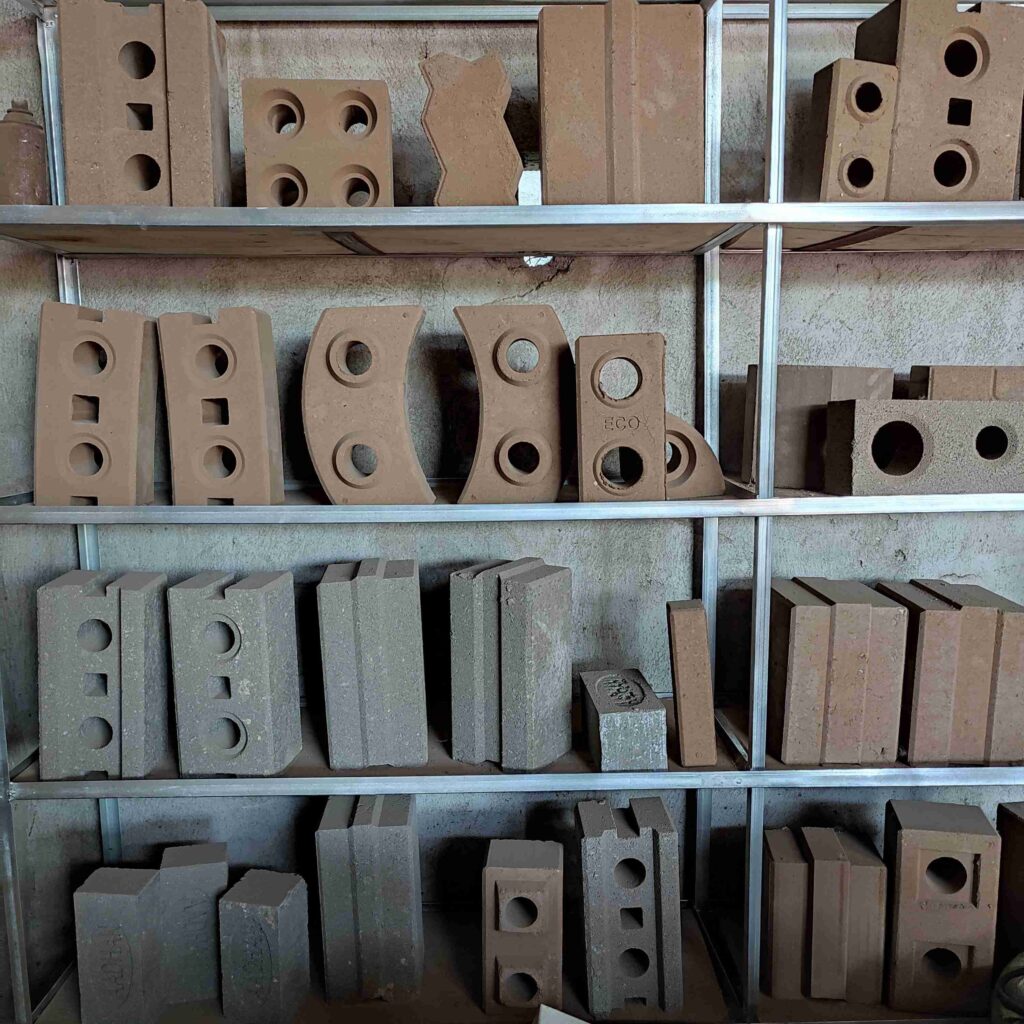
- Mold Versatility and Quality: The ability to quickly change molds to produce different brick sizes, shapes (including interlocking), and surface textures opens multiple market opportunities.
- Build Quality and Environmental Suitability: The machine must be robust enough to handle abrasive soil mixes. Critical components should be protected from dust. Availability of spare parts is non-negotiable.
B. The Importance of Integrated Knowledge Transfer
Selling a mud brick machine is fundamentally different from selling a standard concrete block maker. It requires selling a complete system:
- Soil Testing Capability: Distributors should partner with or guide clients to simple soil testing (e.g., field drop, sedimentation tests) to determine suitability and optimal mix design.
- Training on the Entire Process: Comprehensive training must cover soil selection, mixing, machine operation, brick curing, and basic quality control—not just machine mechanics.
- Providing Mix Design Formulations: Offering proven, tested recipes for different soil types and stabilizers adds immense value and ensures client success.
C. Navigating Pricing and Value Proposition
Pricing tiers follow automation levels, but the value story is paramount. The argument is not merely machine cost, but the total economic and ecological cost of the building system. Distributors must articulate the lifecycle benefits: ultra-low material costs, energy efficiency of the final building, and the social capital of local production.
V. Overcoming Market Barriers and Driving Adoption
The primary challenge is overcoming perception and building code acceptance.
A. Technical Validation and Standardization
- Performance Data: Distributors must be armed with certified test reports showing compressive strength, water absorption, and durability metrics of machine-produced CSEBs, proving they meet or exceed national building code requirements where they exist.
- Case Studies and Visits: Building a portfolio of completed, certified projects (houses, schools) is the most powerful sales tool. Organizing site visits for engineers, architects, and officials is crucial.
B. Strategic Marketing and Partnerships
- Target the Influencers: Market directly to sustainable architects, green building consultants, and forward-thinking civil engineers.
- Collaborate with Development Agencies: Partner with NGOs and international development organizations focused on housing and livelihoods.
- Demonstrate Aesthetic Potential: Showcase the versatility of the material through samples of polished, pigmented, or textured bricks to appeal to the design community.
ສະຫຼຸບ
The modern mud bricks making machine represents a powerful synthesis of tradition and innovation. It transforms a ubiquitous, low-value material into a high-performance, engineered building product, addressing some of the most pressing challenges in global construction: sustainability, affordability, and climate resilience. For the B2B professional, this market demands a consultative approach. It is not about moving metal; it is about championing a building system. Success requires technical knowledge, a commitment to client education, and the vision to see earth not as dirt, but as a sophisticated construction material for the 21st century. By positioning themselves as experts and partners in this field, distributors and dealers can capture a growing segment of the green building market and contribute meaningfully to a more sustainable built environment. The foundation for this future is literally under our feet.
FAQ (Frequently Asked Questions)
Q1: What types of soil are NOT suitable for machine-made mud bricks?
A: Purely organic topsoil, pure expansive clay (which cracks severely), and uniformly fine silt or sand are problematic. The ideal soil is a “loam” containing a balanced mix of sand, silt, and some clay. Soils with large stones or excessive gravel must be screened. A simple sedimentation jar test can quickly determine soil suitability.
Q2: How does the strength and durability of machine-made compressed earth blocks compare to fired clay bricks?
A: Properly produced CSEBs with cement stabilization can achieve compressive strengths of 5-15 MPa, which is comparable to or exceeds that of many fired bricks. Their key advantage is thermal performance and lower embodied energy. Their main difference is lower resistance to prolonged, direct water erosion unless protected with plaster or large roof overhangs. With proper detailing (a good foundation and plaster), they are extremely durable.
Q3: Can these machines produce interlocking earth blocks?
A: Yes, absolutely. In fact, interlocking shapes are highly recommended for CSEBs. The interlocking design reduces or eliminates the need for mortar in the bed joints, compensates for minor dimensional variations, and can improve seismic resistance by creating a more monolithic wall structure. Many machine models offer interlocking mold options.
Q4: What is the typical business model for an entrepreneur starting a CSEB production yard?
A: The model is based on low input costs and local sales. An entrepreneur secures a source of suitable soil (often free), invests in a machine, mixer, and basic tools. Revenue comes from selling bricks to local homebuilders, contractors, and NGOs. Profitability hinges on efficient operation, quality control, and effective curing to ensure a reliable product. The ROI is attractive due to the very high gross margins on a material with near-zero raw material cost.
Q5: Are there specific building codes or standards for compressed earth construction?
A: An increasing number of countries have developed standards or codes for earth construction (e.g., New Zealand, Australia, India, Morocco). Internationally, references like the UNESCO Chair on Earthen Architecture guidelines are used. A key role for distributors is to help clients navigate local building authorities by providing technical data sheets and case studies that demonstrate compliance with general structural safety and durability principles, even in the absence of a specific code.
Q6: What are the main maintenance concerns for machines processing abrasive earth mixes?
A:
- Mold and Ram Wear: Abrasive soil gradually wears down steel surfaces. Using molds with hardened steel liners or faces is critical.
- Dust Ingress: Seals and bearings must be protected. Machines designed with dust covers and easy cleaning access are preferable.
- Regular Cleaning: A strict daily cleaning routine to prevent hardened soil buildup in the mold and on moving parts is essential for longevity.
Q7: How does the moisture content of the soil mix affect the machine operation and final brick?
A: Moisture content is critical. The mix must be at “optimum moisture content”—damp enough to allow particles to bind under pressure, but dry enough that the brick holds its shape immediately after ejection. Too wet causes sticking in the mold and deformation; too dry results in a crumbly, weak brick. Finding the right moisture level (typically 8-12%) is a fundamental part of the operator’s skill set.