
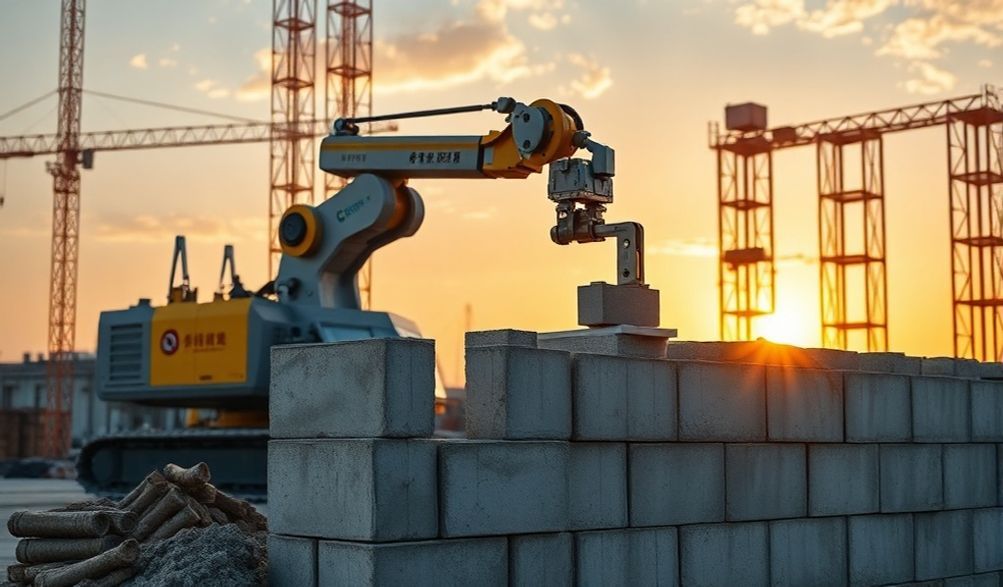
The Ultimate Guide to China Block Laying Machines: Efficiency, Quality & Cost
ການແນະນຳ
The global construction industry is locked in a perpetual race. The finish line? Completing projects faster, with higher quality, and at a lower cost. In this high-stakes environment, relying solely on manual labor is like running a modern sprint with a heavy backpack. The solution lies in strategic mechanization, and at the forefront of this revolution is a pivotal piece of equipment: the block laying machine.
For contractors and builders, the traditional method of manual block laying presents a familiar set of challenges. It’s labor-intensive, slow, and prone to human error, leading to inconsistent quality, high labor costs, and project delays. The physical strain on workers is significant, and finding a skilled, reliable masonry crew is becoming increasingly difficult and expensive worldwide.
Enter the game-changer: the block laying machine. And when it comes to sourcing this transformative technology, one manufacturing hub stands out for its combination of advanced engineering, reliability, and compelling value—China. Chinese manufacturers have evolved from being mere low-cost alternatives to becoming global leaders in producing sophisticated, durable, and highly efficient construction machinery.
This comprehensive guide is designed to be your definitive resource. Built on industry analysis, direct manufacturer specifications, and insights into global supply chain dynamics, we aim to provide contractors, builders, and procurement managers with an unbiased, detailed look at China block laying machines. We’ll explore their undeniable benefits, the types available, key purchasing considerations, and a practical roadmap for navigating the Chinese market with confidence. Let’s build a foundation of knowledge.
Why Choose a Block Laying Machine? The Benefits of Automation
Transitioning from manual labor to a mechanized process is a significant operational decision. Understanding the concrete benefits is crucial to justifying the investment. Here’s how a block laying machine transforms your project economics and outcomes.
Dramatically Increased Productivity and Speed
The numbers speak for themselves. While a skilled mason might lay 300-500 blocks in a day, a semi-automatic machine can lay 800-1,200 blocks per hour. Fully automatic models can exceed 2,000 blocks per hour.
* Quantifiable Gains: This isn’t just a marginal improvement; it’s a 5x to 10x increase in output. Projects that would take weeks can be condensed into days.
* ດຳເນີນການຕໍ່ເນື່ອງ: Machines don’t need breaks, work consistently in various weather conditions, and can operate for extended shifts, drastically shrinking project timelines and enabling faster return on investment.
Superior Precision and Consistent Quality
Human consistency has limits, especially over a long, tiring day. A machine, however, replicates perfection with every single block.
* Uniform Application: Precise mortar extrusion ensures every joint has the exact same thickness and coverage, eliminating weak points.
* Perfect Alignment: Laser-guided or rail-based systems guarantee every block is laid perfectly level and aligned, resulting in straight, plumb walls that are structurally sound and aesthetically superior.
* Reduced Waste: Consistent mortar use minimizes spillage and over-application, leading to direct material savings.
Significant Reduction in Labor Costs and Dependence
Labor is often the single largest variable cost and risk factor in construction.
* ROI Analysis: While there is an upfront capital cost, the long-term savings are substantial. Compare the annual salary, benefits, and management overhead of a 4-6 person masonry crew to the operating cost (fuel/electricity and one operator) of a machine over several projects.
* Solving Shortages: The machine mitigates the critical industry challenge of skilled labor shortages. It allows you to take on more work with your existing team, making your business more scalable and less vulnerable to labor market fluctuations.
Enhanced Worker Safety and Reduced Physical Strain
Construction is a high-risk industry. Automating the most physically demanding tasks has a profound impact on site safety.
* Ergonomic Shift: The machine handles all the heavy lifting—moving, positioning, and placing heavy blocks. This eliminates the primary cause of back injuries and chronic musculoskeletal disorders among masons.
* Safer Environment: Reducing the number of personnel in the immediate laying zone and minimizing repetitive strain injuries creates a safer, more sustainable work environment, which can also lower insurance premiums.
Exploring the Range: Types of Block Laying Machines from China
The Chinese market offers a spectrum of machines to match different project scales, budgets, and levels of desired automation. Understanding these types is the first step in identifying the right tool for your job.
Semi-Automatic Block Laying Machines
These machines strike an excellent balance between automation and operator control, offering a significant productivity boost over manual labor without the complexity of a fully automated system.
* ການດຳເນີນງານ: An operator (or a small team) feeds blocks onto the machine’s conveyor or magazine. The machine then automatically applies mortar and places the block with precision onto the wall. The operator typically guides the machine’s movement along the wall course.
* ກໍລະນີການນຳໃຊ້ທີ່ເໝາະສົມ: Perfect for medium-scale residential projects, commercial buildings, and contractors looking to scale up their capabilities. They offer great versatility and a lower entry point in terms of cost and operational complexity.
Fully Automatic Block Laying Machines
This is the pinnacle of bricklaying automation, designed for maximum output with minimal manual intervention.
* ການດຳເນີນງານ: These are often integrated systems featuring a continuous block feed conveyor, automated mortar mixing and pumping, and a robotic placement head. They follow a pre-set path (via rails or GPS) and can lay entire courses with incredible speed and accuracy, often managed via a programmable logic controller (PLC) interface.
* ກໍລະນີການນຳໃຊ້ທີ່ເໝາະສົມ: Tailor-made for large-scale industrial projects, massive housing developments, and infrastructure projects where speed, scale, and consistent high-volume output are paramount to profitability.
Specialized Machines: Brick Laying, Paver Laying, and Concrete Block Machines
Chinese manufacturers don’t just make generic machines. They produce equipment specialized for different materials.
* Material Specificity: A machine optimized for lightweight AAC (Autoclaved Aerated Concrete) blocks will differ in grip mechanism and pressure from one designed for dense clay bricks or concrete masonry units (CMUs).
* Versatility Options: Some models are adaptable, with changeable heads or settings to handle different block sizes and types. Others are built as dedicated paver layers for roads and landscaping or specialized brick layers for facing work. Clearly defining your primary block type is essential when sourcing.
Key Features to Evaluate When Sourcing from China
Looking beyond the basic “block laying machine” label is critical. Here are the core technical and support features you must scrutinize to ensure you get a reliable, high-performing machine.
Core Performance Specifications
These specs define the machine’s capability and suitability for your projects.
* Laying Speed: Measured in blocks per hour. Ensure it matches your project throughput requirements.
* Working Width & Block Sizes: Verify the maximum/minimum wall width it can build and the range of block lengths, heights, and depths it can accommodate.
* Power Source: Electric models are cleaner and quieter, ideal for indoor or urban sites. Diesel offers full mobility and power for remote sites. Hybrid systems are becoming more common, offering flexibility.
Build Quality and Durability Components
This is where long-term value and uptime are determined. Don’t be fooled by a shiny paint job.
* ກອບ & ໂຄງສ້າງ Look for high-grade, welded steel construction. Thicker gauge steel and robust welding indicate a machine built to withstand the rigors of a construction site.
* Critical Components: Inspect the quality of the linear guides, rails, and bearings. These are precision parts that directly affect accuracy and longevity. Ask about the brand of key components like hydraulic systems or PLCs.
* Protection: Sealing against dust and debris is vital for protecting sensitive mechanical and electronic parts, especially in harsh environments.
Operational Efficiency and Ease of Use
A machine that’s difficult to set up or operate will negate its productivity benefits.
* ລະບົບຄວບຄຸມ: A user-friendly, intuitive control panel—often with touchscreen PLC interfaces—reduces training time and operator error. Clear diagnostics are a plus.
* Mobility & Setup: Consider how easily it moves around site. Is it track-mounted, wheeled, or crane-lifted? How long does calibration and setup take for a new wall section?
* Training: Assess what level of training is provided. Can your existing crew learn to operate it effectively?
After-Sales Support: A Critical Consideration
This is arguably the most important differentiator between a good supplier and a great partner.
* Documentation: Insist on comprehensive technical and parts manuals in clear, correct English.
* Spare Parts: Confirm the availability of a spare parts supply chain. What is the lead time for critical wear parts? Is there a local distributor or must all parts come from China?
* Warranty & Support: Understand the warranty terms (duration, what’s covered). Does the supplier offer remote troubleshooting via video call? Can they dispatch a technician if needed?
Navigating the Chinese Manufacturing Market with Confidence
Sourcing from an international market requires a methodical approach to mitigate risk and ensure a successful purchase.
Identifying Reputable Manufacturers and Suppliers
This step is foundational to demonstrating E-E-A-T (Experience, Expertise, Authoritativeness, Trustworthiness) in your sourcing.
* Verification: Use resources like China’s AIC (Administration for Industry and Commerce) records to verify the business license and legal standing. Check their years in operation; a 10+ year history is a good sign of stability.
* Certifications & History: Look for relevant international certifications like ISO 9001 (Quality Management) and CE (for the European market). A proven export history to your region or similar markets is a strong indicator of reliability.
The Importance of Factory Audits and Sample Testing
Never buy based on a website or brochure alone.
* Third-Party Inspection: Hiring a reputable inspection service like SGS, Bureau Veritas (BV), or Intertek to conduct a pre-shipment inspection is a wise investment. They will check build quality, function, and packaging.
* Performance Verification: Always request a live video demonstration of the exact model you’re considering, showing it laying blocks. If the order value is high, visiting the factory or arranging for a sample unit to be tested is invaluable.
Understanding Logistics, Shipping, and Import Duties
The “landed cost” is more than the factory price.
* Incoterms: Understand terms like FOB (Free On Board, you handle shipping/insurance) and CIF (Cost, Insurance, and Freight, supplier arranges to your port). FOB often offers more control.
* Freight Forwarder: Partner with an experienced freight forwarder who handles customs clearance, sea/air freight, and final delivery.
* Local Regulations: You are responsible for researching and paying all import duties, taxes, and ensuring the machine complies with your country’s regulations.
Total Cost of Ownership (TCO) Analysis
Make your decision based on TCO, not just the sticker price.
Create a 5-year TCO model that includes:
* Purchase Price (FOB/CIF)
* Shipping & Insurance
* Import Duties & Taxes
* Installation & Initial Training
* Estimated Annual Maintenance & Spare Parts
* Operating Costs (Fuel/Electricity)
This holistic view will reveal the true value proposition of different options.
Maximizing Your Investment: Operation and Maintenance Best Practices
Your machine is a major asset. Protect your investment with proper care from day one.
Proper Installation and Site Preparation
- Ensure the site has a stable, level foundation for the machine to operate on.
- Verify power supply compatibility for electric models or secure a clean fuel supply for diesel.
- Follow the manufacturer’s calibration instructions meticulously for the initial setup.
Routine Maintenance Checklist for Longevity
A simple, consistent routine prevents major breakdowns.
* Daily: Clean excess mortar and debris from all moving parts, tracks, and the mortar applicator. Perform a visual inspection for loose bolts or damage.
* Weekly: Lubricate all grease points and guide rails as specified in the manual. Check hydraulic fluid levels and hose integrity.
* Monthly: Tighten all structural bolts and fasteners. Conduct a full system check of electrical connections, sensors, and the control system.
Troubleshooting Common Operational Issues
- Block Misalignment: Check guide rail alignment and calibration. Ensure the block feed is not jamming.
- Inconsistent Mortar Flow: Inspect the mortar pump and nozzle for clogs. Verify the mortar mix consistency is within specifications.
- Power/Electrical Issues: Check all circuit breakers and connections. Consult the manual’s diagnostic codes if equipped with a PLC.
- Golden Rule: For any complex or persistent issue, stop operation and consult your manual first, then contact your supplier’s technical support. Forcing a machine can turn a small fix into a major repair.
Frequently Asked Questions (FAQ)
Q1: What is the typical price range for a block laying machine from China?
A: Prices vary widely based on automation level and capability. A semi-automatic machine can range from $20,000 to $70,000 USD, while fully automatic, high-output models can range from $80,000 to $300,000+ USD. These are broad estimates; you must get detailed quotes based on your specific technical requirements.
Q2: How do I ensure the machine meets my local safety and quality standards?
A: This is critical. Explicitly request the relevant certification for your market (e.g., CE marking for Europe, OSHA compliance considerations for the USA). Choose a manufacturer with a proven history of exporting to your region. For absolute certainty, you can hire a local mechanical engineer to review the machine’s technical specifications and safety features before purchase.
Q3: Can Chinese suppliers provide training for our operators?
A: Reputable suppliers absolutely can and should. This is a key negotiation point. They typically provide detailed digital manuals and videos. Many offer comprehensive on-site training conducted by a technician (you may cover travel/lodging) or structured online training sessions via video call. Ensure training is included in your purchase agreement.
Q4: What is the lead time for manufacturing and delivery?
A: For a standard model, production typically takes 30 to 60 days after order confirmation and deposit. Sea freight shipping then adds another 30 to 45 days to most major global ports, depending on the destination. Customized machines or peak season orders will take longer. Always get a written timeline from your supplier.
Q5: Are spare parts readily available, and how long do they take to arrive?
A: Availability is a hallmark of a good supplier. Before purchasing, ask for a spare parts catalog and price list. Inquire about the lead time for critical wear parts (like mortar pumps or guide rails). The best suppliers keep common parts in stock for immediate dispatch (7-14 days by air). For others, you may face the production lead time plus shipping.
ສະຫຼຸບ
Integrating a China block laying machine into your operations is more than just buying a piece of equipment; it’s a strategic investment in the future competitiveness of your business. The potential for transformative gains in speed, unwavering quality, and significant long-term cost savings is very real.
However, this guide’s core message is that success hinges entirely on informed due diligence. The Chinese market offers incredible value, but it requires a savvy approach. Your goal is not to find the cheapest product, but to identify the most reliable ຄູ່ຮ່ວມງານ—a manufacturer whose ຄວາມຊ່ຽວຊານ is evident in their engineering, whose ອຳນາດອຳນາດ is proven by certifications and a solid track record, and whose ຄວາມເຊື່ອຖືໄດ້ is demonstrated through transparent communication and robust after-sales support.
Use this guide as your framework. Let it empower you to ask the right questions, evaluate suppliers critically, and analyze the true Total Cost of Ownership. Your next step is clear: begin shortlisting potential suppliers, prepare your detailed technical inquiry list, and start the conversation. The wall you build with that first efficiently laid block will be a testament to a smarter way of building.
<