
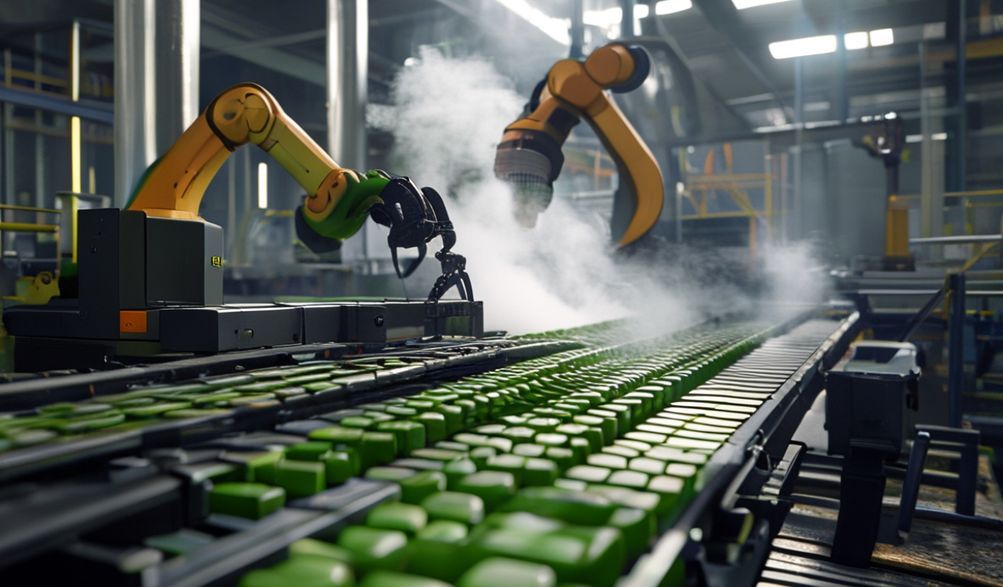
Your Ultimate Guide to Choosing Fly Ash Brick Machine Manufacturers in 2026
Pengenalan
The global construction industry is at a crossroads. With the clarion call for sustainability growing louder, builders and developers are urgently seeking materials and methods that reduce environmental impact without compromising on strength or economics. At the heart of this green revolution is a humble yet transformative product: the fly ash brick. But producing these eco-friendly building blocks at scale requires the right engine—a reliable, efficient fly ash brick making machine. This is where your journey, and your most critical decision, begins.
For entrepreneurs venturing into this promising sector or established builders aiming to vertically integrate, the market for machinery can be a labyrinth. The challenge isn’t a lack of options, but an overwhelming abundance of them, coupled with daunting questions: Which manufacturer truly combines quality with innovation? How do you differentiate robust engineering from clever marketing? Is a lower upfront cost a smart saving or a future liability?
This guide is designed to be your definitive compass. Compiled from deep industry analysis, technical evaluations, and insights into operational realities, it cuts through the noise. We will move beyond superficial brochures to the core factors that determine long-term success. By the end, you will possess a clear, actionable framework to identify top-tier fly ash brick machine manufacturers, evaluate their offerings against your specific needs, and make an investment that ensures profitability, sustainability, and peace of mind for years to come.
Why Fly Ash Bricks? The Sustainable Construction Imperative
Before delving into machinery, it’s crucial to understand the product you’ll be creating. Fly ash bricks are not just an alternative; they are a superior, future-ready building material driving a paradigm shift.
Environmental Benefits: Building a Circular Economy
The primary driver is profound environmental stewardship.
* Waste to Wealth: Fly ash is a fine powder, a byproduct of coal combustion in thermal power plants. Traditionally disposed of in ash ponds, it posed a significant land and water pollution hazard. Brick production consumes this industrial waste, turning an environmental liability into a valuable resource.
* Pengurangan Jejak Karbon: Unlike traditional clay bricks, fly ash bricks are cured, not fired in kilns. This eliminates the massive fossil fuel consumption and associated CO2 emissions from the firing process, slashing the carbon footprint of brick production by up to 90%.
* Pemuliharaan Tanah Atas The clay brick industry is a major contributor to topsoil erosion. Fly ash bricks require zero topsoil, preserving vital agricultural land and preventing ecological degradation.
Economic & Structural Advantages: Performance Meets Profit
Sustainability and performance are powerfully aligned.
* Kos-Efektif: Raw materials (fly ash, lime, gypsum, crusher dust) are often locally available and less expensive than high-quality clay. The production process is also less energy-intensive, lowering operational costs.
* Ketahanan Unggul: These bricks exhibit higher compressive strength, better dimensional consistency, and lower water absorption compared to red bricks. This translates to longer-lasting structures with less mortar consumption.
* Enhanced Insulation: Fly ash bricks offer excellent thermal and acoustic insulation properties, leading to significant energy savings in heating and cooling buildings—a key feature for green building certifications like LEED and GRIHA.
The Growing Market Demand: A Rising Tide
Government policies worldwide are mandating the use of fly ash in construction. Coupled with rising consumer and corporate preference for green buildings, the demand for fly ash bricks is on a steep, irreversible climb. This boom directly fuels the need for dependable, high-output production machinery, making your choice of manufacturer more consequential than ever.
Key Factors to Evaluate Fly Ash Brick Machine Manufacturers
Selecting a manufacturer is a strategic partnership. Look beyond the machine to the company behind it. Here are the non-negotiable pillars of evaluation.
Technical Expertise and R&D Capabilities
A manufacturer’s brain trust is its engineering team.
* Kejuruteraan Dalaman: Prefer manufacturers with dedicated, in-house R&D and design teams. This indicates a commitment to continuous improvement and the ability to troubleshoot specific client problems, rather than just assembling outsourced components.
* Core Innovations: Scrutinize their advancements in:
* Mixing Technology: Uniform mixing is critical for brick strength. Look for advanced pan or forced-action mixers.
* Sistem Getaran: High-frequency, dual-sided vibration ensures optimal compaction and density, reducing voids.
* Automasi & Kawalan: Modern PLC (Programmable Logic Controller) systems with touchscreen interfaces allow for precise control over pressure, cycle time, and vibration, ensuring consistent quality.
Manufacturing Quality and Standards
The machine’s build quality dictates its lifespan and uptime.
* Bahan Premium: Inquire about the grade of steel used in the frame and mold boxes (e.g., hardened EN series steel). The quality of hydraulic cylinders, pumps, and valves (from reputed brands like Bosch Rexroth, Yuken, or equivalent) is paramount.
* Pensijilan Kualiti: A legitimate manufacturer will adhere to international quality management standards like ISO 9001. This provides a baseline assurance of systematic processes.
* Pembinaan Kukuh: The machine must be built to withstand constant vibration and pressure. Welding quality, plate thickness, and overall sturdiness should be evident. A heavier machine often indicates better durability.
Machine Range and Customization
A one-size-fits-all approach rarely works in brick production.
* Spektrum Jenis A reputable manufacturer should offer a range:
* Manual/Separa Automatik: For entrepreneurs and small-scale projects (500-2000 bricks per hour).
* Sepenuhnya Automatik: For high-volume, consistent production with minimal labor (2500-10,000+ bricks per hour).
* Mobile Plants: For on-site production, eliminating transport costs.
* Customization Ability: Can they provide molds for different products—solid blocks, hollow blocks, pavers, interlocking bricks? The ability to tailor the machine to your specific market needs is a significant advantage.
After-Sales Support: The True Test of Reliability
This is where industry leaders are separated from the rest.
* Perkhidmatan Pentauliahan: Do they provide on-site installation, calibration, and operator training? This is crucial for optimal machine setup.
* Jaminan Komprehensif: Look for a clear, written warranty (typically 1-2 years on critical parts) that details what is covered and the process for claims.
* Ekosistem Alat Ganti: Ensure they have a readily available inventory of wear-and-tear parts (like mold liners, springs, seals) and a responsive technical support team, ideally with local service engineers or partners.
A Closer Look at Machine Types and Specifications
Matching the machine type to your operational scale is fundamental to profitability.
Mesin Manual dan Semi-Automatik
Ideal for market entry, rural projects, or lower capital outlay.
* Operasi: Require more manual labor for feeding raw material, placing pallets, and removing finished bricks.
* Output: Typically range from 500 to 2,500 bricks per 8-hour shift.
* Pelaburan: Lower upfront cost, but higher per-unit labor cost.
Fully Automatic Plants
The choice for serious commercial production aiming for scale and efficiency.
* Operasi: Feature automated material feeding, compaction, ejection, and brick stacking via conveyor systems. Often require only 2-3 operators.
* Output: Can produce from 3,000 to over 12,000 bricks per hour.
* Pelaburan: Higher capital expenditure is offset by dramatically lower labor costs, superior consistency, and higher overall output.
Key Specifications to Scrutinize
When comparing quotes, ensure you are comparing apples to apples. Demand detailed spec sheets.
* Kapasiti Pengeluaran: Never rely on a vague “bricks per day.” Get the bata per jam figure at a defined cycle time (e.g., 15-20 seconds).
* Brick Density & Strength: The machine should produce bricks with a compacted density of 1700-1850 kg/m³ to achieve the desired compressive strength (typically 7.5 N/mm² to 10 N/mm² and above).
* Keperluan Kuasa: Calculate your total connected load (Mixer + Machine + Conveyors). Fully automatic plants may require 30-75 HP or more.
* Tekanan Hidraulik: Higher working pressure (e.g., 140-210 kg/cm²) ensures better compaction, especially for higher-strength bricks.
* Mekanisme Getaran: Enquire about vibration frequency (in Hz) and the number/placement of vibrator motors. Dual vibration (top and bottom) is a premium feature.
Navigating the Selection Process: A Step-by-Step Guide
Follow this structured approach to make a confident, informed decision.
Step 1: Define Your Project Requirements
Be specific. What is your daily production target? What is your total project budget, including auxiliary equipment (mixer, loader, pallets)? Where is the plant location, and what are the local constraints for power, water, and raw material sourcing?
Step 2: Shortlist Manufacturers with Proven Credentials
Use the factors in Section 2 to create a long list from online directories, trade shows, and industry publications. Shortlist 4-6 manufacturers who have a strong online presence, published technical data, and verifiable credentials.
Step 3: Conduct Factory Visits or Virtual Tours
Nothing replaces seeing the manufacturing floor. Assess the workshop organization, quality control checks, and the assembly of machines. If an in-person visit isn’t feasible, insist on a detailed live video tour.
Step 4: Analyze Quotations & Total Cost of Ownership
Don’t just compare the machine price. Create a Kos Pemilikan Keseluruhan (TCO) spreadsheet that includes:
* Machine Cost
* Penghantaran & Pemasangan
* Cost of auxiliary equipment (Pan Mixer, Belt Conveyor, Loader)
* Estimated annual maintenance & spare parts cost
* Labor cost differential (semi-auto vs. fully auto)
Step 5: Check Client References and Past Project Portfolios
Ask each shortlisted manufacturer for at least 2-3 client references from the past year. Contact them directly. Ask about machine performance, downtime, quality of bricks produced, and most importantly, the responsiveness of after-sales service.
Common Pitfalls to Avoid When Choosing a Manufacturer
Learning from others’ mistakes is cost-free. Steer clear of these common errors.
Prioritizing Low Price Over Quality and Support
The cheapest quote is often the most expensive in the long run. Compromising on component quality or after-sales support leads to frequent breakdowns, production halts, and spiraling repair costs that quickly erase any initial savings.
Overlooking the Importance of Local Service Networks
A machine will need service. If your manufacturer is located far away without a local service partner or a swift spare parts delivery system, a minor breakdown can stall your project for weeks, damaging your reputation and cash flow.
Ignoring Raw Material Compatibility
A critical, often overlooked step. Provide a sample of your local fly ash, lime, and crusher dust to the manufacturer before purchase. The machine’s mixing ratio, moisture content settings, and compaction force must be compatible with your specific raw material characteristics to produce quality bricks.
FAQ Section
Q1: What is the average price range for a fly ash brick making machine?
Prices vary dramatically. A basic manual machine can start from $5,000 – $10,000. Semi-automatic machines range from $15,000 – $50,000. Fully automatic production lines can cost from $70,000 to over $300,000, depending on capacity and automation level.
Q2: What is the typical payback period on this investment?
For a well-utilized plant with a clear market, the payback period can range from 1 to 3 years. Semi-automatic units in high-demand areas may see quicker returns, while large automatic plants have a longer but stable ROI horizon.
Q3: Can one machine produce different types of blocks?
Yes, most machines are versatile. The key is the interchangeable mold. Reputable manufacturers offer a catalog of mold boxes for producing solid bricks, hollow blocks (of various cavity patterns), pavers, and even interlocking landscape blocks. Ensure the machine’s pressure and vibration are adequate for all desired products.
Q4: How crucial is the moisture content in raw materials?
It is absolutely critical. Optimal moisture content (typically between 8-12%) is essential for proper compaction and green strength (the strength of the brick before curing). Too dry, and the brick won’t bind; too wet, and it will deform. A good machine will have guidelines, but consistent raw material preparation is the operator’s responsibility.
Q5: What are the most reputable regions/countries for sourcing these machines?
India and China are global hubs for brick machinery manufacturing, offering a wide spectrum of options. Germany and Italy are renowned for high-end, fully automated production lines. The choice depends on your budget, desired technology level, and support requirements.
Q6: What are essential maintenance routines for machine longevity?
* Daily: Clean the machine thoroughly, especially the mold box and feeder. Check hydraulic oil levels and for leaks.
* Weekly: Grease all bearings and nipples. Tighten any loose bolts and nuts caused by vibration.
* Monthly: Inspect hydraulic hoses and electrical connections. Check wear parts like mold liners and replace as needed.
* Annually: Change the hydraulic oil and filters. Get a comprehensive check-up from a service engineer.
Kesimpulan
Choosing the right fly ash brick machine manufacturer is a decision that reverberates through the lifespan of your business. It is an investment not just in metal and motors, but in the reliability of your supply, the quality of your product, and the sustainability of your enterprise. This guide has equipped you with the lens to see beyond glossy brochures and focus on the core tenets of technical expertise, manufacturing integrity, and unwavering after-sales support.
Let this be your checklist. Use it to ask the hard questions, demand transparency, and validate claims. The sustainable construction wave is here, and the opportunity is immense. By partnering with a credible, capable manufacturer, you position yourself not just as a brick producer, but as a cornerstone of the green building revolution. Take the next step: request detailed catalogs, schedule those factory visits, and consult with technical experts. Your future-ready, profitable plant awaits.
<