
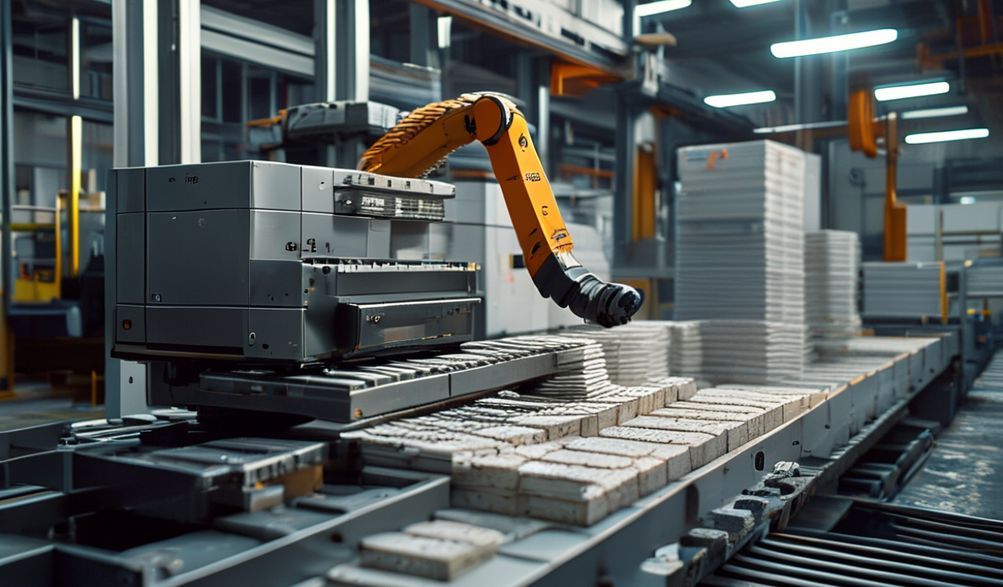
The Ultimate Guide to China Block Bricks Making Machines: Quality, Types & How to Choose
Pengenalan
The global construction industry is in a perpetual race—a race to build more, build faster, and build more affordably without compromising on durability. At the heart of this race lies a fundamental need: reliable, consistent, and cost-effective building materials. This is where the modern block bricks making machine enters the stage, transforming raw concrete into precise, sturdy blocks with remarkable efficiency. And when the world looks for this machinery, one nation consistently dominates the conversation: China.
China has cemented its role as the world’s manufacturing powerhouse, and the industrial machinery sector is no exception. For block brick making machines, China offers a compelling proposition: a blend of advanced technology, scalable manufacturing, and competitive pricing that is difficult to match. However, navigating this vast market requires more than just a search for the lowest price; it demands an understanding of technology, supplier vetting, and long-term value.
This guide serves as your authoritative, expert-backed resource. We will move beyond surface-level catalogs to provide insights grounded in industry analysis, technical specifications, and proven procurement best practices. Whether you are a business owner looking to expand your production, a civil engineer specifying equipment, or an investor entering the construction materials sector, this comprehensive look at China block bricks making machines will equip you with the knowledge to make an informed decision.
Inilah yang akan kami liput:
* The core technology and benefits of automated brick production.
* The main types of machines available from China.
* Critical technical features you must evaluate.
* A step-by-step framework for identifying a reliable supplier.
* The practical journey of procurement, from inquiry to delivery.
Understanding Block Bricks Making Machines: Core Technology & Benefits
Before diving into the specifics of the Chinese market, it’s crucial to establish a solid technical foundation. Understanding bagaimana these machines work and mengapa they are beneficial will inform every subsequent decision you make.
What is a Block Bricks Making Machine?
At its core, a block bricks making machine is a piece of industrial equipment designed to automate the formation of concrete blocks, bricks, pavers, curbstones, and similar products. It replaces slow, labor-intensive, and inconsistent manual molding with a rapid, repeatable, and high-pressure process.
The core operation, though varying by machine type, follows a consistent sequence:
1. Mencampurkan: Raw materials (cement, aggregate, sand, fly ash, water) are combined in a mixer to form a semi-dry concrete mix.
2. Pembentukan: This mix is fed into a mold cavity (the shape of the desired block).
3. Pemadatan: High-frequency vibration and immense hydraulic or mechanical pressure compress the mix, removing air pockets and creating a dense, strong block.
4. Penyembuhan: The freshly ejected “green” block is then moved to a curing area, where it gains strength over time through controlled hydration.
Key Advantages of Automating Brick Production
Investing in a mesin blok konkrit is an investment in the efficiency and future of your construction or block manufacturing business. The advantages are multifaceted:
- High Output & Unmatched Consistency: Machines produce hundreds, even thousands, of blocks per hour. Every block from the same mold is dimensionally identical, ensuring structural integrity and ease of construction.
- Penjimatan Kos Buruh yang Ketara: Automation drastically reduces the number of workers needed for molding, leading to lower long-term operational costs and reduced management overhead.
- Keselamatan yang Ditingkatkan: It minimizes the heavy lifting and repetitive strain injuries associated with manual brick production.
- Kecekapan Bahan yang Unggul: The precise pressure and vibration ensure optimal use of raw materials, minimizing waste and maximizing the strength-to-material ratio.
- Remarkable Product Versatility: By simply changing the mold, a single machine can produce a wide array of products—from standard hollow blocks and solid bricks to intricate interlocking pavers and landscaping stones—allowing you to cater to diverse market demands.
Types of Block Bricks Making Machines from China
The Chinese market caters to every conceivable need, from a small entrepreneur starting on a vacant lot to a corporation building a mega-plant. Your project’s scale, budget, and desired level of automation will determine the ideal machine type.
Mesin Pembuat Blok Sepenuhnya Automatik
These are the pinnacle of automated production lines, often referred to as a complete automatic brick making plant.
- Penerangan: These systems are computer-controlled and integrated. They typically include automatic batching systems, conveyor belts, high-speed multi-block presses, automatic stackers, and palletizers. The entire process, from raw material to palletized blocks ready for curing, requires minimal human intervention.
- Sesuai Untuk: Large-scale block manufacturing plants, government infrastructure projects, and businesses focused on maximum output for supply to a wide region.
- Kebaikan & Keburukan:
- Kelebihan: Maximum production capacity (e.g., 10,000+ blocks per 8-hour shift), exceptional consistency, lowest labor requirement per block.
- Keburukan: Highest capital investment, significant space requirements, complex installation, and need for reliable three-phase power.
Mesin Membuat Blok Semi-Automatik
This category strikes the optimal balance for many growing businesses, representing the most popular export segment from China.
- Penerangan: The core molding process—feeding, vibrating, pressing, and ejecting—is fully mechanized, often using a robust QT series machine frame. However, tasks like feeding raw mix into the hopper or moving fresh blocks to the curing area may be manual or involve simple conveyors.
- Sesuai Untuk: Medium-scale businesses, block yards supplying local construction, and entrepreneurs looking to scale up from manual production.
- Kebaikan & Keburukan:
- Kelebihan: High efficiency at a more accessible price point, easier to install and maintain than full plants, flexible in operation.
- Keburukan: Requires more operational labor than fully automatic systems, output is limited by manual handling steps.
Mobile / Egg Laying Block Machines
Named for their ability to produce and deposit blocks directly onto a level ground surface, these are the entry point into mechanized production.
- Penerangan: These are compact, portable machines without a fixed pallet system. They vibrate and form blocks, then “lay” them onto the concrete floor or a prepared slab before moving forward to produce the next batch.
- Sesuai Untuk: Small businesses, on-site production for specific projects (reducing transport costs of blocks), startups with limited capital, and markets with very low labor costs.
- Kebaikan & Keburukan:
- Kelebihan: Lowest investment cost, high mobility, simple operation and maintenance, can run on diesel engines for sites without grid power.
- Keburukan: Lowest output, blocks require manual collection for curing, product finish may be less refined than with stationary machines, labor-intensive.
Critical Features to Evaluate in a Chinese Machine
Once you’ve identified the machine type, you must drill down into the technical specifications. This is where your due diligence separates a valuable long-term asset from a problematic piece of equipment.
Spesifikasi Kapasiti Pengeluaran & Output
Never rely on vague promises. Demand precise, measurable data.
* Blocks Per Hour/Cycle: How many blocks of a standard size (e.g., 400x200x200mm hollow block) can it produce in one hour? What is the cycle time (the time to produce one mold of blocks)?
* Mold Configuration: Does it have a single mold or multiple mold cavities per cycle? A “4-block” machine will produce four standard blocks every cycle.
* Block Size Range: What are the minimum and maximum block dimensions (LxWxH) the machine can produce? Ensure it covers your current and near-future product lineup.
Machine Construction & Durability
The quality of construction directly dictates uptime and lifespan.
* Bingkai & Struktur: Look for heavy-duty, welded steel frames with sufficient reinforcement. A flimsy frame will flex under load, leading to misalignment and rapid wear.
* Sistem Getaran: This is the heart of the machine. High-quality, balanced vibration motors mounted on a robust vibration table are essential for dense, well-compacted blocks.
* Kulat: Molds should be made from hardened, high-chromium alloy steel for abrasion resistance. Check the thickness of the mold walls and the quality of welding.
* Sistem Hidraulik: For hydraulic machines, inquire about the brand of pumps, valves, and cylinders. Reputable international or top-tier Chinese brands are preferable for reliability.
Power Requirements & Operational Efficiency
Understand the operating costs from day one.
* Jenis Kuasa: Is it electric (and what voltage/phase?), diesel-powered, or a hybrid? Choose based on your site’s infrastructure.
* Total Connected Power: The sum (in kW or HP) of all motors (vibration, hydraulic, conveyor). This determines your electrical supply needs.
* Energy-Efficient Design: Some newer models feature variable-frequency drives (VFDs) on motors, which can reduce energy consumption by matching power to the load.
Mold Versatility and Customization
Your machine’s ability to adapt to market trends is a key asset.
* Interchangeable Mold System: The machine should allow for relatively quick and straightforward mold changes. Ask about the mold clamping system.
* Standard Mold Availability: Check if the supplier has a catalog of standard molds (for hollow blocks, solid bricks, pavers, etc.) and their costs.
* Custom Mold Design: Can they engineer and manufacture a custom mold for a unique block design you have? This service is a mark of a true manufacturer, not just a trader.
How to Identify a Reliable Chinese Manufacturer or Supplier
This is the most critical step in your journey. The right partner ensures success; the wrong one leads to endless headaches. Apply these principles to build a shortlist of trusted suppliers.
Verifying Manufacturer Credentials & Experience
Don’t skip the basics of corporate due diligence.
* Business Licenses: Request copies of their business license, and look for relevant certifications like ISO 9001 (Quality Management), which indicates a structured production process.
* Jejak Kilang: How large is their production facility? A significant factory space often correlates with production capacity and stability. Ask for photos or videos of the workshop.
* Tahun Beroperasi: Generally, a company that has survived for 10, 15, or 20+ years has done so by maintaining a certain level of quality and customer service. Newer companies can be good but require extra scrutiny.
Assessing Technical Expertise & Support
The quality of pre-sales conversation predicts post-sales support.
* Engineering Dialogue: When you ask technical questions, do you get clear, knowledgeable answers from an engineer, or vague replies from a salesperson? A competent factory has technical staff who can engage on details.
* Documentation: Request detailed product catalogs with full specifications, and if possible, CAD drawings or dimension sheets for the machine you’re interested in.
* After-Sales Support Package: This is non-negotiable. Clarify exactly what is included:
* Jaminan: What is covered (e.g., 1 year on main frame, 6 months on electrical parts)? What is the process for claims?
* Pemasangan & Latihan: Do they provide installation manuals, video guides, or online remote guidance? Will they send an engineer (and at what cost)?
* Alat Ganti: Is there a readily available spare parts catalog? What is the typical lead time for shipping common wear parts?
The Importance of Client References and Site Visits
Seeing is believing, and hearing from a peer is invaluable.
* Client References: Ask the supplier for contact information for 2-3 previous clients di rantau anda atau pasaran yang serupa. A confident and reputable supplier will provide these. Take the time to contact them and ask about their experience with machine performance, reliability, and supplier responsiveness.
* Factory Visit or Virtual Tour: If feasible, visiting the factory is the gold standard. You can inspect production quality, material storage, and assembly lines. If travel isn’t possible, insist on a live video call tour of the factory—not a pre-recorded promotional video. This allows you to ask real-time questions and see the operation.
The Procurement Process: From Inquiry to Delivery
Understanding the logistical journey manages expectations and helps you plan your project timeline effectively.
Getting a Quotation and Negotiating Terms
A precise inquiry gets a meaningful quote.
* Provide Detailed Specifications: When contacting suppliers, send a sheet detailing your required block types, sizes, target daily output, preferred automation level, and power source.
* Understand the Quote: The price should be broken down (machine cost, mold cost, spare parts cost). Clarify the Incoterm (e.g., FOB Shanghai, CIF Durban). FOB means you own the goods once they’re on the ship; you handle main shipping and insurance. CIF includes cost, insurance, and freight to your nearest port.
* Payment Terms: Standard terms are often 30% deposit, 70% before shipment. Letters of Credit (LC) are common for larger orders. Never pay 100% upfront.
Quality Inspection Before Shipment
This is your primary quality control checkpoint.
* Pre-Shipment Inspection (PSI): Before the final payment is made and the machine is crated, arrange for an inspection. You can hire a third-party inspection company (like SGS, BV, or TÜV) or, ideally, send your own technician to the factory.
* What to Check: The inspection should verify that the machine is built as per the contract, all components are present and correct, it performs a test run producing sample blocks, and that it is properly prepared for export (rust protection, disassembly if needed).
Logistics, Shipping, and Customs Clearance
The final leg of the journey.
* Shipping: The supplier or your appointed freight forwarder will handle booking sea freight (for full or semi-automatic machines) or air freight (for small parts). You will receive shipping documents (Bill of Lading, Commercial Invoice, Packing List).
* Customs Clearance in Your Country: This is typically the buyer’s responsibility. You or your local agent will use the shipping documents to clear the machine through customs, paying any applicable duties and taxes. Ensure you understand the import regulations for machinery in your country beforehand.
Soalan Lazim (FAQ)
Q1: What is the average price range for a block bricks making machine from China?
A: There is no single “average” price. A small mobile egg-laying machine can start from $3,000 – $7,000. A robust semi-automatic machine ranges from $15,000 – $50,000+. A fully automatic production line can cost anywhere from $80,000 to over $500,000. The only way to get an accurate price is to provide detailed specifications and request formal quotations.
Q2: Can Chinese machines be adapted for local raw materials in my country?
A: Absolutely. Reputable manufacturers expect this. You can send samples of your local cement, sand, and aggregates to the factory. They can test the mix and, if necessary, adjust the machine’s vibration frequency, pressure, or even recommend mix design formulas to ensure optimal block quality with your available materials.
Q3: How long does it take from order to delivery?
A: After order confirmation and deposit, standard machine production typically takes 20-40 days. Customized machines take longer. Sea freight transit can then take 30-45 days to most global ports, plus time for customs clearance and inland transport. Plan for a total timeline of 2.5 to 4 months from order to installation.
Q4: What kind of after-sales support can I expect?
A: You should expect and contract for: detailed installation manuals and video guides, remote support via WhatsApp/WeChat/Skype, a comprehensive parts manual, and a clear warranty policy. For larger machines, on-site installation and training by a factory engineer may be offered (sometimes at an additional cost). Clarify response time expectations for technical queries.
Q5: Are spare parts readily available?
A: This is a critical question. Established manufacturers maintain an inventory of common wear parts (mold liners, springs, hydraulic seals, vibration motor bearings). They should be able to ship these parts within days of an order. It is highly advisable to purchase a starter kit of critical spare parts with your machine to minimize downtime.
Kesimpulan
The world of China block bricks making machines offers a solution for virtually every scale of operation, from the modest startup to the industrial-scale plant. The journey from identifying a need to having a productive machine on your floor is significant, but it is manageable with the right knowledge.
As we’ve outlined, the path to success hinges on a methodical approach. It begins with understanding your own technical requirements and continues through rigorous supplier evaluation, where you must prioritize proven kepakaran, industry kewibawaan, and operational kebolehpercayaan above a tempting low price tag. The most cost-effective machine is rarely the cheapest one; it is the one that runs reliably for years, backed by a supplier who answers the phone when you need help.
Your next step is to synthesize this guide into action. Prepare a clear, detailed project specification document. Use the criteria here to research and create a shortlist of 3-5 potential manufacturers. Engage with them technically, request client references, and always, always prioritize total lifecycle value. With diligent effort, you can successfully partner with a Chinese manufacturer to acquire machinery that will become the profitable backbone of your construction materials business for years to come.
<