
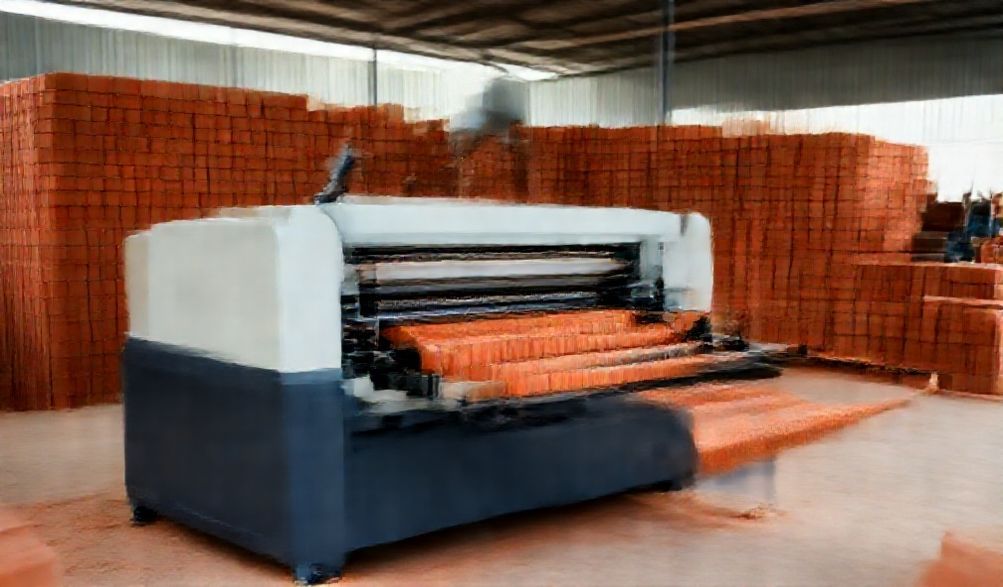
Panduan Muktamad untuk Mesin Pembuatan Bata Tanah Liat di Malaysia (2026)
Pengenalan
Selama berabad-abad, batu bata tanah liat telah membentuk tulang belakang literal dan budaya pembinaan Malaysia. Dari rumah kedai bersejarah di Pulau Pinang hingga pembangunan subbandar moden, ketahanan, penebat haba yang sangat baik, dan estetika abadi mereka menawarkan nilai yang tiada tandingannya. Walau bagaimanapun, kaedah tradisional menghasilkan blok binaan penting ini semakin bercanggah dengan tuntutan projek moden.
Pengeluaran bata secara manual terkenal dengan intensiti buruh yang tinggi, perlahan, dan mudah mengalami ketidakseragaman dalam saiz dan kekuatan. Sebaliknya, bergantung sepenuhnya pada bata import atau bekalan komersial boleh mengetatkan belanjawan projek dengan kos bahan yang tinggi dan kelewatan logistik. Bagi pembina, kontraktor, dan usahawan yang berpandangan ke hadapan, ini menimbulkan cabaran yang besar: bagaimana untuk mendapatkan bekalan bata yang boleh dipercayai, berkualiti tinggi, dan berkesan kos.
Penyelesaiannya terletak pada modenmesin pembuatan bata tanah liatPanduan ini direka untuk menjadi sumber komprehensif dan boleh dipercayai anda mengenai teknologi transformatif ini dalam konteks Malaysia. Dibina atas penyelidikan industri yang teliti, analisis spesifikasi teknikal, dan pemahaman mendalam tentang dinamik pasaran tempatan, matlamat kami adalah untuk membekalkan anda dengan pengetahuan untuk membuat pelaburan yang yakin dan berinformasi. Kami akan meneroka pelbagai jenis mesin yang tersedia, pertimbangan pembelian utama, pembekal terkemuka, analisis kos yang realistik, serta tip operasi penting yang disesuaikan dengan persekitaran unik Malaysia.
Mengapa Memilih Mesin Pembuat Bata Tanah Liat untuk Projek Malaysia Anda?
Melabur dalam mesin pembuatan bata bukan sekadar membeli peralatan; ia tentang meningkatkan keupayaan pengeluaran anda secara asas. Berikut adalah cara teknologi ini memenuhi keperluan teras dalam sektor pembinaan Malaysia.
Kecekapan Tiada Tandingan & Peningkatan Output Pengeluaran
The contrast in output is staggering. A skilled manual laborer might produce 500-800 bricks in a full day of back-breaking work. A basic semi-automatic machine can increase that output to 2,000-3,000 bricks per day with a fraction of the physical effort. High-end fully automatic lines can produce tens of thousands of bricks daily.
This leap in speed is a direct competitive advantage. It allows you to meet tight project deadlines, take on larger contracts, and respond swiftly to market demand. For growing businesses, this scalability is the engine of expansion.
Kualiti Bata yang Unggul dan Konsisten
Machines excel where human hands vary. By applying precise, hydraulic or mechanical pressure, these machines ensure every brick has uniform density, dimensions, and compressive strength. This consistency is not a minor detail—it is critical for structural integrity, simplifies the bricklaying process, and minimizes mortar use.
Consistent quality directly translates to reduced waste from rejected or substandard bricks, protecting your profit margins and project timelines.
Significant Long-Term Cost Savings
While there is an upfront investment, the return on investment (ROI) is compelling. The primary savings come from:
- Kos Buruh Dikurangkan Secara Drastik:Mengautomasikan bahagian pengeluaran yang paling memerlukan tenaga kerja.
- Lower Material Wastage: Precise production means less spoiled raw material.
- Pengeluaran Atas Permintaan: Eliminate storage costs and risks of supply chain price hikes by producing exactly what you need, when you need it.
For large-scale or ongoing projects, producing your own bricks on-site can lead to monumental savings compared to purchasing them.
Adaptability to Local Malaysian Clay
Malaysia boasts a variety of soil types, from the lateritic soils common in many regions to clayey soils near riverbanks. A common concern is whether a machine can handle local materials.
Modern brick making machines are designed with this variability in mind. Key parameters like pressure, moisture content, and mix ratios can be adjusted. The best suppliers will often offer to test your local soil sample to recommend the optimal machine settings and any necessary additives (like sand) to create a perfect, durable brick.
Types of Clay Brick Making Machines Available in Malaysia
Understanding the categories of machines is the first step to matching the right technology to your specific needs and budget.
Mesin Manual atau Dikendalikan Tangan
These are the simplest and most affordable entry point into brick production.
- Terbaik untuk: Very small-scale projects (e.g., a personal home build), community initiatives in rural areas without reliable power, or entrepreneurs testing the market with minimal capital.
- Kelebihan:
- Pelaburan awal yang sangat rendah.
- Simple operation with no electrical or diesel requirements.
- Highly portable.
- Keburukan:
- Very low production output.
- Memerlukan tenaga fizikal yang banyak.
- Quality and consistency depend entirely on the operator’s skill.
Mesin Semi-Automatik
This category offers the best balance for many Malaysian small and medium-sized enterprises (SMEs) and established blockyards.
- Terbaik untuk: SMEs, dedicated brick-making yards, and contractors undertaking several projects per year.
- Kelebihan:
- Excellent balance between cost, output, and consistency.
- Mechanizes the pressing and molding process, drastically reducing manual effort.
- Often includes features like automatic feeding or ejection.
- Keburukan:
- Requires operator involvement for feeding raw material and removing finished bricks.
- Needs a connection to an electrical grid or a generator.
Mesin Sepenuhnya Automatik
These are the powerhouses of brick production, designed for maximum output with minimal manual intervention.
- Terbaik untuk: Large-scale construction firms, industrial brick manufacturing plants, and businesses aiming to dominate regional supply.
- Kelebihan:
- Exceptionally high, continuous output (can include automated palletizing and stacking).
- Requires minimal labor—mainly for supervision and maintenance.
- Delivers the most consistent quality and can be programmed for various brick types and sizes.
- Keburukan:
- Pelaburan modal awal yang tinggi.
- Requires skilled technical maintenance.
- Needs significant space, stable high-power supply, and proper infrastructure.
Key Features to Consider When Buying in Malaysia
Beyond the basic type, these features will determine how well the machine performs in your specific operation.
Kapasiti Pengeluaran (Batu Bata Per Jam/Hari)
Don’t just buy the biggest machine you can afford. Carefully estimate your current and near-future needs. An oversized machine will drain capital and incur higher operating costs, while an undersized one will become a bottleneck. Match the machine’s rated capacity to your realistic project pipeline.
Brick Type and Size Compatibility
Consider your market. Are you focusing on standard solid bricks (e.g., 4″x8″x16″) for general construction? Or is there demand for specialized products?
- Kepelbagaian Acuan: Many machines allow for interchangeable molds. Look for suppliers offering molds for hollow blocks, interlocking paving bricks, or decorative facades. This flexibility lets you diversify your product line and tap into multiple market segments.
Power Source: Electric, Diesel, or Hybrid?
Your location dictates the ideal power source.
- Elektrik: Clean, quiet, and cost-effective for operations with stable grid access (typical in urban/industrial areas).
- Diesel: Essential for remote sites without reliable electricity. Offers independence but comes with fuel costs, noise, and emissions.
- Hibrid: Some models offer the flexibility to switch between power sources, providing valuable adaptability.
Machine Durability and After-Sales Support
This is the most critical consideration for long-term success in Malaysia’s tropical climate.
- Ketahanan: The machine must be built to resist high humidity and occasional rain exposure. Look for robust frames, high-quality steel components, and corrosion-resistant treatments or paint.
- After-Sales Support (The E-E-A-T Critical Point): A machine is only as good as the support behind it. Prioritize suppliers who offer:
- A strong warranty with clear terms.
- Readily available spare parts within Malaysia.
- Local service technicians who can provide installation, training, and prompt repairs.
- A proven track record. Always ask for and contact customer references.
Top Suppliers and Brands of Brick Making Machines in Malaysia
Navigating the supplier landscape is crucial to a successful purchase.
Established Local Manufacturers and Distributors
Local companies have inherent advantages. They understand the specific challenges of the Malaysian market, from soil types to climate. Communication is easier, and they can typically provide faster service and technical support. Whenever possible, insist on visiting their showroom or, even better, an existing client’s operational site to see the machine in action.
Reputable International Brands with Malaysian Presence
Several globally recognized brands have established distributors or partners in Malaysia. These brands are often synonymous with engineering excellence, durability, and advanced technology. The key is to verify that their local partner maintains a fully stocked warehouse of spare parts and employs trained engineers. A famous brand is of little use if you must wait months for a crucial part to be shipped from overseas.
Red Flags to Avoid When Choosing a Supplier
Protect your investment by being vigilant. Steer clear of suppliers who:
- Offer vague or unusually short warranty terms.
- Operate without a verifiable physical business address or workshop.
- Cannot or will not provide contactable customer references.
- Use high-pressure sales tactics to rush your decision.
- Have prices that seem too good to be true (often indicating poor-quality materials or lack of support).
E-E-A-T Focus: Your due diligence is non-negotiable. Verify business licenses, seek authentic testimonials, and choose transparency over empty promises.
Cost Analysis and Investment Guide
Let’s break down the financial commitment. (Note: All figures are estimated ranges in MYR and subject to market changes.)
Price Range Breakdown by Machine Type
- Mesin Manual: RM 1,500 – RM 7,000. A low-cost entry point.
- Mesin Semi-Automatik: RM 15,000 – RM 80,000. The most common range for business investments, with features and capacity affecting price.
- Mesin Sepenuhnya Automatik: RM 100,000 – RM 500,000+. A major industrial investment for high-volume production.
Beyond the Machine: Additional Costs to Budget For
The machine price is just the start. Factor in:
- Kulat: Each different brick type requires its own mold (RM 500 – RM 3,000+ each).
- Palet: For drying and transporting bricks.
- Raw Material Handling: A pan mixer or concrete mixer for preparing the clay-sand mixture.
- Land & Shed Preparation: A level, solid foundation and a covered area for drying and storage to protect bricks from rain.
- Latihan Pengendali: Budget for the time and potential cost of proper training.
Understanding Financing and Government Incentives
For Malaysian SMEs, explore potential financial aid. Check with agencies like SME Corp MalaysiaatauMATRADE for grants, soft loans, or incentives related to upgrading manufacturing technology and equipment. Your local bank may also offer machinery financing loans.
Operating Your Machine: Tips for Success in the Malaysian Climate
Sourcing and Preparing Your Raw Material (Clay)
Success starts with the right mix. Conduct a simple soil test: form a ball of moist soil and drop it from waist height. If it crumbles, it’s too sandy; if it flattens without cracking, it has good clay content. The ideal mix usually includes clay, sand, and a small amount of water to achieve a pliable, non-sticky consistency.
Optimal Curing and Drying Practices
Malaysia’s high humidity is the main challenge for drying.
- Never sun-dry uncovered: Sudden rain can ruin an entire batch.
- Use a dedicated drying shed: A well-ventilated, roofed structure is essential.
- Stack bricks properly: Allow ample air circulation between bricks to promote even drying and prevent warping.
Routine Maintenance for Longevity
A simple, consistent routine prevents major breakdowns.
- Daily: Clean all excess clay from the mold, hopper, and press. Check for loose bolts or nuts.
- Weekly: Lubricate all moving parts as per the manual. Inspect hydraulic hoses and electrical connections for wear.
- Post-Rain: If the machine is exposed to moisture, dry it thoroughly and apply anti-rust spray to vulnerable parts.
FAQ Section
Q1: What is the average production capacity of a mid-range clay brick machine in Malaysia?
A: A typical mid-range semi-automatic machine in Malaysia can produce between 2,000 to 5,000 standard bricks per 8-hour shift, depending on the model and operator efficiency.
Q2: Can I use laterite soil commonly found in Malaysia in these machines?
A: Yes, but laterite soil often needs to be mixed with other soils (like more plastic clay) or additives such as sand or a small amount of cement for optimal binding and strength. A soil test is highly recommended before full-scale production.
Q3: How much space do I need to set up a small brick-making operation?
A: For a small semi-automatic operation, you should plan for at least 5,000 to 10,000 square feet. This space accommodates the machine, raw material storage, a mixing area, a covered drying shed, and storage for finished bricks.
Q4: Are there any safety certifications or standards (like SIRIM) for these machines in Malaysia?
A: While there may not be a specific “brick machine” standard, responsible suppliers should comply with general industrial safety and electrical standards. Always check with the supplier for compliance certificates for critical components like motors, hydraulic systems, and electrical controls. SIRIM certification on key parts is a strong indicator of quality and safety.
Q5: What is the typical lead time for receiving a machine after ordering?
A: For common semi-automatic models available locally, lead time can be as short as 1-2 weeks. For custom configurations or fully automatic lines, it may take 2 to 4 months, including shipping and assembly.
Q6: Can the machine produce different types of bricks, like hollow blocks or paving bricks?
A: Absolutely. Most machines are designed to work with interchangeable molds. By purchasing different molds, the same machine can typically produce solid bricks, hollow blocks, interlocking bricks, and paving stones, giving you great product flexibility.
Kesimpulan
Investing in a clay brick making machine represents a strategic decision to take control of quality, cost, and supply for any construction-related business in Malaysia. It’s a move from being at the mercy of external suppliers to becoming a self-sufficient, efficient producer.
The journey begins with a clear assessment of your production needs, budget, and long-term goals. Let these factors—not just the sticker price—guide your choice. Remember, the reputation and support network of your supplier are as important as the machine itself. A reliable partner ensures your investment continues to pay dividends for years to come.
Ready to transform your brick production and build a more profitable future? Contact a reputable Malaysian supplier today for a detailed consultation and a live site demonstration. For more in-depth technical guides and industry insights, explore our dedicated machinery resource hub.
Our goal has been to provide you with trustworthy, actionable information to empower your decision-making. By prioritizing expertise, experience, and transparency, you can make an investment that strengthens the foundation of your business.
<