
The Ultimate Guide to Automatic Block Machines: Efficiency, Types & How to Choose
Pengenalan
The global construction sector is a relentless engine of growth, demanding billions of concrete blocks annually. Yet, for many manufacturers, meeting this demand with manual or semi-automatic methods is a constant struggle against inefficiency, inconsistency, and rising costs. If you’re a business owner, construction manager, or investor feeling the pinch of slow production and variable quality, you’re not alone. The limitations of outdated block-making are real: they’re labor-intensive, produce lower output, and can jeopardize project timelines with inconsistent product strength.
Enter the automatic block machine—the transformative piece of technology that is redefining modern construction material production. This isn’t just an incremental upgrade; it’s a leap into a future of high-speed, precision automation that directly addresses the core challenges of scale and quality.
This comprehensive guide is built on industry insights, deep technical understanding, and practical operational knowledge. Our goal is to cut through the complexity and provide you with a clear, authoritative resource. By the end, you’ll have a firm grasp on how these machines work, their undeniable advantages, the different types available, and—most importantly—a actionable framework for selecting the right model to maximize your return on investment. Let’s empower your next critical decision.
What is an Automatic Block Machine? Core Principles & Evolution
At its core, an automatic block machine is a sophisticated, integrated manufacturing system designed to produce concrete blocks, pavers, and other masonry products with minimal human intervention. It combines raw material handling, precise mixing, high-pressure molding, and automated product handling into one seamless, computer-controlled operation.
From Manual to Fully Automatic: A Brief History of Block Making
The journey of block making mirrors the broader story of industrial automation.
* Manual Era: For centuries, blocks were made by hand-packing concrete into simple wooden molds—a process that was slow, physically demanding, and yielded highly variable results.
* Mechanical Revolution: The invention of the first mechanical presses, like the “Columbia” machine in the early 1900s, introduced leverage and basic vibration, boosting output but still requiring significant manual labor for feeding and handling.
* The Automation Age: The late 20th century saw the integration of hydraulics, conveyors, and early programmable controllers. Today’s fully automatic machines represent the pinnacle of this evolution, governed by advanced PLCs (Programmable Logic Controllers) that orchestrate every step of the cycle with robotic precision.
How Does an Automatic Block Machine Work? The Production Cycle
Understanding the standard production cycle demystifies the machine’s efficiency. Here’s a step-by-step breakdown:
- Pemberian Bahan Mentah: Aggregates (sand, gravel), cement, and water are automatically batched and fed into the mixer via conveyors or hoppers, ensuring precise mix proportions every time.
- Mencampurkan: A high-efficiency mixer (often a pan or planetary type) blends the materials into a homogeneous, workable concrete mix.
- Molding/Vibration/Compaction: The heart of the process. The mix is fed into a mold on a vibrating table. Here, high-frequency vibration removes air pockets while simultaneous hydraulic pressure compacts the concrete, creating a dense, strong block with sharp edges.
- Curing/Demolding: The freshly formed block (often on a pallet) is automatically transferred to a curing area. In some systems, it’s immediately demolded and stacked; in others, it sets briefly before demolding.
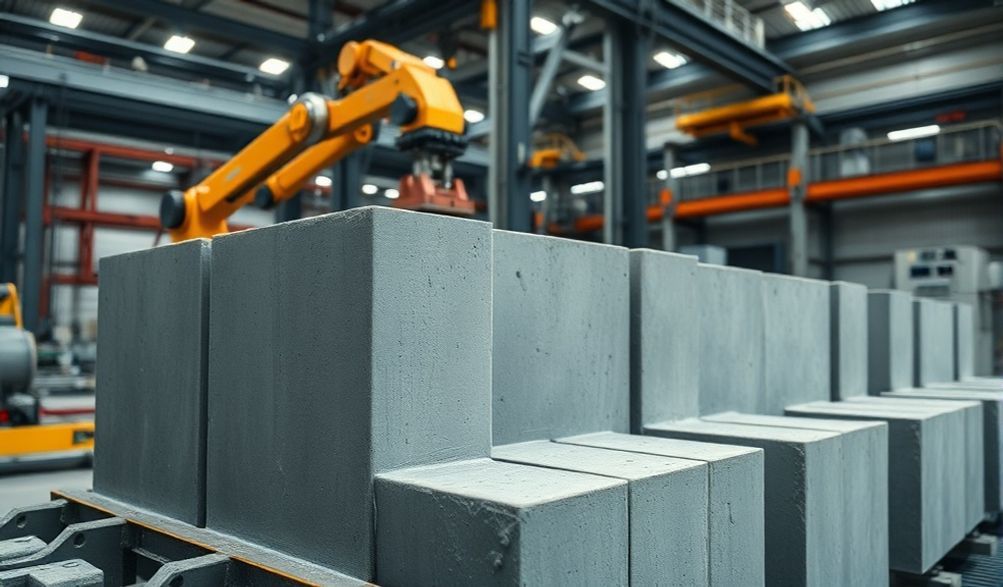
- Pemaletan/Penimbunan: Robotic arms or stackers neatly organize the finished blocks onto pallets or in stacks, ready for transport or further curing.
This entire cycle, from empty mold to stacked block, can take as little as 10-20 seconds, repeating continuously with unwavering consistency.
Key Outputs: Beyond Standard Concrete Blocks
The versatility of these machines is a major selling point. By simply changing the mold, a single machine can produce:
* Hollow & Solid Concrete Blocks
* Batu Paving & Pavers Saling Kunci
* Curb Stones & Landscape Edging
* Interlocking Bricks for Construction
* Specialty Shapes (retaining wall blocks, decorative elements)
Key Advantages of Investing in an Automatic Block Machine
Moving to automation is a strategic business decision with measurable, multi-faceted benefits that directly impact your bottom line and competitive edge.
Kecekapan dan Hasil Pengeluaran yang Tiada Tandingan
The numbers speak for themselves. While a skilled crew with a semi-automatic machine might produce 1,000-2,000 blocks in an 8-hour shift, a mid-range automatic machine can produce 5,000 to 15,000 blocks in the same timeframe. High-end stationary plants can exceed 20,000+. This exponential increase in output allows you to take on larger contracts, fulfill orders faster, and scale your business without proportional increases in labor.
Kualiti Produk yang Unggul dan Konsisten
Automation eliminates human variability. Every block receives:
* Identical vibration frequency and duration.
* Precise, repeatable hydraulic pressure.
* Exact raw material proportions.
This results in blocks with uniform dimensions (critical for smooth bricklaying), consistent high density, and reliable compressive strength (e.g., a steady 7 MPa, 10 MPa, etc.). Consistent quality builds your brand’s reputation and reduces costly call-backs or rejections.
Significant Reduction in Labor Costs & Dependency
An automatic system fundamentally changes your labor structure:
* From: A large crew handling mixing, feeding molds, demolding, and stacking.
* To: 1-3 operators monitoring the control panel, performing quality checks, and managing material input.
This drastic reduction not only cuts long-term wage expenses but also mitigates risks associated with labor shortages, absenteeism, and training turnover.
Enhanced Operational Safety & Better Working Conditions
Automation removes workers from the most hazardous tasks:
* No manual handling of heavy, wet concrete.
* Reduced exposure to repetitive strain injuries from vibrating equipment.
* A cleaner, more controlled factory floor.
This leads to a safer work environment, lower insurance premiums, and improved employee morale.
Optimized Raw Material Usage & Waste Reduction
Precision is key to profitability. Automated batching ensures minimal over-pouring or under-pouring of materials. The efficient molding process drastically reduces spillage and the production of cracked or malformed “waste” blocks. This optimization can improve your material yield by 5-10%, which translates directly to cost savings on every batch.
Types of Automatic Block Machines: Finding the Right Fit
Not all automatic machines are created equal. Choosing the right type is the first and most critical step, determined by your production goals, site conditions, and budget.
Stationary Automatic Block Making Plants
These are the powerhouses of the block manufacturing world.
* Penerangan: Large, fixed-installation systems comprising multiple integrated units (feeder, mixer, host machine, stacker, conveyor). They are installed on a permanent, heavy-duty foundation.
* Terbaik Untuk: Large block manufacturing yards, dedicated block supply companies servicing entire regions, and major, long-duration infrastructure projects with a central batching plant.
* Kelebihan: Highest possible output and automation level. Maximum product consistency. Lowest per-unit cost at high volumes.
* Keburukan: Highest capital investment. Requires significant factory space and a strong, level concrete foundation. Not portable.
Mobile Automatic Block Machines
Also known as “mobile block makers” or “on-site block machines,” these offer unparalleled flexibility.
* Penerangan: Self-contained production units mounted on a trailer or skid frame. They integrate mixing, molding, and often a small block elevator into a single mobile package.
* Terbaik Untuk: Remote construction sites (e.g., rural housing, mining camps), projects where transporting finished blocks is logistically challenging or expensive, and businesses that need to move production between multiple sites.
* Kelebihan: Eliminates transport costs for finished blocks. Enables production exactly where needed. Faster setup than a stationary plant. Lower initial investment.
* Keburukan: Generally lower output capacity than stationary plants. May have less automation in material feeding/stacking. Requires a suitable vehicle for transport.
Sepenuhnya Automatik vs. Semi-Automatik: Perbandingan yang Jelas
It’s crucial to distinguish between these two levels of automation.
Ciri | Mesin Sepenuhnya Automatik | Mesin Semi-Automatik
| :— | :— | :— |
| Tahap Automasi | High. PLC controls the entire cycle from feeding to stacking. | Medium. Machine automates molding/vibration, but loading, demolding, and stacking are manual. |
| Tenaga Buruh Diperlukan | Low (1-3 operators for monitoring). | Moderate to High (4-8 workers for manual tasks). |
| Kapasiti Output | Very High (5,000 – 20,000+ blocks/shift). | Moderate (1,000 – 4,000 blocks/shift). |
| Pelaburan Awal | Higher. | Significantly Lower. |
| Operational Control | Consistent, programmable, less prone to human error. | More dependent on operator skill and pace. |
Critical Features to Evaluate When Choosing a Machine
Once you’ve identified the machine type, dive deep into these technical and support specifications. This is where due diligence pays off for decades.
Production Capacity (Blocks Per Hour) & Mold Versatility
- Kapasiti: Don’t just look at the theoretical maximum. Consider the output for the specific block type and size you’ll produce most often. Match this to your current and projected 3-5 year demand.
- Kepelbagaian Acuan: A quick mold change system is invaluable. Check how long it takes to switch molds and the cost/availability of different mold sets. This flexibility allows you to respond to market opportunities.
Core Mechanical Components: Hydraulics, Vibration, and Control Systems
- Hidraulik: Look for robust, branded hydraulic pumps and cylinders. A well-designed, sealed system runs cooler, is more reliable, and leaks less. Ask about hydraulic oil cooling capacity.
- Sistem Getaran: High-frequency, amplitude-controlled vibration is non-negotiable for dense blocks. Electromagnetic vibrators are common; ensure they are powerful and durable.
- Sistem Kawalan: The PLC panel is the machine’s brain. It should have a user-friendly touchscreen interface (often multilingual), clear fault diagnostics, and the ability to store recipes for different products.
Energy Efficiency & Power Requirements
- Total Connected Load: Get the exact power requirement (in kW). This affects your electrical infrastructure costs.
- Efficiency Features: Inquire about energy-saving motors, variable frequency drives (VFDs) for pumps, and intelligent idle modes. A more efficient machine has a lower lifetime operating cost.
Sokongan Selepas Jualan: Faktor Penentu Kejayaan
This is arguably the most important criterion. A machine is a long-term asset.
* Sokongan Teknikal: Does the supplier offer 24/7 phone support? How quickly can they dispatch a technician?
* Alat Ganti: Is there a local warehouse or guaranteed shipping time for critical spare parts (like hydraulic seals, vibration motors, control cards)?
* Latihan: Does the purchase include comprehensive on-site training for your operators and maintenance staff? Proper training prevents misuse and downtime.
Calculating Your Return on Investment (ROI)
An automatic block machine is a capital investment. A clear financial analysis is essential to justify the purchase and plan for growth.
Understanding the Total Cost of Ownership
Look beyond the sticker price. Your total investment includes:
* Machine Price & Import Duties (if applicable)
* Shipping, Insurance, and On-site Installation
* Foundation Preparation & Utility Connections (3-phase power, water)
* Initial Stock of Spare Parts and Consumables
* Operator & Maintenance Training Costs
Projecting Revenue and Operational Savings
Project the financial upside:
* Peningkatan Hasil Pendapatan: (Higher Daily Output) x (Price per Block) x (Operating Days).
* Penjimatan Tenaga Kerja: (Reduction in Number of Workers) x (Average Annual Wage & Benefits).
* Material Savings: (Estimated % Reduction in Waste) x (Annual Material Cost).
* Quality/Upside: Potential for higher pricing due to superior quality or ability to produce premium products (like colored pavers).
Sample ROI Calculation Framework
Disclaimer: The following is a simplified example. Actual figures vary dramatically based on local market prices, labor rates, material costs, and operational efficiency.
Scenario: A business upgrades from a semi-automatic to a mid-range automatic machine.
* Total Investment: $120,000
* Increased Daily Output: +8,000 blocks
* Profit per Block: $0.15
* Daily Increased Profit: 8,000 x $0.15 = $1,200
* Annual Labor Savings (reducing crew by 4): $40,000
* Total Annual Benefit: ($1,200 x 300 operating days) + $40,000 = $400,000
* Simple Payback Period: $120,000 / $400,000 = ~0.3 years (approx. 3.6 months).
While your payback period will differ, this framework highlights the powerful economics of automation when matched with sufficient market demand.
FAQ: Your Automatic Block Machine Questions Answered
Q1: What is the average price range for an automatic block machine?
A: Prices vary widely based on capacity, brand, and automation level. Small mobile units can start around $50,000, standard stationary machines range from $80,000 to $250,000, and large, fully-integrated turnkey plants can exceed $500,000. Always get detailed, itemized quotations.
Q2: What raw materials can it use?
A: The primary materials are Portland cement, fine aggregates (sand), and coarse aggregates (gravel, crushed stone). Many machines can also effectively use industrial by-products like fly ash or slag cement. Some are designed to incorporate waste materials like crushed construction debris, following a proper mix design.
Q3: How much space and what foundation is required?
A: Space needs include the machine footprint, raw material storage bays, a curing area, and finished product storage. A typical mid-size machine might need a 50ft x 100ft (15m x 30m) covered area. It requires a level, reinforced concrete foundation (often 12-16 inches thick) specified by the manufacturer to absorb dynamic loads.
Q4: What kind of maintenance is required daily/weekly?
A: Regular maintenance is critical. Daily tasks include cleaning excess concrete, checking hydraulic oil levels, and lubricating guide rails. Weekly tasks involve inspecting molds for wear, checking belt tensions on conveyors, and tightening bolts. Follow the manufacturer’s manual strictly.
Q5: Can one machine produce different block types and sizes?
A: Absolutely. This is a key advantage. By purchasing different mold sets, you can produce hollow blocks, solid blocks, pavers, etc., from the same host machine. The key is to choose a machine with a quick and easy mold change system to minimize downtime during product switches.
Kesimpulan
Investing in an automatic block machine is more than a purchase; it’s a strategic commitment to scaling your production, future-proofing your business, and dominating your market with consistent, high-quality products. We’ve explored how these machines deliver unmatched efficiency, superior quality, and a compelling return on investment by tackling the core challenges of labor, waste, and capacity.
The right choice hinges on a clear-eyed analysis of your specific business scale, target product mix, budget, and local market dynamics. There is no one-size-fits-all solution, but a perfect fit for your unique operation.
As a final piece of expert advice, we strongly recommend taking these steps before deciding: visit the supplier’s factory to see the machine being built, request to see a working installation (and speak to that owner), and run your own production numbers through an ROI model. Use this guide as your foundational checklist.
Empower your next move with knowledge. Consult with reputable industry experts, ask the hard questions about support, and make the investment that will build your business for the next decade.
<