
The QTY4 25 Block Making Machine: A Comprehensive Guide for Builders & Manufacturers
Pengenalan
For builders, entrepreneurs, and project managers, the challenge is universal: securing a reliable, cost-effective supply of quality concrete blocks. Whether you’re constructing a family home, launching a small manufacturing yard, or overseeing a community development project, dependence on external suppliers can mean budget overruns, logistical delays, and compromised control over your core building material.
This guide cuts through the noise. Built on an analysis of technical specifications, operational best practices, and real-world applications of small-scale block-making equipment, we provide a deep dive into a specific solution: the QTY4 25 Block Making Machine. Our goal is not to sell you a machine, but to arm you with the detailed, practical knowledge needed to evaluate if this model aligns with your project’s scale, budget, and goals.
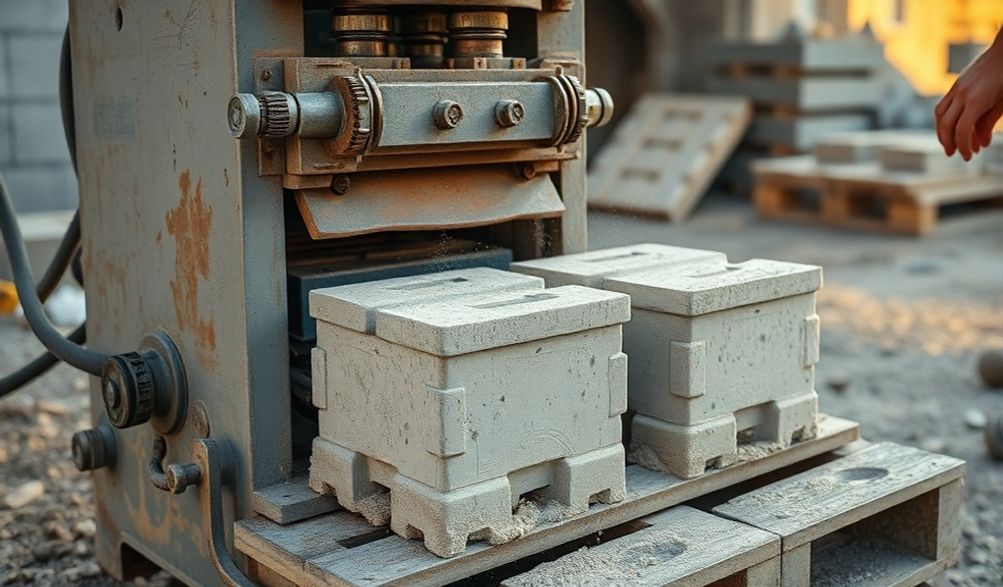
The “QTY4 25” typically refers to a manual or semi-automatic press capable of producing four (4) blocks per production cycle, with the “25” often denoting a key block dimension, such as a 25cm width or thickness. It represents a bridge between purely manual, single-block presses and larger, more expensive automated systems.
This post will serve as your unbiased manual. We’ll explore its specifications, ideal use cases, operational nuts and bolts, and honest pros and cons. By the end, you’ll be equipped to make an informed, confident decision about this pragmatic piece of equipment.
What is the QTY4 25 Block Making Machine? Specifications & Core Features
Understanding the fundamental design and capabilities of the QTY4 25 is the first step to assessing its fit for your operation.
Machine Type and Operating Principle
The QTY4 25 is generally classified as a manual or semi-automatic static block press. It often utilizes a mechanical lever system, sometimes aided by a small hydraulic jack, to compress the concrete mix within a sturdy steel mold. Many models also incorporate a vibrator motor (requiring electrical connection) to enhance compaction and block density.
The operating cycle is straightforward and cyclical:
1. Pengisian: Prepared concrete mix is loaded into the machine’s mold cavities.
2. Pemadatan: The operator engages the lever system (and vibration, if equipped) to compress the mix.
3. Pengusiran: The lever is pulled to raise the mold, leaving the freshly formed blocks on the production pallet or ground.
4. Reset: The mold is lowered, and the cycle repeats.
Spesifikasi Teknikal Utama
While specs can vary slightly by manufacturer, here are the common parameters you can expect:
- Kapasiti Pengeluaran: The core feature is 4 blocks per cycle. Daily output is highly variable, but a skilled operator can typically produce between 800 to 1,500 blocks in an 8-hour shift, depending on cycle time, mix preparation, and workflow efficiency.
- Block Dimensions: The “25” commonly indicates a block width of 250mm (25cm). A standard output might be a solid or hollow block measuring 250mm (W) x 200mm (H) x 400mm (L). It is critical to confirm the exact mold dimensions with your supplier.
- Dimensi & Berat Mesin: As a static, bench-style machine, it may measure approximately 1.5m x 1m x 1.5m (LxWxH) and weigh between 300-500 kg, requiring a stable, level foundation.
- Keperluan Kuasa: Most models require a 220V/380V electrical supply to power the vibrator motor for optimal compaction. The core pressing action remains manual.
- Construction & Durability: Built for rugged use, it features a heavy-duty steel frame and high-carbon steel or alloy mold components to withstand constant abrasion and pressure.
Standard Output: Types of Blocks It Can Produce
The specific blocks produced are determined by the mold installed. Standard offerings often include:
- Blok Konkrit Pejal: Dense blocks for heavy-load bearing walls and foundations.
- Blok Konkrit Berongga: Lighter, with cavities for insulation and reinforcement, used in most wall constructions.
- Blok Papak Berkunci For landscaping, walkways, and driveways (requires a specific mold set).
- Other Specialty Blocks: Some suppliers offer molds for kerbstones, vent blocks, or decorative designs.
The ability to change molds varies; some machines have fixed molds, while others offer interchangeable systems. This is a key question for your supplier.
Ideal Applications and Target Users for the QTY4 25
This machine isn’t for everyone, but for the right user, it’s an invaluable asset. Its design caters to scenarios where simplicity, affordability, and independence trump high-volume, fully automated production.
Small to Medium-Scale Construction Projects
For individual builders or contractors working on defined projects like homesteads, farm structures, or perimeter walls, the QTY4 25 offers compelling advantages:
* Pengeluaran Atas Permintaan: Manufacture blocks directly on-site, eliminating transport costs and delays.
* Kawalan Kualiti: Directly manage the concrete mix and curing process, ensuring block strength.
* Cost Savings: Significant reduction in material costs compared to purchasing ready-made blocks from a large yard.
Startup Block Manufacturing Businesses
For entrepreneurs entering the construction materials market with limited capital, this machine is a viable starting point.
* Low Barrier to Entry: It requires a fraction of the investment of automatic block-making plants.
* Manageable Scale: Allows a small team to produce and sell blocks locally, serving neighborhood construction needs.
* Proof of Concept: Enables testing of the business model before scaling up with more expensive equipment.
Community Projects & NGOs
In development contexts or community-led initiatives, the QTY4 25 shines due to its:
* Kesederhanaan: Easy to operate and maintain with basic training.
* Low-Tech Reliability: Minimal electronic components mean fewer breakdowns and easier repairs.
* Kelestarian: Empowers communities to produce their own building materials using locally available aggregates, fostering self-reliance.
Advantages for These Users
Across these applications, common benefits include:
* Pelaburan Awal yang Lebih Rendah: The most significant advantage over automated machinery.
* Kebebasan Operasi: Frees users from the volatility and logistics of external supply chains.
* Infrastruktur Minimum: Can be operated in a simple shed or even outdoors with a tarpaulin cover.
Operational Guide: Running and Maintaining Your Machine
Proper operation and maintenance are the difference between a durable, profitable asset and a piece of scrap metal. Here’s a practical guide.
Step-by-Step Operating Instructions
- Site & Setup: Place the machine on a solid, level concrete floor. Ensure clear space for material storage, mixing, and block stacking.
- Reka Bentuk Campuran: A well-graded mix is crucial. A common starting ratio is 1 part cement, 4 parts sharp sand, 4 parts coarse aggregate (10-14mm). Water should be added to achieve a semi-dry, moldable consistency—too wet will cause blocks to slump.
- The Production Cycle:
- Place a wooden or steel pallet under the mold.
- Fill the mold cavities completely with mix, slightly heaped.
- Engage the vibrator (if equipped) for 5-10 seconds to settle the mix.
- Pull the lever to apply high pressure and compact the block.
- Hold pressure for a few seconds, then release and pull the ejection lever to raise the mold.
- Carefully move the pallet with the fresh blocks to the curing area.
- Proses Penyembuhan: Do not move blocks for at least 24 hours. Then, keep them moist and covered with plastic sheeting for a minimum of 7 days to allow proper hydration and strength development. Full strength is achieved after 28 days.
Essential Safety Procedures
- Peralatan Perlindungan Diri (PPD): Always wear safety glasses, heavy-duty gloves, steel-toe boots, and a dust mask when handling cement.
- Safe Handling: Keep hands clear of moving parts and mold during the compression cycle. Use proper lifting techniques when handling raw materials or blocks.
- Workspace: Maintain a clean, organized area free of trip hazards and excess slurry.
Routine Maintenance Checklist
Adhering to a simple schedule prevents major downtime:
* Daily: Thoroughly clean all mold surfaces and the machine frame with water after production to prevent concrete buildup. Check for any visible damage.
* Weekly: Inspect and tighten all bolts and nuts. Lubricate all moving pivot points, levers, and guide rails with light oil or grease as specified.
* Periodic (Monthly/Quarterly): Inspect mold liners for excessive wear or damage. Check springs and hydraulic seals (if applicable) for integrity. Replace worn parts promptly to maintain block quality.
Evaluating the Investment: Pros, Cons, and Alternatives
A balanced view is essential. Let’s weigh the QTY4 25’s value proposition and see how it stacks up against other options.
Advantages of the QTY4 25 Model
- Kos-Efektif: It offers the lowest capital outlay for multi-block production, enabling a faster return on investment for small-scale operations.
- Ease of Use & Training: Operators can be trained effectively within a day. Its mechanical simplicity is a major asset.
- Durability & Low-Tech Reliability: With minimal electronics and a robust build, it can withstand harsh site conditions and is repairable with basic workshop tools.
Limitations and Considerations
- Padat Buruh: Output is directly tied to operator effort and stamina. It is not a “set and forget” machine.
- Output Rendah: It cannot compete with the daily production of even small automatic machines (which can produce thousands of blocks).
- Tuntutan Fizikal: Requires a fit operator capable of repetitive manual labor.
Comparison with Other Common Machines
- Vs. Manual Single Block Presses (QTY1): The QTY4 25 has 4x the output per cycle but is heavier and requires more effort per cycle. It’s more efficient for projects needing more than a few hundred blocks.
- Vs. Semi-Automatic Static Machines (e.g., QTY6, QTY8): These larger siblings offer higher output (6-8 blocks/cycle) and may include more automation (e.g., automatic mix feeding). The trade-off is a higher price and increased power requirements. The QTY4 25 is the more entry-level option.
- Vs. Fully Automatic Mobile Machines: This is a different league. Automatic machines (like egg-layers or stationary plants) produce hundreds of blocks per hour with minimal labor but cost 10-50 times more and require significant infrastructure. They are for commercial mass production.
Key Decision Factors: Your choice should hinge on Budget, Required Daily Output, Labor Availability, and Access to Stable Power.
Soalan Lazim (FAQ)
Q1: What is the exact daily production output I can expect from a QTY4 25 machine?
A: While it produces 4 blocks per cycle, daily totals depend on workflow efficiency. A realistic range is 800 to 1,500 blocks in an 8-hour day. This assumes a well-organized site with a dedicated mixer and operator. The first week will be slower as the operator gains proficiency.
Q2: Can I use different molds with this machine to produce other block sizes or designs?
A: This varies by manufacturer. Some models have fixed, welded molds, while others are designed with bolt-on or interchangeable mold systems. You must clarify this with the supplier before purchase. If product diversity is important, prioritize a machine with mold interchangeability.
Q3: What kind of concrete mix strength (PSI/MPa) can I achieve with this machine?
A: The machine provides compaction; the strength comes from your mix design and curing. With a proper 1:4:4 mix and good curing practices, you can consistently produce blocks with a compressive strength of 15-20 MPa (approx. 2,175 – 2,900 PSI), which is suitable for load-bearing walls in low-rise construction, often meeting or exceeding local standard grades.
Q4: Where can I buy a genuine QTY4 25 machine and find reliable spare parts?
A: Source from reputable construction machinery suppliers or direct manufacturers (research brands like Lontto, Wangda, or local equivalents). Use B2B marketplaces like Alibaba or Made-in-China with extreme caution: always verify supplier credentials, request live video demonstrations, ask for customer references, and explicitly confirm warranty terms and spare parts availability. A cheaper machine is no bargain if you can’t repair it.
Q5: Is technical training or support usually provided with the purchase?
A: Most suppliers provide a basic printed or digital operation manual. Some may offer a setup video. Comprehensive on-site training is rare for this machine class due to its simplicity. Your due diligence in asking the specific supplier about their support package is crucial. The best “training” often comes from speaking to an existing owner.
Kesimpulan
The QTY4 25 block making machine is a tool of empowerment. It won’t produce blocks for a skyscraper, but for the hands-on builder, the aspiring block yard owner, or the community project manager, it represents a tangible path to self-sufficiency. It trades high-volume automation for affordability, simplicity, and rugged reliability.
Final Recommendation: If your needs revolve around controlled, on-site production for specific projects or a low-risk entry into block manufacturing, the QTY4 25 is a pragmatic and often excellent choice. It allows you to convert raw materials into valuable building blocks with a manageable investment.
Your Next Step: Take this informed perspective and engage with suppliers. Use the questions from this guide—especially on output, mold options, and parts support—during your inquiries. Request real demonstration videos, not just catalog photos. If possible, speak to a current user. Your thorough due diligence is the final, most critical component of a successful investment. Good luck with your building or business venture.
<