
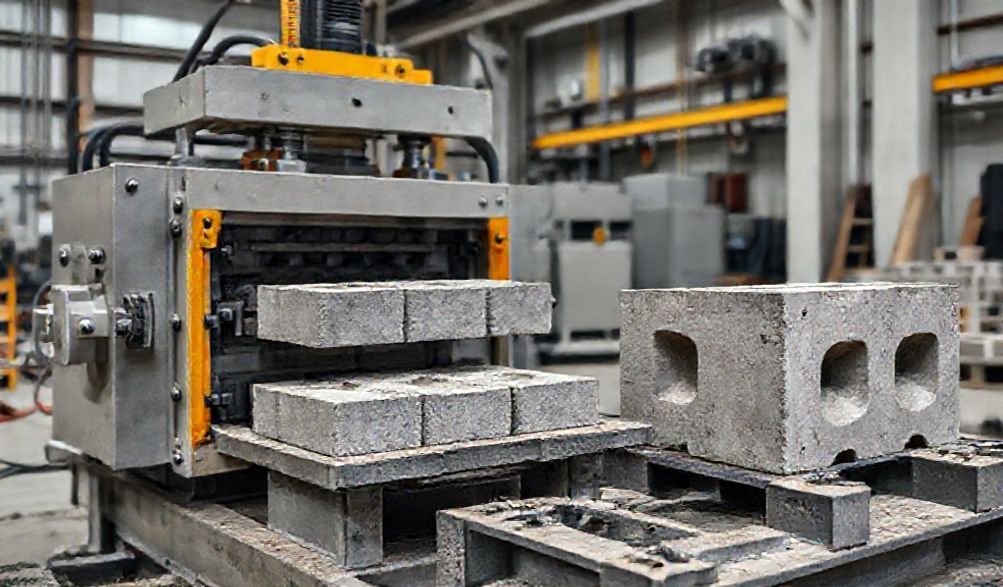
The Ultimate Guide to Multi-Purpose Block Making Machines: Versatility, Efficiency, and ROI
The modern construction landscape is a race against time and budget. Developers, contractors, and block manufacturers are constantly pressured to do more with less—less cost, less waste, and less space. What if the key to unlocking this efficiency wasn’t a fleet of specialized machines, but a single, intelligent piece of equipment? What if one machine could dynamically produce the hollow blocks for a housing project, the elegant pavers for a commercial driveway, and the robust curbstones for municipal work?
Enter the multi-purpose block making machine: the Swiss Army knife of concrete product manufacturing. This versatile equipment is engineered to produce a wide array of building blocks, bricks, and landscape products by simply changing molds. It represents a paradigm shift from dedicated, single-product lines to agile, demand-driven production.
For entrepreneurs, small-to-medium enterprises (SMEs), and even large construction firms, this isn’t just a machine; it’s a strategic investment. The core value proposition is undeniable: maximize your return on investment (ROI) by consolidating capabilities, reducing capital expenditure on multiple machines, and gaining the flexibility to pivot with market demands. This comprehensive guide draws on industry standards, technical specifications, and operational expertise to dissect everything you need to know. We’ll explore how these machines work, their tangible benefits, critical buying considerations, and best practices to ensure your investment pays dividends for years to come.
What is a Multi-Purpose Block Making Machine? Defining Versatility
At its heart, a multi-purpose block making machine is defined by its adaptability. Unlike traditional machines designed for a single product type, these units are built with a modular philosophy, allowing operators to switch between producing different concrete blocks and pavers with minimal downtime.
Fungsi Teras dan Falsafah Reka Bentuk
The design philosophy centers on interchangeability and robust, adjustable systems. The core function remains the same—to compact a concrete mix into a precise shape—but the execution is flexible. This is achieved through:
- Sistem Acuan Modular: The primary feature. Molds for hollow blocks, solid bricks, or pavers are designed as interchangeable cassettes or modules.
- Adjustable Vibration and Compression: The vibration table frequency and hydraulic pressure can often be calibrated. This ensures optimal compaction for a lightweight hollow block and a dense, wear-resistant paver from the same machine.
- Universal Pallet Size: Many models use a standard-sized pallet that accommodates various mold frames, streamlining the production flow.
Komponen Utama dan Peranan Mereka
Understanding the key components highlights how versatility is engineered:
- Hopper & Mixing System: Stores and feeds the raw concrete mix. A consistent, well-proportioned mix is critical for all product types.
- Sistem Penghantar: Transfers the mix from the hopper to the mold area.
- Mold Interchange System: This can be a manual mold frame, a semi-automatic sliding mechanism, or a fully automatic rotating carousel holding multiple molds.
- Motor Getaran: Provide the high-frequency vibrations that compact the concrete and remove air pockets.
- Mesin Tekan Hidraulik: Applies the final top pressure to achieve the desired block density and smooth surface finish.
- Panel Kawalan: The brain of the operation, ranging from simple manual controls to programmable logic controllers (PLC) that store recipes for different products.
- Pemberi Palet: Automatically feeds empty pallets into the machine for casting.
Jenis Blok Yang Dapat Dihasilkan
The true test of a “multi-purpose” machine is its product range. A high-quality machine should be capable of producing:
- Blok Berongga: Standard, lightweight building blocks for walls.
- Solid Blocks & Bricks: Dense blocks for foundations and heavy-duty construction.
- Batu Paving & Bata Saling Kunci:Untuk jalan masuk, laluan pejalan kaki, dan patio.
- Paving Rumput: Permeable pavers for eco-friendly landscaping and parking.
- Curb Stones & Edgers: For road construction and garden borders.
- Landscape Products: Such as retaining wall blocks or decorative accents.
Key Advantages of Investing in a Multi-Purpose Machine
Moving beyond the basic definition, the decision to invest hinges on concrete advantages that impact your bottom line and operational agility.
Maximized Return on Investment (ROI)
This is the most compelling financial argument. Instead of capital being tied up in a separate machine for blocks, another for pavers, and a third for curbs, you make one strategic purchase. This significantly lowers your entry barrier and accelerates the payback period. Furthermore, you maintain a single set of core components (hydraulics, vibration motors, frame), reducing long-term spare parts inventory and simplifying maintenance training and costs.
Unmatched Production Flexibility for Market Demands
Market needs fluctuate. A multi-purpose machine future-proofs your business. If demand for housing blocks slows but municipal paving projects increase, you can switch production in hours, not days or weeks. This agility allows you to:
* Accept a wider variety of orders from different client segments.
* Test new products in the market with minimal risk.
* Reduce finished goods inventory by producing on-demand.
Space and Operational Efficiency
One machine requires one foundation, one power connection, and one operational footprint. For workshops or yards with limited space, this consolidation is a game-changer. Operationally, your team becomes proficient on one system, leading to higher efficiency, fewer errors, and a more streamlined workflow compared to managing multiple, specialized machines.
Sustainability and Reduced Waste
Efficiency is a cornerstone of sustainability. A versatile machine promotes optimal material use across product lines and typically has a better energy consumption per unit of output than running several older, dedicated machines. Crucially, it enables the effective use of recycled aggregates (like crushed concrete or slag) in various products, contributing to a circular economy in construction.
Critical Technical Specifications to Evaluate Before You Buy
Navigating the market requires a keen eye for specifications that translate to real-world performance. Don’t just compare prices; compare these critical technical aspects.
Production Capacity: Cycles Per Hour and Output
Be wary of theoretical maximums. A machine rated for “2,000 blocks per hour” might refer to small solid bricks, not large hollow blocks. Always ask for output charts for specific products. Understand the cycle time (mold fill, vibration, compression, ejection) and how it changes with product size and complexity.
Sistem Tekanan: Hidraulik lawan Getaran
Most multi-purpose machines use a combination, but the emphasis matters:
* Vibration-Intensive Systems: Excellent for achieving a tight, interlocking structure in pavers and bricks. May produce slightly less dense hollow blocks.
* Hydraulic-Press Dominant Systems: Deliver extremely high, consistent top pressure. Ideal for producing very dense, strong blocks and products with a perfectly smooth finish. Often considered more versatile for the full product range.
Mold Changing Mechanism: Speed and Ease
This specification directly impacts your flexibility and downtime.
* Manual Change: Requires physically unbolting and swapping the entire mold box. Can take 30-60 minutes and more labor.
* Separa Automatik: Uses a sliding or quick-lock system, reducing changeover to 15-25 minutes.
* Fully Automatic Carousel: Holds 4-8 molds on a rotating turntable. The PLC can switch molds in under 5 minutes, enabling true just-in-time production of small batches.
Power Requirements and Automation Level
Match this to your facility’s capabilities and labor model.
* Kuasa: Common requirements are 380V/50Hz (3-phase) for automatic models. Verify your electrical supply.
* Automasi: Ranges from manual (operator feeds mix and pallets) to fully automatic (with auto batching, mixing, and robotic pallet handling). Higher automation increases output and consistency but also cost and complexity.
Machine Durability and Build Quality
This is non-negotiable for trustworthiness and safety. Inspect:
* Bingkai & Struktur: Heavy-duty, reinforced steel (minimum Q235) with professional welding.
* Komponen Hidraulik: Reputable brand names (e.g., Bosch Rexroth, Kawasaki, Yuken) ensure reliability and easy servicing.
* Motor Getaran: High-quality, balanced motors mounted on anti-vibration pads for stability and longevity.
* Overall Craftsmanship: Clean welds, proper paint coating for corrosion resistance, and accessible service points.
How to Choose the Right Machine for Your Business Needs
Technical specs must be filtered through the lens of your specific business reality. This is where experience guides the decision.
Assessing Your Project Portfolio and Market
Start with a simple audit:
* What are your 3-5 most common and profitable products?
* What is your average and peak daily/weekly production volume for each?
* Are you targeting niche, high-margin products or high-volume commodity blocks?
* What are the growth trends in your local construction market?
Matching Machine Specifications to Your Scale
- Skala Kecil / Permulaan A manual or semi-automatic machine with a simple mold change system is ideal. Focus on robustness and ease of use over sheer speed.
- Perniagaan Berskala Sederhana / Sedang Berkembang: A semi-automatic or fully automatic single machine with a carousel system offers the perfect balance of output and flexibility.
- Pengeluaran Berskala Besar / Perindustrian: You likely need a fully automatic multi-purpose production line, possibly with a central PLC controlling batching, mixing, and block making.
Budgeting: Initial Cost vs. Total Cost of Ownership
The purchase price is just the beginning. A comprehensive budget must include:
* Shipping, insurance, and import duties.
* Installation, foundation work, and utility hookup.
* Initial operator training.
* Ongoing costs: Maintenance, spare parts, energy consumption, and mold costs.
Choosing a cheaper, low-quality machine often results in exorbitant TCO due to downtime, repair costs, and poor part availability.
Vendor Selection and Support
Your relationship with the manufacturer or supplier is critical for long-term success. Evaluate them on:
* Reputation & Experience: How long have they been building these machines? Ask for client references and, if possible, visit an existing installation.
* Dokumentasi Teknikal Clear, comprehensive manuals in your language are a sign of professionalism.
* Jaminan: Look for at least a 12-month warranty on core components like the frame, hydraulics, and motors.
* Perkhidmatan Selepas Jualan: Do they offer installation supervision? Is operator training included? What is their spare parts supply chain and response time for technical support? A trustworthy supplier is a partner, not just a vendor.
Operational Best Practices and Maintenance
To protect your investment and ensure consistent, high-quality output, adhering to operational discipline is key.
Safe Setup and Operator Training
Never skip proper training. Ensure all operators understand:
* Machine start-up and shut-down procedures.
* Safe mold changing protocols (locking out power).
* The function of all emergency stops and safety guards.
* Mandatory use of Personal Protective Equipment (PPE): safety glasses, gloves, and steel-toe boots.
Routine Maintenance Checklist
Preventive maintenance is far cheaper than repairs.
* Daily: Clean the machine, check hydraulic fluid levels, inspect for loose bolts or leaks.
* Weekly: Lubricate all moving parts as per the manual, check vibration motor mounts, inspect mold liners for wear.
* Monthly: Thoroughly check hydraulic hoses and connections, calibrate pressure settings, inspect electrical connections.
Optimizing Mix Design for Different Blocks
The machine forms the block, but the mix determines its strength. While a standard mix works, optimization yields better results:
* Blok Berongga: Can often use a slightly more aggregate-rich, drier mix to achieve shape stability.
* Pavers & Solid Blocks: Require a denser, stronger mix with optimal cement content and lower water-cement ratio for durability and freeze-thaw resistance.
Always conduct trial batches when switching products.
Troubleshooting Common Issues
- Blocks Sticking in Mold: Likely caused by a worn mold liner, insufficient mold release agent, or an overly wet concrete mix.
- Poor Compaction/Weak Blocks: Check vibration motor function, vibration time, and hydraulic pressure. Often linked to an incorrect mix design.
- Surface Defects (Cracks, Chips): Can be due to improper handling after ejection, excessive vibration, or aggregate that is too large for the product section.
Soalan Lazim (FAQ)
Q1: What is the typical price range for a good multi-purpose block making machine?
A: Prices vary dramatically based on automation and capacity. A basic, robust semi-automatic machine can start around $15,000 – $30,000. High-capacity, fully automatic systems with carousels and PLC controls can range from $70,000 to over $150,000. Always correlate price with the detailed specifications and brand reputation.
Q2: How long does it take to change molds on these machines?
A: It depends entirely on the mechanism. Manual changes can take 30-60 minutes with a skilled crew. Semi-automatic quick-change systems reduce this to 15-25 minutes. Fully automatic carousels on advanced machines can switch between pre-loaded molds in under 5 minutes.
Q3: Can I use recycled materials (like crushed concrete) in a multi-purpose machine?
A: Yes, most well-built machines can handle a portion of recycled aggregates. The key is material consistency: it must be clean (free of clay, wood, plaster) and properly graded. High percentages of abrasive recycled material may accelerate wear on mixer blades and mold liners. Always test your mix design thoroughly.
Q4: What kind of after-sales support should I expect from a reputable manufacturer?
A: Expect comprehensive support: detailed operation and maintenance manuals, installation drawings/guidance (sometimes including a supervisory engineer), thorough operator training (onsite or at their facility), a clear warranty policy (minimum 1 year on core parts), and a reliable channel for ordering genuine spare parts with accessible technical support via phone or video call.
Q5: Is a multi-purpose machine as durable as a single-purpose machine?
A: When engineered and built to high standards by a reputable manufacturer, yes—it can be equally or more durable. The frame and core components are designed for the variable stresses of different production modes. The durability is determined by the quality of materials (steel, hydraulics) and construction, not its versatility alone.
Kesimpulan
A multi-purpose block making machine is more than a piece of equipment; it’s a strategic business decision that embodies flexibility, efficiency, and smart capital allocation. It empowers businesses to adapt, diversify, and compete in a dynamic construction market without the burden of multiple, underutilized assets.
As we’ve explored, the journey from consideration to successful operation hinges on diligent research. Prioritize proven performance, transparent technical specifications, and—above all—a trustworthy partnership with your supplier. The lowest upfront price often carries the highest long-term cost in downtime and frustration.
Your next step is to engage with reputable manufacturers or distributors. Approach them with your specific project portfolio, capacity needs, and budget framework. Request detailed quotations, but also ask for customer references and case studies. Seeing a machine in operation and speaking with a current owner is the ultimate verification of performance and after-sales service. Make your investment a foundation for growth, not a source of operational headaches.
<