
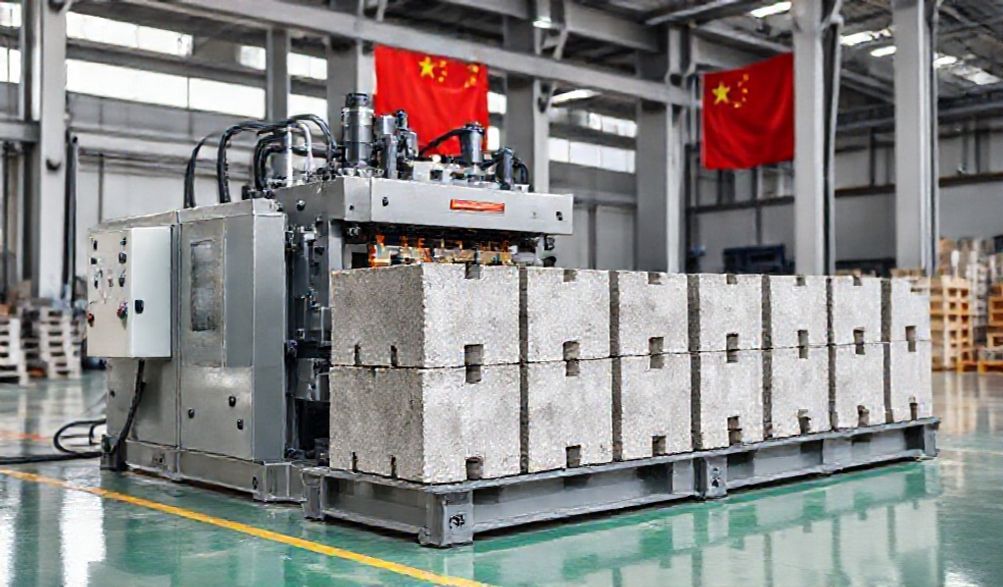
Your Ultimate Guide to Finding a Block Moulding Machine for Sale in China: Spotlight on FUDA Block Making Machine Factory
Pengenalan
The global construction industry runs on efficiency and affordability. As infrastructure and housing demands surge worldwide, builders and entrepreneurs are constantly seeking reliable, cost-effective machinery to meet production goals. In this landscape, China has solidified its role as the world’s premier manufacturing hub, offering a compelling blend of scale, technology, and value—especially for essential equipment like block moulding machines.
However, sourcing heavy machinery from overseas is fraught with challenges. How can you be sure of the quality from thousands of miles away? How do you navigate countless suppliers, overcome communication barriers, and ensure you’re getting true value, not just a low price? These are the critical questions that stall many promising projects.
This guide zeroes in on the search for a “block moulding machine for sale in China” and places a specific spotlight on the FUDA Block Making Machine Factory. Built on industry research, an analysis of manufacturer specifications, and proven international procurement practices, this post is designed to be your trustworthy roadmap. We’ll dissect FUDA’s potential offerings, provide a framework for evaluation, and walk you through the key steps to a successful purchase, empowering you to make a confident, informed decision.
Mengapa Sumber Mesin Pembuat Blok dari China?
Before focusing on a single supplier, it’s crucial to understand the fundamental reasons why China dominates this market. This isn’t about random chance; it’s a calculated advantage for savvy buyers.
Kos-Efektif dan Penetapan Harga Kompetitif
The primary driver is economic. China’s unparalleled manufacturing scale creates significant advantages in raw material sourcing, component production, and skilled labor costs. This ecosystem allows factories to produce machinery at a price point often unmatched by manufacturers in Europe or North America. For a business, this cost-effectiveness can mean a faster return on investment (ROI) and a stronger competitive edge in your local market.
Pembuatan Termaju dan Penerapan Teknologi
Gone are the days of associating Chinese manufacturing solely with basic imitation. The industry has made massive investments in R&D, precision engineering, and automation. Many Chinese block machine manufacturers, including established players like FUDA, now integrate advanced PLC control systems, energy-efficient hydraulic units, and robust vibration technologies that rival global standards. You’re often accessing modern tech at a fraction of the expected cost.
Pelbagai Pilihan dan Pilihan Penyesuaian
Whether you’re a small-scale entrepreneur starting out or a large construction firm supplying a major development, China’s market has a machine for you. The range is exhaustive:
* Mesin Manual & Semi-Automatik: Ideal for lower-budget startups or small-scale production.
* Loji Stesen Sepenuhnya Automatik: Designed for high-volume, consistent output with minimal labor.
* Mesin Blok Mudah Alih: Perfect for on-site production, eliminating transport costs for finished blocks.
This variety extends to customization. Need a specific block size, shape, or texture? Chinese factories are typically structured to accommodate custom mould designs, allowing you to create unique products for your niche.
Introducing FUDA Block Making Machine Factory: An Overview
When narrowing down your search, focusing on factories with a clear identity and track record is essential. Let’s examine what a company like FUDA Block Making Machine Factory might represent in this sector.
Profil Syarikat dan Kedudukan Industri
While specific details should always be verified directly with the factory, a typical reputable Chinese manufacturer in this space will have a profile akin to this: A factory with over a decade (or more) of specialized experience focused solely on block making machinery. They are likely based in an industrial hub, such as Shandong, Fujian, or Guangdong province. A key trust signal is their commitment to international standards—look for mentions of ISO certification for quality management systems and CE marking for machines sold into certain markets, indicating compliance with European health, safety, and environmental standards.
Jajaran Produk Teras dan Pengkhususan
A focused manufacturer like FUDA would typically offer a comprehensive lineup to serve diverse needs. Their core product range often includes:
* Concrete Hollow Block Making Machines: For producing standard hollow blocks used in walls.
* Paver and Interlocking Brick Machines: For manufacturing landscaping pavers and interlocking bricks for driveways and walkways.
* Solid Block and Curbstone Machines: For heavier construction needs.
* Multifunctional Machines: Capable of producing various block types by simply changing the mould.
Key differentiators for such factories often emphasize robust frame construction (using high-grade steel), user-friendly PLC control interfaces, and designs focused on kecekapan tenaga to lower long-term operating costs.
Jangkauan Global dan Portfolio Pelanggan
A strong indicator of reliability is a proven export history. Reputable factories don’t just sell domestically; they have a network of international clients. You might find evidence that their machines are “exported to over 50 countries across Africa, Southeast Asia, the Middle East, and South America.” This global reach suggests experience in handling export documentation, logistics, and providing support to international customers, which is invaluable for a first-time importer.
Key Features to Look for in a FUDA Block Moulding Machine
Once you’ve shortlisted a supplier, the next step is technical evaluation. Knowing what to look for separates a good purchase from a great one.
Kapasiti Pengeluaran dan Spesifikasi Output
Never just look at the model name. Dig into the specifications:
* Kitaran per Jam: How many moulding cycles can the machine complete in 60 minutes?
* Blok per Kitaran: How many blocks are produced in each cycle (e.g., 6, 10, 15)?
* Daily Output (8/24-hour basis): Calculate the potential output based on your planned operational hours.
Contoh: A machine with 10 cycles/hour producing 10 blocks/cycle can yield ~800 blocks in an 8-hour shift. Match this to your project demand.
Machine Type: Automatic, Semi-Automatic, or Manual?
Your choice here impacts labor costs, initial investment, and output consistency.
* Mesin Manual: Lowest cost, highest labor intensity. Suitable for very small-scale or intermittent production.
* Mesin Semi-Automatik: A middle ground. Often involve manual feeding of raw material but automated pressing and ejection. Good for medium-scale businesses.
* Mesin Sepenuhnya Automatik: Highest upfront cost, but they automate feeding, mixing, moulding, curing, and stacking. They maximize output with minimal labor and ensure consistent block quality. This is where factories like FUDA likely focus their high-end models.
Critical Components: Mould Quality, Hydraulic System, and Vibration
The durability of your machine and the quality of your blocks hinge on these three elements:
1. Kualiti Acuan: The mould must be made from high-grade, hardened steel with precise machining. A poor mould leads to blocks that are difficult to demould, have rough edges, or inconsistent dimensions. Ask about mould steel grade (e.g., #45 steel) and hardening processes.
2. Sistem Hidraulik: This is the heart of the pressure system. Look for reputable brand-name components (domestic or international) and a well-designed circuit. A good system provides stable, powerful pressure for dense blocks and operates efficiently without constant leaks or overheating.
3. Sistem Getaran: Critical for compacting the concrete mix and removing air bubbles. A powerful, well-balanced vibration table ensures high-density, strong blocks with a smooth finish. Ask about the vibration motor’s power and frequency.
After-Sales Support: Warranty, Spare Parts, and Technical Guidance
This is arguably the most critical section. The machine’s price is just the first cost.
* Jaminan: What is covered (parts, labor)? What is the duration (typically 1-2 years)? What are the terms?
* Alat Ganti: Is there a readily available inventory of wear-and-tear parts (like mould liners, hydraulic seals, vibration motors)? What is the lead time for ordering?
* Sokongan Teknikal: Do they provide English operation and maintenance manuals? Do they offer installation guidance via video call? Will they dispatch an engineer for on-site installation (often at an additional cost)?
A supplier’s commitment here is a direct reflection of their confidence in product quality and their dedication to a long-term partnership.
The Practical Guide to Purchasing from FUDA Factory
Armed with technical knowledge, you’re ready to navigate the procurement process. Here is a step-by-step guide based on industry best practices.
Step 1: Direct Inquiry and Detailed Quotation
Contact the factory directly through their official website or B2B platform. To get a useful quote, provide crystal-clear specifications:
* Type of blocks required (hollow, solid, paver, etc.)
* Desired block dimensions and possible compressive strength.
* Target daily output.
* Available power supply on-site (voltage, phase).
* Level of automation desired.
A professional factory will ask these questions and provide a detailed proforma invoice (PI) listing the machine model, specs, price, warranty, and trade terms.
Step 2: Factory Audit and Quality Verification
Never skip due diligence.
* Request a Video Call: Ask for a live video tour of the factory floor, showcasing assembly lines and quality control checks.
* Ask for References: Request contact information for 2-3 previous international clients in a region similar to yours. Follow up with them.
* Check Certifications: Ask for clear copies of business licenses and quality certificates (ISO, CE).
* Sample Video: Ask for a video of the exact machine model you’re interested in, running under load.
Step 3: Understanding Incoterms and Logistics
The quoted price is tied to an “Incoterm” that defines responsibility and cost.
* FOB (Franko Kapal): You pay for the machine loaded on the ship at the Chinese port. You arrange and pay for sea freight, insurance, and destination port costs. This offers more control over shipping costs.
* CIF (Kos, Insurans, dan Pengangkutan): The supplier arranges and pays for sea freight and insurance to your nearest port. You handle destination port charges and inland transport.
Partner with a reliable freight forwarder experienced in heavy machinery to handle customs clearance and logistics.
Step 4: Secure Payment and Documentation
Standard practices include:
* T/T (Bank Transfer): A common structure is 30% deposit to start production, 70% balance against copy of shipping documents before shipment.
* L/C (Letter of Credit): More secure for large orders but involves bank fees. It guarantees payment to the supplier upon proof of shipment.
Ensure all agreed details—model, specs, warranty, spare parts list—are included in the sales contract. The factory should provide a complete set of shipping documents (Commercial Invoice, Packing List, Bill of Lading, Certificate of Origin).
FAQs: Block Moulding Machine for Sale in China & FUDA Factory
Q1: What is the approximate price range for a FUDA block making machine?
A: Prices vary dramatically based on automation and capacity. A small manual machine may start around \$5,000-\$10,000, while a large, fully automatic production line can range from \$50,000 to over \$200,000. The only way to get an accurate price is to request a formal quotation based on your specific output and automation requirements.
Q2: Can FUDA customize a machine for a specific block design?
A: Most reputable factories, including those like FUDA, specialize in customization. They can typically manufacture custom moulds for unique block designs, logos, or textures. Be sure to inquire about the additional cost and extended lead time for custom mould development.
Q3: What kind of after-sales service can I expect when importing?
A: Standard service should include detailed English manuals, remote troubleshooting via video call (e.g., WhatsApp, Zoom), and a supply of spare parts. For an additional fee, most factories will offer the option to send a technician to your site for installation and training. Clarify all these points before ordering.
Q4: How do I verify the legitimacy and reputation of FUDA factory?
A: Conduct a multi-point check: Verify their business license on platforms like Alibaba or via direct request; search online for customer reviews or testimonials (be wary of only glowing reviews on their own site); use tools like Google Earth to view their stated factory address; and most importantly, insist on a live video call to see their facility and team in real-time.
Q5: What are the hidden costs when importing machinery from China?
A: Budget beyond the machine price for: Sea freight and marine insurance; import duties and taxes (varies by your country); customs clearance agent fees; inland transportation from your port to your site; and potential costs for electrical adaptation or foundation construction at your facility.
Kesimpulan
Sourcing a block moulding machine from China presents a significant opportunity to acquire advanced, cost-effective equipment for your business. By focusing on established suppliers like FUDA Block Making Machine Factory and applying a structured, diligent approach, you can mitigate risks and secure a valuable asset.
Remember, the goal is not simply to find the lowest price, but to secure the highest total value—a combination of robust machinery, reliable performance, and unwavering after-sales support. Use this guide as your checklist. Your logical next step is to contact the FUDA factory directly with your detailed project specifications. Initiate the conversation, request a comprehensive quotation, and begin the verification process with confidence, knowing you are asking the right questions.
<