Mekanik Operasi dan Komponen Teras
Prinsip Kerja Asas
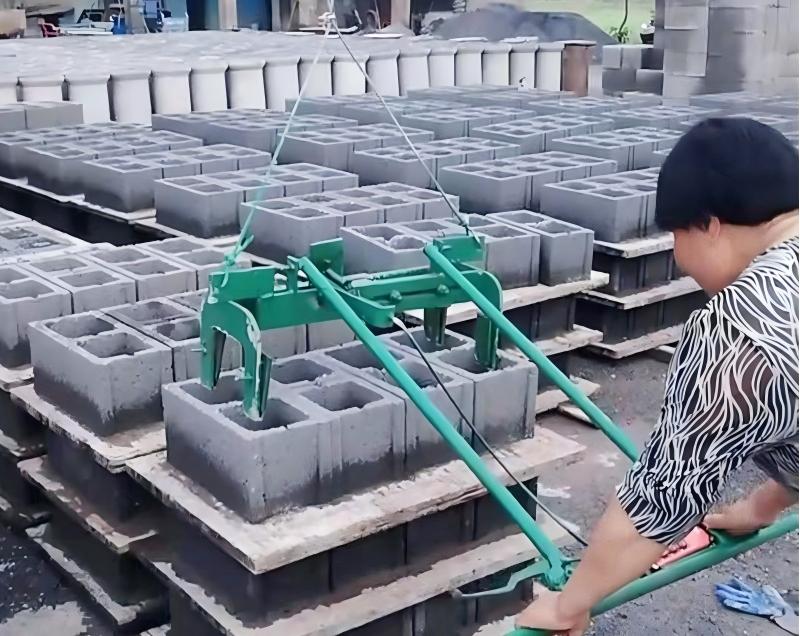
Pada dasarnya, jentera ini mengautomasikan pengambilan, pengangkutan, dan penempatan tepat blok binaan piawai. Proses bermula dengan mesin menyelaraskan diri dengan palet muatan, selalunya menggunakan sistem panduan laser atau panduan fizikal. Dengan mekanisme pengapit proprietarinya, ia mencengkam keseluruhan timbunan dengan selamat. Muatan kemudian diangkat, biasanya melalui sistem angkat gunting teguh atau lengan hidraulik, dan distabilkan untuk pengangkutan. Jentera itu kemudian bergerak—sama ada diarahkan secara manual oleh pengendali atau melalui arahan yang telah diprogramkan dalam model lebih maju—ke kawasan pembongkaran yang ditetapkan. Di sini, penempatan dilaksanakan dengan ketepatan milimeter, memastikan setiap unit diletakkan dengan betul untuk kerja batu atau pemasangan seterusnya. Kitaran selesai dengan mesin kembali ke titik permulaan, bersedia untuk muatan seterusnya. Operasi berulang dan berketepatan tinggi ini menghapuskan variasi dan keletihan yang dikaitkan dengan pengendalian manual.
Subsistem Kritikal dan Fungsi Mereka
Kebolehpercayaan dan prestasi peralatan ini bergantung kepada beberapa subsistem bersepadu:
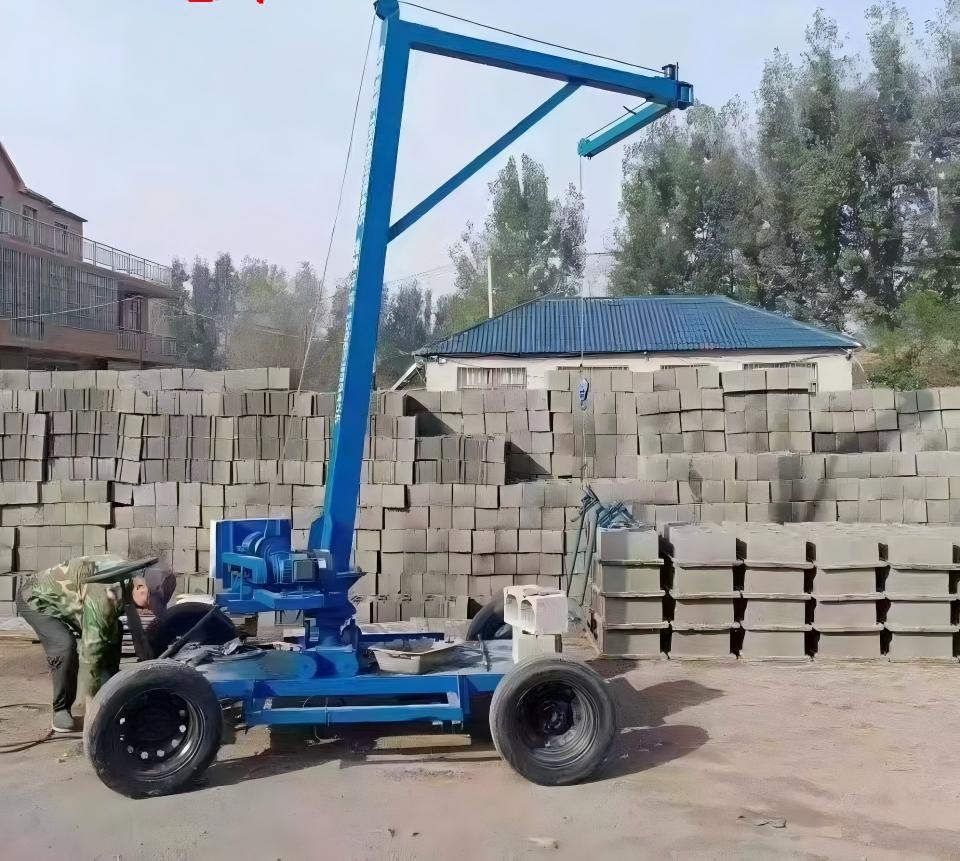
- Rangka dan Bingkai Mobiliti:Ini membentuk tulang belakang mesin, direka untuk kestabilan di bawah beban penuh. Pilihan termasuk versi berantai untuk daya tarikan unggul di medan kasar yang tidak disediakan dan model beroda untuk mobiliti lebih lancar di permukaan keras. Pemilihan bahagian bawah langsung mempengaruhi kebolehgunaan mesin merentasi pelbagai keadaan tapak.
- Mekanisme Pengangkatan dan Manipulasi:Ini adalah teras fungsi mesin. Sistemnya merangkumi dari garpu gaya forklift yang ringkas hingga kepala berbilang cakar canggih yang mampu mengendalikan pelbagai saiz dan bentuk blok. Daya angkatan disediakan oleh sistem hidraulik, terkenal dengan ketumpatan daya tinggi dan kawalan lancar, atau penggerak elektromekanikal dalam model baharu yang mengutamakan kecekapan tenaga lebih tinggi.
- Antara Muka Kawalan dan Panduan:Antara muka pengendali merangkumi tuil fizikal dan kayu bedik pada model asas sehingga panel skrin sentuh digital sepenuhnya. Sistem canggih menggabungkan perisian yang membolehkan pengaturcaraan corak penempatan berulang, penyimpanan parameter kerja biasa, dan maklum balas diagnostik. Sesetengah unit berteknologi tinggi mempunyai panduan separa autonomi yang mengikut laluan yang telah ditetapkan atau panduan wayar.
- Sistem Kuasa dan Pendorong:Enjin diesel menawarkan kuasa tinggi tradisional dan jangka hayat panjang untuk operasi sepanjang hari di tapak terpencil. Model berkuasa motor elektrik, dikuasakan oleh bank bateri besar, semakin popular untuk penggunaan dalaman, pelepasan sifar tempatan, dan bunyi operasi yang lebih rendah, selaras dengan inisiatif bangunan hijau.
- Peranti Keselamatan dan Penstabilan Integral components include outriggers or stabilizer legs that deploy to prevent tipping during lifting operations. Sensors continuously monitor load weight, hydraulic pressure, and machine balance. Automatic shut-off features engage if parameters exceed safe limits, protecting both the machine and personnel.
Market Segmentation and Equipment Varieties
Classification by Mobility and Scale
The market offers differentiated products tailored to specific operational scales and environments.
- Compact and Mid-Range Units: These are highly maneuverable machines ideal for residential projects, smaller commercial builds, and retrofitting jobs. They are often trailer-mounted for easy transport between sites. Their focus is on agility and speed for frequent, smaller loads.
- High-Capacity Industrial Systems: Designed for large-scale industrial, commercial, and infrastructure projects, these units feature greater load capacity, extended reach, and often more sophisticated controls. They are built for durability and continuous operation, handling the vast material requirements of major construction sites.
- Specialized Attachment-Based Solutions: This category consists of modular attachments that can be fitted to existing carrier vehicles like telehandlers or mini-excavators. This offers a cost-effective entry point for contractors who already own compatible base machines, providing functional versatility.
Advanced Features and Technological Integration
Modern iterations are increasingly defined by their technological enhancements. Telematics systems allow fleet managers and dealers to monitor machine location, fuel levels, operational hours, and maintenance alerts remotely. This data is invaluable for preventive maintenance scheduling and optimizing machine utilization. Furthermore, integration with Building Information Modeling (BIM) represents the cutting edge. Machine controls can theoretically import data from a project’s BIM model, automating the placement pattern directly from the digital blueprint, thereby reducing layout errors and further accelerating the construction process.
Strategic Advantages for the Supply Chain and End-Users
Quantifiable Economic and Operational Benefits
The adoption of this machinery delivers a compelling return on investment through multiple channels. The most direct impact is the dramatic reduction in labor costs; a single machine and operator can replace a crew of several manual laborers, completing tasks in a fraction of the time. This translates directly to shorter project timelines, allowing contractors to take on more projects per year. Material waste due to handling damage is minimized, as the consistent, mechanical movement prevents chipping and breakage common in manual throws and carries. Furthermore, the precision placement reduces the need for subsequent adjustments, allowing masons or assemblers to begin their work immediately and more efficiently.
Enhancing Safety and Ergonomic Standards
Beyond economics, the safety imperative is profound. Manual handling of heavy, dense building materials is a leading cause of musculoskeletal injuries, including chronic back problems and strains. By assuming this physically demanding task, the machinery drastically lowers the incidence of such injuries. It also reduces foot traffic and congestion in the primary material drop zones, minimizing the risk of struck-by incidents. This creates a safer, more organized worksite, which can lead to lower insurance premiums and improved regulatory compliance for the end-user.
Sustainability and Industry Alignment
The efficiency gains have a direct positive environmental impact. Faster project completion reduces the overall duration of site disturbance and energy consumption on-site. Electric models, in particular, contribute to quieter, emission-free operation, which is crucial for urban projects with strict noise and pollution ordinances. By promoting a solution that aligns with goals for faster, safer, and cleaner construction, distributors align themselves with the broader trends shaping the future of the industry.
Conclusion: Positioning for a Productive Future
The transition towards automated material handling in construction is not a speculative trend but a demonstrable shift towards greater rationality and productivity. For dealers, distributors, and procurement professionals, this equipment category represents a high-value portfolio segment that addresses fundamental client pain points: cost, time, safety, and precision. Success in this market requires a deep technical understanding of the product variations, a clear communication of the total cost of ownership and ROI, and the ability to provide robust after-sales support and parts service. By becoming knowledgeable advocates for these solutions, supply chain partners do more than sell machinery; they enable their clients to build better, faster, and safer. The competitive advantage offered by this technology makes it an indispensable consideration for any forward-looking business servicing the modern construction landscape.
Frequently Asked Questions (FAQ)
Q1: What is the typical range of load capacity for these machines?
A: Load capacities vary significantly to suit different projects. Compact models may handle stacks weighing between 500 to 1,500 kg, while heavy-duty industrial machines can lift and transport palletized loads exceeding 3,000 kg. It is crucial to match the machine’s capacity with the most common pallet weights used by your clientele.
Q2: How does the training process work for operators, and is it complex?
A: Operator training is generally straightforward, especially for standard models. Most manufacturers provide comprehensive onsite training covering basic operations, safety protocols, and routine maintenance. For machines with advanced software or BIM integration, more in-depth training is provided. The intuitive nature of the controls allows skilled equipment operators to become proficient relatively quickly.
Q3: What are the primary considerations for choosing between a tracked and wheeled model?
A: The choice depends on anticipated ground conditions. Tracked models offer superior ground pressure distribution, making them ideal for soft, muddy, or uneven terrain as they are less likely to sink or cause damage. Wheeled models provide higher travel speeds and are better suited for hard, level surfaces like prepared pads or factory floors. They also tend to be easier to transport on trailers.
Q4: Can these machines handle other materials besides standard construction blocks?
A: Yes, with the appropriate attachments, many models can be adapted to handle a variety of palletized or bundled materials common on construction sites. This includes bags of mortar mix, landscaping blocks, certain types of paving stones, and dimensional lumber packs. This versatility enhances the machine’s utility and ROI for the end-user.
Q5: What does the maintenance schedule look like, and what is the parts availability like?
A: Maintenance is similar to other mobile construction equipment, involving regular checks of hydraulic systems, filters, structural components, and (in diesel models) the engine. Electric models have fewer moving parts and require less routine maintenance. Reputable manufacturers support their products with readily available spare parts networks and detailed service manuals. For distributors, establishing access to this parts supply chain is a critical component of customer support.
Q6: How do we effectively demonstrate the ROI to a skeptical contractor?
A: The most effective demonstration is a concrete cost-benefit analysis. Focus on direct labor savings: calculate the hours and crew size required to manually move a set quantity of material versus the machine’s cycle time. Add in quantifiable savings from reduced breakage, lower insurance costs (due to improved safety), and the potential for increased project throughput. Offering a live demonstration on the contractor’s own site, using their materials, is often the most persuasive tool.