
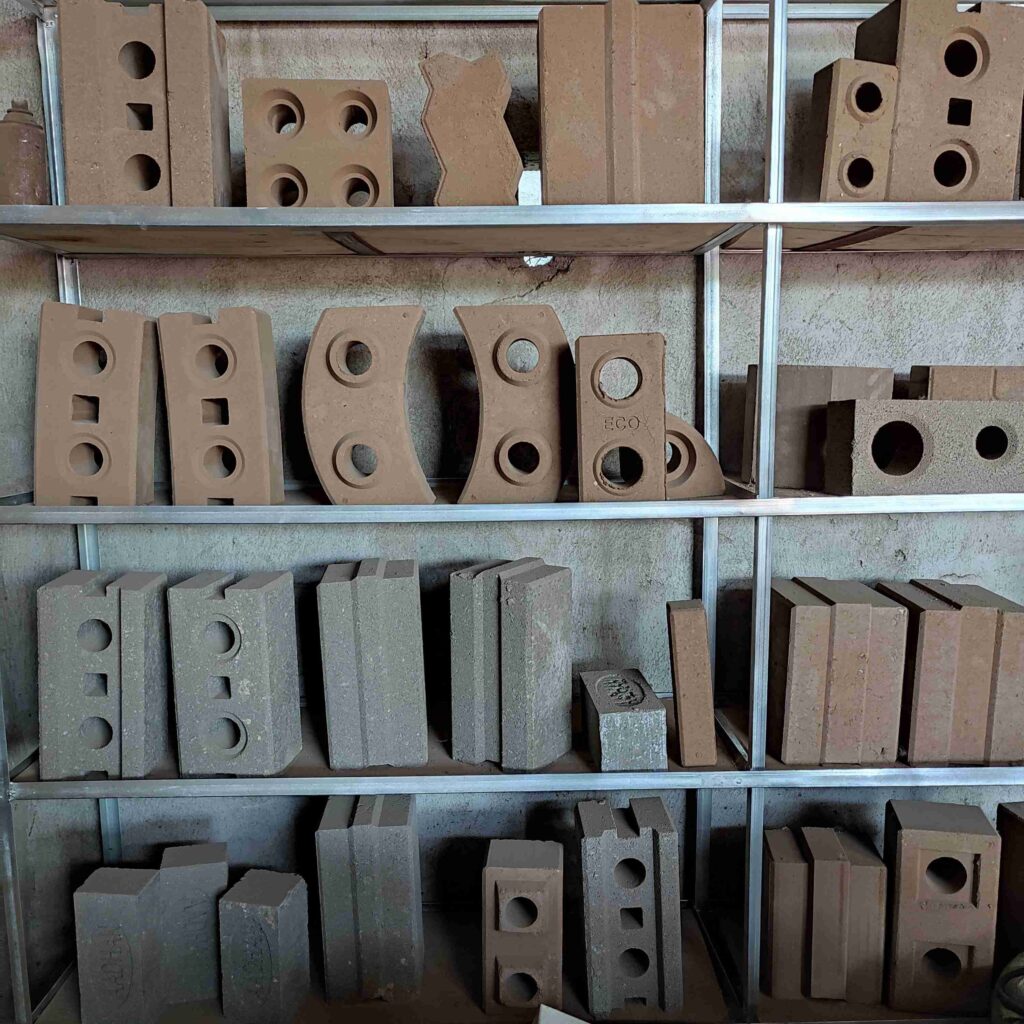
1. Memahami Teknologi dan Ceruk Pasarnya
Mesin blok tanah dan bumi, sering dikategorikan di bawah mesin Blok Bumi Termampat (BET) atau Blok Tanah Terstabil (BTT), menggunakan mampatan mekanikal untuk membentuk bata tahan lama daripada tanah. Proposisi nilai teras terletak pada kelestarian, tenaga terwujud yang rendah, dan penggunaan bahan mentah tempatan yang sering percuma. Bagi seorang pengedar, memahami niche ini adalah sangat penting. Asas pelanggan utama bukanlah kilang bata berskala besar tradisional, tetapi kumpulan pelbagai termasuk pembina eko, kumpulan perumahan bantu diri, NGO yang terlibat dalam kerja pembangunan, agensi pembinaan semula bencana, dan usahawan di kawasan dengan akses terhad kepada bahan binaan konvensional. Mesin ini sering menjadi tumpuan model pembinaan yang lebih kecil, lebih tangkas, dan berfokuskan komuniti, yang mempengaruhi semua aspek reka bentuk, pemasaran, dan sokongannya.
2. Pengelasan Mesin Utama dan Prinsip Operasi
Apabila mencari mesin untuk dijual, mereka terutamanya dibezakan oleh mekanisme operasi dan tahap campur tangan pengguna yang diperlukan.
2.1. Tekanan Tuas Manual
Ini adalah unit paling asas dan menjimatkan kos, beroperasi sepenuhnya menggunakan tenaga manusia.
- Mekanisme:Tuil panjang memberikan kelebihan mekanikal untuk memampatkan tanah di dalam kotak acuan. Pengeluaran juga dilakukan secara manual.
- Output Biasa:80-250 blok setiap hari 8 jam, sangat bergantung pada stamina operator.
- Terbaik Untuk:Projek berbelanjawan ultra-rendah, inisiatif latihan komuniti, dan lokasi terpencil tanpa bekalan elektrik. Kesederhanaan mereka adalah titik jualan utama untuk pasaran tertentu.
2.2. Mesin Tekan Hidraulik Manual
Reka bentuk ini menambah baik tekanan tuas dengan menggabungkan pam hidraulik yang dikendalikan secara manual.
- Mekanisme:Pengendali mengepam jek hidraulik untuk mencapai tekanan yang jauh lebih tinggi dan lebih konsisten berbanding tuas.
- Output Biasa:200-600 bongkah sehari. Menghasilkan bongkah yang lebih padat dan kuat dengan usaha fizikal yang kurang setiap bongkah berbanding mesin tekan tuas.
- Terbaik Untuk:Operasi komersial berskala kecil, penghuni tanah pertanian, dan projek pembangunan yang memerlukan kualiti dan hasil yang lebih baik daripada yang dibenarkan oleh akhbar tuas, tanpa memerlukan kuasa grid.
2.3. Engine-Driven or Electric Hydraulic Presses
These semi-automatic machines represent a major step up in productivity.
- Mekanisme: A gasoline/diesel engine or electric motor powers a hydraulic pump. The operator manually feeds the soil and activates the compression cycle via a valve or button.
- Output Biasa: 500-2,000 blocks per day. Offers excellent pressure consistency and dramatically reduces operator fatigue.
- Terbaik Untuk: Small to medium enterprises (SMEs) producing blocks for sale, larger building projects, and businesses where labor cost and output volume become critical factors.
2.4. Automated Production Systems
At the high end of the market, fully automated systems integrate material handling, compression, and block ejection.
- Mekanisme: These systems feature hopper-fed soil, automated weighing or volumetrics, programmable compression cycles, and automatic palletizing or stacking.
- Output Biasa: 2,000-10,000+ blocks per day.
- Terbaik Untuk: Commercial block yards supplying regional construction markets, large-scale housing developments, and entrepreneurs targeting the mainstream construction sector with a sustainable product.
3. Critical Technical Specifications for Evaluation
Beyond the basic type, several technical details define performance, quality, and suitability for the target market.
- Compression Force: Measured in tons (e.g., 10-ton, 20-ton, 40-ton) or psi (pounds per square inch). Higher pressure yields denser, stronger blocks. Machines for load-bearing construction typically need 1,000 psi or more.
- Block Size and Mold Versatility: Standard block sizes (e.g., 10″x14″x4″) are common, but the ability to offer interchangeable molds for different dimensions (including interlocking shapes) significantly broadens market appeal. Mold material (hardened steel vs. mild steel) affects wear life and block finish.
- Power Source and Energy Requirements: Defining whether a machine is manual, engine-driven (specifying HP), or electric (specifying voltage and phase) is crucial for matching it to the end-user’s infrastructure.
- Build Quality and Durability: The thickness of the main frame steel, the quality of the hydraulic cylinder and hoses, and the robustness of the mold assembly are indicators of longevity. A machine built from light-gauge steel will fail under continuous commercial use.
- Moisture Control System: Some advanced machines include a system to pre-mix and condition soil to an optimal moisture content before compression, which is critical for achieving consistent quality.
4. Sourcing Strategy: Evaluating Manufacturers and Supply Partners
For a distributor, choosing the right manufacturing partner is as important as the machine specifications.
- Engineering Focus vs. General Fabrication: Seek out suppliers who specialize in soil compression technology and understand soil mechanics, rather than general welding shops that replicate a design. Specialists provide better technical support and product evolution.
- Material and Component Provenance: Inquire about the source of key components like hydraulic pumps, seals, and pressure gauges. Machines built with internationally recognized component brands often offer greater reliability.
- Testing and Quality Assurance: Reputable manufacturers will provide evidence of testing, such as videos of the machine in operation or data sheets on block strength achieved with standard soil mixes.
- Support for Your Business: The ideal supplier acts as a partner, providing you with marketing materials (high-quality photos, videos, specification sheets), technical documentation, and training to equip your sales and service teams.
5. The Complete Commercial Package: Beyond the Machine Itself
To be a successful seller, you must think in terms of selling a penyelesaian, not just a piece of equipment.
- The Importance of Auxiliary Equipment: A complete offering includes soil testing kits (sieve sets, moisture testers), tampers, pallets for block curing, and potentially mixers and conveyors for higher-end systems. Bundling these creates a higher-value sale.
- Technical Documentation and Training: Ensure you receive comprehensive, clear manuals covering operation, maintenance, troubleshooting, and basic soil selection. The ability to offer installation and training services dramatically increases your value to the end-customer.
- Spare Parts Strategy: Develop a sensible initial spare parts inventory (seal kits, hoses, wear plates) and a clear supply chain agreement with the manufacturer for replenishment. This is critical for customer satisfaction and generating recurring revenue.
- Business and Marketing Guidance: Partner with manufacturers who can provide insights on block production costs, business plan templates, and technical data to help your clients succeed, making you a trusted advisor rather than just a vendor.
Kesimpulan
Procuring and selling dirt and earth block making machines requires a nuanced approach that blends technical understanding with market insight. The opportunity lies not in competing with mass-produced concrete block machines, but in championing a sustainable, cost-effective, and empowering construction technology. Success hinges on selecting machines that are robust, appropriately specified for the target audience, and backed by a knowledgeable manufacturer. By focusing on providing a complete commercial and technical package—including quality equipment, essential accessories, thorough documentation, and actionable business advice—distributors can position themselves as vital links in the sustainable construction value chain. This sector demands a partner who educates the market and supports clients in building successful enterprises; fulfilling this role is the key to long-term profitability and growth in the evolving world of alternative building materials.
FAQ
Q1: What type of soil is required to make good quality blocks with these machines?
A: The ideal soil is a “loam” containing a mix of clay (15-30% for binding), silt, and sand/gravel. Pure clay will crack, and pure sand will not bind. Simple field tests (like the jar test) can determine suitability. Many machines can work with a range of soils, but optimal results often require site-specific adjustment of the mix, sometimes with added sand or a small percentage of stabilizer like cement (3-10%).
Q2: Can these blocks be used for load-bearing walls in permanent structures?
A: Absolutely. When produced with the correct soil mix, proper moisture content, and sufficient compression pressure (often 1,000 psi or more), Compressed Earth Blocks (CEBs) can meet and exceed the structural strength requirements for single and multi-story load-bearing walls in many building codes. Stabilization with cement or lime further enhances strength and weather resistance.
Q3: What is the learning curve for operating these machines?
A: Manual machines are simple to learn but physically demanding to operate at scale. Hydraulic and semi-automatic machines require basic training on safety, feeding the mix, operating the controls, and performing routine maintenance. A competent operator can be trained in a few days. The greater learning curve is often in mastering soil selection and preparation for consistent quality.
Q4: What are the primary cost components in a block production business?
A: The major costs are: 1) Capital: Machine and auxiliary equipment. 2) Buruh: Operators and helpers. 3) Bahan-bahan: Stabilizer (cement/lime, if used), possibly sand for mix adjustment, and water. 4) Overhead: Land, power, fuel, and transport. The key advantage is that the primary raw material—suitable soil—is often very low cost or free.
Q5: How do we handle after-sales service and technical support?
A: A clear service strategy is essential. It should combine: a basic on-site warranty period for major defects, remote support via phone/video for troubleshooting, a stocked inventory of common wear parts (seals, hoses), and access to the manufacturer’s engineering team for complex issues. Offering annual service contracts can be a valuable revenue stream.
Q6: Are there any building code certifications or standards for these blocks?
A: Yes, many countries and regions are developing or have established standards for earth construction. Common international references include ASTM E2392 / E2392M for CEBs. It is crucial to provide clients with guidance on how to get their blocks tested locally (for compressive strength, absorption, etc.) to gain approval from local building authorities. Providing a machine that produces consistent blocks is the first step in this process.

