
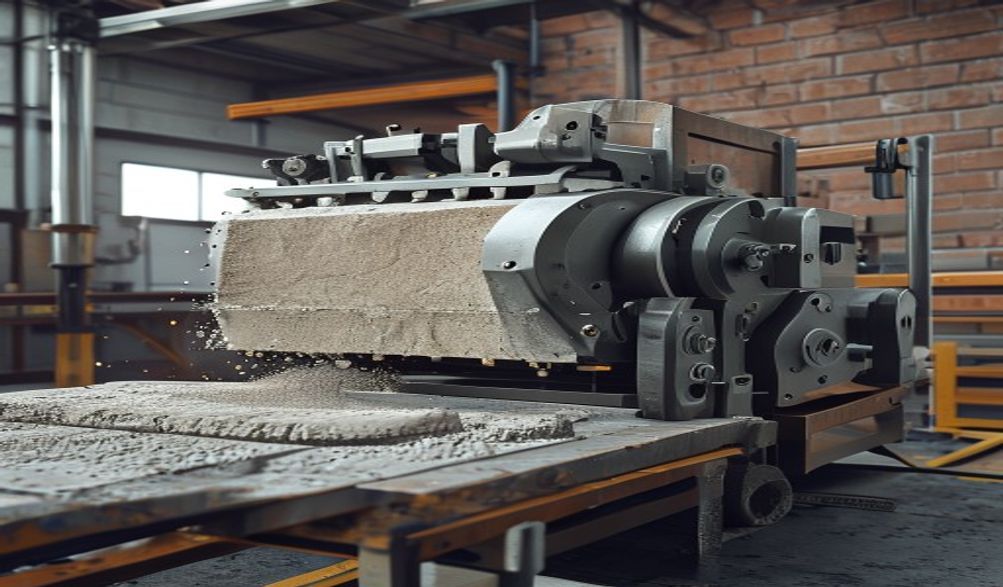
Cara Memilih Mesin Pembuat Bata: Panduan Pembeli untuk 2024
Pengenalan
Dengan begitu banyak model, mekanisme, dan pembekal global, memilih mesin pembuatan bata yang tepat boleh terasa membebankan. Ia adalah keputusan berisiko tinggi. Pilihan yang salah boleh menyebabkan modal terbuang, pengeluaran yang rendah secara kronik, dan produk akhir yang gagal memenuhi piawaian pasaran atau projek.
Panduan komprehensif ini direka untuk menembusi kekeliruan. Berdasarkan pengalaman industri kolektif selama beberapa dekad, kami menyediakan rangka kerja langkah demi langkah yang jelas untuk membantu anda membuat pelaburan yang berinformasi dan yakin. Kami bukan sekadar menyenaraikan mesin; kami akan menunjukkan kepada andacara memilih mesin pembuat batayang selaras dengan keperluan pengeluaran khusus anda, bahan mentah, dan matlamat perniagaan jangka panjang.
Menjelang akhir panduan ini, anda akan memahami faktor-faktor utama—dari kapasiti harian dan tahap automasi hingga penyaringan pembekal dan jumlah kos pemilikan. Pengetahuan ini akan membolehkan anda memilih peralatan yang memaksimumkan pulangan pelaburan dan beroperasi dengan boleh dipercayai untuk tahun-tahun mendatang.
1. Nilai Keperluan Projek Anda: Asas Pilihan Anda
Melangkau penilaian keperluan yang menyeluruh adalah kesilapan paling biasa dan mahal yang dilakukan oleh pembeli. Anda tidak boleh memilih alat yang betul tanpa terlebih dahulu menentukan tugas. Langkah ini menetapkan kriteria yang tidak boleh dirunding yang akan membimbing setiap keputusan seterusnya.
Tentukan Jenis Bata Utama dan Spesifikasi Anda
Batu bata yang anda ingin hasilkan menentukan fungsi teras mesin. Mulakan dengan memahami produk anda dengan jelas.
-
Jenis-jenis Bata Biasa:
- Bata Pejal:Padat, digunakan untuk dinding galas beban. Memerlukan mampatan tinggi.
- Blok Berongga:Ringan, dengan rongga untuk penebat dan penggunaan bahan yang dikurangkan. Biasa digunakan dalam pembinaan.
- Bata Saling Kunci:Direka untuk muat bersama tanpa mortar, sesuai untuk pemadatan dan sistem dinding tertentu.
- Batu Bata Paving:Hiasan dan tahan lama, memerlukan kemasan licin dan kekuatan tinggi.
-
Spesifikasi Utama:
- Saiz & Dimensi:Panjang, lebar, dan tinggi yang tepat.
- Kekuatan Mampatan (MPa):Metrik kritikal untuk integriti struktur. Ketahui keperluan kod bangunan tempatan anda.
- Tekstur & Kemasan Permukaan:Lancar, kasar, atau bertekstur? Ini mempengaruhi reka bentuk acuan dan teknik pengeluaran.
Kira Kapasiti Pengeluaran Harian/Mingguan Anda Yang Diperlukan
Your target output is the primary driver for machine size and automation level. Be realistic.
- Forecast Based on Demand: Are you supplying a single large project or selling into an open market? Calculate your brick needs over time.
- Memahami Metrik Output Suppliers often list “theoretical” output per hour. In practice, factors like material feeding, curing time, and labor efficiency reduce this. A good rule is to assume a sustainable output of 70-80% of the theoretical maximum.
- Scale Guidance:
- Small-scale / Startup: 1,000 – 5,000 bricks per day.
- Sederhana-sederhana: 5,000 – 20,000 bricks per day.
- Large-scale / Industrial: 20,000+ bricks per day.
Determine Your Available Raw Materials
The raw material is the heart of your process. The machine must be engineered to handle it efficiently.
-
Material Suitability:
- Tanah liat Requires an extruder or stiff-mud process. Often needs drying and firing (unless producing compressed earth blocks).
- Concrete (Cement, Aggregate, Sand, Fly Ash): The most common material for block making machines. Uses vibration and compression.
- Soil/Stabilized Earth: For compressed earth blocks (CEBs), requiring high mechanical pressure without vibration.
-
The Direct Influence: Your material choice immediately narrows the field. A machine optimized for concrete will struggle with clay, and vice versa. Some modern machines offer adaptability, but specialization usually yields better quality and efficiency.
2. Understand the Different Types of Brick Making Machines
With your requirements defined, you can now navigate the different technologies available. Each type offers a distinct balance of cost, labor, and output.
Mesin Manual, Semi-Automatik, dan Sepenuhnya Automatik
This spectrum represents the level of human involvement and investment.
-
Mesin Manual: Operated entirely by hand (filling, compacting, ejecting).
- Kelebihan: Very low cost, simple maintenance, no power needed.
- Keburukan: Very low output, high labor intensity, inconsistent product quality.
- Terbaik Untuk: Micro-enterprises, very small projects, or regions with extremely low labor costs.
-
Mesin Semi-Automatik: Mechanize the core forming process (e.g., vibration, compression) but require manual feeding of raw material and removal of finished bricks.
- Kelebihan: Good balance of cost and output, improved consistency, lower skill requirement than manual.
- Keburukan: Still labor-dependent for feeding and handling.
- Terbaik Untuk: Small to medium businesses with moderate capital and available labor.
-
Mesin Sepenuhnya Automatik: Integrated systems with automated material feeding, mixing (if included), molding, stacking, and sometimes palletizing.
- Kelebihan: Very high, consistent output. Drastically reduced labor costs and human error.
- Keburukan: High initial investment, complex maintenance, requires stable power supply.
- Terbaik Untuk: Medium to large-scale production, where output consistency and labor savings justify the capital outlay.
Mesin Blok Pegun vs. Mesin Bata Mudah Alih
This choice is about your production philosophy: centralized factory or on-site manufacturing?
-
Mesin Blok Stesen: Installed in a fixed location, typically a factory or yard.
- Kelebihan: Generally more robust, higher capacity, and can be part of a larger integrated production line (with mixers, conveyors).
- Keburukan: Bricks must be transported to the construction site. Requires a dedicated, prepared space with proper foundation.
- Terbaik Untuk: Established block yards and permanent manufacturing plants.
-
Mesin Bata Mudah Alih: Mounted on a trailer or wheels for easy relocation.
- Kelebihan: Eliminate brick transport costs; produce directly at the construction site. Faster setup.
- Keburukan: Often have lower capacity than large stationary models. Can be less stable.
- Terbaik Untuk: Large construction companies building projects in remote locations or developers who move from site to site.
Key Machine Mechanisms: Hydraulic, Vibration, and Compression
The mechanism defines how the brick is formed and impacts its final density and strength.
-
Tekanan Hidraulik: Uses hydraulic cylinders to apply immense, controlled pressure to the raw material in a mold.
- Impak: Produces very dense, high-strength bricks with a smooth finish. Excellent for interlocking and compressed earth blocks.
- Match With: Soil, clay, and concrete mixes where extreme compaction is desired.
-
Vibration (High-Frequency): Uses electric or hydraulic vibrators to settle concrete mix into a mold, removing air pockets.
- Impak: Produces standard hollow and solid concrete blocks efficiently. The most common mechanism for concrete block making.
- Match With: Concrete mixes (with cement, fly ash, aggregate).
-
Sistem Gabungan: Many high-quality machines, especially automatic ones, use a vibration and compression combo. Vibration settles the mix, and a hydraulic press applies final top pressure for superior density and a uniform finish.
3. Evaluate Critical Machine Features and Build Quality
Two machines may look similar on a spec sheet but differ vastly in longevity. Here, you must look at the engineering details.
Core Components: Mold Quality, Frame Strength, and Power System
These are the bones and muscles of the machine. Never compromise here.
-
Kualiti Acuan: The mold defines the brick.
- Look For: Hardened, heat-treated steel (e.g., Cr12, 45# steel). Precision machining for smooth surfaces and tight tolerances.
- Mengapa Ia Penting: Poor molds wear quickly, leading to misshapen bricks, increased downtime for replacement, and higher long-term costs.
-
Kekuatan Bingkai The frame absorbs all operational stress.
- Look For: Heavy-duty, welded steel construction with reinforced corners and gussets. Avoid light, bolted-together frames.
- Mengapa Ia Penting: A weak frame will flex, causing misalignment, poor brick quality, and ultimately, catastrophic failure.
-
Sistem Kuasa: The heart of operation.
- Look For: Brand-name electric motors (e.g., Siemens, WEG) and hydraulic pumps/packs (e.g., Rexroth, Yuken) with adequate power ratings.
- Mengapa Ia Penting: Reliable, efficient components ensure consistent performance, lower energy consumption, and easier sourcing of replacement parts.
Automation Features and Control Systems
Automation is about precision, repeatability, and data.
- Pengawal Logik Boleh Aturcara (PLCs):Otak mesin.
- Manfaat: Allows for precise control over cycle times, pressure, and vibration duration. Enables fault diagnostics and easy adjustment of settings for different products.
- Touchscreen Human-Machine Interface (HMI):
- Manfaat: Provides an intuitive dashboard for operators, displaying production counts, fault codes, and allowing parameter changes.
- Automated Material Feeding and Stacking:
- Manfaat: Creates a continuous production flow, maximizing output and minimizing physical labor and product handling damage.
Energy Efficiency and Operational Costs
The purchase price is just the beginning. Consider how the machine consumes resources.
- Compare Power Ratings: A machine with a more efficient design or higher-quality components may use a 15kW motor to do the same work as a competitor’s 22kW model, saving significant electricity over its lifetime.
- Design for Efficiency: Look for features like variable-speed drives on motors or load-sensing hydraulics, which reduce energy waste.
4. Research and Vet Potential Suppliers Thoroughly
The machine is only as good as the company that builds and supports it. This step is about risk mitigation.
Evaluating Supplier Reputation and History
- Longevity & Track Record: How long have they been in business? A 20-year-old company has likely refined its designs and survived market tests.
- Client Testimonials & Portfolios: Ask for case studies or contact lists of clients in your region. A reputable supplier will provide them.
- Factory Audits: If feasible, visit the manufacturing facility. You can assess their quality control processes, engineering capability, and inventory firsthand.
The Non-Negotiables: Warranty, After-Sales Service, and Parts Availability
This is your safety net. Scrutinize it.
- Jaminan: A comprehensive warranty should cover defects in materials and workmanship for critical components (frame, molds, power systems) for at least 1-2 years. Understand what voids it.
- Perkhidmatan Selepas Jualan: Do they offer installation supervision and operator training? What is their technical support structure? Is it via email, phone, or remote desktop? What are their response time guarantees?
- Ketersediaan Bahagian: Ensure they maintain an inventory of wear parts (mold liners, seals, vibrator motors) and can ship them promptly. Long lead times for parts equate to costly production downtime.
Request and Analyze Quotations and Proposals
Standardize the information you request to make an apples-to-apples comparison.
- Your Quote Checklist:
- Detailed machine specifications and model number.
- Itemized pricing (machine, spare parts kit, optional features).
- Shipping terms (FOB, CIF, or DDP) and estimated delivery time.
- Scope of after-sales support (installation, training, warranty).
- Drawings for foundation and utility (power, air) requirements.
5. Analyze Cost vs. Value for Long-Term ROI
Shift your mindset from “purchase price” to “total cost of ownership” and long-term value.
Understanding the Total Cost of Ownership (TCO)
The true cost includes every expense from purchase to disposal.
- Kos Permulaan: Machine price, shipping, insurance, import duties, installation, and initial training.
- Kos Operasi: Electricity/fuel, labor, raw materials, routine maintenance.
- Kos Masa Henti: Lost production revenue during breakdowns and maintenance.
- Lifecycle Costs: Replacement of wear parts (molds, liners, hydraulic seals) and eventual major overhauls.
Balancing Your Budget with Quality and Needs
The cheapest machine is often the most expensive in the long run.
- Avoid False Economy: A low-quality machine will have higher breakdown rates, produce more waste (rejected bricks), and have a shorter lifespan, erasing any initial savings.
- Smart Compromises: You might compromise on a semi-automatic vs. a fully automatic model to fit your budget, but you should never compromise on the quality of core components like the frame, molds, and power system.
Financing Options and ROI Projections
- Financing: Some suppliers offer financing plans. Alternatively, explore equipment loans from local banks or development agencies focused on industry.
- Simple ROI Projection:
- KirakanTotal Annual Production (bricks/day x operating days).
- Determine your Net Profit per Brick (Selling Price – Total Cost per Brick [material, labor, power, overhead]).
- Annual Profit = Total Annual Production x Net Profit per Brick.
- Simple Payback Period = Total Machine Investment / Annual Profit.
This projection highlights how a slightly more expensive, more reliable, and efficient machine can pay for itself faster by maximizing uptime and output.
Soalan Lazim (FAQ)
What is the average cost of a brick making machine?
There is no single “average” due to the vast range. Manual machines can start from $1,000 – $5,000. Semi-automatic stationary machines typically range from $10,000 – $50,000. Large, fully automatic production lines can cost $100,000 to over $500,000. The price is directly tied to capacity, automation level, and build quality.
Can one machine produce different types of bricks?
Yes, in most cases. The primary method is by changing the mold. However, ease varies. On a simple manual machine, it might take 30 minutes. On a complex automatic line, mold changeover might require specialized tools and several hours of downtime. When comparing machines, ask about mold changeover time and the cost of additional molds.
How much space and what kind of foundation is needed?
Requirements vary dramatically:
* Small Manual/Semi-Auto: A 50-100 sqm shed with a level, compacted earth or simple concrete floor.
* Medium Semi/Fully Auto: A 200-500 sqm workshop with a reinforced concrete foundation (often 300-500mm thick) specified by the supplier.
* Large Automatic Line: A 1000+ sqm factory space with a heavy-duty industrial foundation, 3-phase high-voltage power, and possibly overhead cranes.
Always follow the supplier’s foundation and utility layout drawings precisely.
What is the most common mistake people make when choosing a machine?
Two linked mistakes: 1) Choosing based solely on the lowest purchase price, ignoring quality and TCO, and 2) Failing to accurately assess long-term production needs, leading to a machine that is either underpowered for growth or overly complex and expensive for their actual demand. Thorough planning, as outlined in this guide, prevents both.
Kesimpulan
Choosing the right brick making machine is a strategic investment that forms the foundation of your business or project’s success. By following this five-step process—defining your precise needs, understanding machine types, evaluating build quality, vetting suppliers meticulously, and analyzing total cost versus value—you move from a position of uncertainty to one of informed confidence.
Remember, this decision is not just about buying a piece of equipment; it’s about securing a reliable, profitable production capability for years to come. Prioritize your specific requirements, demand proven quality from reputable partners, and invest in a solution that grows with you.
Have more specific questions about your project? The next step is to consult with industry experts or reach out to shortlisted suppliers with your detailed requirements for personalized guidance and quotations.
<