
The Ultimate Guide to Blocks and Bricks Making Machines: Types, Benefits & How to Choose
Pengenalan
From the humblest home to the grandest infrastructure project, our built world rests on a simple, fundamental unit: the brick or block. These essential components are the literal building blocks of civilization. Yet, the method of their creation has undergone a revolutionary shift. Gone are the days of relying solely on slow, labor-intensive, and inconsistent manual production. Today, the key to unlocking efficiency, quality, and profitability in construction lies in mechanization.
Whether you are a construction business owner looking to vertically integrate, a civil engineer specifying materials, a project manager controlling costs, or an entrepreneur eyeing the building materials industry, understanding mesin membuat blok dan bata is crucial. This guide is designed to be your comprehensive resource. We synthesize industry knowledge, technical specifications, and practical, experience-driven advice to help you make a confident and informed investment decision. You will learn about the different types of machines available, their tangible benefits, a detailed checklist for selection, and essential insights into operation and maintenance.
Memahami Mesin Pembuat Blok dan Bata
What is a Blocks/Bricks Making Machine?
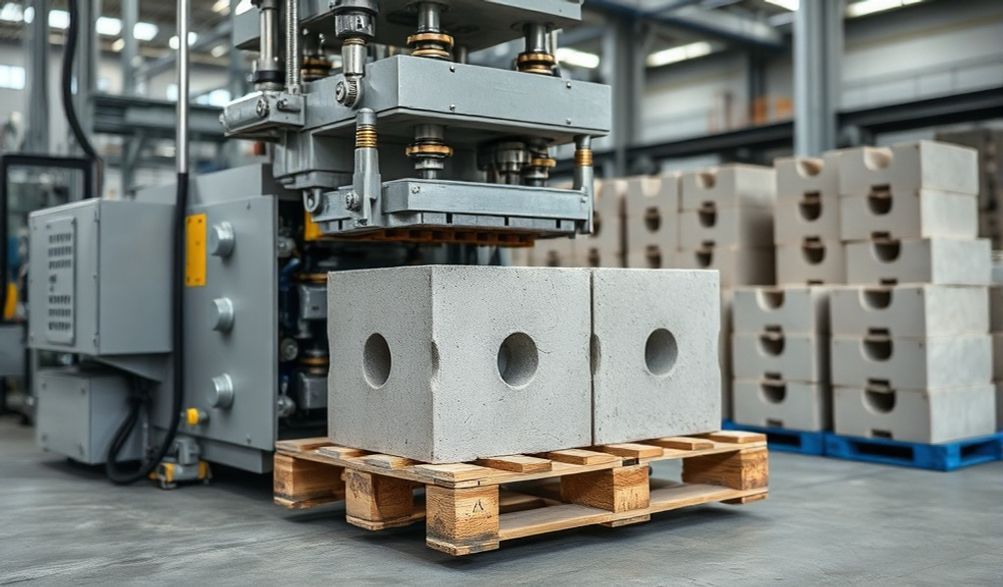
At its core, a blocks or bricks making machine is a device that automates the process of molding raw materials into precise, uniform building units. It takes inputs like concrete, clay, soil, or industrial by-products (such as fly ash) and transforms them into solid, hollow, paving, or interlocking blocks through a controlled process of compaction and shaping.
The primary function of these machines is to replace variable manual labor with consistent, automated force. This ensures every single block that comes off the production line meets exact dimensional and strength specifications, which is fundamental for modern, efficient construction.
How Do These Machines Work? The Basic Process
While machine designs vary, the fundamental production process follows a logical sequence:
- Pemberian Bahan: Pre-mixed raw materials (e.g., concrete: cement, sand, aggregate; or clay) are loaded into the machine’s hopper.
- Pencampuran & Penghantaran: An internal mixer (in some models) ensures consistency, and a conveyor system transfers the material to the molding area.
- Pemadatan/Getaran This is the heart of the process. The material is fed into a mold (also called a mold box). Then, through one or both of the following methods, it is densely compacted:
- Tekanan Hidraulik: A hydraulic ram applies immense, controlled pressure from above.
- Getaran: A high-frequency vibration table shakes the mold, causing particles to settle and eliminate air pockets.
- (Many machines use a combination of both for optimal results.)
- Pembentukan & Pengusiran: Once compacted, the mold is lifted or opened, and the freshly formed “green” block is ejected onto a pallet or conveyor.
- Penyembuhan/Pengeringan: The blocks are then moved to a curing area. For concrete blocks, this often involves controlled moisture and temperature to gain strength. For clay bricks, it involves drying and then firing in a kiln for extruder-type machines.
This mechanized cycle, repeated every few seconds, is what enables high-volume, high-quality production.
Types of Blocks and Bricks Making Machines
Navigating the market requires understanding the key classifications of this equipment.
By Operation: Manual, Semi-Automatic, and Fully Automatic
- Mesin Manual: These are the most basic and affordable entry point. They require significant human labor for almost every step—filling the mold, applying leverage for compaction, and ejecting the block. Ideal for very small-scale projects, community initiatives, or startups with minimal capital. Output is low, often measured in hundreds of blocks per day.
- Mesin Semi-Automatik: This category offers a strategic balance. The core compaction process (hydraulic or vibration) is powered, significantly reducing physical strain and improving consistency. However, tasks like feeding raw materials, moving pallets, or stacking blocks often require manual intervention. They offer moderate output and are a popular choice for small to medium-sized businesses. In practice, operating a semi-automatic machine efficiently typically requires a crew of 3-4 people.
- Mesin Sepenuhnya Automatik: These are the pinnacle of production efficiency. Computer-controlled and often part of a complete production line, they automate feeding, mixing, molding, curing, and stacking. Labor is primarily for supervision, maintenance, and quality control. They deliver the highest output (thousands of blocks per hour), impeccable consistency, and require the highest investment. Suitable for large-scale commercial block yards and major construction material suppliers.
By Product Output: Stationary Block Making Machines vs. Mobile Brick Machines
- Loji Pembuatan Blok Pegun: These are heavy-duty, fixed-installation machines or complete factories. They are designed for maximum output in a dedicated location, feeding a regional market. They require significant space for the machine, raw material storage, and block curing.
- Mesin Pembuatan Bata Mudah Alih: Built on trailers or skids, these machines can be transported directly to a construction site. The primary benefit is the drastic reduction in transportation costs for the finished blocks. You produce the bricks exactly where they are needed, ideal for large, remote projects like housing developments or infrastructure. Output is generally lower than stationary plants.
By Raw Material: Concrete, Clay (Extruders), and Fly Ash (AAC) Machines
- Mesin Blok Konkrit: The most common type, designed to work with a mix of cement, aggregates, and water. They produce a wide variety of Concrete Masonry Units (CMUs)—hollow, solid, paving, and landscaping blocks.
- Mesin Bata Tanah Liat (Ekstruder): These machines process natural clay or shale. They use an extrusion process, where the plastic clay is forced through a die to form a continuous column, which is then wire-cut into individual bricks before drying and firing.
- Fly Ash/AAC Machines: These are specialized plants for producing Autoclaved Aerated Concrete (AAC) blocks. They use a mixture of fly ash (an industrial waste product), lime, cement, and an expansion agent. The mixture is poured into a large mold, where it rises like cake batter, is then cut into blocks, and cured in a high-pressure steam autoclave. AAC blocks are lightweight and offer high thermal insulation.
Key Benefits of Investing in a Modern Making Machine
Moving from manual or outdated methods to a modern machine delivers transformative advantages.
Unmatched Efficiency and High Production Output
Mechanization shatters the output ceiling of manual labor. Where a skilled artisan might produce a few hundred bricks per day, a basic semi-automatic machine can produce 800-1,500 blocks in an 8-hour shift. A fully automatic line can exceed 10,000 blocks per day. This scalability allows you to meet large orders and grow your business exponentially.
Superior Quality and Consistency of Blocks
Machines eliminate human variability. Every block has:
* Precise Dimensions: Ensuring uniform mortar joints and faster, easier bricklaying.
* Ketumpatan Seragam: Critical for consistent structural performance and weight.
* Kekuatan Mampatan Lebih Tinggi: Controlled hydraulic pressure and vibration create a denser, stronger product that can meet or exceed industry standards like ASTM C90.
Pengurangan Kos Jangka Panjang yang Ketara
The initial investment is quickly offset by ongoing savings:
* Reduced Labor Costs: One machine can replace a large team of manual laborers.
* Bahan Buangan Diminimumkan: Precise mixing and compaction reduce spillage and rejected sub-standard blocks.
* Ekonomi Skala: Lower per-unit production cost as volume increases, boosting profit margins.
Versatility in Product Design
Modern machines are not one-trick ponies. By simply changing the mold (a relatively quick process), a single machine can produce:
* Solid blocks for foundations
* Hollow blocks for walls
* Paving stones for landscaping
* Interlocking blocks for retaining walls
This allows you to diversify your product line and respond to market demand without multiple machines.
Kelestarian Alam Sekitar
Investing in a modern machine can be a green decision:
* Utilizes Industrial Waste: Fly ash brick and AAC machines repurpose a coal combustion byproduct.
* Reduces Waste: Efficient production and consistent quality mean less material ends up as rubble.
* Kecekapan Tenaga: Compared to traditional fired clay bricks, which require kilns burning for days, many concrete block curing processes have a lower carbon footprint.
Cara Memilih Mesin yang Tepat: Senarai Semak Pembeli
Selecting the ideal machine is a strategic decision. Use this checklist to guide your process.
Assess Your Production Requirements
Mulakan dengan menjawab soalan-soalan asas ini:
* What is my required daily or monthly output to meet current and near-future demand?
* What types of blocks or bricks do my customers or projects need? (List them: e.g., 4″, 6″, 8″ hollow blocks, paving slabs).
* What physical space is available for the machine, raw material storage, and block curing/stacking?
Evaluate Your Budget and Investment Scale
Look beyond the sticker price. Consider the Kos Pemilikan Keseluruhan:
* Machine purchase price & import duties (if applicable)
* Installation, foundation, and utility hookup costs
* Cost of auxiliary equipment (mixer, conveyor, pallets, forklift)
* Ongoing operational costs (power, water, labor, maintenance)
Consider Raw Material Availability
Your local context dictates the machine type. Choose technology that matches your most abundant and cost-effective materials.
* Is cement and aggregate cheap and readily available? → Concrete Block Machine.
* Do you have access to high-quality clay deposits? → Clay Brick Extruder.
* Are you near a thermal power plant with fly ash? → Fly Ash/AAC Machine.
Check Critical Machine Specifications
When comparing models, scrutinize these technical specs:
* Masa Kitaran: Time to produce one block cycle. Faster = higher output.
* Mold Capacity: How many blocks per cycle (e.g., 3-block mold, 6-block mold).
* Tekanan (Tan) The hydraulic pressure applied. Higher tonnage generally produces stronger, denser blocks.
* Keperluan Kuasa: Does it need a standard 3-phase industrial power supply?
* Tahap Automasi: Aligns with your labor availability and output goals.
Prioritize Supplier Reputation and After-Sales Service
Di sinilahkebolehpercayaan is paramount. A machine is a long-term partnership.
* Research the Manufacturer: How long have they been in business? What is their reputation?
* Request Client References: Speak to other buyers, especially in your region.
* Verify Support Services: Is training provided? What is the warranty period? How quickly can you get spare parts? A machine breakdown without parts support can halt your entire business.
Operational Best Practices and Maintenance
To protect your investment and ensure peak performance, follow these guidelines.
Essential Steps for Optimal Machine Operation
- Perfect the Mix Design: The machine can only compact what you feed it. Use the correct ratios of cement, sand, aggregate, and water. The mix should be damp, not wet or dry.
- Ensure Proper Setup: The machine must be installed on a level, solid foundation as per the manufacturer’s instructions.
- Invest in Operator Training: Well-trained operators are safer, more efficient, and can perform basic troubleshooting.
Routine Maintenance Schedule for Longevity
A little preventative care prevents major downtime.
* Daily: Clean the machine thoroughly at the end of each shift. Check for loose bolts or parts. Lubricate all moving points as indicated in the manual.
* Weekly: Inspect hydraulic hoses for leaks. Check the vibration motor mounts and electrical connections.
* Monthly: Perform a more thorough inspection of wear parts like mold liners, conveyor belts, and seals. Replace as needed.
Troubleshooting Common Issues
- Problem: Blocks sticking to the mold.
- Cause: Worn mold liners, insufficient release agent, or a wet mix.
- Solution: Apply a recommended mold oil, check/replace liners, and adjust mix moisture.
- Problem: Poor surface finish or crumbling edges.
- Cause: Incorrect mix (too dry or sandy), insufficient compaction pressure/vibration time.
- Solution: Adjust mix design, increase vibration time or check hydraulic pressure.
- Problem: Low block strength.
- Cause: Incorrect cement ratio, inadequate curing (for concrete), or insufficient compaction.
- Solution: Review and correct mix design, ensure proper 7-28 day curing process, and verify machine compaction settings.
Soalan Lazim (FAQ)
Q1: What is the average cost of a blocks making machine?
A: Costs vary dramatically based on type and automation. A small manual machine can start at a few thousand USD. A robust semi-automatic model may range from $15,000 to $50,000. Large, fully automatic production lines can cost from $100,000 to over $500,000. It’s essential to get detailed quotations based on your specific needs.
Q2: Can one machine produce different sizes and types of blocks?
A: Yes, this is a key advantage. Most modern machines are designed to work with acuan boleh tukar. By investing in different mold sets, you can use a single machine to produce hollow blocks, solid blocks, paving stones, and more, maximizing your return on investment.
Q3: What is the typical payback period for this investment?
A: The payback period depends heavily on scale, local market demand, and operational efficiency. For a well-run small to medium operation, a period of 1 to 3 years is a common benchmark. High-volume operations with strong demand can see an even faster return.
Q4: How much space and what kind of power supply is needed?
A: Space needs vary. A small semi-automatic setup might need a 1,000-2,000 sq. ft. covered area plus outdoor curing space. For power, smaller machines may run on standard single-phase, but most industrial-grade semi- and fully-automatic machines require a 3-phase power supply. Always confirm voltage and power (kW) requirements with the supplier.
Q5: Where can I find a reliable supplier or manufacturer?
A: Conduct thorough due diligence. Attend international construction equipment trade shows, search reputable B2B industrial platforms, and seek recommendations from industry associations. Always apply the buyer’s checklist from this guide—research the company’s history, ask for client references, and verify their after-sales support network before committing.
Kesimpulan
Choosing the right blocks and bricks making machine is far more than a simple equipment purchase; it is a strategic decision that lays the foundation for productivity, quality, and long-term profitability in the construction sector. By thoroughly analyzing your production needs, budget, and local context, and by partnering with a reputable supplier, you transform this machine from a cost center into a powerful engine for business growth.
Equipped with the knowledge of types, benefits, and critical selection criteria, you are now prepared to engage with manufacturers confidently. Remember, this investment is a partnership. Prioritize quality, service, and reliability to ensure your machine builds not just blocks, but the foundation of your success. Your next step is to contact shortlisted, reputable manufacturers for detailed quotations and, if possible, arrange a factory visit to see the machines in action.
<