
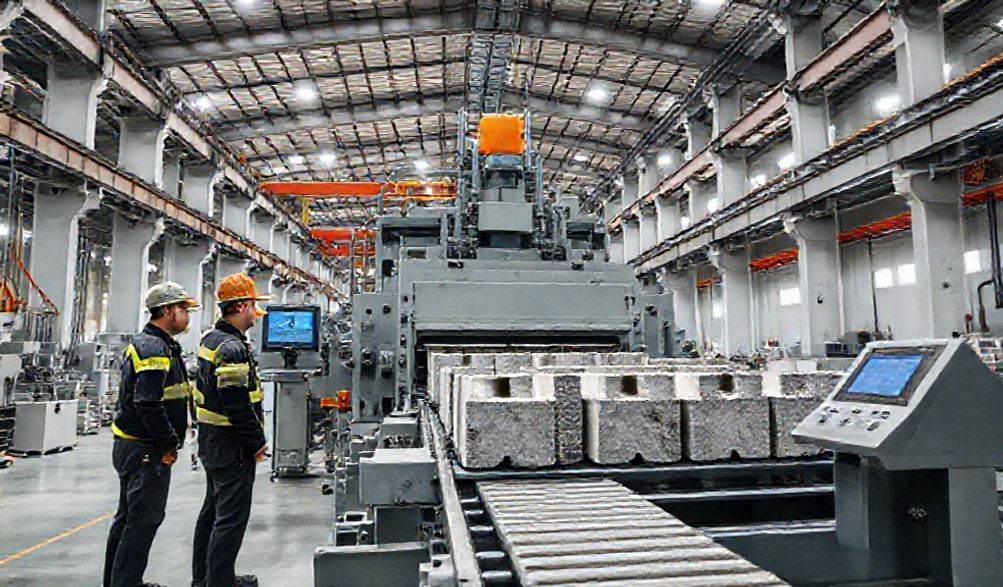
The Ultimate Guide to China Block Making Machine Manufacturers in 2024
Pengenalan
Industri pembinaan global diunjurkan mencapai angka yang mengejutkanAS$15.2 trilion menjelang 2030, driven by urbanization, infrastructure development, and housing demands worldwide. At the heart of this growth lies a critical piece of equipment: the block making machine. From concrete hollow blocks for walls to interlocking pavers for driveways, these machines form the literal building blocks of modern development.
For decades, the epicenter of manufacturing for these essential machines has shifted decisively to the East. Today, China stands as the undisputed global hub for block making machinery, offering an unparalleled combination of scale, technology, and value. However, for a buyer thousands of miles away, navigating this vast and complex marketplace is fraught with challenges. How do you distinguish a reputable manufacturer from a trading company? How can you verify quality from afar? What about after-sales support, logistics, and contractual safeguards?
This guide is your definitive answer. Built on deep industry research and analysis, we provide a comprehensive, step-by-step framework to navigate the world of Chinese block making machine manufacturers. Our goal is to empower you with trustworthy, actionable information—transforming a potentially risky procurement process into a confident, strategic investment for your business.
Mengapa Memilih Mesin Pembuat Blok Sumber dari China?
Choosing to source from China is not merely about finding a lower price; it’s about accessing a complete industrial ecosystem designed for efficiency and innovation. Here’s why the world turns to China for this critical machinery.
Unmatched Scale and Industrial Ecosystem
China’s manufacturing dominance is built on a concentrated network of supply chains. Key components—from high-grade steel and hydraulic systems to PLC controllers and molds—are produced by specialized suppliers often located within the same industrial regions as the machine assemblers. This clustering drastically reduces lead times, simplifies logistics for the manufacturer, and fosters intense competition that drives quality up and costs down. Furthermore, a deep pool of skilled labor, from welders to electrical engineers, supports this industry.
Harga Kompetitif dan Kecekapan Kos
The principle of economies of scale is powerfully at work here. High production volumes allow Chinese manufacturers to source materials at better rates and optimize production lines for efficiency. This cost advantage is passed on to the international buyer. Crucially, competitive pricing does not automatically mean compromised quality. Many top-tier factories invest the savings from scale into better R&D and quality control, offering superior value—a higher specification machine for a comparable price to a lesser machine from elsewhere.
Kemajuan dan Inovasi Teknologi
Gone are the days when China was seen only as a copycat. The country is now a global leader in machinery innovation. Significant investment in R&D has led to advancements in:
* Automasi: Fully automatic lines with robotic pallet handling and stacking.
* Kecekapan Tenaga: Machines with optimized hydraulic systems that reduce power consumption.
* Kawalan Pintar: User-friendly PLC interfaces with fault diagnosis and production data tracking.
* Hybrid Versatility: Machines capable of producing multiple block types with quick mold changes.
Diversity of Machinery for Every Need
Whether you are a startup in Africa needing a simple manual machine or a multinational contractor building a city requiring a 10-station fully automatic plant, Chinese manufacturers have a solution. The range is exhaustive:
* Small, mobile machines for on-site production.
* Semi-automatic machines for growing businesses.
* Large, fully integrated production lines for national infrastructure projects.
* Specialized machines for niche products like retaining wall blocks, curbstones, and concrete pipes.
Key Factors When Evaluating a Chinese Manufacturer
With hundreds of companies claiming to be top manufacturers, due diligence is non-negotiable. Evaluate prospects against these critical criteria.
Manufacturing Experience and Industry Longevity
A company’s history is a strong proxy for stability and evolved knowledge. Look for manufacturers with at least 10-15 years of operation. This longevity suggests they have survived market cycles, iteratively improved their products, and built a reputation. They are less likely to disappear after the sale and more likely to understand the real-world challenges of block production.
Technical Expertise and R&D Capability
A true manufacturer, not just an assembler or trader, will have in-house engineering and R&D teams. Key indicators include:
* A portfolio of patents for machine designs or components.
* The ability to offer customized solutions based on your specific raw materials (e.g., fly ash, aggregate size) or product requirements.
* Detailed technical documentation and CAD drawings.
Quality Control Processes and Certifications
Certifications are a baseline, not the finish line. Essential checks include:
* Pensijilan Antarabangsa: ISO 9001 for quality management systems is crucial. CE certification is mandatory for exporting to Europe and indicates adherence to safety standards.
* Pencarian Bahan: Inquire about the grade and source of steel (e.g., wear-resistant steel for molds), the brand of hydraulic components and electrical parts.
* Audit Kilang: Do they have a documented QC process with staged inspections (pre-production, in-process, final)?
Production Capacity and Lead Times
You need a partner who can deliver on time. Assess:
* Factory size and number of production lines.
* Current order book to gauge their capacity to handle your project.
* Realistic lead times from order confirmation to shipment. Be wary of quotes that seem unusually short, as they may indicate poor planning or the use of substandard parts.
Comprehensive After-Sales Service
This is the single greatest differentiator between a good supplier and a great partner. A robust after-sales package includes:
* Detailed installation manuals and video guides.
* Remote support via video call for troubleshooting.
* Clear warranty terms (typically 12-24 months for core parts) with defined response times.
* Long-term availability of spare parts at reasonable prices.
A Deep Dive into Machine Types and Applications
Understanding the machine categories will help you align your investment with your business goals.
Mesin Pembuat Blok Sepenuhnya Automatik
- Permohonan: Designed for high-volume, continuous production (e.g., large block yards supplying major construction projects).
- Ciri-ciri: Fully integrated systems with automatic material batching, mixing, block molding, curing, and pallet stacking. Output can range from 10,000 to over 100,000 blocks per 8-hour shift.
- Pelaburan: Highest capital cost but lowest labor cost and highest consistency per block.
Mesin Semi-Automatik dan Manual
- Permohonan: Ideal for SMEs, startups, or specialized product lines. Offers excellent flexibility.
- Ciri-ciri: The molding process is mechanized, but pallet handling, feeding, and block removal may be manual or semi-mechanized.
- Pelaburan: Lower initial cost and simpler maintenance. Higher labor input but perfect for testing markets or producing custom, lower-volume items.
Mesin Blok Mudah Alih
- Permohonan: On-site production for large projects like dams, roads, or remote housing developments.
- Ciri-ciri: Mounted on a trailer for easy transport. Significantly reduces the cost and logistics of transporting finished blocks over long distances.
- Pelaburan: Balances the efficiency of a stationary plant with the flexibility of location.
Specialized Machines for Concrete Pipes, Kerbstones, etc.
The Chinese industry also excels in producing niche machinery:
* Pipe Making Machines: For producing concrete drainage pipes of various diameters.
* Kerbstone Machines: For efficient production of road curbs and channels.
* Paver & Tile Machines: For producing thin, high-precision paving slabs and tiles.
The Procurement Process: From Inquiry to Delivery
A structured approach minimizes risk and ensures a smooth transaction.
Step 1: Defining Your Requirements
Be specific. Prepare a document detailing:
* Jenis & Saiz Blok: Hollow block, solid block, paver, etc., with precise dimensions.
* Output yang Dikehendaki: Blocks per hour or per shift.
* Tahap Automasi: Fully automatic, semi-automatic, or manual.
* Bahan Mentah: Type of cement, aggregate size, potential use of waste materials like fly ash.
* Budget Range: Be realistic, understanding the correlation between cost and capability.
Step 2: Vetting and Shortlisting Manufacturers
- B2B Platforms: Use Alibaba or Made-in-China as starting points, but filter for “Verified Suppliers” and those with “Assessed” capabilities. Look for Gold Suppliers.
- Industry Exhibitions: The Canton Fair and specific building machinery expos in China are ideal for meeting suppliers in person.
- Third-Party Verification: Services like SGS or Bureau Veritas can provide background checks.
Step 3: Effective Communication and Quotation Analysis
- Ask detailed technical questions. A real manufacturer will provide deep answers.
- Compare quotations on a like-for-like basis. Ensure they include the same scope: machine specs, spare parts package, warranty, and trade terms (FOB, CIF, etc.).
- FOB (Franko Kapal): You control shipping and pay costs from the Chinese port onward.
- CIF (Cost, Insurance, Freight): The supplier arranges and pays for shipping to your nearest port.
Step 4: Factory Audit and Sample Inspection
- Never skip this step. If an in-person visit isn’t possible, insist on a live video tour of the factory floor, not a pre-recorded video.
- Request a production sample of the blocks you intend to make, using your specified raw material mix if possible. Test the sample for compressive strength.
Step 5: Logistics, Shipping, and Customs Clearance
- Engage a reliable freight forwarder with experience in heavy machinery.
- Understand Incoterms—they legally define who is responsible for cost and risk at each stage of shipping.
- Prepare for customs clearance in your country by ensuring you have all necessary documents: commercial invoice, packing list, bill of lading, and certificate of origin.
Building Trust and Mitigating Risks
Verifying Business Legitimacy
- Request a copy of their Lesen Perniagaan.
- Check their export history and ask for references from past clients in your region or a similar market.
- Search for the company name online alongside keywords like “complaint” or “review.”
Securing Your Transaction
- Avoid large direct wire transfers before shipment.
- Use secure payment channels:
- Letter of Credit (L/C): A bank-guaranteed payment, secure but more complex.
- Escrow Services: Such as Alibaba Trade Assurance, which holds payment until you confirm satisfactory delivery.
The Importance of a Detailed Contract
A professional contract protects both parties. It must include:
* Detailed Technical Specifications (as an appendix).
* Payment Schedule (e.g., 30% deposit, 70% against copy of bill of lading).
* Delivery Schedule with defined penalties for delays.
* Warranty Terms & After-Sales Support in full detail.
* Dispute Resolution mechanism (e.g., arbitration in a neutral location).
FAQ: Your Top Questions Answered
Q1: What is the average price range for a block making machine from China?
A: Prices vary dramatically. A small manual machine can start around $10,000, while a high-capacity fully automatic production line can exceed $300,000. The key is to understand that the “machine” is often a system. The lowest quote may exclude essential components like molds, pallets, or the control system. Always compare total package value.
Q2: How can I ensure the machine quality without visiting the factory?
A: A multi-layered approach is best:
1. Conduct a live, interactive video tour of the factory.
2. Hire a third-party inspection company (like SGS, Intertek) for a pre-shipment inspection.
3. Demand a performance test video of a machine similar to your order.
4. Speak directly to existing international clients and ask for their unbiased feedback.
Q3: What is the typical warranty period, and what does it cover?
A: Reputable manufacturers typically offer a 12 to 24-month warranty on core components like the hydraulic system, mainframe, and controller. The warranty usually covers defects in material and workmanship but not wear-and-tear parts or damage from improper operation. Get the exact warranty terms in writing before payment.
Q4: Do manufacturers provide installation and training support?
A: Yes, most do. Options include:
* Sending Engineers: At an additional cost (covering airfare, accommodation, and daily rate), they will supervise installation and train your team.
* Remote Guidance: Comprehensive support via detailed manuals, video tutorials, and video calls. Clarify the level of support included in your price during negotiations.
Q5: How long does shipping take, and who handles customs?
A: Sea freight is the standard for heavy machinery. Shipping time can range from 4 to 8 weeks depending on the destination port. Customs clearance is your responsibility in your country. The chosen Incoterm defines who arranges and pays for the main carriage: with CIF, the supplier arranges shipping to your port; with FOB, you do. In both cases, you or your local agent must handle import customs.
Kesimpulan
Sourcing a block making machine from China presents an immense opportunity to acquire advanced, cost-effective technology that can transform your construction business. The journey, however, demands diligent research, clear communication, and a focus on building a partnership, not just making a purchase.
Remember, the goal is not to find the cheapest machine, but the one that offers the greatest total value—combining robust construction, intelligent design, reliable after-sales support, and a manufacturer’s commitment to your long-term success. As you move forward, consider manufacturers who are future-proofing their machines with energy-efficient designs and smart connectivity features.
Use this guide as your checklist. Conduct thorough due diligence, ask the hard questions, and take the necessary steps to verify your chosen partner. By doing so, you will secure not just a machine, but a cornerstone for your business’s growth for years to come.
<