
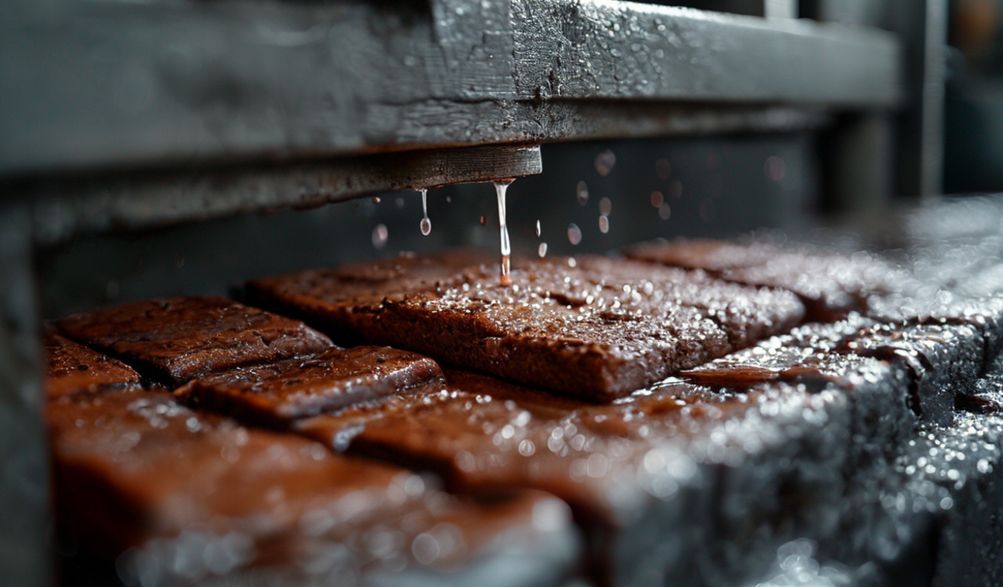
Panduan Utama Mesin Acuan Bata Tanah Liat: Jenis, Proses & Pemilihan
Selama beribu tahun, batu bata telah menjadi asas literal dan metafora tamadun. Dari ziggurat purba hingga pencakar langit moden, kekuatan dan serba guna mereka yang berkekalan tidak dapat ditandingi. Namun, kualiti, konsistensi, dan kecekapan pengeluaran batu bata bergantung pada satu fasa kritikal: pengacuan. Lonjakan daripada kaedah manual yang intensif buruh kepada ketepatan mekanisasi telah merevolusikan industri ini. Kini, pilihanmesin acuan bata tanah liatadalah satu-satunya keputusan yang paling memberi kesan bagi mana-mana pengeluar bata, menentukan kualiti produk, kecekapan operasi, dan keuntungan perniagaan.
Panduan komprehensif ini mensintesiskan piawaian industri selama beberapa dekad, data pengeluar langsung, dan pandangan operasi yang diperoleh melalui pengalaman. Sama ada anda seorang pengurus kilang berpengalaman yang ingin menaik taraf atau seorang usahawan yang menceburi sektor bahan binaan, sumber ini akan menjelaskan dunia mesin pengacuan bata tanah liat. Kami akan meneroka pelbagai jenis mesin, menguraikan proses pengeluaran lengkap, menyediakan rangka kerja untuk memilih peralatan yang sesuai, dan berkongsi amalan terbaik penting untuk memastikan operasi anda berjalan lancar dan berjaya.
Memahami Mesin Pengacuan Bata Tanah Liat
Sebelum mendalami spesifikasi dan model, adalah penting untuk membina pemahaman asas tentang apa itu mesin-mesin ini dan mengapa ia tidak boleh dipisahkan dalam penghasilan bahan binaan moden.
What is a Clay Brick Moulding Machine?
A mesin acuan bata tanah liat is a mechanical or electro-mechanical device designed to shape prepared, tempered clay into precise, uniform bricks (known as “green bricks”) at a high rate of production. It automates the core forming process, applying controlled force to compact the clay into a mold or die of a specific shape and size. This machinery is the heart of any brick-making plant, transforming raw, plastic clay into the standardized units that builders rely on.
Komponen Teras dan Cara Ia Berfungsi
While designs vary, most modern clay brick moulding machines share several key components:
- Hopper: The entry point where the prepared clay mix is fed into the machine.
- Mould or Die: The cavity that defines the brick’s final shape, size, and texture (e.g., for solid, hollow, or perforated bricks). These are often interchangeable.
- Sistem Pemadatan: The powerhouse of the machine. This can be a mechanical lever system, a hydraulic ram, or an extrusion screw that applies significant pressure to the clay, eliminating air pockets and achieving the required density.
- Mekanisme Pengusiran: A system that carefully pushes or conveys the newly formed “green brick” out of the mould without damaging its shape.
- Panel Kawalan: On automatic and semi-automatic models, this houses the controls for operation cycles, pressure settings, and safety interlocks.
Benefits Over Traditional Manual Moulding
The adoption of a dedicated moulding machine offers transformative advantages:
- Kecekapan Tiada Tandingan: Machines produce hundreds or thousands of bricks per hour, a rate impossible to achieve manually.
- Kualiti Konsisten: Every brick has identical dimensions, density, and weight, leading to better structural integrity and easier bricklaying.
- Higher Output Volume: Enables the scaling of operations to meet large project demands.
- Reduced Labor Costs: Automates the most labor-intensive part of the process, freeing workers for material handling and quality control.
- Improved Worker Safety: Reduces repetitive strain injuries and direct physical handling of heavy materials.
Types of Clay Brick Moulding Machines
The market offers a variety of machines, each suited to different production scales, brick types, and investment levels. Understanding these categories is the first step in making an informed choice.
Mesin Manual vs. Semi-Automatik vs. Sepenuhnya Automatik
- Mesin Manual: Operated entirely by human power (levers, handles). They are low-cost, portable, and ideal for very small-scale or on-site production (e.g., a few hundred bricks per day). Labor intensity and output are their main limitations.
- Mesin Semi-Automatik: These electrically powered machines automate the compaction and ejection process. An operator feeds the clay and removes the finished bricks. They offer an excellent balance, providing high output (2,000-6,000 bricks per 8-hour shift) with a moderate investment, perfect for small to medium enterprises (SMEs).
- Mesin Sepenuhnya Automatik: These are complete production lines with automated clay feeding, moulding, brick ejection, and stacking onto pallets. Controlled by PLC systems, they require minimal human intervention and achieve the highest output (10,000+ bricks per shift). They represent a significant capital investment suited for large-scale industrial plants.
Extrusion Moulding Machines
This is one of the most common types, especially for producing hollow blocks and perforated bricks.
- Proses: A rotating screw (auger) inside a barrel forces the tempered clay through a shaped die at the end. The continuous column of clay (the “extrudate”) is then cut into individual brick lengths by wires.
- Ciri Utama: Often integrated with a pug mill, which mixes and kneads the clay immediately before extrusion, ensuring a homogeneous and plastic feed material.
- Terbaik Untuk: High-volume production of standard hollow and solid bricks.
Hydraulic Press Moulding Machines
These machines prioritize extreme precision and high density for specialized bricks.
- Proses: Clay is fed into a precision mold, and a hydraulic ram applies immense, controlled pressure from the top (and sometimes bottom) to compact it. This is a batch process, not continuous.
- Ciri Utama: Produces bricks with very low porosity, high compressive strength, and sharp, consistent edges.
- Terbaik Untuk: Paving bricks (clay pavers), engineering bricks, and high-quality facing bricks where appearance and strength are paramount.
Vacuum Extrusion Machines
Considered the premium technology for producing the highest quality extruded bricks.
- Proses: Similar to standard extrusion, but the clay passes through a vacuum chamber sebelum entering the extrusion barrel. This removes up to 90% of the air entrapped in the clay.
- Ciri Utama: De-aired clay extrudes more smoothly, produces bricks with higher density and strength, and reduces cracking and warping during drying and firing. It also allows for lower initial moisture content.
- Terbaik Untuk: Manufacturers targeting the premium brick market, producing high-strength products with superior firing properties.
The Brick Moulding Process: Step-by-Step
A machine is only one part of a system. Understanding the full workflow is essential for operational success.
Stage 1: Clay Preparation and Tempering
The moulding process’s success is determined long before the clay reaches the machine. Poorly prepared clay will cause endless production issues.
- Clay Quality: The raw clay must be tested for its composition (shale, surface clay, fire clay) and suitability for the desired brick type.
- Crushing & Screening: Lumps are crushed and screened to achieve a fine, uniform particle size.
- Tempering: This is the critical step of adding water and thoroughly mixing to achieve the perfect “plastic” consistency—moist enough to mold without cracking, yet firm enough to hold its shape after ejection. A pug mill is typically used for this.
Stage 2: The Moulding Operation
Di sinilah tempatmesin acuan bata tanah liat takes center stage.
- Pemberian Makan: The tempered clay is conveyed or manually placed into the machine’s hopper.
- Pemadatan: Depending on the machine type, the clay is either forced through a die (extrusion) or pressed in a confined mold (hydraulic).
- Pengusiran: The formed green brick is gently pushed out onto a conveyor belt, pallet, or drying rack.
Stage 3: Post-Moulding Handling (Curing & Drying)
The brick is at its most fragile state after moulding. Proper handling is non-negotiable.
- Green Brick Handling: Bricks must be moved without deformation, typically on wooden pallets or steel racks.
- Pengeringan: The single most critical step before firing. Moisture must be removed slowly and evenly to prevent cracking. This is done in dedicated drying sheds (natural drying) or faster, controlled dryers (artificial drying using heat and humidity control).
How to Choose the Right Machine for Your Needs
Selecting a machine is a strategic investment. This framework will guide your decision-making process.
Menilai Keperluan Pengeluaran Anda
Mulakan dengan menjawab soalan-soalan asas ini:
- What is my target output in bricks per day or hour?
- What type(s) of bricks will I produce (solid, hollow, paving, special shapes)?
- What are the standard brick dimensions in my target market?
- What is my available factory space and power supply (3-phase electricity)?
- What is the nature of my raw clay material?
Key Machine Specifications to Compare
When evaluating models, compare these hard metrics side-by-side:
- Kapasiti Output: Stated in bricks per hour. Remember, real-world output can be 10-20% lower than theoretical maximums.
- Kuasa Motor: Indicates the machine’s capability and energy consumption (measured in kW or HP).
- Tekanan Operasi: For hydraulic machines, higher pressure (measured in tons or MPa) generally means denser, stronger bricks.
- Tahap Automasi: Manual feed, semi-auto, or fully auto with auto-stacker.
- Mould Customization: Can the supplier provide or manufacture custom dies for your specific brick design?
Budgeting: Initial Investment vs. Operational Costs
Look beyond the sticker price. The Total Cost of Ownership (TCO) includes:
- Kos Permulaan: Machine price, shipping, installation, and commissioning.
- Kos Operasi: Electricity consumption, routine maintenance supplies (grease, oil), and labor.
- Long-Term Costs: Spare parts (augers, mould liners, hydraulic seals) and potential downtime costs.
Supplier and After-Sales Service Evaluation
Di sinilahkebolehpercayaan becomes critical. A reliable supplier is as important as the machine itself.
- Reputasi: Research the manufacturer’s history, client testimonials, and industry presence.
- Jaminan: Understand the scope and duration of the warranty.
- Sokongan Teknikal: Is there accessible, knowledgeable support for troubleshooting?
- Alat Ganti: Are parts readily available locally or with short lead times?
- Latihan: Does the supplier provide comprehensive on-site training for your operators and maintenance staff? Never underestimate this.
Operational Best Practices and Maintenance
Protect your investment and ensure peak performance with disciplined operations.
Essential Safety Protocols for Operators
- Ensure all machine guards are in place and functional.
- Implement a strict Lock-Out/Tag-Out (LOTO) procedure for any maintenance or clearing of jams.
- Mandate the use of Personal Protective Equipment (PPE): safety glasses, gloves, and steel-toe boots.
- Provide thorough safety training for all personnel.
Routine Maintenance Checklist
| Frequency | Key Tasks |
| :— | :— |
| Daily | Clean the machine of all clay residue. Check hydraulic oil levels and for leaks. Lubricate all moving parts as per manual. |
| Weekly | Inspect and tighten all bolts and fasteners. Check wear on mould liners and extrusion augers. Clean the hydraulic oil filter. |
| Monthly | Perform a more detailed inspection of electrical connections, hydraulic hoses, and valves. Test safety interlocks. |
Troubleshooting Common Issues
- Cracked Bricks: Usually caused by clay that is too dry, improper tempering, or too-rapid ejection from the mould.
- Poor Compaction/Weak Bricks: Insufficient pressure, clay that is too wet, or a worn-out compaction system.
- Sticking in Mould: Mould surfaces may be worn or need better lubrication; clay may be too wet.
- Uneven Sizes: Worn or misaligned mould/die components; inconsistent clay feed.
Soalan Lazim (FAQ)
Q1: What is the production capacity range for these machines?
A: Capacity varies enormously. Small manual machines may produce 500-1,000 bricks per 8-hour day. Semi-automatic machines range from 2,000 to 6,000 bricks per shift. Large, fully automatic lines can produce 15,000 to 40,000+ bricks in the same period.
Q2: Can one machine produce different brick sizes and shapes?
A: Yes, but with a key caveat. Most machines are designed to work with interchangeable moulds or dies. You can produce different sizes and shapes (e.g., solid to hollow) by changing the die. However, the machine’s core design (e.g., extrusion vs. hydraulic) determines the type of shapes it can make.
Q3: What is the typical lead time for a clay brick moulding machine?
A: For standard models in local stock, lead time can be a few weeks. For custom configurations or machines shipped from overseas, lead times of 60 to 120 days are common. Always confirm this with your supplier.
Q4: How important is operator training?
A: It is absolutely critical. A well-trained operator ensures safety, maximizes output quality, prevents costly machine damage, and optimizes productivity. Supplier-provided training is a non-negotiable part of the purchase.
Q5: What are the common wear parts, and how often are they replaced?
A: Common wear parts include extrusion augers, mould and die liners, hydraulic seals and hoses, and cutting wires. Replacement frequency depends entirely on the abrasiveness of your clay and the rigor of your maintenance schedule. An auger in a highly abrasive clay might last 6 months, while in softer clay it could last years.
Kesimpulan
Choosing the right mesin acuan bata tanah liat is a pivotal decision that sets the trajectory for your manufacturing operation’s quality, efficiency, and profitability. It requires a careful balance between your production goals, the characteristics of your raw materials, and your financial framework. From manual starters to fully automated vacuum extrusion lines, the technology exists to match every ambition.
Investing time in thorough research, consulting with reputable and experienced suppliers, and prioritizing operator training and maintenance will yield lasting returns. We strongly encourage you to move beyond brochures and specifications: request live demonstrations, visit existing customer sites, and see the machines in action. This hands-on due diligence is the final, essential step in making a confident, informed investment in the foundation of your brick-making business.
<