
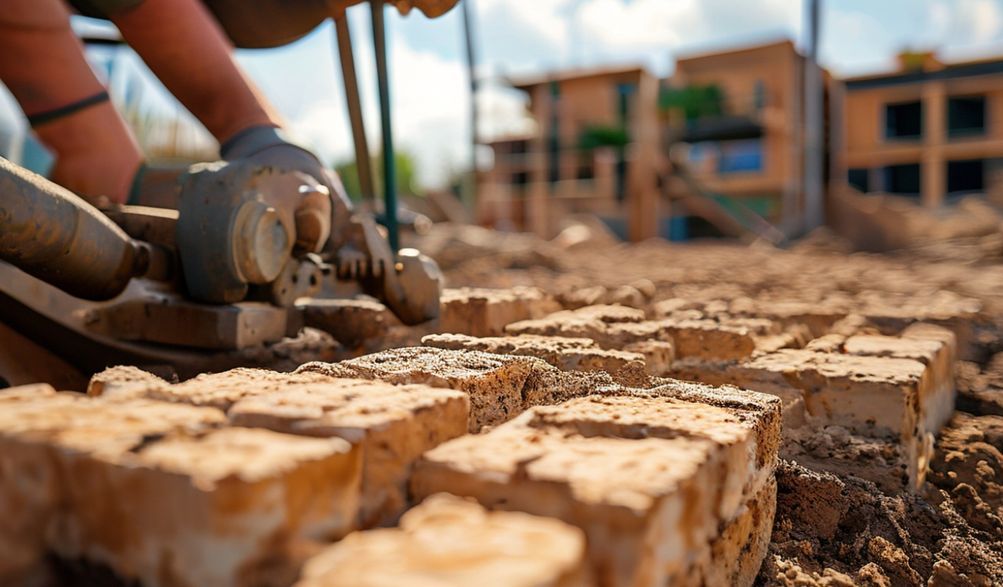
Panduan Terakhir untuk Mesin Bata Saling Kunci Makiga: Pandangan dari Kilang Pembuatan Blok FUDA
Pengenalan
Keperluan global untuk perumahan mampu milik dan mampan adalah antara cabaran paling mendesak kita. Kaedah pembinaan tradisional sering bergantung pada bahan import yang mahal dan tenaga kerja mahir yang banyak, menjadikan tempat tinggal yang layak tidak terjangkau oleh jutaan orang. Tetapi bagaimana jika penyelesaiannya bukan teknologi yang lebih kompleks, tetapi kejuruteraan yang lebih bijak, mudah dan lebih mudah diakses?
Masukkan mesin bata saling mengunci manual—teknologi kos rendah yang transformatif, memberdayakan usahawan dan komuniti di seluruh dunia. Antara ini, mesin bata saling mengunci Makiga telah muncul sebagai alat unggulan untuk pembinaan akar umbi. Tetapi bagaimana ia benar-benar sesuai dalam landskap pengeluaran blok yang lebih luas?
Panduan ini diilhamkan oleh analisis industri dan pandangan dari perspektif pengeluar mapan sepertiKilang Blok FUDApemain utama dalam mesin bata dan blok. Tujuan kami adalah untuk memberikan gambaran pakar yang seimbang. Kami akan membedahMesin bata saling mengunci Makigaaplikasi idealnya, dan batasannya, sambil menempatkannya dalam konteks pasar yang juga mencakup mesin hidrolik berkapasitas tinggi dan mesin otomatis.
Ini bukan sekadar ulasan produk. Ia adalah panduan strategik untuk membantu anda membuat keputusan yang berinformasi sama ada teknologi manual ini merupakan landasan pelancaran yang tepat untuk projek atau perniagaan anda, dan bagaimana laluan pertumbuhan anda mungkin kelihatan bersama pemimpin industri sepertiKilang pembuatan blok FUDA.
Apakah itu Mesin Bata Saling Kunci Makiga?
Pada terasnya, mesin Makiga adalah alat pemberdayaan. Ia mendemokrasikan pengeluaran bahan binaan dengan mengubah tanah tempatan yang tersedia menjadi batu bata saling kunci yang kukuh.
Teknologi Teras dan Falsafah Reka Bentuk
Mesin itu menghasilkan Blok Tanah Stabil Saling Berkunci (ISSB). Prinsipnya cerdik:
- Saling Mengunci:Blok-blok ini mempunyai reka bentuk jantan dan betina pada permukaan atas dan bawahnya. Ia terkunci bersama seperti Lego, memberikan penjajaran dan kekuatan ricih yang luar biasa.
- Stabil:Tanah dicampur dengan peratusan kecil (biasanya 5-10%) simen atau kapur. "Penstabilan" ini mengikat zarah tanah secara kimia, menghasilkan batu bata yang tahan cuaca dan tahan lama.
- Tanah:Bahan mentah utama adalah tanah yang sudah ada di atau berhampiran tapak, dengan ketara mengurangkan kos bahan dan jejak pengangkutan alam sekitar.
Reka bentuk mesin Makiga mencerminkan falsafah kesederhanaan radikal:
* Ia sepenuhnyamanualdikendalikan oleh tuil tangan.
Ia dibina untukketahanandaripada keluli tahan lasak.
* Ia memerlukantiada elektrik atau bahan apimenjadikannya sesuai untuk lokasi luar grid.
* Ia adalahmudah alihsering kali dipasang pada roda, jadi pengeluaran boleh berlaku tepat di mana blok diperlukan.
Perspektif Kilang Blok FUDA Terhadap Mesin Manual
From the vantage point of a full-spectrum manufacturer like FUDA, manual machines occupy a vital, specific niche. FUDA’s range typically includes everything from manual presses to fully automatic, computer-controlled block making plants. This breadth offers a clear frame of reference.
TheMesin bata saling mengunci Makiga represents the essential entry point into block manufacturing. It is the ideal choice for:
- Usahawan Permulaan: Individuals testing a business idea with minimal capital risk.
- Small-Scale Projects: Building a single home, a perimeter wall, or a small community structure.
- Remote Locations: Where grid power is unreliable or nonexistent.
- Skill-Building Initiatives: Training programs and vocational schools.
The key insight from this perspective is that there is no “one best” machine—only the most appropriate technology for your specific scale, budget, and goals. The Makiga excels in contexts where low capital cost and operational simplicity are paramount.
Key Features and Benefits of the Makiga Machine
Why has the Makiga machine gained such global traction? Its benefits align perfectly with the needs of its target users.
Cost-Effectiveness and Low Operational Overhead
This is the most compelling advantage.
* Pelaburan Awal Yang Rendah: The machine cost is a fraction of a motorized block maker.
* Penyelenggaraan Minimum: With no engines, hydraulics, or complex electronics, upkeep is simple and cheap.
* Zero Energy Costs: No bills for diesel or electricity.
* Localized Material Cost: Up to 90% of your brick’s content is free, excavated soil.
Ease of Use and Mobility
- Quick Training: Operators can be trained to produce good quality blocks in a matter of days.
- Pengeluaran Di Tapak: Move the machine to the construction site. This eliminates the cost and damage risk of transporting fragile bricks over long distances.
- Community Involvement: Its simplicity allows for the direct involvement of future homeowners or community members in building their own structures.
Strength and Sustainability of Produced Bricks
- Integriti Struktur: Properly stabilized ISSBs can meet and exceed the compressive strength of traditional fired clay bricks or concrete blocks.
- Thermal & Acoustic Performance: Soil blocks have excellent natural insulation properties.
- Kelestarian Alam Sekitar: Drastically reduced cement use (compared to concrete blocks) lowers the carbon footprint. Using local soil eliminates the environmental cost of quarrying and transporting aggregate.
Practical Applications and Ideal Use Cases
The Makiga machine isn’t a toy; it’s a serious tool for specific, impactful applications.
For the Aspiring Entrepreneur
It offers a viable path to business ownership. With a small investment, one can start a mobile brick-making service or a small yard-supplying blocks for local home extensions and projects. It’s a business with low barriers to entry.
For Community-Driven and Self-Help Projects
This is where the technology shines. NGOs, charities, and community groups use Makiga machines to build:
* Affordable housing units
* School classrooms and libraries
* Health clinics and sanitation blocks
* Water tanks and agricultural structures
The model fosters ownership, builds local skills, and stretches donor funds significantly.
For Individual Homeowners and DIY Builders
An owner-builder can realistically produce the thousands of blocks needed for their own home over time. While labor-intensive, the savings on material costs can be transformative, making homeownership achievable.
Critical Considerations and Limitations
Informed decisions require honest appraisal. Understanding the limitations of the Makiga machine is as important as celebrating its benefits.
Production Capacity vs. Industrial Machines
This is the primary trade-off.
* Makiga Output: A skilled, two-person team might produce 500 to 1,000 high-quality blocks in an 8-hour day. Output is human-paced.
* Industrial Comparison: A basic Kilang pembuatan blok FUDA semi-automatic hydraulic press could produce 2,000-5,000 blocks in the same timeframe. A fully automatic line could produce tens of thousands.
The Makiga is not for supplying a large commercial development. It’s for controlled, small-to-medium scale production.
Labor Intensity and Brick Quality Consistency
- Tuntutan Fizikal: Operating the lever all day is hard work. Output is directly tied to operator stamina.
- Skill-Dependent Quality: Consistency in soil mix, moisture content, and compression force relies on the operator’s skill and attention. There is a learning curve to producing uniform, high-strength blocks batch after batch.
Soil Suitability and Stabilization
The machine is only as good as the soil you feed it.
* Soil Testing is Non-Negotiable: Not all soil is suitable. The ideal is a sandy loam. Clay-heavy or organic soils require modification or are unsuitable. A simple jar test is a crucial first step.
* Stabilization is Key: “Stabilized” is the critical word in ISSB. Incorrect cement/soil ratios lead to weak, crumbly blocks. This is the most common point of failure for newcomers.
Navigating the Market: Makiga, FUDA, and Making the Right Choice
You’ve decided a block machine is right for you. How do you proceed in a market with everything from manual levers to fully automated plants?
Sourcing a Genuine Makiga Machine
- Official Channels: Seek authorized distributors or contact Makiga Engineering directly. Be wary of cheap counterfeits made with inferior steel that will bend or break under pressure.
- Verify and Research: Look for user reviews, videos of the actual machine in operation, and clear warranty terms.
When to Consider Upgrading to a FUDA-Style Machine
Your business growth dictates the technology transition. Consider upgrading to a semi-automatic or automatic machine (from a manufacturer like FUDA) when:
* Demand Exceeds Supply: You have consistent orders you cannot meet with manual production.
* Labor Costs Rise: The cost of manual labor outweighs the investment in a faster machine.
* Quality Standardization is Critical: You need guaranteed, machine-consistent block dimensions and strength for larger contracts.
* You Scale Up Project Size: You move from building houses to supplying blocks for schools, apartment complexes, or commercial projects.
This represents a natural business progression: start with the accessible Mesin bata saling mengunci Makiga, then scale up with a Kilang pembuatan blok FUDA machine as your capital and market grow.
Essential Questions to Ask Suppliers
Whether buying a Makiga or a FUDA machine, be a savvy buyer. Ask:
1. What is included in the price? (Molds for different block types?)
2. What is the warranty period and what does it cover?
3. How available are spare parts, and what is the typical delivery time?
4. Do you provide operational training or detailed manuals?
5. Can you connect me with existing customers for references?
Soalan Lazim (FAQ)
Q1: How many bricks can a Makiga machine produce in a day?
A: A realistic output for a motivated two-person team is between 500 and 1,000 bricks per 8-hour day. This pales in comparison to an industrial machine but is ample for a small business or building project.
Q2: What is the cost difference between a Makiga manual machine and a basic FUDA automatic block maker?
A: The difference is typically an order of magnitude. A Makiga machine is often a few thousand dollars, representing a micro-investment. A basic automatic block making machine from a manufacturer like FUDA can start in the tens of thousands. They are tools for entirely different stages of operation.
Q3: Do interlocking bricks made with the Makiga machine require mortar?
A: The interlocking design eliminates the need for thick mortar joints. A thin slurry of cement “cream” is often brushed between courses to ensure perfect leveling and bonding. This can reduce mortar use by over 50% compared to conventional masonry.
Q4: Can I use any type of soil with the Makiga interlocking bricks machine?
A: No. Soil suitability is paramount. Ideal soil is a sandy loam (roughly 70% sand, 30% silt/clay). Pure clay or organic topsoil will not work. Always conduct a simple soil test before purchasing a machine.
Q5: Is training provided when purchasing a Makiga or FUDA machine?
A: Reputable suppliers for both types of machinery should provide basic operational guidance, either in-person, via detailed manuals, or through video resources. Always confirm the level of after-sales support and training before finalizing a purchase.
Kesimpulan
TheMesin bata saling mengunci Makiga is more than a tool; it’s a catalyst for affordable construction, entrepreneurial spirit, and community resilience. It stands as a powerful testament to the concept of “appropriate technology”—brilliantly designed to meet specific needs where high-cost, complex machinery cannot.
From the expert perspective of the broader industry, including manufacturers like Kilang Blok FUDA, the choice is never about which machine is universally “better.” It is about which technology is kanan for your specific goals, scale, and resources. The Makiga is an exceptional, low-risk entry point into the world of block production. It provides a foundation upon which a successful business can be built—a business that may one day graduate to the higher-capacity, efficiency, and consistency offered by advanced machinery.
Your journey should begin not with a purchase order, but with due diligence. Assess your project needs honestly, research suppliers thoroughly, and most importantly, start with a simple soil test. The quality of your land is the first and most critical determinant of your success with this transformative technology.
<