Deconstructing the Profitability Equation in the block manufacturing business
Profit margin in block manufacturing is the financial residue after all costs are subtracted from revenue. It is a measure of operational mastery and market positioning, heavily influenced by both internal controls and external forces.
1. Primary Cost Components: The Foundation of the Model
A clear grasp of cost structure is essential to understand margin potential.
1.1. Variable Costs: The Cost of Goods Sold (COGS)
These are direct costs that fluctuate with production volume, typically constituting 60-75% of total cost.
- Raw Materials (40-55% of COGS): This is the single largest expense. The price and quality of cement, aggregates (sand, gravel), and water are geographically variable. Access to local, affordable aggregate sources is a major competitive advantage.
- Direct Labor (10-15% of COGS): Wages for machine operators, mixers, and forklift drivers. Higher automation reduces this cost per unit but increases fixed costs.
- Power and Fuel (8-12% of COGS): Electricity for motors, vibrators, and potential steam-curing systems, or fuel for mobile plants and loaders.
- Consumables & Packaging (3-5% of COGS): Wear parts for molds, pallets, strapping, and shrink wrap.
1.2. Fixed and Semi-Fixed Costs: The Overhead Burden
These costs persist regardless of output level and must be covered by gross profit.
- Depreciation & Equipment Finance: The cost of the block machine, mixer, loader, and other capital assets, spread over their useful life.
- Facility Costs: Rent or mortgage, property taxes, and utilities for the factory space.
- Administrative & Sales Expenses: Salaries for management, sales staff, marketing, insurance, and professional fees.
2. Key Drivers of Margin Performance
Profitability is not accidental; it is engineered through strategic focus in several areas.
2.1. Operational Efficiency and Scale
This is the core internal driver. A high-capacity automatic plant running at 85-90% utilization will have a significantly lower fixed cost per block than a semi-automatic plant operating intermittently. Minimizing raw material waste, optimizing mix designs for cost and performance, and reducing machine downtime are direct pathways to margin improvement.
2.2. Product Mix and Value Addition
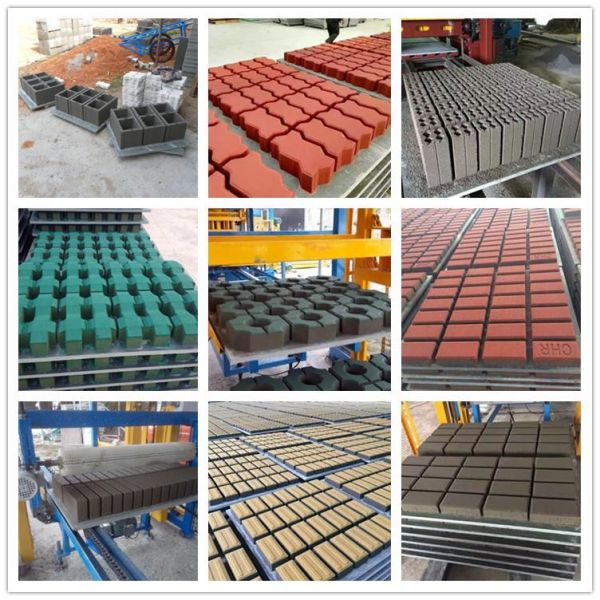
Not all blocks are equally profitable. Producing only standard hollow blocks often leads to competition primarily on price. Introducing a diversified portfolio—such as premium interlocking pavers, decorative landscaping blocks, or insulated concrete forms—allows for higher price points and improved margins. Value-added products differentiate the business from low-cost commodity producers.
2.3. Market Positioning and Sales Strategy
A manufacturer’s go-to-market approach critically impacts margins.
- Direct Sales vs. Distributor Network: Selling directly to large contractors or government projects can capture more margin but requires a robust sales and logistics capability. Using distributors expands reach but shares the margin.
- Pricing Power: This is derived from product quality, brand reputation, reliability of supply, and unique product offerings. A business known for superior, consistent quality can command a price premium over basic competitors.
3. Realistic Margin Benchmarks and Strategic Analysis
While highly variable, general benchmarks provide a frame of reference.
- Gross Profit Margin (Revenue – COGS): Typically ranges from 25% to 40%. This is the first key indicator of production efficiency and raw material cost control.
- Net Profit Margin (After all expenses & taxes): This is the ultimate bottom line. Well-run, efficient plants in stable markets can achieve net margins between 10% and 20%. Challenging markets, high competition, or inefficient operations can see this drop to 5% or below, highlighting the thin margins in a commodity-focused model.
A strategic break-even analysis is crucial. Clients must know their monthly fixed costs and contribution margin per block (selling price minus variable cost) to calculate the volume required to start generating net profit.
Conclusion: Engineering Profitability Through Strategic Partnership
Ultimately, the profit margin in block manufacturing is not a discovered fact but a constructed result. It is a direct reflection of management choices regarding technology, product strategy, and market engagement. For the equipment distributor or consultant, this understanding transforms your role. Your dialogue with clients must evolve beyond machine specifications to encompass business modeling. You add immense value by helping them analyze their local cost inputs, project realistic volume-based cost curves, and understand how a higher-capacity or more automated machine might improve their unit economics despite a higher upfront cost. By framing equipment as a tool for margin enhancement—through reduced labor content, lower waste, and enablement of premium products—you become an integral partner in building their profitability. In a competitive market, the most successful manufacturers are those who view every operational element, starting with their core machinery, through the lens of margin optimization.
Frequently Asked Questions (FAQ)
Q1: What is the single biggest threat to profit margins in this business?
A1: Volatile and uncontrolled raw material costs, especially the price of cement, pose the most significant threat. A sudden spike in cement prices can erase margins if not managed through forward purchasing contracts or adjusted in selling prices with a time lag. Inefficient production leading to high waste is a close second.
Q2: How quickly can a new block manufacturing plant expect to become profitable?
A2: This depends on market penetration speed and capital structure. A well-planned operation with established pre-sales or a clear niche can reach its cash-flow break-even point within 6-12 months. Achieving a stable net profit that provides a return on the full capital investment may take 2 to 4 years, contingent on market conditions and sales execution.
Q3: Does a higher degree of automation guarantee a higher profit margin?
A3: Not automatically, but it creates the potential for higher margins. Automation lowers variable labor costs and increases consistency, but it raises fixed costs (depreciation, financing). Therefore, achieving high capacity utilization is critical to realizing the margin benefit. An underutilized automated plant can be less profitable than a busy semi-automatic one.
Q4: How can a small manufacturer compete with larger plants on margin?
A4: By competing on agility and specialization, not price. A small plant can focus on niche products (custom colors, unique shapes, local stone aggregates), offer faster turnaround for smaller orders, and provide hyper-local service that large plants cannot match. This allows them to command premium pricing and protect their margins.
Q5: As a distributor, how can I use margin understanding in sales conversations?
A5: Move the conversation from price to total cost of ownership and value creation. Demonstrate how a more reliable, faster machine reduces downtime (increasing revenue-generating hours) and waste (lowering COGS). Provide case-based examples of how a specific machine feature enables a higher-margin product. Frame your equipment as a margin-enhancing investment, not just a cost.