
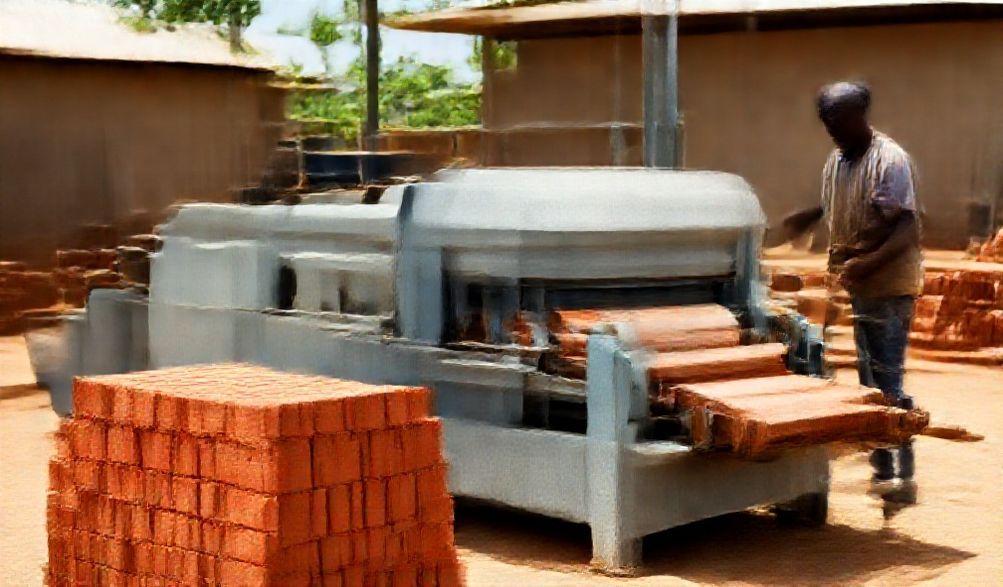
Panduan Anda untuk Mesin Pembuat Bata Tanah Liat di Uganda: Pandangan daripada Pakar Kilang FUDA
Pemandangan langit Uganda sedang berubah. Dari jalan-jalan sibuk Kampala hingga pekan-pekan yang berkembang di seluruh negara, ledakan pembangunan sedang berlaku, didorong oleh urbanisasi, pembangunan infrastruktur, dan permintaan yang meningkat untuk perumahan. Di tengah setiap bangunan yang kukuh dan tahan lama terdapat komponen asas: bata. Namun, cabaran bagi pembina, kontraktor, dan usahawan sering kali adalah mendapatkan bekalan yang konsisten, berkualiti tinggi, dan mampu milik.
Di sinilah teknologi pembuatan bata tanah liat moden menjadi pengubah permainan. Meninggalkan kaedah manual yang intensif buruh dan tidak konsisten, pengeluaran bata secara mekanisasi menawarkan jalan ke arah kecekapan, kualiti, dan keuntungan. Namun, dengan pelbagai mesin dan pembekal di pasaran, bagaimana anda membuat pilihan yang tepat untuk keadaan unik Uganda?
Panduan komprehensif ini memotong kekeliruan. Berdasarkan kepakaran operasi mendalam dari Kilang Membuat Batu Bata FUDA—pengilang dan rakan kongsi yang dipercayai dengan rekod prestasi terbukti di seluruh Uganda—kami menyediakan lebih daripada sekadar spesifikasi. Kami menyampaikan nasihat praktikal dan pakar tentang mengemudi dunia mesin pembuatan batu bata tanah liat, dari memahami teknologi dan kos hingga memaksimumkan pelaburan anda dan membina perkongsian yang berjaya. Sama ada anda syarikat pembinaan besar, pemaju hartanah, usahawan tempatan, atau perolehan kerajaan, siaran ini adalah peta jalan anda untuk membuat keputusan termaklum yang menyokong projek anda dan pertumbuhan Uganda.
Mengapa Pengeluaran Bata Tanah Liat Penting untuk Pertumbuhan Uganda
Melabur dalam pengeluaran bata bukan sekadar keputusan perniagaan; ia adalah pelaburan dalam pembangunan mampan negara. Memahami gambaran besar ini menekankan nilai jentera yang tepat.
Permintaan untuk Bahan Binaan Mampan dan Tahan Lama
Bata tanah liat bukanlah peninggalan masa lalu; ia adalah penyelesaian abadi yang sangat sesuai untuk Uganda moden.
- Sesuai untuk IklimBata tanah liat menawarkan jisim terma yang sangat baik, bermakna ia menyerap haba pada siang hari dan melepaskannya secara perlahan pada waktu malam. Penebat semula jadi ini membantu mengawal suhu dalaman, mengurangkan kebergantungan pada sistem penyejukan yang menggunakan tenaga tinggi—satu kelebihan besar dalam iklim Uganda.
- Kekuatan dan Ketahanan yang Tiada TandinganBata tanah liat yang dibakar dengan betul sangat tahan lasak, kalis cuaca, api, dan perosak. Bangunan yang diperbuat daripada bata berkualiti tahan lama, mengurangkan kos penyelenggaraan jangka panjang dan memberikan keselamatan yang berkekalan.
- Tempatan & Kesan RendahApabila dihasilkan secara tempatan menggunakan tanah liat tempatan, bata mempunyai jejak karbon yang lebih rendah berbanding keluli import atau blok konkrit yang memerlukan pengangkutan yang meluas. Ia diperbuat daripada bahan semula jadi yang banyak, menjadikannya pilihan yang mampan.
Perkukuhan Ekonomi dan Penciptaan Peluang Pekerjaan
Penghasilan bata setempat merupakan enjin yang kukuh untuk pembangunan ekonomi akar umbi.
- Membangun Ekonomi Tempatan A brick-making enterprise creates a ripple effect. It generates direct employment in machine operation, material sourcing (clay, sand), logistics, and sales. It also supports indirect jobs in transportation, retail, and ancillary services.
- Reducing Import Dependence: By establishing robust local production capacity, Uganda can reduce its reliance on imported building materials, keeping capital within the country and strengthening economic resilience.
- Aligning with National Goals: This model of localized industrial activity and skills development directly supports Uganda’s Vision 2040 and National Development Plan goals for industrialization, job creation, and sustainable urban development.
Memahami Mesin Pembuatan Batu Bata Tanah Liat: Jenis & Teknologi
Not all brick machines are created equal. The right choice depends entirely on your production goals, budget, and scale. Here’s a breakdown of the primary technologies available.
Manual & Semi-Automatic Machines (Ideal for Startups & Small Scale)
These machines offer an accessible entry point into mechanized brick production, balancing affordability with improved output over purely manual methods.
- Operasi: They require operator involvement to feed material, initiate the molding cycle (often via a lever or button), and remove finished bricks. The core compaction is powered by hydraulics or mechanics, ensuring uniform brick density.
- Kapasiti Output:Mesin separa automatik biasa boleh menghasilkan antara2,000 to 8,000 bricks per 8-hour shiftbergantung pada model dan kecekapan krew.
- Sesuai Untuk: Start-up entrepreneurs, community cooperative projects, small-scale builders supplying local demand, and businesses looking to validate the market before scaling up. FUDA offers robust, user-friendly models in this category designed for the Ugandan context.
Fully Automatic Brick Making Machines (For Large-Scale Production)
For high-volume, commercial production, fully automatic systems are the pinnacle of efficiency and consistency.
- Proses Berautomasi: These systems integrate feeding, mixing, molding, and stacking. Once configured, they produce bricks with minimal human intervention, ensuring identical size, shape, and strength for every single unit.
- High Output & Investment:Mampu menghasilkan10,000 to 50,000+ bricks per day, they represent a significant capital investment but offer the lowest cost-per-brick at scale. They require stable infrastructure (power, space).
- FUDA’s Industrial Solutions: For large construction firms, real estate developers, and major suppliers, FUDA provides industrial-grade automatic lines. These are engineered for relentless performance and are backed by our strongest support agreements.
Key Machine Components and Their Role
Understanding the core parts builds confidence in your investment:
- Pengadun: Blends clay, sand, and water to a perfectly consistent homogenous mixture, which is critical for brick strength.
- Acuan/Die: The heart of the machine. This high-strength steel component defines the brick’s shape (solid, hollow, interlocking) and precision.
- Sistem Hidraulik: Provides the immense, controlled pressure (measured in tons) to compact the raw material into a dense, strong brick block.
- Panel Kawalan: The brain of automatic/semi-automatic machines, allowing for adjustment of pressure, cycle time, and other parameters for different clay types.
The FUDA Factory Advantage: Expertise Built on Experience
In a market with many options, partnership is key. FUDA is not just a seller of machines; we are a partner invested in your production success.
Our Story: Deep-Rooted Experience in the Ugandan Market
FUDA’s journey is intertwined with Uganda’s construction growth. With over a decade of operation, our technicians have installed and serviced machines from Gulu to Mbarara, from Jinja to Fort Portal. This on-ground experience is invaluable. We understand the variability of Ugandan clay, the challenges of intermittent power supply, and the specific demands of local builders for brick types like standard commons, pavers, and interlocking blocks.
Our Product Range: Machines Engineered for Ugandan Conditions
Our machines are not just imported; they are selected and often adapted based on our field experience.
- Adapted for Local Clay: We can advise on and configure machine settings for the lateritic clays common in Central Uganda or the more sandy soils found elsewhere.
- Built for Durability: We prioritize robust construction and quality components to withstand demanding production environments.
- Pilihan Kuasa Fleksibel: We offer models compatible with the grid, diesel engines, or even solar-hybrid setups to ensure production never stops.
Beyond the Machine: FUDA’s Comprehensive Support System
Our commitment begins selepas the sale, ensuring your operation runs smoothly.
Technical Training & On-Site Installation
We don’t just deliver a machine. Our engineers conduct full on-site installation and provide hands-on training for your operators and maintenance staff, ensuring you achieve optimal output from day one.
Reliable After-Sales Service & Parts Supply
Downtime is lost revenue. Our network of local service technicians and our inventory of critical spare parts in Uganda are designed for prompt response to keep your production line moving.
Raw Material Guidance
The best machine needs good raw material. Our experts can provide basic guidance on sourcing local clay and simple field tests to check its suitability, helping you secure a consistent, quality supply.
Key Considerations Before Investing in a Brick Making Machine
A successful investment requires careful planning. Ask yourself these key questions, guided by FUDA’s experience.
Assessing Your Needs: Scale, Budget, and Output Goals
- What is my primary market? (Personal project, local retail, large contractor supply?)
- What is my realistic daily or monthly brick production target?
- What is my total available startup capital?
- Do I have the skilled labor, or will I need to train operators?
Total Cost of Ownership: Beyond the Purchase Price
Budget for all associated costs to avoid surprises:
* Machine Price: The base cost of the equipment.
* Shipping & Installation: Transport to site and professional setup.
* Latihan: Essential for efficient operation.
* Site Preparation: Foundation, shed, and utilities.
* Kos Operasi: Regular expenses for power/fuel, raw materials (clay, sand), labor, and routine maintenance parts.
Site Preparation and Infrastructure Requirements
Prepare your site for success:
* Angkasa: Adequate covered area for the machine and open space for drying and curing bricks (can be 5-10x the machine footprint).
* Foundation: A strong, level concrete base as per machine specifications is non-negotiable for stability.
* Kuasa: Ensure access to the required voltage. Discuss diesel or solar alternatives with FUDA if grid power is unreliable.
* Water Source: Consistent access to water for mixing clay is essential.
Maximizing Your Investment: Tips for Efficient Brick Production
Protect and enhance your investment with these best practices from our field team.
Sourcing and Preparing Quality Clay
Good bricks start with good clay. Perform a simple “ribbon test”: take a moist ball of clay and roll it into a pencil-thin ribbon. If it holds together without crumbling for 4-5 inches, it’s likely suitable. Remove stones and debris, and ensure consistent moisture content before feeding into the machine.
Optimizing the Production and Curing Process
- Pembentukan: Ensure the mold is correctly filled and the machine’s pressure is set appropriately for your clay mix.
- Pengeringan: Dry bricks under shade (not direct sun) for 2-3 days to prevent cracking from rapid moisture loss.
- Penyembuhan: Stack dried bricks and keep them moist by sprinkling water for 7-14 days. This chemical process is critical for achieving final strength.
Basic Maintenance for Machine Longevity
- Daily: Clean the mold, mixer, and machine surfaces of residual clay. Check for loose bolts.
- Weekly: Lubricate all moving parts as per the manual. Inspect hydraulic hoses for wear.
- Post-Use: If stopping for more than a day, thoroughly clean all components to prevent clay from hardening inside the system.
Soalan Lazim (FAQ)
Q1: What is the price range for a clay brick making machine from FUDA in Uganda?
A: Prices vary significantly based on automation and capacity. A robust manual/semi-automatic machine can start from UGX 15-25 million, while high-output fully automatic lines can range from UGX 80 million upwards. We provide detailed, transparent quotes based on a direct assessment of your specific needs.
Q2: Can FUDA machines use the local clay found in my region?
A: Absolutely. Our machines are designed to handle a wide variety of clay types. We often conduct simple soil tests for clients and can adjust machine settings—like moisture content and compression pressure—to optimize results for your specific local clay.
Q3: What kind of training and warranty do you provide?
A: We provide comprehensive, on-site training for your operators until they are confident. Our machines come with a standard 1-year warranty on core parts and components, backed by the prompt response of our local service team.
Q4: How many bricks can a semi-automatic FUDA machine produce per day?
A: For example, our popular FUDA-5000 semi-automatic model can produce approximately 3,000 to 5,000 standard solid bricks per 8-hour shift, depending on operator efficiency and workflow organization.
Q5: Do you help with business planning for a new brick-making venture?
A: As machinery experts with extensive client experience, we can share valuable insights on common business models, efficient site layout, and operational benchmarks. We are also happy to connect serious entrepreneurs with our network of successful clients for peer learning.
Kesimpulan
Uganda’s construction revolution demands reliable, high-quality building materials, and localized clay brick production is a powerful answer. Success in this venture hinges not just on a machine, but on the expertise and partnership behind it.
FUDA Brick Making Factory offers that essential combination: robust machines engineered for local conditions, deep-rooted experience in the Ugandan market, and an unwavering commitment to after-sales support. We are invested in the success of your project, because your success contributes to building a stronger Uganda.
Ready to build your future with quality bricks?
Contact the FUDA Brick Making Factory experts today for a personalized consultation and a detailed quote tailored to your production goals and budget.
Visit our showroom and workshop in Kampala to see our machines in action and speak directly with our technical team.
Let’s build Uganda, together—one strong brick at a time.
<