
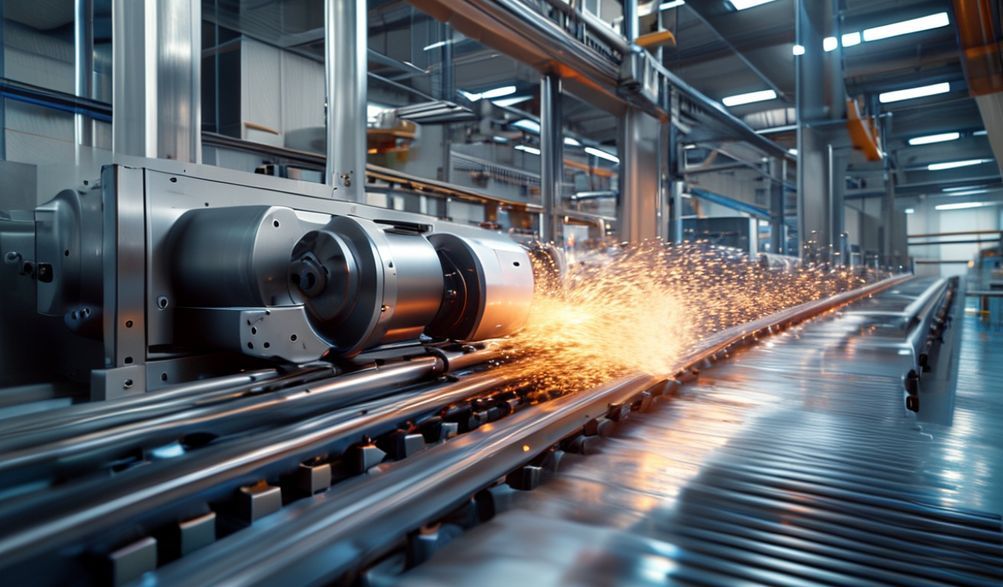
Your Ultimate Guide to Block Molding Machines: Inside the FUDA Brick Making Factory
Pengenalan
The global construction industry is in a perpetual race—against time, budgets, and rising material costs. At the heart of this challenge lies the demand for affordable, durable, and readily available building blocks. The solution? Reliable, efficient production machinery. For contractors, entrepreneurs, and developers, the choice of a block molding machine isn’t just an equipment purchase; it’s a strategic investment in the very foundation of their projects and profitability.
So, what is a block molding machine? In essence, it’s an industrial device designed to transform raw materials like cement, aggregates, and water into precise, high-strength concrete blocks, bricks, and pavers through a process of compaction and molding. This machinery is the linchpin of modern construction material manufacturing, enabling scale, consistency, and quality control that manual methods simply cannot match.
MasukkanKilang bata FUDA. With over two decades of specialized engineering and manufacturing excellence, FUDA has established itself not merely as a supplier, but as an authoritative partner in the global construction materials sector. Their journey is built on a deep, practical understanding of what it takes to run a successful block yard or brick manufacturing plant in diverse markets worldwide.
This comprehensive guide leverages the hard-won insights from FUDA’s factory floor and engineering team. We’ll dissect the types of block molding machines, delve into the critical features that separate adequate equipment from exceptional investments, and provide a clear framework for selecting the right machine for your specific needs. Our goal is to empower you with the knowledge to make an informed decision that aligns with your production goals and business vision.
As the author, my background spans over ten years in industrial machinery journalism and technical analysis, with a specific focus on construction technology. I’ve collaborated with engineering teams, visited manufacturing plants like FUDA’s, and seen firsthand the impact of quality machinery on project outcomes. This guide is synthesized from that experience, technical documentation, and industry best practices.
What is a Block Molding Machine? Core Principles & Applications
Before exploring specific models, it’s crucial to understand the fundamental mechanics and vast applications of this core technology.
The Basic Mechanics of Block Molding
The process, while sophisticated in its automation, follows a logical sequence. A high-quality block molding machine ensures each step is optimized for maximum output and block integrity.
- Mencampur & Memberi Makan: Precisely proportioned raw materials (cement, sand, aggregate, possibly fly ash) are mixed with water to form a homogeneous, semi-dry concrete mix. This mix is then fed into the machine’s hopper.
- Pemadatan: This is the heart of the process. The mix is conveyed into a mold box. Here, a combination of getaran frekuensi tinggidan besartekanan hidraulik compresses the material, eliminating air pockets and achieving the required density and strength.
- Pembentukan: While under compaction, the mix takes the exact shape of the mold cavity—whether for a hollow block, solid block, or paver.
- Pengeluaran & Pengerasan: The freshly formed, or “green,” block is ejected from the mold onto a pallet or conveyor. It is then moved to a curing area, where it gains strength over days through controlled moisture and temperature conditions before being ready for use or sale.
Types of Blocks and Products Manufactured
The versatility of a modern block molding machine is one of its greatest assets. By simply changing the mold, a single machine can produce a wide array of products:
- Blok Berongga: The workhorse of wall construction, offering excellent strength-to-weight ratios and insulation properties.
- Blok Pejal: Used for foundations, load-bearing walls, and applications requiring maximum density and strength.
- Batu Paving & Bata Saling Kunci: For driveways, walkways, and patios. These require high precision and surface finish.
- Curbstones & Landscape Blocks: For road edging and decorative garden walls.
- Bentuk Khas: Including blocks for retaining walls, chimney blocks, and custom architectural elements.
Why Automation is Key for Modern Construction
The shift from manual labor to mechanized production isn’t just about doing things faster. It’s a fundamental upgrade in capability:
- Kecekapan Tiada Tandingan: A single automatic machine can produce in one hour what might take a large manual team days.
- Kualiti Konsisten: Every block is identical in dimensions, density, and strength, ensuring structural integrity and simplifying the building process.
- Penjimatan Tenaga Kerja yang Ketara: Automation reduces dependency on large, skilled labor crews, mitigating cost fluctuations and training overhead.
- Kebolehskalaan: Whether you’re supplying a single housing project or a city-wide infrastructure development, automated machines allow you to scale output predictably to meet demand.
Exploring the FUDA Brick Making Factory’s Machine Range
FUDA’s product portfolio is engineered to meet the needs of every market segment, from the aspiring entrepreneur to the established industrial producer.
Manual & Semi-Automatic Block Molding Machines
Ideal for small businesses, startups, or operations with lower volume requirements, these models offer an accessible entry point without compromising on core quality.
- Aplikasi: Small-scale construction projects, community development initiatives, producing specialty or custom blocks where full automation isn’t cost-effective.
- Perbezaan FUDA: Even at this level, FUDA machines are built with robustness in mind. They feature reinforced steel frames, durable mold systems, and simple, reliable mechanics designed for easy operation and maintenance in varied environments.
Fully Automatic Block Production Lines
This is where FUDA’s engineering prowess shines. A fully automatic line is a synchronized symphony of machinery, transforming raw materials into stacked, cured blocks with minimal human intervention.
- The Integrated System: These lines typically include an automatic batching system, mixer, conveyor, the core block molding machine, a block stacker, and a pallet return system.
- High-Output Performance: Capable of producing thousands of blocks per shift, these systems are built for large-scale commercial production, government housing projects, and major infrastructure supply.
- FUDA’s Engineering Focus: Key emphasis is placed on the synchronization of all components, vibration isolation for stability, and intelligent control systems that allow for easy adjustments and monitoring of production parameters.
Specialized Machines for Unique Needs
True expertise is demonstrated by the ability to solve niche problems. FUDA’s R&D team works on specialized solutions, such as:
- Machines for Colored Paving Blocks: Equipped with mixers and feeders for pigments and surface coatings to produce aesthetically pleasing pavers.
- Insulated Concrete Form (ICF) Block Machines: For producing the blocks used in energy-efficient ICF construction.
- Custom Mold Development: Collaborating with clients to design and manufacture molds for unique, non-standard block shapes required for specific architectural designs.
Key Features to Look For: Insights from FUDA’s Engineering
Choosing a machine goes beyond comparing price tags. Here are the critical engineering features, explained through the lens of FUDA’s manufacturing experience, that you must evaluate.
Production Capacity & Output (Blocks per Hour)
Don’t just look at the maximum theoretical output. Consider the sustainable, practical output for the block type you’ll produce most often.
- Padanan dengan Matlamat: A machine rated for 2,000 solid blocks per hour might produce only 1,200 intricate paving stones. FUDA’s technical team always provides realistic output estimates based on your specific product mix and material composition.
The Power System: Hydraulic vs. Vibration
Most machines use a combination, but the primary compaction method is a key differentiator.
- Vibration-Intensive Systems: Use high-frequency vibrations to settle the concrete mix. Excellent for producing lighter weight blocks and pavers with fine surface detail. Generally more energy-efficient for certain products.
- Hydraulic-Pressure Dominant Systems: Apply tremendous static pressure to the mix. This method is superior for achieving very high-density, high-strength blocks (e.g., for heavy-load applications) and works well with stiffer concrete mixes.
- FUDA’s Approach: Based on field data, FUDA engineers often recommend and design systems that optimally balance both. For instance, a machine might use strong vibration for initial compaction followed by high hydraulic pressure for final densification, ensuring optimal block strength and surface finish.
Mold Quality and Versatility
The mold is the tool that defines your product. Its quality directly impacts block precision, surface finish, and maintenance costs.
- Hardened Steel Construction: FUDA uses high-chromium alloy steel, heat-treated for extreme hardness and wear resistance. This ensures molds last for hundreds of thousands of cycles before needing refurbishment.
- Easy Changeover System: A quick mold change system (often employing a bolted or cartridge design) is vital for producers who switch between multiple products. It minimizes downtime and maximizes operational flexibility.
- Pemesinan Ketepatan: Tolerances are measured in fractions of a millimeter. FUDA’s computer-controlled machining ensures every mold cavity is identical, guaranteeing block uniformity.
Ketahanan dan Kemudahan Penyelenggaraan
A machine is a long-term asset. Its design should reflect that.
- Pembinaan Bingkai: Look for a heavy-duty, welded steel frame that can withstand constant vibration and load without stress fatigue. FUDA frames are often stress-relieved after welding for long-term structural integrity.
- Kualiti Komponen: Brand-name electrical components, hydraulic cylinders, and vibration motors reduce failure rates and simplify sourcing replacements if ever needed.
- Design for Serviceability: Can you easily access the vibration motors? Are grease points readily available? FUDA designs machines with maintenance in mind, grouping components logically and providing clear service manuals to minimize downtime.
The FUDA Advantage: More Than Just a Machine
Purchasing from FUDA is the beginning of a partnership. Their value proposition extends far beyond the factory gate.
In-House Engineering and R&D
Unlike assemblers, FUDA designs and manufactures core components in-house. Their dedicated R&D team continuously analyzes performance data from machines in the field to implement improvements in efficiency, user-friendliness, and energy consumption in next-generation models.
Quality Control and Manufacturing Standards
Every step at the FUDA factory is governed by a stringent QC protocol:
* Material certification for incoming steel and components.
* In-process inspections during machining and assembly.
* A mandatory pre-delivery test run where every machine is operated for an extended period, producing sample blocks to verify performance against specifications.
Comprehensive Support: Installation, Training, and Spare Parts
This is a primary trust signal for any international buyer.
* Penyeliaan Pemasangan: FUDA can provide engineers to supervise installation and commissioning at your site.
* Operator & Maintenance Training: Comprehensive training ensures your team can operate the machine safely and perform basic maintenance.
* Global Spare Parts Network: A guaranteed inventory of critical spare parts and a logistics system to get them to you promptly minimizes potential operational disruptions.
Global Client Portfolio and Case Studies
From small block yards in Southeast Asia to large automated plants supplying major infrastructure projects in Africa and the Middle East, FUDA’s machines are proven in diverse climates and operating conditions. This global experience directly informs machine design, making them adaptable and resilient.
How to Choose the Right Block Machine for Your Project
Armed with technical knowledge, follow this practical, experience-driven framework to make your selection.
Assessing Your Raw Material (Cement, Aggregate, Fly Ash)
The machine must suit your available materials.
* Reka Bentuk Campuran: The gradation of your sand and aggregate, the type of cement, and the potential use of industrial by-products like fly ash will affect the optimal moisture content and compaction method. FUDA’s engineers can provide mix design guidance based on your local materials.
Calculating ROI: Cost vs. Production Needs
Think beyond the purchase price.
1. Calculate Your Daily/Weekly Block Requirement.
2. Match a Machine’s Realistic Output to meet that demand with some capacity to spare.
3. Factor In: Machine cost, estimated labor savings, cost of raw materials per block, and your selling price. A slightly more expensive, higher-output automatic machine may pay for itself much faster than a cheaper, slower manual alternative.
Site Requirements: Space, Power, and Labor
Create a practical checklist:
* Angkasa: Include room for the machine, raw material storage, a curing area, and finished block storage.
* Kuasa: Verify the voltage and amperage requirements of the machine. Fully automatic lines may require significant three-phase power.
* Buruh: How many operators are needed? Automatic lines may require only 2-3 people for the entire production process.
The Importance of Supplier Due Diligence
Always vet your supplier as thoroughly as you evaluate the machine.
* Request a Factory Audit: Can you or a local agent visit the factory? FUDA welcomes such visits as a demonstration of transparency.
* Ask for a Live Demonstration: See the machine running, preferably producing blocks.
* Permintaan Rujukan Pelanggan: Speak to past buyers in regions similar to yours about their experience with the machine and after-sales support.
FAQ Section
Q1: What is the average lifespan of a FUDA block molding machine?
A: With proper routine maintenance and operation within its designed parameters, a FUDA machine has a service life of 10-15 years or more for the core structure. High-wear components like molds and vibration motors have their own, shorter lifespans but are designed for easy replacement.
Q2: Can FUDA machines use local raw materials, or do they require special mixes?
A: A core principle of FUDA’s design is adaptability. Their machines are engineered to work effectively with a wide range of locally available aggregates and cement types. Based on decades of experience, their technical team can provide advisory support on optimizing your local mix for their machines.
Q3: What kind of after-sales service and warranty does FUDA offer?
A: FUDA typically offers a comprehensive 12-month warranty on the entire machine, covering defects in materials and workmanship. They provide detailed technical manuals (available in multiple languages), online support, and a reliable supply chain for genuine spare parts to ensure your operation continues smoothly.
Q4: How does a block molding machine differ from a brick making machine?
A: The terms are often used interchangeably, but technically, “block” usually refers to larger concrete masonry units (CMUs), while “brick” can refer to smaller, often clay-based units. FUDA specializes in machinery for concrete block and paver production, which uses a cementitious mix and compaction molding, as opposed to kiln-fired clay brick production.
Q5: What is the lead time for a machine order from the FUDA factory?
A: Lead time depends on the model complexity and customization. Standard manual/semi-automatic models may ship in 15-30 days, while a fully customized automatic production line could take 60-90 days for manufacturing, testing, and preparation. FUDA maintains clear communication throughout the process to provide accurate timelines.
Kesimpulan
Selecting the right block molding machine is a pivotal decision that impacts your productivity, product quality, and long-term profitability. It requires balancing technical specifications with practical business needs and, most importantly, choosing a manufacturing partner whose expertise and support you can rely on.
TheKilang bata FUDA stands out by offering that complete package: deep engineering expertise, rigorous manufacturing quality, and a commitment to partnership that extends through installation, training, and the entire lifecycle of your machine. They provide more than equipment; they provide a foundation for growth.
Ready to build your success?
* Primary CTA: Contact the FUDA brick making factory engineering team today for a personalized consultation and a detailed quote tailored to your specific project requirements.
* Secondary CTA: Request our comprehensive digital catalog and specification sheets to explore the full technical details of our machine range.
At FUDA, we understand that our success is built on yours. We don’t just sell machines; we partner with you to build the robust, efficient, and profitable foundation your construction material business needs to thrive.
<