
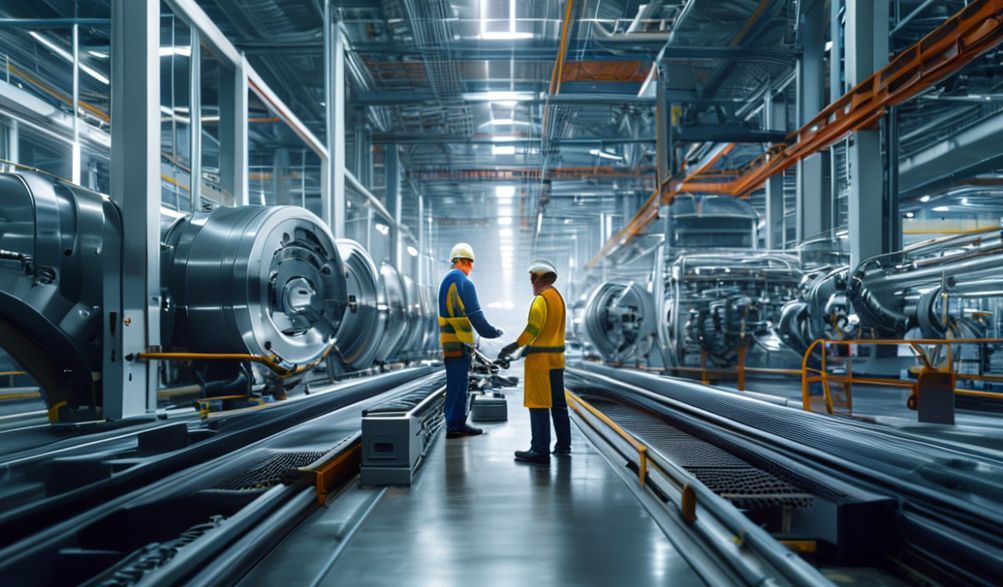
Panduan Utama Anda untuk Memilih Kilang Mesin Pembuat Blok Berlubang Simen
Pengenalan
Lanskap pembinaan global dibina atas asas kecekapan dan kemampuan. Di tengah-tengah ini, terutamanya untuk dinding, sekatan, dan pelbagai aplikasi struktur, terletaknya blok berongga yang ringkas namun sangat diperlukan. Ketika urbanisasi semakin pesat, permintaan untuk bahan binaan yang boleh dipercayai dan kos efektif tidak pernah setinggi ini. Bagi usahawan, firma pembinaan, dan pemilik tapak blok, ini menawarkan peluang yang besar. Namun, untuk memanfaatkannya bermula dengan satu keputusan kritikal yang sering kali sukar: membeli mesin pembuat blok berongga simen yang sesuai.
Cabaran bukan sekadar mencari mesin dengan harga yang menarik. Halangan sebenar terletak pada memastikan kebolehpercayaan jangka panjang, kualiti produk yang konsisten, dan akhirnya, pulangan pelaburan yang menguntungkan. Ramai yang telah belajar dengan cara yang sukar bahawa kegagalan mesin, dimensi blok yang tidak konsisten, atau kekurangan sokongan teknikal boleh memberhentikan operasi—dan pendapatan—secara mengejut.
Di sinilah perubahan perspektif asas diperlukan. Keputusan utama anda bukanlah tentang memilih sebuahmesin; ia tentang pemilihankilangyang membinanya. Kilang adalah rakan kongsi jangka panjang anda, yang kepakaran, integriti, dan sistem sokongannya akan menentukan kejayaan anda untuk dekad yang akan datang atau lebih. Kilang yang bereputasi adalah asas untuk ketahanan mesin, prestasi, dan ketenteraman jiwa anda.
Drawing on decades of industry observation and technical insight, this comprehensive guide is designed to move you from uncertainty to confidence. We will provide you with a detailed, actionable framework for evaluating cement hollow block making machine factories. Consider this your blueprint for making an informed, trustworthy investment that will build the foundation of your business, block by solid block.
Why Your Choice of Factory Matters More Than You Think
In the search for machinery, it’s easy to become fixated on specifications and price. However, the factory behind the nameplate is the true engine of your future success. Let’s explore why this partnership is paramount.
Beyond the Machine: The Factory as Your Long-Term Partner
A machine is a capital asset with a lifecycle cost that far exceeds its initial purchase price. This total cost includes:
* Harga Pembelian Awal: Just the entry point.
* Maintenance & Consumables: Regular upkeep, wear parts like mold liners, and hydraulic fluids.
* Kos Masa Henti The single largest hidden expense. Every hour of malfunction is lost production and missed orders.
* Nilai Jual Semula: A machine from a renowned factory holds its value significantly better.
A top-tier factory designs and builds with this entire lifecycle in mind. Their engineering choices—such as using stress-relieved steel frames to prevent weld fatigue or oversizing hydraulic pumps to run cooler—directly translate to lower operating costs and less downtime for you. They are not just selling equipment; they are selling productivity and reliability.
The Direct Impact on Your Block Quality and Business Reputation
The quality of your blocks is a direct reflection of the precision engineered into your machine. Inconsistent vibration, poorly machined mold boxes, or unstable hydraulic pressure lead to blocks with:
* Dimensional Inaccuracies: Causing issues in laying, increased mortar use, and rework.
* Variable Strength (Crushing Strength): Compromising structural integrity and failing to meet local building codes.
* Poor Surface Finish: Resulting in an unprofessional appearance that clients will notice.
A factory with rigorous quality control ensures that every machine component is built to exacting tolerances. This precision guarantees that your machine produces uniform, high-quality blocks consistently. This consistency builds your reputation for reliability, reduces material waste, and becomes a powerful competitive advantage in your market.
Navigating the Global Market: Identifying True Manufacturers vs. Traders
The global B2B marketplace is filled with both genuine manufacturers and trading companies. Distinguishing between them is your first critical test.
- True Manufacturers invest in physical infrastructure: in-house Research & Development (R&D) teams, dedicated production lines for frames and molds, quality control laboratories, and hold intellectual property for their designs.
- Traders or Assemblers often source components from various suppliers, assemble them, and apply their branding. While not inherently bad, their control over core engineering, quality consistency, and long-term parts supply can be limited.
Practical Verification Tips:
* Request a live or recorded video tour of their production facility, specifically showing CNC machining centers, welding bays, and assembly lines.
* Ask detailed questions about their mold manufacturing process. A true manufacturer will have deep knowledge of heat treatment, machining precision, and liner materials.
* Inquire about their R&D department and recent innovations. Can they explain the engineering behind their vibration system or control logic?
Key Evaluation Criteria for a World-Class Machine Factory
To separate the industry leaders from the rest, evaluate potential partners against these concrete criteria.
Kepakaran Kejuruteraan dan Pembuatan
The core competence of any factory lies in its engineering DNA.
* Penyelidikan dan Pembangunan Dalaman: A dedicated team that continuously improves designs, adapts to new materials, and develops smarter control systems (like PLC with touchscreen HMI) is a strong indicator of a forward-thinking partner.
* Pemilihan Bahan: Ask about the grade of steel used for the frame (e.g., ASTM A36 or better), the specifications for hydraulic cylinders, and the alloy and hardening process for mold liners. Premium materials resist wear and deformation.
* Manufacturing Technology: Look for evidence of modern fabrication: CNC (Computer Numerical Control) machining for precision parts, robotic welding for consistent, strong seams, and automated electrostatic painting lines for durable corrosion-resistant finishes.
Comprehensive Quality Assurance Protocols
A “quality control” claim is meaningless without defined processes. A trustworthy factory will transparently outline their inspection stages:
1. Pemeriksaan Bahan Mentah: Certificates for steel plates, electrical components, and hydraulic parts.
2. Pemeriksaan Dalam Proses: Dimensional checks on machined parts, weld quality testing (like ultrasonic testing), and pressure tests for hydraulic assemblies.
3. Pre-Shipment Final Testing: A full production run test with customer-specified block dimensions and mix design. The machine should be tested under load, and performance data (cycle time, vibration frequency) should be recorded.
4. Standard Compliance: Certifications like ISO 9001 (Quality Management Systems) or CE (for the European market) demonstrate an institutional commitment to standardized quality processes, though they should be seen as a baseline, not a guarantee.
Product Range and Customization Capability
A factory with a broad product range—from simple manual egg-laying machines to fully automatic stationary plants with robotic pallet handling—demonstrates extensive design and application knowledge. This breadth suggests they can offer unbiased advice on what you truly need.
Crucially, assess their customization capability. Can they:
* Adapt the mixer or hopper for your local aggregate (e.g., larger crushed stone)?
* Modify mold designs to produce special shapes (interlocking, split-face, grass pavers) popular in your region?
* Adjust the control system for your local voltage and frequency (50Hz vs. 60Hz)?
This flexibility is key to optimizing your production for local market demands.
Transparency and Evidence of Past Success
A reputable factory has nothing to hide and a proven track record to share.
* Portfolio Projek: Request detailed case studies or a client list segmented by region. A machine installed in a climate similar to yours is a relevant reference.
* Testimonials & References: Genuine testimonials often include the client’s name, company, and location. Even more valuable is obtaining permission to contact 1-2 reference clients directly. Ask them about machine performance, support responsiveness, and overall satisfaction.
The Non-Negotiables: Service and Support
The relationship with your factory truly begins selepas the sale. This is where trust is built or broken.
Pre-Sales Consultation and Planning Support
A good factory acts as a consultant. Their engineers should proactively ask about:
* Your site layout to recommend optimal machine placement and logistics flow.
* Local material properties (cement type, aggregate size, moisture content) to adjust machine parameters.
* Your business goals (target output, block types) to recommend the most efficient model, avoiding under- or over-investment.
Professional Installation, Commissioning, and Training
Clarify what “commissioning” includes.
* On-Site Commissioning: A factory engineer should travel to your site to supervise installation, calibrate the machine with your actual materials, and conduct comprehensive training. This is invaluable.
* Operator & Maintenance Training: Hands-on training for your team should cover daily operations, routine maintenance (greasing points, filter changes), and basic troubleshooting. High-quality, illustrated manuals with clear parts diagrams and electrical schematics are essential.
After-Sales Service: The True Test of a Factory
This is the ultimate differentiator. Scrutinize their service offering:
* Jaminan: Is it 12 months, 18 months, or longer? What does it explicitly cover and exclude? Is it for parts only, or does it include labor?
* Parts Supply: How quickly can they ship common wear parts (mold liners, hydraulic seals, vibration motor bearings)? Do they maintain a transparent, published parts list with codes? A strong factory has a global logistics network for efficient spare parts delivery.
* Sokongan Teknikal: Is there a 24/7 technical hotline? Can they perform remote diagnostics if the machine has modern PLC controls? What is their typical response time for dispatching a service technician if needed?
Conducting Your Due Diligence: A Step-by-Step Process
Arm yourself with this practical, step-by-step approach to vetting potential factories.
Initial Research and Shortlisting
- Sources: Use industry-specific B2B platforms, directories from construction equipment associations, and recommendations from existing block producers.
- Website Red Flags: Stock photos only, vague “about us” information, lack of technical details, and prices that seem too good to be true.
- Website Green Flags: Detailed machine specifications, factory photos/videos, clear company history, technical blogs or articles, and listed certifications.
The In-Depth Inquiry: Questions to Ask
Prepare a questionnaire. Here’s a sample script:
Technical:
* “What is the specific hardening process and Rockwell hardness of your standard mold liners?”
* “Can you provide the technical data sheet for the brand and model of the main hydraulic pump and PLC you use?”
* “What is the amplitude and frequency range of your vibration table, and how is it controlled?”
Commercial & Service:
* “What is the exact scope of work included in your quoted price (FOB/CIF, installation, training, warranty)?”
* “Can you provide a lead time breakdown from order confirmation to shipment?”
* “What is your process for supplying spare parts for a machine that is 10 years old?”
Requesting and Assessing Quotations
Compare quotes holistically. A slightly higher quote that includes on-site commissioning, comprehensive training, and a longer warranty often provides far greater value than a bare-bones offer.
* Understand Incoterms: Know the difference. FOB (Franko Kapal) means you own the goods and are responsible for cost and risk once loaded on the ship. CIF (Kos, Insurans, dan Pengangkutan) includes shipping and insurance to your port. Clarify who handles customs clearance at your destination.
The Final Verification Step
- Contact References: When provided, actually call or email them. Ask about their experience, machine uptime, and the factory’s support.
- Factory Inspection: If feasible, visiting the factory is the gold standard. You can assess the scale, cleanliness, worker skill, and quality controls firsthand. If travel isn’t possible, insist on a live video call walkthrough of the production area where your machine would be built.
Soalan Lazim (FAQ)
Q1: What is the typical lead time from order to delivery for a hollow block machine?
Lead times vary by complexity. For a standard model, expect 30-45 days for production and testing after order confirmation. Shipping can add 15-60 days depending on destination and Incoterms. Customized machines will take longer.
Q2: How do I determine the right machine capacity (blocks per hour) for my new business?
Analyze your local market demand and project pipeline. A common strategy is to start by calculating your target monthly output in blocks. Then, factor in an 8-10 hour working day and 70-80% machine efficiency (accounting for setup and maintenance). A factory consultant can help translate this into the required cycles per hour.
Q3: What are the most common maintenance tasks, and can my local technician handle them?
Most daily and weekly tasks are straightforward: lubricating moving parts, checking hydraulic fluid levels and filters, cleaning the mixer and mold, and inspecting electrical connections. A competent local mechanic, guided by the factory’s manual, can handle these. Major overhauls or control system issues may require factory support.
Q4: Can the machine be adapted to produce different block sizes and shapes?
Yes, with a reputable factory. This is done by changing the mold box. Most factories offer a wide range of standard mold designs and can manufacture custom molds for special shapes. Ensure the machine’s hydraulic pressure and vibration system are rated for the different block dimensions.
Q5: What is the expected lifespan of a well-maintained machine from a reputable factory?
With proper maintenance and operation, the core structure (frame, vibration table) of a quality machine can last 15-20 years or more. Wear components like mold liners, hydraulic seals, and vibration motors will need periodic replacement, often every 1-5 years depending on usage.
Q6: How does the factory handle parts replacement for machines that are 10+ years old?
This tests a factory’s commitment. Leading manufacturers maintain technical archives and often continue to produce or source compatible parts for legacy models. Ask them directly about their policy and ability to support older machines.
Q7: What are the key power requirements for a fully automatic line?
Requirements vary by model but typically involve:
* Three-Phase Electricity: Common for motors (e.g., 380V/50Hz or 440V/60Hz). Confirm your local supply.
* Compressed Air: Needed for pneumatic cylinders (e.g., 6-8 bar pressure). An on-site air compressor is usually required.
* Water Supply: For the mixer system. The factory should provide specific consumption rates.
Kesimpulan
Choosing a cement hollow block making machine is one of the most significant investments you will make in your construction or manufacturing business. As we’ve detailed, this decision transcends the specifications on a brochure; it is fundamentally an investment in the factory behind the machine. Their expertise, integrity, and support network become the bedrock of your operational success and profitability.
By applying the structured framework outlined in this guide—evaluating engineering prowess, quality systems, service commitments, and conducting thorough due diligence—you transform a complex, high-stakes decision into a manageable, evidence-based process. You move from being a potential buyer to an informed partner, capable of discerning true value from mere marketing.
Prioritize long-term partnership and total lifecycle value over short-term cost savings. This disciplined approach is the proven path to establishing a profitable, sustainable, and reputable block-making business. Let this guide be your checklist as you begin conversations with potential factory partners, empowering you to build your future with confidence.
<