Defining “Eco-Friendly” in Concrete Masonry
The term encompasses a range of attributes that improve upon the environmental profile of conventional blocks. These are not mutually exclusive and can be combined:
- 1.1. Reduced Embodied Carbon: This focuses on lowering the carbon dioxide emissions associated with production, primarily by replacing Portland cement—a major CO2 contributor—with supplementary cementitious materials (SCMs).
- 1.2. Incorporation of Recycled Content: Using industrial by-products or post-consumer waste as raw materials diverts material from landfills and reduces the need for virgin aggregate mining.
- 1.3. Enhanced Operational Efficiency: Blocks that improve a building’s thermal performance reduce energy consumption over the structure’s lifetime, a crucial aspect of whole-life sustainability.
2. Machine Adaptations for Alternative Material Inputs
The core function of a block machine—vibratory compaction—remains valid. The key is managing the often-different physical properties of sustainable mixes.
- 2.1. Handling Novel Aggregate Streams
Many eco-friendly mixes utilize lighter or more angular materials.- Lightweight Aggregates: Using expanded clay, shale, or recycled glass requires adjustments to vibration time and pressure to achieve optimal compaction without crushing the fragile aggregates.
- Recycled Concrete Aggregate (RCA): Crushed concrete from demolition has a higher water absorption rate. The batching system must accurately account for this moisture to maintain a consistent water-cement ratio. The mixer may need extended time to properly coat the RCA particles.
- Other Industrial By-products: Materials like foundry sand or bottom ash may have specific grading or density that necessitates mix design optimization and potential machine calibration.
- 2.2. Optimizing for Low-Cement and High-SCM Mixes
Replacing 30-50% or more of Portland cement with fly ash, slag cement, or natural pozzolans changes the mix’s behavior.- Setting Time: These mixes often have a longer initial set time. This may affect the early “green strength” of the block, requiring careful handling on the production line and possibly longer initial curing before pallet movement.
- Curing Requirements: Some SCMs, like slag, benefit greatly from controlled, moist curing (e.g., steam curing) to activate and develop strength efficiently. Producers must ensure their curing system can provide the appropriate environment.
3. Product Types and Market Positioning
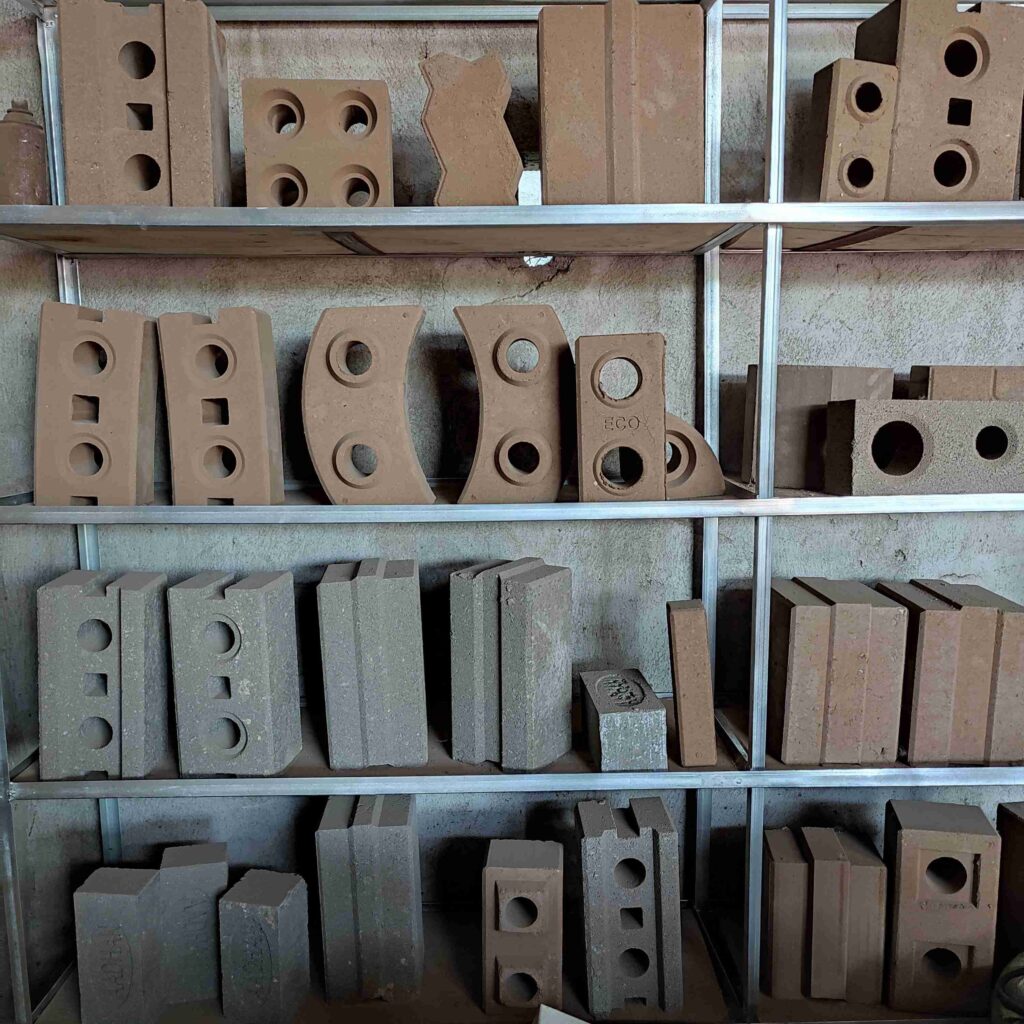
Eco-friendly blocks are not a single product but a portfolio catering to different green building priorities.
- 3.1. High-Recycled Content Blocks
These products are marketed based on their circular economy credentials, utilizing post-industrial or post-consumer materials. They appeal to projects targeting green building certifications like LEED or BREEAM, where material reuse credits are valuable. - 3.2. Autoclaved Aerated Concrete (AAC) Blocks
While AAC requires a fundamentally different chemical process (autoclaving) not performed in a standard block machine, the initial slurry mixing and molding can be adapted. AAC offers exceptional thermal insulation, drastically reducing operational energy use in buildings. This represents a premium, high-performance segment of the eco-friendly market. - 3.3. Insulating Concrete Masonry Units (ICMUs)
A standard block machine can produce these by creating units designed to be filled with insulating materials like foam inserts or perlite loose-fill. The block itself becomes a system for high thermal resistance.
4. Strategic Implications for the Supply Chain
Transitioning to eco-friendly production is a business strategy, not just a technical exercise.
- 4.1. Sourcing and Securing Alternative Materials
Reliability of supply is critical. Establishing partnerships with suppliers of fly ash, slag, or recycled aggregates is essential. This requires understanding regional availability and potential variability in the material’s properties, which must be managed through rigorous quality control. - 4.2. Certification, Testing, and Marketing
- Performance Data: Eco-friendly claims must be substantiated. Comprehensive testing for strength, durability (freeze-thaw resistance), and, if applicable, thermal performance is required. Third-party certifications (e.g., Environmental Product Declarations – EPDs) provide verified, transparent data.
- Value-Based Marketing: Sales messaging shifts from pure cost-per-block to value-per-project. Distributors must educate specifiers and contractors on the long-term benefits: certification credits, reduced energy bills, and compliance with tightening environmental regulations on construction.
- 4.3. Regulatory and Incentive Alignment
Producers and distributors must stay informed of evolving building codes that may incentivize or mandate lower-carbon materials. Positioning eco-friendly blocks as a solution to meet these regulatory demands creates a powerful market advantage.
နိဂုံး
The conventional block-making machine is a highly capable platform for entering the growing sustainable construction market. By embracing alternative cementitious materials and recycled aggregates, and by optimizing production processes for these new mixes, producers can manufacture blocks with a substantially reduced environmental footprint. The transition demands attention to material science, process adaptation, and rigorous quality assurance. For the distribution and supply chain, success lies in mastering not only the logistics of new material streams but also the art of marketing performance-based environmental benefits. By doing so, businesses can future-proof their operations, meet the demands of a greener building industry, and transform a standard production asset into a cornerstone of sustainable development.
FAQ
Q1: Do eco-friendly blocks compromise on strength or durability?
က: Not when properly formulated. Blocks using high volumes of fly ash or slag often develop higher ultimate strength and improved long-term durability (like resistance to sulfate attack) compared to pure Portland cement mixes, though early strength may be slower. Performance must be validated through ASTM-standard testing.
Q2: Is specialized new machinery required to start producing these blocks?
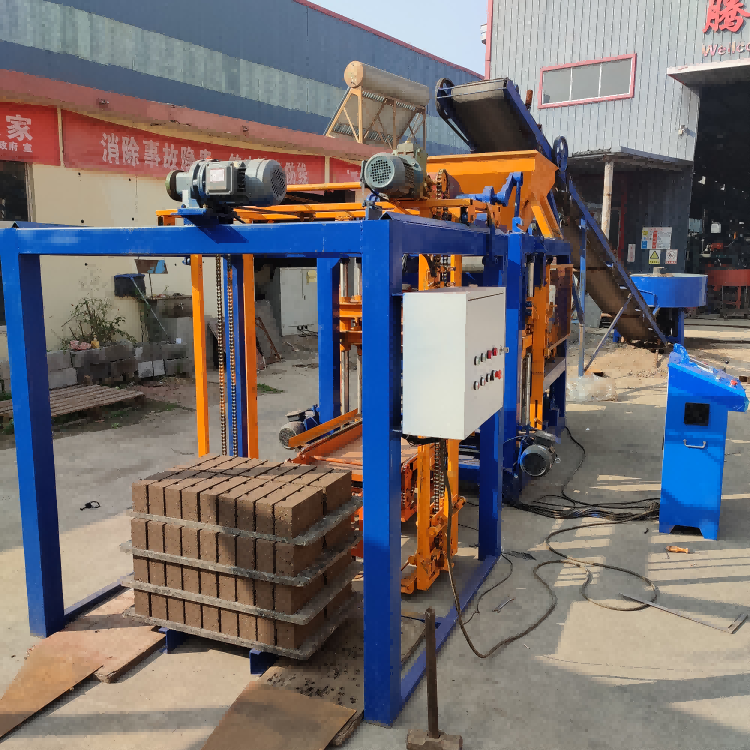
က: Usually, no major new capital machinery is required for mixes using SCMs or recycled aggregates. The existing mixer, conveyor, and block machine can typically handle them with parameter adjustments. The primary investments are in material handling (silos for SCMs) and potentially enhanced curing systems. AAC production is the exception, requiring a significant autoclaving investment.
Q3: Are eco-friendly blocks more expensive to produce?
က: The cost structure changes. While SCMs like fly ash are often less expensive than Portland cement, recycled aggregates may have processing costs. The overall raw material cost may be similar or lower, but costs can be incurred for testing, certification, and potential process adjustments. The final price reflects added value, not just production cost.
Q4: How do we convince cost-conscious builders to choose a potentially premium eco-friendly product?
က: Focus on the total project value: 1) Certification Credits: Quantify the value in achieving LEED points. 2) Performance: For insulating blocks, model long-term energy savings for the building owner. 3) Regulatory Compliance: Frame it as a forward-looking solution to meet emerging low-carbon codes, avoiding future retrofit costs.
Q5: What is the single most impactful change a producer can make?
က: Implementing a high-volume Portland cement replacement program using readily available SCMs like fly ash or slag. This directly and significantly reduces the carbon footprint of every block produced, requires minimal operational change, and is supported by extensive industry research and standards. It is the most effective first step toward greener production.