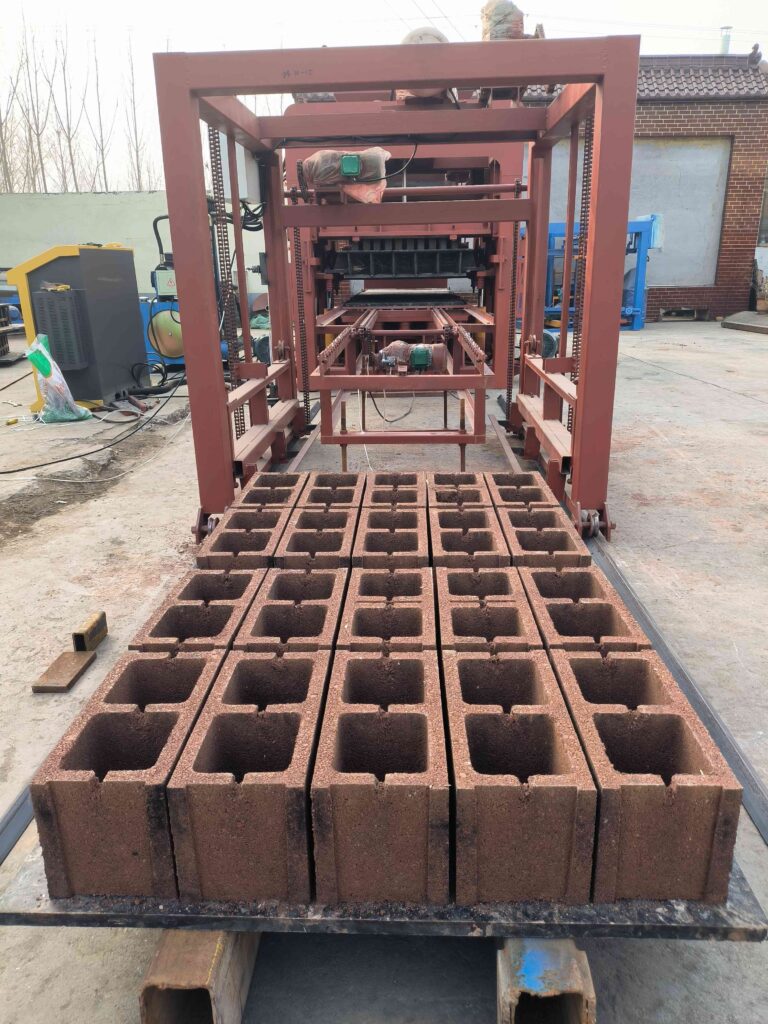
A Multi-Dimensional Approach to Block Brick Uniformity Assessment
Uniformity must be evaluated across several key attributes: dimensional accuracy, weight, visual appearance, and production behavior. A systematic program integrates simple manual checks with more advanced monitoring.
1. Dimensional Uniformity: The Foundation of Fit and Function
Blocks that vary in size cause misaligned courses, uneven mortar joints, and installation headaches. Checks should be both frequent and statistically relevant.
- 1.1. Routine Manual Measurement:
- Frequency: At minimum, perform checks at the start of a production run, after any machine adjustment or mold change, and at regular intervals (e.g., every 30-60 minutes).
- Tools: Use calibrated steel calipers, a steel rule, and a sturdy square.
- Key Dimensions: Measure length, width (height), and depth of randomly selected blocks from the production stream. Pay special attention to the critical face shell and web thicknesses, as these directly affect structural capacity and must comply with ASTM C90 minimums.
- Procedure: Measure multiple points on each dimension (e.g., both ends and the middle for length) to check for bowing or taper. Record measurements on a simple log sheet to track trends.
- 1.2. In-Line Dimensional Monitoring Systems:
For advanced operations, laser or optical gauging systems can be installed on the conveyor. These non-contact sensors measure each block’s key dimensions in real-time, providing instant feedback and generating statistical process control (SPC) data. While an investment, they offer unparalleled consistency monitoring.
2. Weight and Density Consistency: A Proxy for Internal Quality
Weight is an excellent, non-destructive indicator of a block’s internal density and, by correlation, its potential strength and durability.
- 2.1. Periodic Weight Checks:
- Method: Use a platform scale to weigh random samples throughout a production run. Weigh both dry and saturated units if checking absorption, but for routine uniformity, dry weight is key.
- Interpretation: Significant weight variation (e.g., more than ±5% from the established norm for that product) is a major red flag. It signals inconsistent mix proportions (especially water content), inadequate or variable compaction, or changes in aggregate density. A block that is too light likely has low strength; one that is too heavy may have incorrect aggregate grading or excess moisture.
- 2.2. The “Tap Test” for Sonic Uniformity:
A simple but informative qualitative check. Using a small hammer or steel rod, tap multiple blocks at similar locations (e.g., the center of a face shell). A consistent, sharp, high-pitched “ring” indicates good density and curing. A dull, flat “thud” suggests internal voids, poor compaction, or cracking. Inconsistent sounds across a sample indicate process variability.
3. Visual and Surface Quality Inspection
The human eye is a powerful tool for spotting patterns of non-uniformity.
- 3.1. Surface Finish and Color:
- Check for: Consistent texture across all faces. Variations can indicate uneven wear of mold liners, inconsistent vibration, or fluctuating mix moisture.
- Color Consistency: For colored blocks, inspect for blotchiness, streaking, or batch-to-batch shade variation. This points to issues with pigment dispersion, mixing time, or water content.
- 3.2. Edge Integrity and Formational Defects:
- Check for: Chipped or broken corners (indicating low “green strength” or rough handling), cracked face shells or webs, and “flash” (thin fins of concrete) around cores or edges (indicating worn mold parts or excessive clearance).
- Void Formation: Inspect the voids of hollow blocks. They should be clean, fully formed, and consistent in shape. Obstructed or misshapen voids point to worn core rods, mix sticking, or debris in the mold.
4. Monitoring Machine and Process Parameters
True uniformity is achieved by controlling the inputs, not just inspecting the outputs. Consistent blocks are the result of a stable process.
- 4.1. Critical Machine Parameter Checks:
- တုန်ခါမှုစနစ် Monitor amperage draw on vibration motors; a significant change can indicate bearing wear or imbalance. Ensure vibration time per cycle is locked and consistent.
- ဟိုက်ဒရောလစ် ဖိအား Verify that compaction head pressure is stable and within the specified range for the product.
- Pallet Condition and Alignment: Warped or damaged pallets are a primary cause of dimensional variation. Regularly inspect the pallet conveyor and indexing system for precise alignment.
- 4.2. Raw Material and Mix Consistency:
Uniformity fails at the mixer. Implement strict controls on:- Aggregate Moisture: The most volatile variable. Use a moisture probe and adjust mix water automatically or manually to maintain a constant total water-cement ratio.
- Batching Accuracy: Regularly calibrate scales for cement, aggregates, and water.
- Mixing Time: Ensure a consistent, adequate mixing cycle for every batch to achieve homogeneity.
Conclusion: Uniformity as a Process, Not an Inspection
Checking block uniformity is an active, integrated quality management process that spans from raw material intake to final product palletizing. It combines simple, frequent visual and manual checks with disciplined monitoring of machine parameters and mix consistency. For a producer, a robust uniformity program is the most effective way to prevent costly rejects, reduce waste, and build a reputation for reliability. It ensures that the performance promised by occasional strength tests is delivered in every single unit. For distributors and specifiers, a supplier’s attention to uniformity—evidenced by tight dimensional tolerances, consistent weight, and flawless appearance—is a tangible sign of professional manufacturing and a lower risk for the projects they supply. In a market built on trust and performance, uniformity is the visible signature of quality.
FAQ
Q1: How many blocks should we sample for a uniformity check during a run?
က: For manual checks, a sample of 3-5 blocks taken at random intervals throughout a production lot is a practical minimum. Do not sample consecutively produced blocks, as they may mask cyclic problems. The sampling frequency should increase after machine start-up or adjustments. The goal is to obtain a representative snapshot of the run.
Q2: We have good dimensional uniformity but poor weight uniformity. What does this mean?
က: This is a critical finding. It suggests that while the machine is forming blocks to the correct external size, the internal composition is inconsistent. The most likely culprits are significant fluctuations in mix water content (affecting density but not necessarily volume if the mix is stiff) or inconsistent compaction force/vibration, leading to variable void structure and density within the same mold volume.
Q3: Can automated systems replace manual uniformity checks?
က: They augment but do not fully replace them. Automated systems (like laser gauges and in-line scales) provide continuous, objective data and are excellent for SPC. However, a trained inspector’s eye is still unmatched for catching surface defects, color issues, and subtle formational problems that sensors might miss. The ideal system combines both.
Q4: What is the first thing to check when we notice sudden non-uniformity?
A: Immediately verify the moisture content of your aggregates and the consistency of your fresh mix. A sudden change in sand moisture is the most common and fastest-acting cause of uniformity breakdown. Next, perform a quick visual and operational check of the machine’s vibration system, feed shoe travel, and pallet condition.
Q5: How should we document uniformity checks?
က: Use simple, standardized checklists and log sheets. Record: date/time, machine ID, product type, sample measurements/weights, any visual defects noted, and key process parameters (e.g., vibration time). This creates a historical record for troubleshooting trends and provides evidence of your quality control process for clients and certifiers. Digital logs with photo attachments are highly effective.