
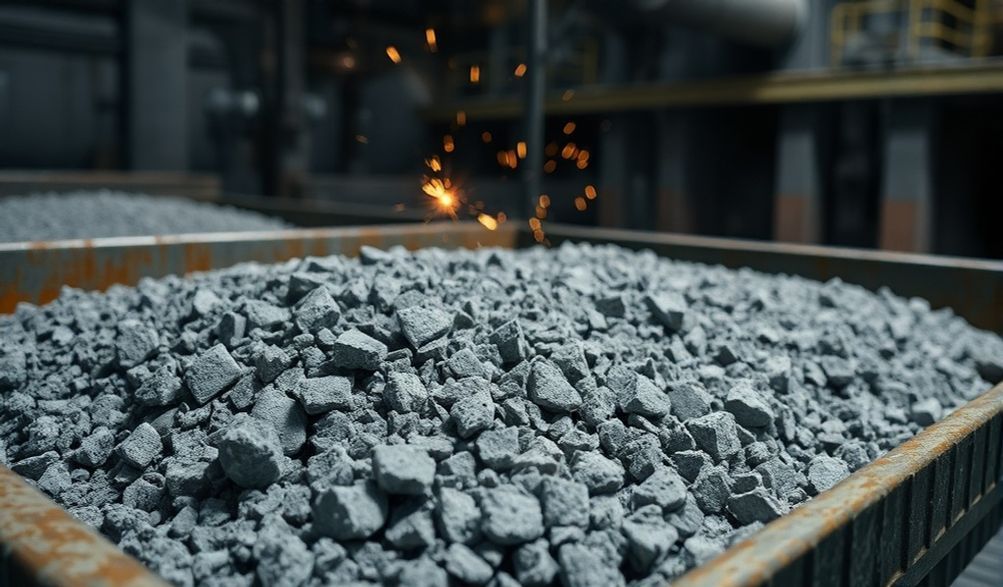
The Ultimate Guide to Bulk Machines for Clinker & Block-Shaped Granular Materials | FUDA Factory
မိတ်ဆက်
In the high-stakes world of cement production, mining, and aggregate processing, few challenges are as persistent and costly as the handling of materials like clinker. These block-shaped, abrasive, and often hot granular materials are the backbone of heavy industry, yet they are the nemesis of standard material handling equipment. The result? Plant managers and engineers face a relentless cycle of excessive wear, unplanned downtime, spillage, and soaring maintenance costs that directly erode profitability and disrupt production schedules.
With over two decades of specialized engineering experience, our team at ဖူဒါ ဘလောက်ပြုလုပ်ရေးစက်ရုံ has witnessed these challenges firsthand on-site at cement plants and mineral processing facilities across China and beyond. We understand that the solution isn’t just a “stronger conveyor”—it’s a fundamental re-engineering of bulk handling principles for extreme service. This guide is born from that direct, hands-on experience in solving specific, gritty material handling problems.
This article provides a comprehensive, technical analysis of bulk handling machines specifically engineered for clinker and similar granular block materials. We will move beyond generic specifications to explore the ဘာကြောင့်လဲ behind the design, offering plant managers, procurement specialists, and project engineers the knowledge needed to make informed decisions. You will learn about key machinery types, critical selection criteria, and how partnering with a specialist manufacturer is not merely a purchase, but a strategic investment in long-term operational reliability, efficiency, and ROI. The right equipment is the foundation of your operational success; let’s build that foundation correctly.
Understanding Clinker and Block-Shaped Granular Material Challenges
Before specifying a single machine, one must deeply understand the adversary. Clinker and similar materials (like certain slags, sinter, and coarse aggregates) aren’t just “heavy gravel.” They possess a unique set of physical properties that demand respect and specialized solutions.
Material Properties: Abrasion, Weight, and Flow Characteristics
The challenges start with the material’s inherent nature:
- Extreme Abrasiveness: Clinker is essentially a super-hard, partially vitrified rock. Its sharp, angular edges act like sandpaper on steel, grinding away at contact points with relentless efficiency. Standard mild steel components can be worn through in a matter of months.
- High Density and Impact Force: These materials are dense. A cubic meter of clinker can weigh over 1.4 tons. When dropped from a silo or chute, they generate tremendous impact forces that can bend frames, shatter idlers, and deform pans.
- Temperature: Fresh clinker can exit the kiln at temperatures exceeding 100°C. This heat accelerates wear, degrades rubber components (like standard conveyor belts), and creates thermal expansion challenges for machinery.
- Poor Flowability and Caking: The blocky, irregular shape leads to a steep angle of repose. They don’t flow like grain or sand. This can cause bridging in hoppers, erratic feed rates, and requires active discharge solutions.
- Dust Generation: The abrasion process and material transfer points create significant dust, posing environmental, health, and maintenance issues.
Common Pain Points in Bulk Handling Systems
When conventional equipment meets these materials, predictable failures occur:
- Catastrophic Wear: Belt conveyors suffer from gouging, tearing, and rapid cover wear. Screw conveyors are simply destroyed.
- Frequent Downtime: Breakdowns at a critical transfer point can halt an entire production line, leading to massive financial losses.
- Material Degradation: The very process of handling can break down the valuable product into unwanted fines, reducing product quality and value.
- Spillage and Dust Escape: Ill-fitting seals and inappropriate transfer designs lead to product loss and create hazardous, dirty work environments.
- Energy Inefficiency: Under-designed drives struggle with start-up loads, leading to higher power consumption and motor failure.
These aren’t just operational hiccups; they are direct drains on your bottom line through increased spare parts costs, labor for repairs, and lost production capacity.
Key Machinery Solutions for Heavy-Duty Bulk Handling
To combat these challenges, the industry relies on a class of machinery built not for general use, but for survival. Here are the workhorses designed for clinker and block-shaped aggregates.
Heavy-Duty Apron Feeders & Plate Feeders
Think of these as the armored tanks of bulk feeding. They are the first line of defense under a hopper or bin, designed to absorb massive impact and provide a controlled, steady feed.
- Design & Function: Constructed from overlapping, heavy-duty steel pans (or “aprons”) carried by robust tractor-style chains. This creates a continuous, solid bed that protects the chain from direct material contact.
- Why They Excel: The solid pan construction withstands the impact of falling material from great heights. They can handle the hottest clinker without issue. Their slow, positive drive offers precise feed-rate control, which is crucial for downstream processes like crushers or mills.
- Typical Application: Primary extraction from stockpiles or under raw material bins, feeding crushers, and as a regulated feed to belt conveyors.
Robust Bucket Elevators for Vertical Transport
When you need to lift abrasive materials vertically, a standard bucket elevator will fail. The solution is a reinforced, purpose-built design.
- Centrifugal vs. Continuous Discharge: For blocky materials, continuous design elevators (where buckets are spaced closely and discharge by gravity/inversion) are often preferred over centrifugal discharge. They provide a gentler handling action, reducing product breakage and allowing for the handling of larger lumps.
- Critical Features: Buckets are fabricated from thick, abrasion-resistant steel with reinforced lips. The chain or belt is heavy-duty, with large, hardened pins. Key design elements include:
- Spaced Buckets: Prevents jamming and material carryover between buckets.
- Bolt-On Buckets: Facilitates easy replacement of worn components.
- Robust Casing: Fully enclosed to contain dust and protect the mechanism.
Specialized Conveyors: Drag Chain and Pan Conveyors
For horizontal or inclined transport where dust control and severe conditions are paramount, belt conveyors are often not the answer.
-
Drag Chain Conveyors (En-Masse):
- These conveyors move material using a continuous chain with flights (or paddles) through an enclosed trough. The material itself becomes part of the conveying medium.
- အားသာချက်များ Excellent dust containment, multiple inlet and discharge points, and a compact footprint. They are ideal for handling hot, abrasive materials in a controlled environment.
-
Pan Conveyors (Slat Conveyors):
- Similar in concept to an apron feeder but designed for longer horizontal runs. They consist of steel pans bolted to a heavy-duty chain, forming a continuous, solid bed.
- အားသာချက်များ They offer the ultimate in durability for severe abrasion and high impact. The solid, leak-proof pan makes them ideal for handling fine, dusty materials alongside lumps without spillage.
Critical Selection Criteria for Your Bulk Machine
Choosing the right machine is a technical exercise. Here are the unbiased criteria you must evaluate, beyond the initial price tag.
Assessing Capacity and Throughput Requirements
Under-sizing is a fatal flaw. Your analysis must be thorough:
* Calculate Peak Load, Not Average: Base your capacity on the maximum required tons per hour your process demands, not the average. Include surge factors for when bins are emptied.
* အနာဂတ်အတွက်အဆင်သင့်ဖြစ်အောင် Consider potential plant expansion. Can the drive unit handle a 15-20% increase in load? Is the frame strong enough?
* Material Analysis: A precise understanding of your material’s bulk density, lump size, and abrasiveness is non-negotiable for accurate sizing.
Durability Features: Materials, Coatings, and Component Quality
This is where true heavy-duty design is revealed. Scrutinize these elements:
- Wear Liners: Look for Abrasion-Resistant (AR) steel liners (e.g., AR400 or Hardox 400) in high-wear areas like feeder pans, chutes, and elevator boots. These should be bolt-on for easy replacement.
- Chain and Sprocket Quality: The heart of the system. Components must be heat-treated, hardened, and manufactured to precise tolerances. Ask about the grade of steel and the hardening process (e.g., through-hardening vs. case hardening).
- Drive Unit Specifications: The gearbox and motor must be rated for high torque, low-speed applications with ample service factors. NEMA-rated motors and reputable, serviceable gearbox brands are a sign of quality.
Operational Efficiency and Safety Considerations
A reliable machine is also a safe and efficient one.
- စွမ်းအင်သုံးစွဲမှု Well-designed drives with proper sizing and efficient gear reducers minimize wasted energy. Variable Frequency Drives (VFDs) can optimize power use and provide soft starts.
- Dust Control: Integrated sealing systems—such as rubber skirtboards on feeders, gasketed covers on elevators, and pressurized seals on conveyors—are essential for compliance and housekeeping.
- Safety Systems: Ensure the design includes accessible emergency stop cables, proper guarding of all moving parts, and adequate walkways for inspection and maintenance.
Why Partner with a Specialist Manufacturer: The FUDA Factory Advantage
In the world of heavy-duty bulk handling, not all factories are created equal. Choosing a partner with specific expertise transforms your capital expenditure from a commodity purchase into a tailored solution.
Engineering Expertise Tailored to Granular Materials
At FUDA, we don’t just build machines; we solve material handling problems for the cement, slag, and aggregate industries. Our engineering process begins with your material.
* Customization is Standard: We routinely modify bucket profiles to optimize fill and discharge for specific blocky materials, adjust apron feeder pan pitch and depth for your flow rate, and design custom transfer chutes with impact-absorbing rock boxes and wear liners.
* Application Knowledge: Our engineers understand that handling clinker from a cooler is different from handling stockpiled aggregate. We account for temperature, abrasiveness, and degradation requirements in every design.
Manufacturing Quality and Robust Construction
Our factory is where the design is realized with integrity. We control the process to ensure durability:
* ကုန်ကြမ်းရယူခြင်း We procure certified, high-grade steel plates and structural components.
* Precision Fabrication: CNC cutting ensures part accuracy. Critical welds are performed by certified welders and are often stress-relieved to prevent failure.
* In-House Assembly & Testing: Every major subsystem (like the drive assembly or chain strand) is assembled and tested in our factory before shipment, ensuring it arrives on site as a proven unit.
Comprehensive Support: From Design to After-Sales
Our relationship begins at the concept stage and continues for the life of the machine.
1. Site Analysis & Layout Assistance: We can review your plant layout to recommend the most efficient and integrable solution.
2. Detailed Installation Guidance: We provide comprehensive drawings and manuals, and our engineers are available for consultation during installation.
3. Operator & Maintenance Training: We ensure your team knows how to operate and care for the equipment properly.
4. Dedicated Spare Parts Inventory: We maintain a stock of critical wear parts (liners, chain links, pins) for our machines, drastically reducing your downtime when maintenance is required.
မကြာခဏ မေးလေ့ရှိသော မေးခွန်းများ (FAQ)
Q1: What is the main difference between a standard conveyor and a machine built for clinker?
က: The difference is fundamental. Clinker-built machines use vastly heavier construction materials (thicker steel plates, AR400 liners), significantly stronger components (forged chain links, large-diameter hardened pins, heavy-duty bearings), and incorporate specific design features like impact beds, sealed housings, and reinforced frames. A standard system might move the material initially, but it will fail quickly and catastrophically under the extreme abrasion and impact.
Q2: How do I determine the right capacity size for my plant?
က: Start with your process requirements: desired tons per hour output. Then, factor in peak loading conditions (e.g., emptying a full silo) and any future expansion plans. The most reliable method is to share your material specifications (size analysis, bulk density) and process flow diagram with an application engineer from your equipment supplier. They can perform the necessary calculations and recommend a size with an appropriate safety factor.
Q3: What are the most critical maintenance points for these bulk machines?
က: Proactive maintenance is key. Focus on: 1) Regular visual inspections of wear liners, chain stretch, and sprocket teeth. 2) Strict adherence to lubrication schedules for all chain pins, bearings, and gearboxes. 3) Monitoring drive unit performance for unusual noise, vibration, or overheating. A well-designed machine makes these points accessible and minimizes maintenance frequency, but it cannot eliminate the need for a disciplined maintenance program.
Q4: Can FUDA Factory customize a machine for our specific site layout and material blend?
က: Absolutely. As a specialist engineering factory, customization is at the core of our value proposition. We regularly design machines to unique lengths, inclines, and discharge heights to fit existing plant layouts. We can modify bucket shapes, pan configurations, and sealing systems to handle your specific material blend—whether it’s a mix of clinker sizes, a combination of hot and cold feed, or a particularly abrasive aggregate. Our goal is seamless integration and optimal performance for မင်္ဂလာပါ operation.
နိဂုံး
Successfully handling abrasive, block-shaped granular materials like clinker is not a challenge to be met with off-the-shelf solutions. It requires a strategic commitment to purpose-built machinery engineered for extreme conditions—where durability, intelligent design, and manufacturer expertise are non-negotiable. From understanding the material’s punishing properties to selecting the right heavy-duty feeder, elevator, or conveyor, every decision impacts your plant’s long-term productivity, maintenance costs, and bottom line.
Investing in quality engineering from a proven, specialist manufacturer like ဖူဒါ ဘလောက်ပြုလုပ်ရေးစက်ရုံ is ultimately an investment in operational certainty. It’s the assurance that your bulk handling system will perform reliably, day in and day out, as a robust pillar of your production process.
Ready to solve your bulk material handling challenges for good? Contact the engineering team at FUDA Factory today for a confidential consultation and a custom quote tailored to your plant’s specific needs and material characteristics.
<