
The Ultimate Guide to Concrete Hollow Block Making Machines in India (2026)
မိတ်ဆက်
India’s construction sector is not just growing; it’s booming. With ambitious infrastructure projects, rapid urbanization, and the government’s push for housing for all, the demand for robust, cost-effective, and sustainable building materials has never been higher. At the heart of this modern construction revolution lies a humble yet critical component: the concrete hollow block. Lighter, stronger, and more insulating than traditional bricks, these blocks are the preferred choice for forward-thinking builders.
However, meeting this surging demand with manual production methods is a recipe for inconsistency, high labor costs, and limited scale. For manufacturers and entrepreneurs, navigating the crowded market of machinery to find the right concrete hollow block making machine in India can be a daunting task, filled with technical jargon and confusing price points.
This is where automated block making technology steps in as the definitive solution. This comprehensive guide cuts through the noise. Built on deep industry analysis, direct insights from manufacturers, and technical expertise, our aim is to equip you with the knowledge to make a confident and informed investment. We will explore the types of machines available, key features, price landscapes, top manufacturers, and a practical roadmap for setting up your own successful block manufacturing unit.
Understanding Concrete Hollow Block Making Machines
What is a Concrete Hollow Block Making Machine?
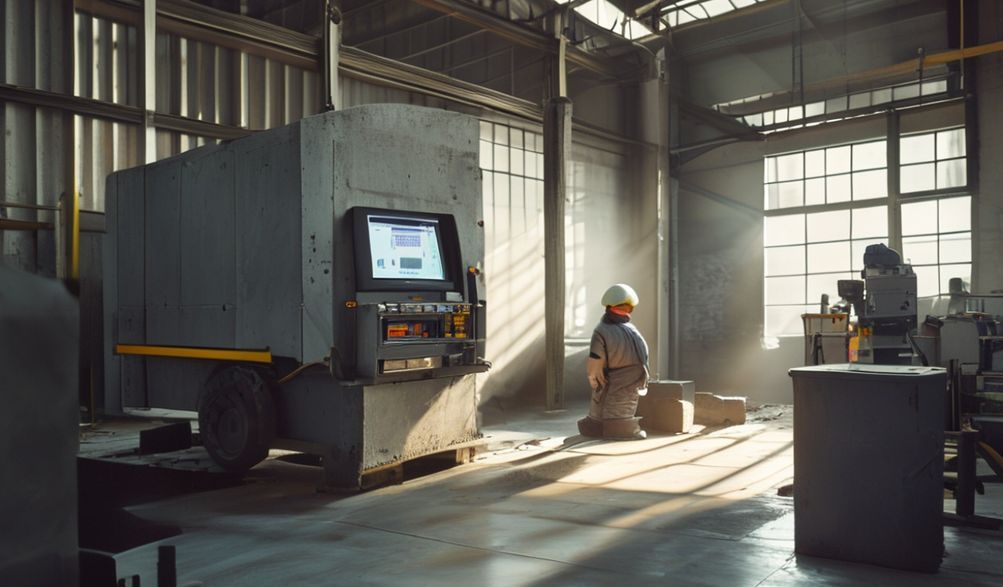
A concrete hollow block making machine is a specialized piece of equipment designed to manufacture hollow concrete blocks through a process of high-pressure compaction and vibration. It automates the most labor-intensive and quality-critical steps of block production.
The basic principle involves feeding a semi-dry concrete mix (cement, sand, aggregates) into a mold cavity. Powerful vibration motors consolidate the mix, while a hydraulic system applies immense pressure to form a densely compacted block. The machine then ejects the freshly formed block onto a pallet for curing. Key components that make this possible include:
- ဟိုက်ဒရောလစ်စနစ် The powerhouse that provides the pressing force.
- Vibration Motor(s): Ensures the mix is evenly distributed and voids are eliminated for strength.
- Mold (Die): The interchangeable part that defines the block’s size and shape (hollow, solid, paver, etc.).
- ကွန်ထရိုးပါနယ် Ranges from simple switches to advanced PLC (Programmable Logic Controller) systems for automation.
- Pallet Feeder/Conveyor: Automates the movement of pallets in and out of the machine.
အိန္ဒိယစျေးကွက်တွင် ရရှိနိုင်သော စက်ပစ္စည်းအမျိုးအစားများ
The Indian market caters to every scale of operation, offering a spectrum from basic manual machines to fully automated plants.
- လက်ဖြင့် အုတ်ခဲပြုလုပ်သည့် စက်များ These are entry-level, hand-operated or semi-mechanized machines. They require significant physical effort to operate the lever for compaction and are best suited for very small-scale startups, rural projects, or on-site production for a single building. Output is relatively low, but the initial investment is minimal.
- အချိန်ကုန်သက်သာစေသော စက်များ This category strikes an ideal balance for small to medium-scale businesses. The core processes of vibration and compaction are powered (electrically/hydraulically), but an operator is needed to feed raw materials, activate cycles, and remove finished blocks. They offer a substantial jump in output and consistency over manual machines while remaining affordable.
- အလိုအလျောက် အပြည့်အစုံ ဘလောက်ပြုလုပ်သည့် စက်များ These are high-output, computer-controlled production lines. They integrate automatic material batching, mixing, block molding, curing, and stacking. With minimal human intervention, they can run 24/7, producing thousands of blocks per shift. This is the choice for large-scale manufacturers and construction companies supplying major projects.
- မိုဘိုင်းဘလောက်စက်များ A versatile niche, these self-contained machines can be towed to a construction site. They produce blocks directly where they are needed, drastically cutting transportation costs for large projects in remote locations or urban sites with space constraints.
Benefits of Using an Automated Machine
Investing in even a semi-automatic machine unlocks transformative advantages over manual methods:
- တသမတ်တည်းရှိသော အရည်အသွေးနှင့် ခိုင်မာမှု Automated pressure and vibration ensure every block has uniform density, dimensions, and high compressive strength, meeting IS standards consistently.
- မြင့်မားသော ထုတ်လုပ်မှုနှုန်းနှင့် ထိရောက်မှု Machines produce blocks in a fraction of the time, enabling you to take on larger orders and scale your business predictably.
- အလုပ်သမားစရိတ် သိသိသာသာ လျှော့ချမှု One machine operated by 2-3 workers can replace 15-20 manual laborers, slashing long-term operational costs and dependency on skilled labor.
- Versatility in Product Range: By simply changing the mold, a single machine can produce hollow blocks, solid blocks, paving slabs, kerbstones, and designer landscape products, allowing you to diversify your product line.
- Better Raw Material Utilization & Waste Reduction: Precise compaction reduces raw material usage per block and minimizes breakage and waste, improving your overall material cost efficiency.
Key Features to Look for in an Indian-Made Machine
Beyond the type, scrutinizing these features will ensure you get a machine that delivers performance and stands the test of time.
အဓိက နည်းပညာ သတ်မှတ်ချက်များ
- ထုတ်လုပ်မှုစွမ်းရည် Don’t just look at “blocks per hour” in ideal conditions. Ask for realistic output figures for an 8-hour shift for the specific block size you intend to produce (e.g., 4″, 6″, 8″ hollow blocks).
- Block Sizes and Mold Customization: Ensure the machine can accommodate the standard block sizes in demand in your region. Check if the manufacturer offers custom mold fabrication for specialty blocks, which can be a lucrative niche.
- မော်တာပါဝါ Assess both the hydraulic motor power (for pressing force) and the vibration motor power (for compaction). Robust motors ensure consistent performance under load.
- အလိုအလျောက်စက်လည်ပတ်မှု ဒီဂရီ A PLC control system in semi-auto and fully-auto machines allows for precise control over vibration time, pressure cycles, and troubleshooting, enhancing consistency and ease of use.
Build Quality and Durability Factors
The machine must withstand years of intense vibration and pressure.
- Robust Steel Structure: The frame should be made from heavy-duty, welded steel plates and channels. A flimsy frame will lead to misalignment and premature failure.
- အရေးကြီးအစိတ်အပိုင်းများ၏ အရည်အသွေး Inquire about the brand of hydraulic pumps, valves, and cylinders. Reputed brands, even if they increase cost slightly, guarantee reliability. Similarly, vibration assemblies should be from trusted sources.
- Corrosion Resistance: Look for machines with quality paint finishes, and ideally, powder coating on critical parts to resist rust in India’s humid climates, especially if your unit is near the coast.
After-Sales Support & Service Network
This is the most critical, non-negotiable factor for your investment in India. A machine is a long-term asset, and downtime directly translates to lost revenue.
- Availability of Spare Parts: Confirm that commonly wearing parts (like hydraulic seals, vibration mounts, mold liners) are standardized and readily available, not proprietary parts with long lead times.
- Warranty Period and Terms: A comprehensive warranty (typically 1 year on major parts) from a reputable company is a sign of confidence. Read the fine print on what is covered and what is considered “wear and tear.”
- Proximity of Service Technicians: A manufacturer with a wide service network or trained technicians in your state/region is invaluable. The ability to get quick on-site service minimizes operational disruptions.
Top Manufacturers and Suppliers of Block Making Machines in India
(Disclaimer: This section provides an objective market overview based on industry reputation and presence. It is essential to conduct your own due diligence.)
Established Indian Brands
Several homegrown manufacturers have built strong reputations over decades by offering reliable, value-for-money machines tailored to Indian conditions.
- Everon Impex: A prominent name known for a wide range of machines, from manual to fully automatic stationary plants. They have a strong pan-India presence and are recognized for their robust build.
- Chirag International: Another key player with a significant market share, offering concrete block and paver making machines. They are known for their engineering focus and extensive model range catering to various scales.
- Shri Engineering Enterprises: Based in Pune, they are well-regarded manufacturers of semi-automatic and automatic machines, often noted for their sturdy construction and practical design.
Technology Partners & Collaborations
Some Indian companies enhance their offerings through technology transfers or collaborations with foreign engineering firms (from Germany, Italy, or China). These machines often incorporate advanced hydraulic systems, PLC controls, and energy-efficient designs, positioning them in the premium segment of the market.
How to Vet a Reliable Supplier
Use this checklist before finalizing any deal:
- Insist on a Factory Visit: See the manufacturing facility. It reveals their scale, quality control processes, and professionalism.
- Ask for Client References: Speak directly to existing customers, preferably those who have used the machine for 1-2 years. Ask about performance, downtime, and service responsiveness.
- Request a Material Test: Provide your own local sand and aggregates for a production test at their facility. This demonstrates the machine’s performance with မင်္ဂလာပါ raw materials.
- Review the Service Contract: Don’t just get a price quote. Get the detailed after-sales service terms, warranty document, and spare parts price list in writing.
Investment Guide: Price Range and ROI Analysis
Concrete Hollow Block Machine Price in India (2026 Estimates)
Prices are highly variable and subject to change based on raw material costs, features, and brand. The following are broad, indicative ranges for a basic setup.
- Manual/Small Semi-Automatic Machines: ₹ 3 Lakhs to ₹ 8 Lakhs. Ideal for micro-enterprises and very small-scale production.
- Standard Semi-Automatic Machines: ₹ 8 Lakhs to ₹ 25 Lakhs. This is the most popular range for SMEs, offering a great balance of output and automation.
- Fully Automatic Stationary Plants: ₹ 25 Lakhs to ₹ 1 Crore+. Price scales with the level of integration (batching plant, mixer, stacker) and production capacity.
Factors affecting price: Level of automation, brand reputation, production capacity (block per shift), motor power (HP), and optional add-ons like color feeders or automatic pallet feeders.
Calculating Your Return on Investment (ROI)
A simplified framework to estimate profitability:
- Calculate Daily Production Value: (Number of blocks produced per day) x (Selling price per block in your market).
- Calculate Daily Operational Cost: Include raw materials (cement, sand, aggregate), power consumption, labor wages, and a minor provision for maintenance.
- Estimate Gross Daily Profit: Subtract #2 from #1.
- Factor in Fixed Costs: Account for land lease, loan EMI (if financed), and other overheads to get net profit.
Example (Simplified): If a semi-auto machine produces 1500 blocks/day sold at ₹ 40/block, the revenue is ₹ 60,000. If operational costs are ₹ 35,000, the gross daily profit is ₹ 25,000. The machine can often pay for itself within 12-18 months based on consistent demand.
Crucial Note: Your local market demand and the prevailing price of blocks are the most critical variables in this calculation.
Government Schemes and Financing Options
Entrepreneurs can explore financing through:
* MSME/Business Loans from nationalized banks, which often offer favorable terms for manufacturing equipment.
* PMEGP (Prime Minister’s Employment Generation Programme) and other state-level subsidies for micro-enterprises.
* Direct financing or lease options sometimes offered by the machine manufacturers themselves in collaboration with NBFCs.
Setting Up Your Block Manufacturing Unit: A Step-by-Step Checklist
Pre-Purchase Planning
- Land & Shed: Secure a plot (owned or leased) with adequate space for the machine, raw material storage, block curing area, and finished goods yard. A covered shed of at least 2000-5000 sq. ft. is typically needed.
- Power & Water: Ensure access to a stable 3-phase electricity connection (required for most machines) and a reliable water source for the concrete mix and curing.
- Raw Material Sourcing: Identify reliable local suppliers for cement, sand (of consistent quality), and aggregates (6mm to 12mm). Consistent raw material quality is key to block quality.
Installation and Commissioning
- Foundation: Prepare a strong, level concrete foundation as per the machine supplier’s drawings. This is vital for machine stability and performance.
- Supplier Role: A reputable supplier will provide an engineer for installation, mechanical & electrical commissioning, and most importantly, comprehensive operator training.
- Trial Runs: Conduct multiple trial runs with your actual raw materials to fine-tune the mix design and machine settings before starting commercial production.
Production and Quality Control
- Mix Design: A standard starting ratio is 1 part cement : 6 parts combined aggregates (sand + stone chips). The mix should be semi-dry (holds shape when squeezed).
- Curing Process: Freshly made blocks must be kept moist for at least 7-14 days for proper strength gain. Use a water sprinkler system or cover blocks with wet gunny sacks.
- Simple Quality Tests:
- Weight & Dimension Check: Ensure blocks meet standard size and weight tolerances.
- Visual Check: Look for smooth faces, sharp edges, and no cracks.
- Drop Test: A well-cured block should not break when dropped from waist height onto a hard surface.
မကြာခဏ မေးလေ့ရှိသော မေးခွန်းများ (FAQ)
Q1: What is the average price of a concrete hollow block making machine in India?
က: There’s no single “average” price due to the vast range. A basic manual machine can start around ₹ 3 lakhs, while a high-capacity fully automatic plant can exceed ₹ 1 crore. Your budget, required output, and level of automation will determine the final cost. Always get detailed quotes from multiple manufacturers.
Q2: Which is the best brand for block making machines in India?
က: The “best” brand is subjective and depends entirely on your specific needs—budget, scale, desired automation, and most importantly, the quality of after-sales service in your geographic location. Focus on shortlisting 3-4 reputable manufacturers (like those mentioned earlier) and evaluate them based on the “Key Features” and vetting checklist provided in this guide.
Q3: What is the production capacity I can expect from a semi-automatic machine?
က: A typical semi-automatic machine in India can produce between 1000 to 3000 blocks in an 8-hour shift. The exact number depends on the block size (smaller blocks are faster), the operator’s skill and speed, and the machine’s specific cycle time.
Q4: Can I get a customized mold for special block designs?
က: Yes, absolutely. Most reputable manufacturers have in-house mold fabrication facilities and can create custom molds for interlocking blocks, designer pavers, or special architectural shapes. This usually involves additional cost and a lead time of 2-4 weeks.
Q5: What after-sales support should I insist on before buying?
က: This is critical. Insist on: 1) A comprehensive warranty document (at least 1 year on major parts), 2) Mandatory on-site installation and training for your operators, 3) A readily available spare parts catalog with clear pricing, and 4) A dedicated service contact or helpline number for troubleshooting.
နိဂုံး
Investing in the right concrete hollow block making machine in India is more than a purchase; it’s a strategic decision that can transform a small venture into a thriving business or elevate an existing construction company’s capabilities. In an era defined by speed, scale, and quality, automated block production is no longer a luxury but a necessity for growth.
As you move forward, let this guide serve as your framework. Remember, the cheapest machine can often become the most expensive due to downtime and poor quality. Prioritize စုစုပေါင်းတန်ဖိုး—encompassing machine durability, production efficiency, and unparalleled after-sales support—over the lowest upfront price.
Take the next step with confidence. Use the insights here to conduct thorough on-ground research. Visit manufacturing units, speak to existing customers of your shortlisted brands, and witness the machines in operation. By making an informed choice, you’re not just buying a machine; you’re laying the foundation for a profitable and sustainable future in India’s ever-expanding construction landscape.
<