The Current State of Design in Brick Production
Traditional Limitations and Methods
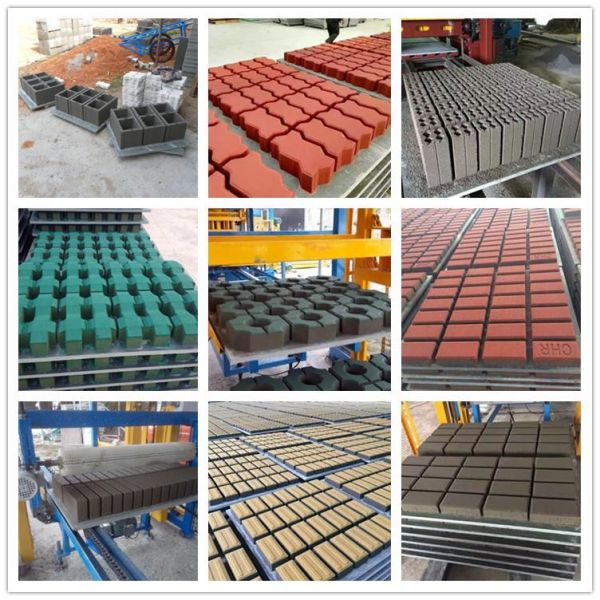
Historically, brick machinery has been engineered for efficiency, consistency, and volume in producing standard geometric shapes. Customization was largely confined to the realm of manual craftsmanship or limited to post-production processes.
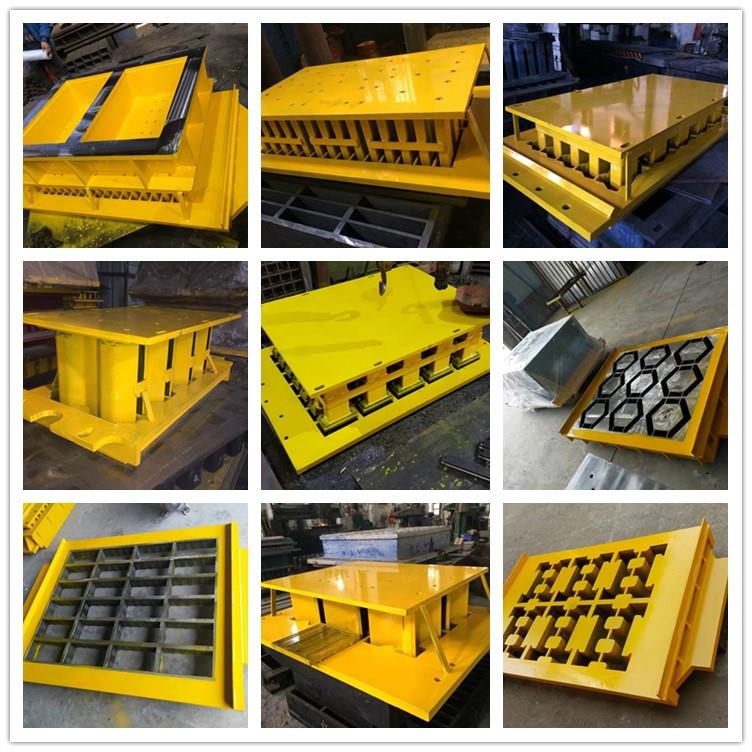
- Mold-Based Constraints: The primary method for creating non-standard designs has been the use of custom molds. While effective for repeating a specific pattern or shape, this approach is inherently inflexible. Each new design requires the fabrication of a new, costly mold, making small batches or one-off custom units economically unviable. Changeover times are significant, and storage of numerous molds becomes a logistical challenge.
- Post-Production Modification: Surface textures or simple patterns have been applied through rolling, scoring, or sandblasting units after they leave the press. While adding some variety, these methods are limited in depth, precision, and geometric complexity. They cannot create intricate three-dimensional forms or variable designs across a single unit.
The Digital Imperative in Construction
The driving force behind the demand for customization is the widespread adoption of digital tools in architecture and construction. Building Information Modeling (BIM), parametric design, and 3D visualization allow for the creation of complex, non-repetitive facades and structures that are difficult or impossible to realize with standardized components. This creates a pressing need for a production technology that can bridge the digital model and the physical product with high fidelity.
Technological Pathways Towards Customizable Fabrication
Hybrid Molding and Robotic Tooling
The first significant step beyond fixed molds involves introducing adaptability into the forming process itself.
- Adaptive or Reconfigurable Molds: Emerging systems utilize molds with actuated elements or surfaces that can change shape between cycles. Controlled by digital instructions, these systems can produce a series of different bricks from a single setup, eliminating the need for physical mold changes for certain families of shapes.
- Robotic Post-Processing Arms: Integrated robotic arms equipped with carving, milling, or etching tools can be stationed downstream from a standard press. A generic brick blank is produced, and the robot, guided by a CAD file, then machines the custom design onto or into the unit with high precision. This allows for incredible detail and variability, as the robot’s program can be changed instantly for each brick.
Additive Manufacturing and Binder Jetting
The most direct analogy to “printing” comes from adapting additive manufacturing principles to brick-scale production.
- Layered Deposition of Clay/Concrete: Experimental systems are exploring the extrusion of clay or concrete paste in a controlled, layer-by-layer manner, similar to large-scale 3D printing. This process, while currently slower than pressing, offers ultimate geometric freedom. It can create organic shapes, internal voids, and interlocking structures that are impossible with subtractive or pressure-based methods.
- Powder Bed and Binder Jetting: This innovative technique involves spreading a thin layer of dry clay or cementitious powder. A print head then selectively deposits a binding agent (like a liquid polymer) that solidifies the powder in the desired cross-section. The process repeats layer by layer. Unbound powder supports the structure during printing and is recycled. This method can achieve extremely fine resolution and complex internal geometries, truly “printing” a brick from a digital file.
Integrated Digital and Material Systems
The core of custom production is the seamless flow of data from design to machine.
- CAD/CAM Direct Integration: The future lies in machines that accept direct input from architectural CAD or BIM software. A designer’s model of a complex facade could be processed by the machine’s software, which would automatically generate the toolpaths and production instructions for creating each unique brick required for its construction, including necessary tolerances and alignment keys.
- Variable Material Composition: Advanced systems could potentially vary material composition within a single unit. Imagine a brick with a highly compacted, weather-resistant exterior face and a lighter, more insulative core, or a unit with integrated color gradients—all formed in a single, automated process based on a digital recipe.
Market Implications and Opportunities for the Supply Chain
Unlocking New Architectural Applications
The ability to produce custom designs opens vast new markets and applications for masonry.
- Bespoke Architectural Facades: Architects could design flowing, textured, or pattern-varying walls where each brick is a unique component of a larger mosaic or relief. This transforms brick from a modular unit into a continuous tiling or sculptural medium.
- Restoration and Heritage Projects: Precisely replicating intricate, weathered, or historically specific brick profiles and ornaments for restoration work becomes feasible with scan-and-print technology, preserving cultural heritage with perfect material matches.
- Branding and Artistic Installations: Custom bricks with embossed logos, inscriptions, or artistic designs become possible for corporate buildings, public art, and personalized residential projects.
Transforming Business Models for Distributors and Producers
This technological shift will fundamentally alter how value is created and captured in the industry.
- From Volume to Value: The business model for producers could shift from competing on the cost-per-thousand standard bricks to competing on design capability, precision, and the value-added of custom solutions. Margins on customized, low-volume, high-value production runs can be significantly higher.
- The Role of the Distributor as a Digital Facilitator: Distributors may evolve to offer not just machinery, but a suite of services. This could include providing or partnering with software platforms that translate designer intent into machine code, offering training in digital design-for-manufacture, and managing the digital asset library of custom designs for clients.
- On-Demand and Localized Production: The economics of custom design favor localized, on-demand production to minimize logistics for unique, often fragile components. This could strengthen the case for smaller, regional producers equipped with flexible machinery, supported by local distributors with deep technical knowledge.
Challenges and Considerations on the Path to Adoption
Technical and Operational Hurdles
The transition to design-focused production is not without significant challenges.
- Production Speed vs. Customization: A core tension exists between the high-speed, continuous operation of traditional brick presses and the slower, batch-oriented nature of most customizable printing or machining processes. Technological advancements must focus on increasing the throughput of custom systems to make them viable for larger projects.
- Material Science and Integrity: Custom shapes, especially those with fine details, overhangs, or variable densities, must still meet structural performance standards. Ensuring consistent material properties, durability, and frost resistance in additively manufactured or intricately machined units requires extensive R&D and new material formulations.
- Quality Control and Standardization: With every brick potentially being unique, traditional quality control methods are inadequate. New, automated inspection systems using machine vision and 3D scanning will be required to verify dimensional accuracy and surface quality against the original digital model for each unit or batch.
Economic and Skills Transition
The human and capital investment aspects are equally critical.
- Initial Capital Investment: The first generations of truly flexible, production-capable “printing” systems for bricks will carry a high capital cost. The ROI calculation will hinge on the premium the market is willing to pay for customization and the new business opportunities it unlocks.
- Evolving Workforce Skills: Operating and maintaining this advanced equipment requires a new blend of skills: mechatronics, CAD/CAM software operation, basic robotics, and an understanding of parametric design principles. Distributors will play a key role in bridging this skills gap through comprehensive training and support programs.
နိဂုံး
The question of whether brick machines will be able to print custom designs is being answered affirmatively in laboratories and pioneering factories today. While the ubiquitous, high-speed “printer” for bespoke bricks is not yet the industry standard, the technological convergence making it possible is undeniable. The journey from rigid molds to adaptive tooling, robotic machining, and ultimately, additive manufacturing is a clear trajectory that aligns with powerful trends in digital construction and personalized design.
For the supply chain—the distributors, dealers, and procurement experts—this represents both a challenge and a monumental opportunity. The future will belong to those who understand that brick machinery is evolving into a digital fabrication platform. By engaging with this trend now, by understanding the technologies on the horizon, and by preparing to help clients navigate the shift from pure volume to integrated design and value, you can position your business at the forefront of the next revolution in masonry. The future of brick is not just solid; it is intricately, beautifully, and uniquely customizable.
FAQ
Q1: Is this technology only for artistic or high-end projects, or will it have mainstream applications?
A: Initially, adoption will likely be in high-value, signature architectural projects and restoration work where the cost of customization is justified. However, as the technology matures and speeds increase, mainstream applications will emerge. For example, a developer might offer a selection of standardized custom patterns for subdivision homes, or a system might produce a run of uniquely coded bricks for a large but varied facade. The trajectory is from niche to broader adoption over time.
Q2: How does the cost of a brick from a “printing” process compare to a traditionally pressed brick?
A: In the near term, per-unit cost will be higher due to slower production speeds and advanced equipment amortization. However, the comparison is misleading because it contrasts a commodity with a designed component. The correct comparison is against other methods of achieving custom facades (e.g., hand-carving, specialized cladding systems, or intricate formwork for concrete). In that context, digital fabrication of bricks can become a cost-competitive and more material-authentic solution.
Q3: As a distributor of traditional high-volume machinery, should we be concerned about this trend?
A: Not as a threat, but as a complementary evolution. The demand for standard, high-volume brick products for structural cores, infill, and cost-driven projects will remain massive for decades. The opportunity is to expand your portfolio. Consider customizable fabrication technology as a new product line that serves a different, high-margin market segment. It allows you to cater to all your client’s needs, from bulk material to bespoke design elements.
Q4: What are the main barriers preventing this technology from being widely used tomorrow?
A: Three key barriers exist: 1. Throughput: Current additive or robotic methods are too slow for large-scale projects. 2. Material Certification: Building codes and standards are based on decades of data for pressed/fired bricks. Proven long-term performance data for new geometries and formation methods is needed. 3. Integrated Workflow: The seamless digital pipeline from architect to factory floor is still being developed. Overcoming these requires continued investment and collaboration across the design, manufacturing, and construction sectors.
Q5: Can existing brick plants integrate some level of this customization technology, or does it require a completely new factory?
A: Integration is possible at various levels. The most accessible step is adding a robotic machining or etching cell to the end of an existing production line. This allows standard bricks to be customized post-pressing. More advanced additive “printing” systems might operate as a separate, specialized line within a plant, dedicated to fulfilling custom orders while the main lines produce standard products. Full integration is a strategic decision based on a producer’s market goals.