Dekonstrukcja Inwestycji: Holistyczna Analiza Kosztów
Cena w pełni automatycznej maszyny do produkcji cegieł glinianych nie jest pojedynczą liczbą, lecz złożonym odzwierciedleniem filozofii inżynieryjnej, rzetelności produkcyjnej i zastosowania rynkowego. Zrozumienie tej struktury jest kluczowe.
I. Podstawowe Czynniki Kosztów: Inżynieria i Skala Produkcji
A. Architektura Systemu Podstawowego i Przepustowość
Konstrukcyjna filozofia maszyny bezpośrednio determinuje jej finansową podstawę.
- Zdolność produkcyjna i synchronizacja liniiCena rośnie wraz z gwarantowaną, zrównoważoną wydajnością (np. 15 000 vs. 50 000 cegieł na 8-godzinną zmianę). Wysoka wydajność wymaga zsynchronizowanych podsystemów – zasilania, zagęszczania, cięcia, transportu – zaprojektowanych do ciągłej, szybkiej pracy bez wąskich gardeł. Ta synchronizacja jest głównym czynnikiem zwiększającym koszty.
- Poziom Integracji i Automatyzacji:
- Podstawowe Prasy Automatyczne:Zawiera automatyczne podawanie materiału i prasowanie, ale może wymagać ręcznego obsługiwania surowych cegieł. Jest to punkt wyjścia do automatyzacji.
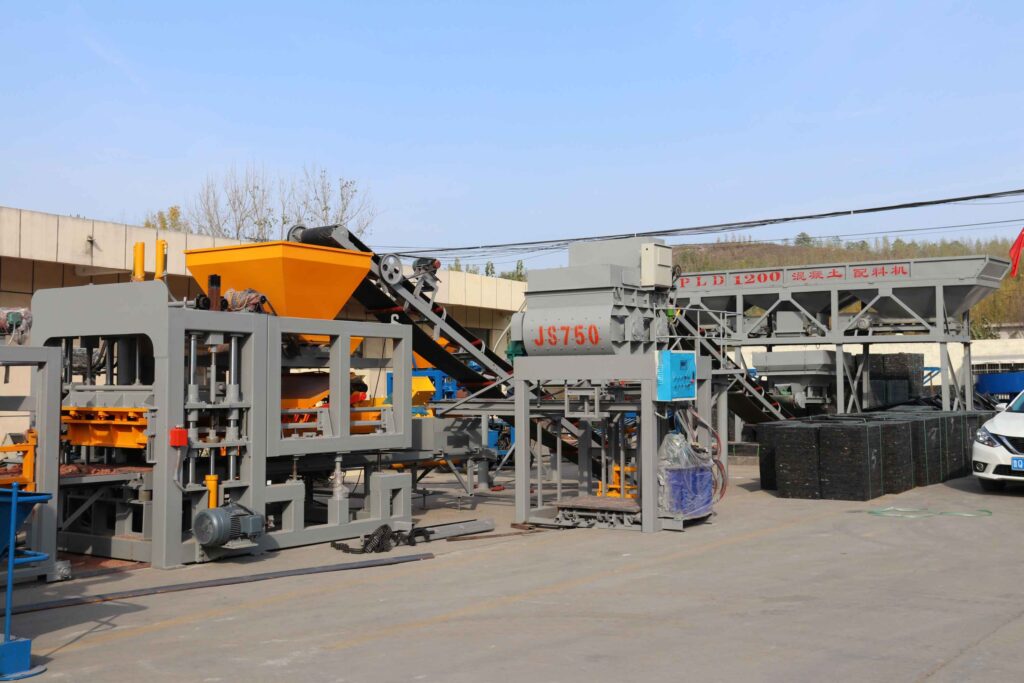
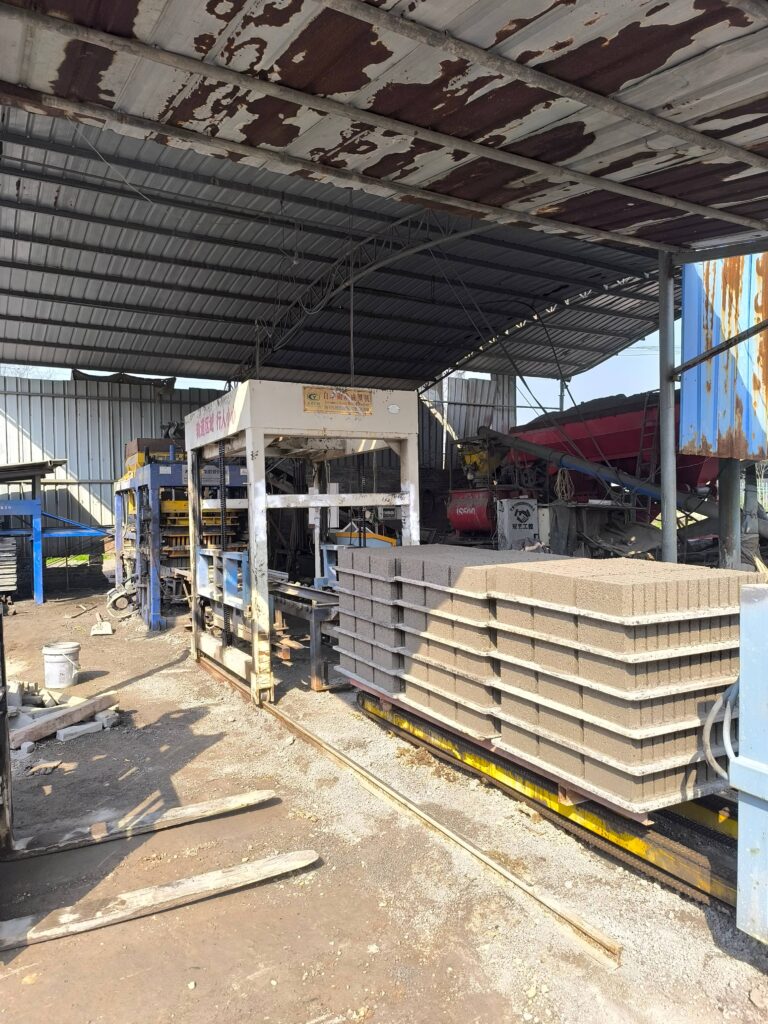
- W pełni zintegrowane linie wytłaczania:Reprezentują segment premium. Te systemy integrują wytłaczarkę (lub mieszalnik), komorę próżniową do odgazowania, automatyczny przecinak, robotyczne systemy układania, a czasami automatyczne paletyzery. Każdy zintegrowany moduł zwiększa złożoność i koszt, ale eliminuje pracę ręczną i poprawia spójność.
- Technologia wytłaczania a technologia prasowania:W przypadku cegieł glinianych, w pełni zautomatyzowane systemy wykorzystują głównie technologię ekstruzji. Koszt wysokomomentowego, dwuwałowego wytłaczarki z wydajną pompą próżniową jest znaczący. Inżynieria niezbędna do utrzymania stałego ciśnienia ekstruzji i poziomów próżni stanowi główny ośrodek kosztów, odrębny od systemów pras hydraulicznych stosowanych dla innych materiałów.
B. Integralność Materiałów i Hierarchia Komponentów
The quality of components determines longevity, uptime, and ultimately, the cost per brick produced.
- Structural Robustness: Machines built for 24/7 industrial duty use heavy-gauge, stress-relieved steel in frames and fabrication. The wear parts—such as the extrusion auger, die mouth, and cutter wires—are fabricated from specialized, hardened alloys. The material cost and machining precision for these parts are substantial.
- Drive and Power Systems: High-capacity, industrial-grade motors (for the extruder, vacuum pump, conveyor drives) coupled with precision gearboxes or variable frequency drives (VFDs) form a significant portion of the cost. VFDs allow for precise speed control, optimizing extrusion for different clay types, but add to the initial price.
- Control and Sensory Architecture: The transition from relay logic to a comprehensive PLC (Programmable Logic Controller) system with distributed I/O and an HMI (Human-Machine Interface) is a major cost step. Advanced systems include sensors for monitoring vacuum levels, extrusion pressure, and cutter positioning, enabling closed-loop control and predictive maintenance alerts. This electronic nervous system is a critical value driver.
- Handling and Robotics: The integration of servo-driven multi-axis robotic arms or sophisticated cross-transfer systems for handling unfired (green) bricks without deformation is a high-cost, high-value addition that dramatically reduces labor and breakage.
II. The Expanded Financial Framework: Beyond the Machine Quotation
The supplier’s pro forma invoice is the beginning of the financial commitment. A strategic assessment requires a broader lens.
A. Direct Ancillary and Logistical Expenditures
- Logistics and Trade Terms (EXW, FOB, CIF): The chosen Incoterm fundamentally alters financial responsibility. An Ex-Works (EXW) price is lowest but leaves all logistics, insurance, and export formalities to the buyer. Cost, Insurance, and Freight (CIF) to a destination port provides predictability but at a higher upfront cost. For large lines, specialized heavy-lift or flat-rack shipping may be required.
- Import Duties, Taxes, and Port Charges: These are often overlooked in initial budgeting. Duties can range from 5% to 20%+ depending on the country of import and its classification of industrial machinery. Local VAT or GST will also apply upon clearance.
- Installation, Commissioning, and Civil Works: This includes the cost of a reinforced concrete foundation, utility hook-ups (high-power electrical, water, compressed air), and the fees for technical supervisors from the supplier to oversee assembly, calibration, and production startup.
- Essential Ancillary Systems: The brick machine is the core of a production ecosystem. This ecosystem includes box feeders or forklifts for raw clay, crushers and feeders for additives, aging/weathering space for clay, and often a sophisticated drying system (chamber dryers) prior to firing. These are separate, major investments.
B. Lifecycle Operational and Implicit Costs
The true financial picture emerges over years of operation.
- Energy Consumption Profile: A fully automatic line with extruders, vacuum pumps, and robotics is energy-intensive. The efficiency of the drive systems and the design of the drying stage (if integrated) are critical determinants of long-term operating cost. A machine with a higher price but 15% better energy efficiency can justify the premium within a few years.
- Maintenance Regime and Spare Parts Inventory: The abrasive nature of clay accelerates wear on specific components. The expected lifecycle and cost of wear parts (augers, liners, dies, cutter heads) must be modeled. A supplier with an expensive but long-lasting, locally stocked spare part may offer a lower TCO than one with cheap but frequently failing parts.
- Labor Cost Restructuring: While a fully automatic line reduces direct labor for brick handling, it requires more skilled (and costly) technicians for maintenance, programming, and supervision. This shift in labor cost and skill profile must be factored into the client’s business plan.
- Cost of Downtime and Technological Obsolescence: Unplanned downtime in a high-throughput line is catastrophic. The reliability engineered into the machine, backed by a responsive service agreement, has direct financial value. Furthermore, a machine with a modular, updatable control system is more future-proof than a closed, proprietary system.
Strategic Procurement and Value Proposition Development
For the distributor, the goal is to align machine cost with client ambition, creating a compelling investment case.
I. Conducting a Total Cost of Ownership (TCO) Analysis
A disciplined TCO analysis over a 7-10 year horizon is the most powerful tool for justification. It must include:
- Capital Expenditure (CAPEX): Machine price, shipping, duties, taxes, installation, and essential ancillaries.
- Operational Expenditure (OPEX): Annual costs for energy, skilled labor, routine maintenance, and wear parts.
- Cost of Capital: Interest if financed.
- Residual Value: Potential resale value of the robust machine at end of period.
Presenting this analysis contrasts the true cost of a “cheap” machine (high OPEX, high downtime) versus a “premium” machine (higher CAPEX, lower OPEX).
II. Building the Client’s Return on Investment (ROI) Model
Your role is to help the client build their business case. The model should be localized and project:
- Revenue Potential: Based on brick selling price and the machine’s realistic annual capacity after accounting for maintenance and market demand.
- Variable Cost Savings: Highlight the reduction in direct labor per thousand bricks and the potential for optimized raw material use (less waste) through precise extrusion and cutting.
- Quality Premium: The ability to produce consistent, high-density, dimensionally accurate bricks can command a higher market price, especially for facing bricks.
- Payback Period and IRR: Calculate the simple payback (Investment / Annual Net Profit) and the more sophisticated Internal Rate of Return (IRR). A machine with a 24-month payback and a 35% IRR is an outstanding investment, even with a high initial price.
III. Market Segmentation and Strategic Positioning
- Tier 1 (Modernizing Traditional Producers): Target manufacturers seeking to move from manual/semi-auto to full automation. Emphasize labor savings, consistency, and the ability to meet larger contract volumes. Price must be justified by a clear, rapid ROI.
- Tier 2 (Greenfield Industrial Plants): For large-scale, new entrants or government-backed housing projects. The discussion centers on project feasibility, output guarantees, and lifecycle cost. The value is in being a turnkey solution provider, not just a machine seller.
- Tier 3 (Niche & Architectural Brick Producers): Focus on machines with high flexibility—quick-change dies, programmable texture rollers, and color feeding systems. The price premium is justified by the higher margins in the architectural brick market.
Conclusion
Navigating the cost landscape of fully automatic clay brick making machinery is a defining competency for the successful B2B construction materials specialist. It requires a shift from transactional price negotiation to strategic value partnership. The most economically sound decision is invariably rooted in a rigorous analysis of total cost of ownership, a clear-sighted projection of client ROI, and a deep understanding of the engineering quality that underpins long-term reliability. By mastering this triad—Cost, Capability, and Calculation—distributors can transcend the role of equipment vendors to become indispensable advisors, empowering their clients to build not just bricks, but scalable, profitable, and future-ready industrial enterprises. In this paradigm, price becomes a function of demonstrable value, and the investment becomes a cornerstone of shared, long-term success.
FAQ (Frequently Asked Questions)
Q1: What is the typical price range for a complete, fully automatic clay brick production line, and what does it include?
A complete line capable of industrial-scale production typically starts in the range of $12,000 to $50,000+ for a basic to mid-range setup (EXW price). This generally includes the core automated extruder with vacuum system, automatic cutter, and a setting or stacking system. A high-capacity line with advanced robotics, integrated chamber dryers, and sophisticated material handling can exceed $70,000. It is crucial to define “complete,” as many quotes are for the core machinery only, excluding clay preparation equipment (crushers, feeders) and the essential drying system.
Q2: How significant is the cost of the drying stage, and is it integrated into the machine price?
The drying stage is a critical and major separate investment, often comparable to or exceeding the cost of the extrusion and shaping machinery itself. Industrial chamber dryers with precise humidity and temperature control are necessary to prevent cracking in the green bricks before firing. They are rarely included in a standard “brick making machine” quote. This must be budgeted separately and is a key part of the overall plant design.
Q3: What are the most important factors affecting long-term operational costs for the end-user?
The “big three” are:
- Energy: Consumption of the extruder, vacuum pump, and especially the drying system.
- Wear Parts: The replacement cost and frequency for the extrusion auger, liner, die, and cutter mechanisms, which degrade due to abrasive clay.
- Skilled Labor: While fewer in number, the wages for PLC technicians and maintenance engineers are higher than for manual laborers.
A reputable supplier will provide estimated consumption rates and wear part lifecycles for financial modeling.
Q4: Can the output and product type of these machines be easily changed, or is it a fixed design?
Modern fully automatic lines are designed for flexibility, but changes incur cost and time. Quick-change die systems allow for different brick profiles (perforated, hollow, solid). Changing brick dimensions (length/height) involves reprogramming the cutter and handling systems, which is relatively straightforward. However, a significant change in the production rate or a switch to a radically different clay body with different plasticity may require mechanical adjustments or even different auger designs, which are not instantaneous. Flexibility is a valued feature that influences the base price.
Q5: How does financing typically work for such a large equipment purchase, and what should we look for?
Large machinery purchases are often financed through:
- Supplier-Arranged Financing: Some manufacturers have partnerships with export-import banks or leasing companies, offering structured loans.
- Third-Party Equipment Leasing: Specialized firms purchase the machine and lease it to the end-user.
- Local Bank Industrial Loans.
Key points for negotiation: the down payment percentage (typically 30%), the interest rate, the loan term (3-7 years), and the inclusion of ancillaries and installation in the financed amount. Clear ownership transfer terms at the end of a lease are also critical.