Specyfikacje techniczne maszyn do produkcji cegieł cementowo-piaskowych
Produkcja cegieł cementowo-piaskowych wymaga specyficznych rozwiązań inżynieryjnych, odmiennych od standardowych maszyn do produkcji bloczków betonowych, głównie ze względu na właściwości materiałowe mieszanki i pożądane cechy końcowego produktu.
1. Synergia Nauki o Materiałach i Projektowania Maszyn
Produkcja wysokiej jakości cegieł cementowo-piaskowych zależy od precyzyjnego zrozumienia mieszanki materiałów oraz roli maszyny w ich zagęszczaniu.
- Profil Mieszany:Typiczna mieszanka składa się z dużej proporcji drobnego, dobrze uziarnionego piasku (często 85-92%) związanej mniejszym procentem cementu (8-15%). Mieszanka ta zawiera minimalną ilość lub w ogóle nie zawiera kruszywa grubego, co skutkuje materiałem drobniejszym, bardziej spoistym, ale mniej płynnym w porównaniu ze standardowym betonem. Ta cecha bezpośrednio wpływa na konstrukcję maszyny, szczególnie na etapy podawania i zagęszczania.
- Zaprojektowany dla drobnych kruszyw: Machines must be equipped with feed systems that prevent segregation of the fine materials. Auger feeders or specially designed hoppers with agitators are common to maintain mix homogeneity. The compaction system must be exceptionally effective, as the strength of the brick is derived almost entirely from the densification of the sand particles and their bond with the cement paste, not from the interlock of coarse stones.
2. Core Machine Typologies and Their Operational Principles
Machines in this category are segmented by their degree of automation and their primary compaction methodology.
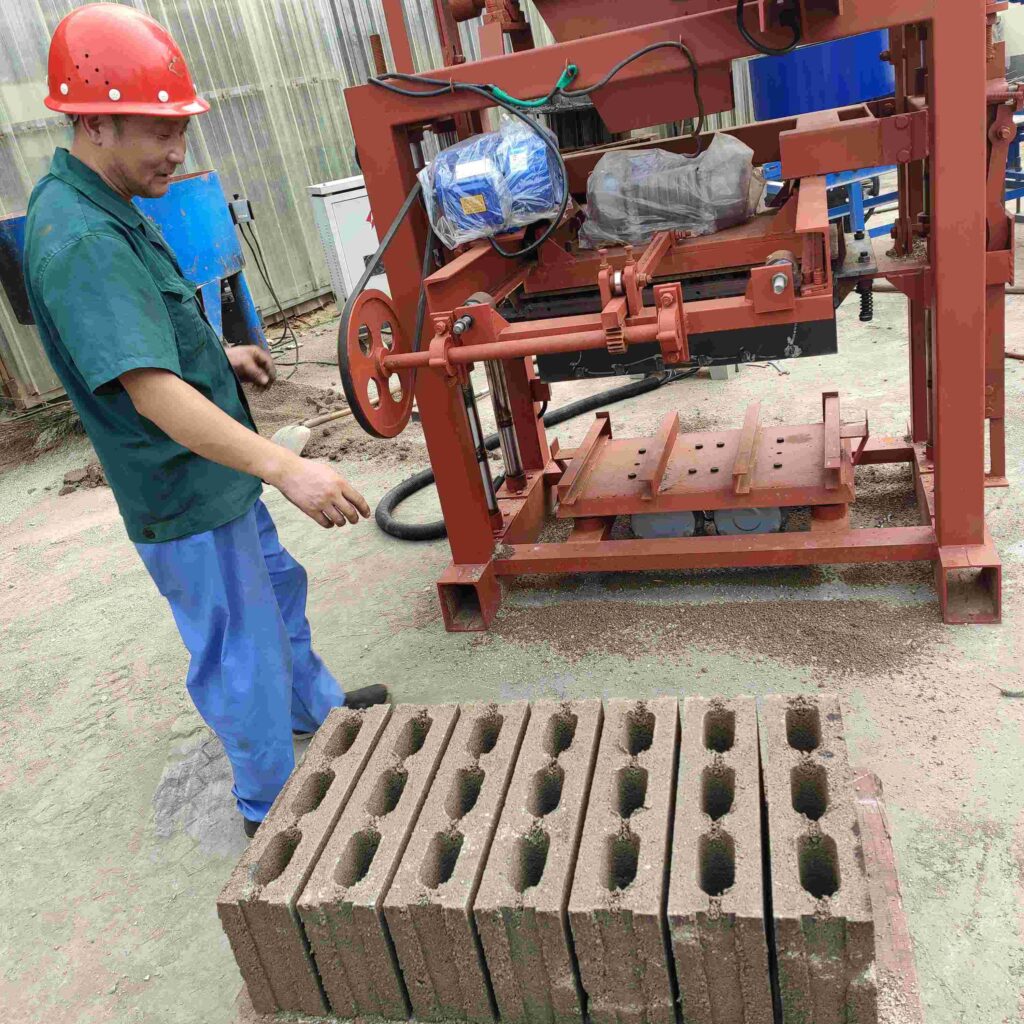
- Mechanical Lever Presses (Manual/Semi-Automatic):
- Principle: Utilize a compound lever system or a flywheel-driven cam to generate high mechanical pressure on the mix contained within a steel mold. Vibration is minimal or absent.
- Product Outcome: Produces bricks of very high, uniform density through static pressure. The bricks have a smooth, precise finish and high early strength, suitable for immediate handling.
- Cost & Application: Lower initial investment. Ideal for small-scale workshops, producing bricks for localized housing projects, landscaping, and interior partition walls.
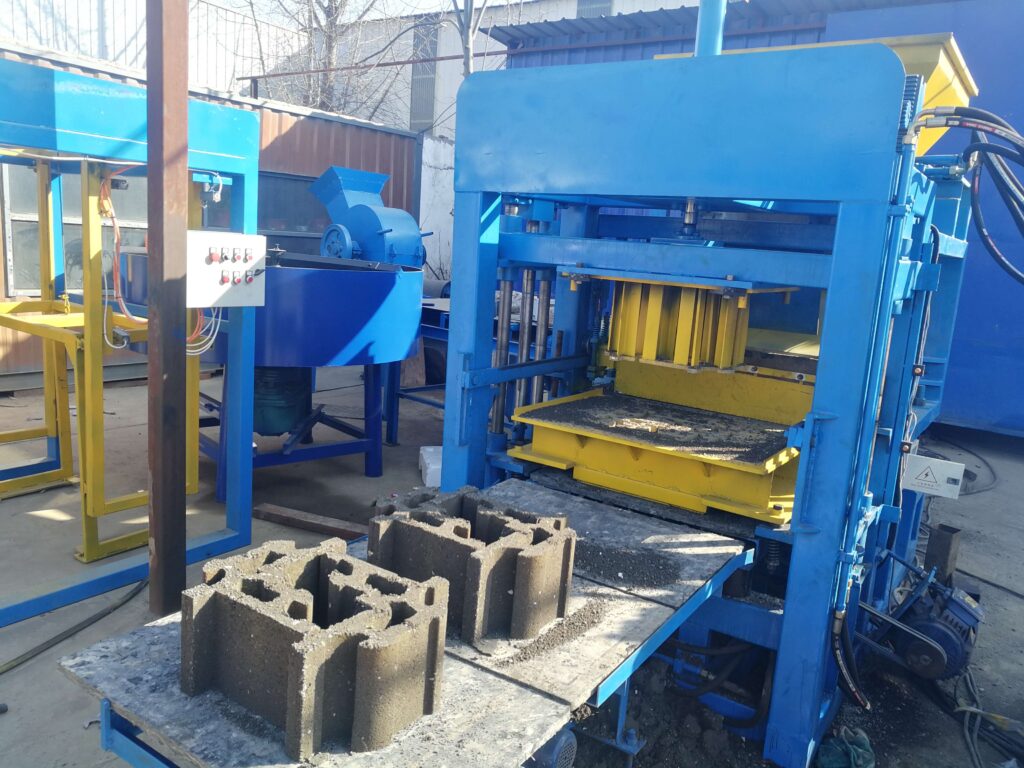
- Hydraulic Press Machines (Semi to Fully Automatic):
- Principle: Employ a hydraulic cylinder to apply calibrated, programmable pressure (often ranging from 20 to 100 tons) to the sand-cement mix. This can be combined with brief, high-frequency vibration to aid particle settlement before the final press.
- Product Outcome: Enables exceptional control over brick density and dimensional tolerance. Capable of producing bricks with consistent color and texture, as well as special shapes like interlocking bricks for dry-stack construction.
- Cost & Application: Mid to high-range investment. The preferred choice for dedicated brick manufacturing businesses supplying urban housing developments and commercial projects where aesthetic consistency is valued.
- Mobile “Egg-Layer” Systems:
- Principle: A self-contained unit that molds bricks and deposits them directly onto a prepared ground slab for curing. Often uses a combination of vibration and tamping for compaction.
- Product Outcome: Efficient for producing large volumes of standard bricks on-site. The curing process is simplified, as bricks remain in place.
- Cost & Application: Valued for large-scale, linear projects (e.g., township development) or in remote areas, reducing the logistics of brick transport. Represents a mobile factory solution.
Market Dynamics and Strategic Positioning
The market for cement-sand bricks and their production machinery is driven by distinct economic and regulatory factors.
1. Target Applications and Competitive Advantages
- Affordable Housing and Core Housing Programs: Cement-sand bricks are a cornerstone material for cost-sensitive, large-volume housing initiatives due to their lower material cost (no coarse aggregate) and the ability to be produced locally, even in regions with limited aggregate resources.
- Aesthetic and Finishing Applications: The fine texture of the mix allows for the production of smooth-faced, paint-ready bricks and those with consistent pigmentation. They are favored for visible masonry in residential and commercial architecture where a clean finish is desired.
- Regulatory and Environmental Drivers: In regions with policies promoting the use of local materials or restricting the quarrying of river sand or coarse aggregates, manufactured sand (M-Sand) provides a consistent, eco-friendly alternative, making cement-sand brick machines highly relevant.
2. Financial Architecture: Cost, Value, and ROI
Understanding the investment profile requires analyzing both the machine’s price and the unique economics of the product it creates.
- Capital Expenditure (CapEx) Drivers:
- Pressure Capacity: The tonnage of the press is a primary cost driver, directly correlating to the achievable brick strength (e.g., 7N/mm² vs. 15N/mm²).
- Automation Level: A single-station, manually fed press is at the lowest cost tier. The price increases with automatic mix feeding, brick ejection, pallet handling, and PLC-controlled production cycles.
- Output Capacity & Mold Multiplicity: Machines that produce 4, 6, or 10 bricks per cycle have proportionally higher costs. Quick-change mold systems for different brick sizes (e.g., standard, jumbo) add value and cost.
- Operational Economics and Profitability:
- Lower Raw Material Cost: The primary economic advantage is the significantly lower cost of sand versus a full concrete mix with gravel. This expands the profit margin per brick or allows for more competitive pricing.
- Energy Efficiency: Hydraulic press machines for cement-sand mixes often require less energy than high-vibration concrete block machines, as compaction is achieved more through sustained pressure than prolonged vibration.
- Sample ROI Scenario: A mid-level hydraulic press machine costing $45,000, producing 5,000 bricks per day with a raw material cost savings of $0.03 per brick over concrete blocks, can achieve a payback period of 12-18 months in a stable market, presenting a compelling case for entrepreneurs.
Conclusion: Building a Business on a Foundation of Efficiency
For the distribution channel, the cement-sand brick making machine is not merely another piece of equipment; it is a key to unlocking markets centered on affordability, sustainability, and local resource utilization. Success in this segment requires a consultative approach:
- Market Education: Clients must understand the performance characteristics and appropriate applications of cement-sand bricks versus traditional clay or concrete blocks.
- Technical Validation: Providing demonstrations and data on brick compressive strength, water absorption, and durability is crucial to overcome market preconceptions.
- Holistic Business Support: The most successful distributors will offer packages that include not just the machine, but guidance on optimal mix designs, sourcing of quality sand, basic curing protocols, and even business planning templates.
By positioning this machinery as a tool for entrepreneurial empowerment and sustainable community development, distributors can tap into a growing and socially impactful segment of the construction industry, fostering long-term client relationships and building a reputation as innovators in building material solutions.
Frequently Asked Questions (FAQ)
Q1: How does the strength and durability of a cement-sand brick compare to a traditional concrete block or fired clay brick?
A: Properly manufactured cement-sand bricks can achieve compressive strengths comparable to many standard concrete blocks and are suitable for load-bearing construction in low-rise buildings. Their durability against weathering is excellent due to the dense, impermeable matrix created under high pressure. They typically offer better dimensional consistency and a smoother finish than traditional concrete blocks but have different thermal and acoustic properties than fired clay bricks.
Q2: What type of sand is required, and how critical is its quality?
A: Sand quality is paramount. It should be clean, well-graded (a mix of fine and slightly coarser particles), and free of organic material, silt, and clay. The use of manufactured sand (M-Sand) is highly recommended as it is consistent in gradation and devoid of impurities. River sand can be used if it is washed and properly graded. Poor sand quality will lead to weak, brittle bricks regardless of the machine’s quality.
Q3: Can these machines also produce blocks with hollow cores or special shapes like interlocking bricks?
A: Absolutely. With the appropriate mold, hydraulic press machines are excellent at producing hollow cement-sand blocks (which improve thermal insulation and reduce weight) and complex shapes like interlocking bricks. The static pressure of a hydraulic press cleanly forms intricate shapes without segregation, which can be a challenge in vibratory machines with fine mixes.
Q4: What is the curing process for these bricks, and is it different from concrete blocks?
A: Curing is critical and slightly more sensitive due to the higher surface-area-to-volume ratio of the fine matrix. After demolding, bricks should be kept under damp hessian cloths or plastic sheeting for at least 7 days to prevent moisture loss and ensure complete cement hydration. Water sprinkling is also effective. Proper curing dramatically increases final strength and reduces cracking.
Q5: What are the main maintenance focuses for this type of machinery?
A: Key maintenance revolves around the wear on the mold and press head due to the abrasive nature of sand. Regular inspection and lubrication of the hydraulic system and guide columns are essential. For machines with feed augers, checking for wear on the auger flights is important. A preventative schedule focused on these abrasive wear points will ensure consistent product quality and machine longevity.
Q6: For a distributor, what is the best way to demonstrate the value of this machine to a potential client?
A: The most effective method is a live, data-driven demonstration. Produce bricks on-site using locally available sand. Then, have those bricks tested for compressive strength at a recognized lab (costs relatively little). Present the client with a side-by-side comparison: the test report, a calculated cost per brick (highlighting material savings), and a projected business model showing production capacity and ROI. Tangible proof of quality and profitability is the ultimate sales tool.