
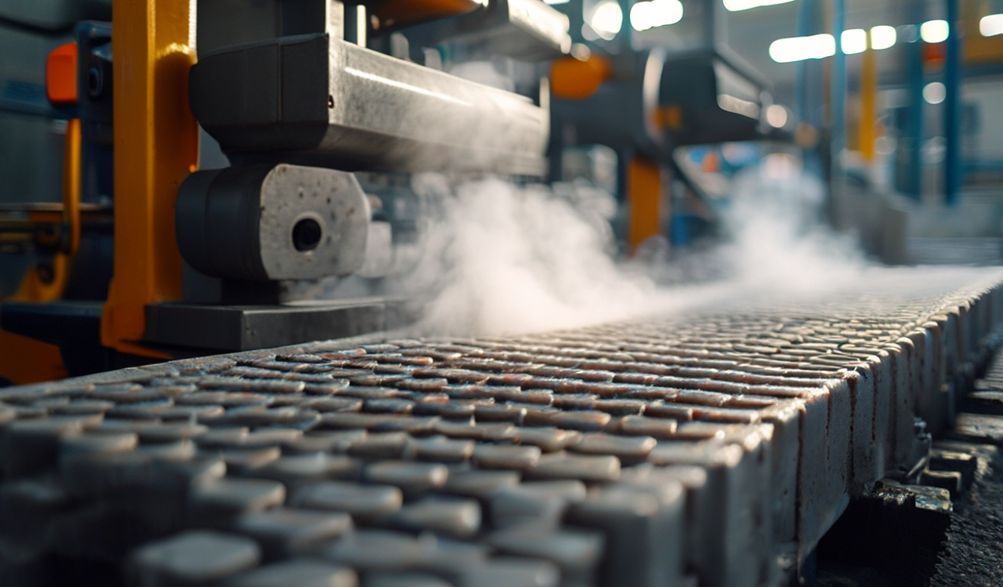
Preço da Máquina de Fabricar Blocos de Cimento no Sri Lanka: Um Guia do Comprador para 2026 dos Especialistas da Fábrica FUDA
Introdução
Navegar pelo mercado de máquinas para fazer blocos de cimento no Sri Lanka pode parecer avassalador. Você se depara com uma variedade vertiginosa de opções, especificações confusas e preços que parecem variar sem motivo. Como empreiteiro, construtor ou empreendedor, você precisa de clareza, não de confusão. Você precisa de conselhos baseados em experiência do mundo real, não apenas em conversa de vendedor.
Este guia abrangente foi elaborado pela equipe de engenharia e vendas da Fábrica de Tijolos FUDA. Baseamo-nos em mais de 15 anos de experiência prática na fabricação, manutenção e fornecimento de máquinas para produção de blocos em todas as províncias do Sri Lanka. Vimos o que funciona, o que falha e o que oferece um retorno genuíno sobre o investimento em nosso mercado único.
Nosso objetivo é simples: cortar o ruído. Forneceremos faixas de preços transparentes e atualizadas para 2026, explicaremos os fatores críticos que realmente determinam o custo e ofereceremos o aconselhamento especializado necessário para um investimento confiante e orientado pelo valor. Seja você que está começando um pequeno pátio de blocos ou expandindo uma operação de grande porte, este guia é o seu primeiro passo para uma compra mais inteligente.
Compreendendo as Máquinas para Fabricação de Blocos de Cimento: Tipos e Aplicações
Antes de discutir o preço, é crucial entender os tipos de máquina disponíveis. Escolher o tipo errado para sua aplicação é a maneira mais rápida de desperdiçar seu investimento. Aqui está um detalhamento das máquinas comuns no mercado do Sri Lanka.
Máquinas Manuais e Semiautomáticas
- Descrição e Uso Ideal:Estas são as máquinas de ponto de entrada. As máquinas manuais exigem um trabalho físico significativo para misturar, moldar e liberar os blocos. As versões semiautomáticas utilizam uma alavanca ou um pequeno motor para auxiliar na compactação e ejeção.
- Perfeito Para:Pequenos projetos pessoais, iniciativas de habitação rural, startups com capital muito limitado ou produção de blocos especiais em baixo volume.
- Modelos Comuns no Sri Lanka:Moldes de bloco único (manuais) e máquinas do tipo "poedeira" (semiatuomáticas) que podem produzir múltiplos blocos por ciclo e depositá-los diretamente no solo.
- Saída Típica:500 a 2.000 blocos por dia, altamente dependente da resistência do operador e do fluxo de trabalho.
Máquinas Estacionárias Totalmente Automáticas
- Descrição e Uso Ideal:Esta é a máquina de trabalho do pátio de blocos de médio a grande porte. Essas máquinas integram mistura, transporte, compactação (por meio de vibração potente e pressão hidráulica) e empilhamento em um sistema contínuo.
- Perfeito Para:Empresas que fornecem para empreendimentos habitacionais, construtoras e vendas por atacado no varejo. Elas oferecem consistência, alta produtividade e custos de mão de obra significativamente reduzidos.
- Principais Características:Sistemas automatizados de alimentação, mesas vibratórias de alta frequência, compressão hidráulica e esteiras transportadoras para movimentar paletes de blocos acabados.
- Saída Típica:3.000 a 10.000+ blocos padrão por turno de 8 horas.
Máquinas de Blocos Móveis
- Descrição e Uso Ideal:Também conhecidas como "fabricantes de blocos móveis" ou "máquinas in loco", estas são unidades autônomas que podem ser rebocadas diretamente para o canteiro de obras.
- Perfeito Para:Grandes empreendimentos como complexos de apartamentos, hotéis ou projetos de loteamentos onde o transporte de blocos de um pátio distante é caro e logisticamente desafiador.
- Vantagem Operacional:Eles "fabricam e assentam" blocos diretamente sobre uma base de areia preparada no local, eliminando a dupla movimentação e danos durante o transporte.
Máquinas Especializadas para Pavimentadoras, Blocos Vazados e Intertravadores
- Ampliando Sua Linha de Produtos:O lucro real muitas vezes está na diversificação. Apenas trocando o molde, uma máquina automática robusta pode produzir não apenas blocos maciços, mas também blocos vazados (para peso mais leve e isolamento), lajotas de pavimentação e blocos de encaixe.
- Demanda de Mercado no Sri Lanka:Há uma demanda crescente por esses produtos em paisagismo, calçadas comerciais, áreas de estacionamento e projetos arquitetônicos modernos. Investir em uma máquina com essa capacidade protege seu negócio para o futuro.
Key Factors Determining Cement Block Machine Prices in Sri Lanka
The price tag on a machine is a sum of its parts and potential. Understanding these factors will help you compare apples to apples and avoid costly surprises.
1. Level of Automation (Manual vs. Automatic)
This is the single biggest price driver. The jump from manual to semi-automatic, and then to fully automatic, involves significant increases in cost due to added motors, hydraulics, PLC control systems, and complex engineering. However, this cost is directly correlated with:
* Economia de Mão de Obra: One automatic machine can replace 10-15 manual laborers.
* Production Speed & Consistency: Unmatched output and uniform block quality.
* ROI Perspective: For any serious business, the higher initial investment in automation almost always yields a faster and greater return than saving on upfront cost.
2. Production Capacity & Output
Within each category, price scales with capacity. A machine rated for 3,000 blocks/day will cost less than one rated for 8,000 blocks/day. The key is to honestly match capacity with your business plan. Over-investing in a huge machine you can’t keep busy hurts your ROI. Under-investing leads to missed opportunities and operational bottlenecks.
3. Brand, Origin, and Build Quality
The Sri Lankan market has a mix:
* Fully Imported Machines: Often premium-priced, with potential challenges in spare parts and service delays.
* Local Assemblies: Varying quality; some use inferior components to cut costs.
* Local Manufacturers (Like FUDA): Build machines specifically for Sri Lankan conditions, with a focus on robust materials and local serviceability.
The Price-Quality Trade-off: A cheaper machine may use thinner steel, low-grade hydraulics, or weak vibration motors. This leads to faster wear, frequent breakdowns, and poor block density. Investing in quality construction pays off in longevity and lower lifetime maintenance costs.
4. Suporte e Serviço Pós-Venda
This is a critical, often overlooked, part of the cost equation. A machine is a long-term asset. What happens when it breaks down?
* The FUDA Model: We price our machines to include guaranteed local service, a dedicated support team, a local spare parts warehouse, and comprehensive operator training. This ensures minimal downtime.
* The Hidden Cost: A “cheaper” machine without local support can cost you thousands per day in lost production while you wait for a technician or an imported part. Always factor in the value of reliable after-sales service.
5. Raw Material Requirements & Operating Costs
The machine itself is just the beginning. Consider:
* Dosagem de Concreto: Some advanced machines can produce high-quality blocks with optimal cement content, saving on your single largest raw material cost.
* Consumo de Energia: Fully automatic machines require a stable three-phase power connection. Their efficiency (blocks per kWh) varies by design.
* Foundation & Installation: A large stationary plant requires a proper concrete foundation, which is an additional cost.
Current Price Ranges for Block Machines in Sri Lanka (2026 Overview)
Aviso Importante: The following price ranges are indicative for standard configurations as of early 2026. Final pricing depends on specific customizations, optional features, raw material cost fluctuations, and economic factors. Contact FUDA for an exact, no-obligation quote tailored to your needs.
-
Máquinas Manuais para Fabricação de Blocos: LKR 150,000 – LKR 500,000
- Basic entry-level for very small-scale production.
-
Máquinas Semiautomáticas: LKR 600,000 – LKR 1,800,000
- The mid-range for growing businesses, offering a balance of cost and productivity.
-
Máquinas Estacionárias Totalmente Automáticas: LKR 2,000,000 – LKR 5,500,000
- The core range for commercial block yards. Price varies significantly with capacity, brand, and level of automation (e.g., with auto-pallet feeder and stacker).
-
High-Capacity / Fully Automatic Plants: LKR 6,000,000+
- For industrial-scale production, often with robotic handling systems.
-
Note on Mobile & Specialized Machines: Prices for mobile block makers and machines dedicated to pavers or interlockers vary widely based on features and capacity. A detailed consultation is essential to determine accurate pricing.
The FUDA Factory Advantage: Expertise Built in Sri Lanka
Choosing FUDA isn’t just buying a machine; it’s partnering with a team invested in your success.
Our Manufacturing Philosophy for the Sri Lankan Climate
We don’t just import and sell. We design and build. Our machines are engineered with:
* Robustness for Local Conditions: Higher-grade steel to withstand humidity and rigorous use.
* Adaptability to Local Materials: Tuned to perform optimally with Sri Lankan cement and aggregate variations.
* Serviceability: Designed for easy maintenance by our local technicians.
Beyond the Machine: Comprehensive Support
We believe our responsibility starts after the sale. Every FUDA purchase includes:
* Free Site Consultation & Business Planning: Our experts visit your location to advise on setup and workflow.
* Professional Installation & Commissioning: We ensure your machine runs perfectly from day one.
* Hands-On Operator & Maintenance Training: We train your team until they are confident.
* Local Spare Parts Warehouse & Dedicated Service Team: Quick response to keep your production running.
Case Study: A FUDA Machine in Operation
One of our clients in the Kurunegala district invested in a FUDA fully automatic machine in early 2024. Starting as a small supplier, they leveraged the machine’s reliability and our support to secure contracts for two local housing projects. By maintaining consistent quality and output, they reported achieving full ROI within 18 months and have since expanded their yard, adding a second FUDA machine to meet demand.
Making Your Investment Decision: A Step-by-Step Guide
Follow this practical guide to ensure you make the right choice.
-
Assess Your Real Needs: Be brutally honest. What is your current and projected project scale? What block types (solid, hollow, paver) do you need to make? What is your required daily volume? Create a 2-year business projection.
-
Calculate Your True Budget: The machine price is one line item. Remember to budget for:
- Machine cost
- Installation and foundation
- Power connection/transformer (if needed)
- Initial raw material stockpile
- Transportation
-
Prioritize Total Cost of Ownership (TCO): Look beyond the sticker price. Ask: What are the expected maintenance costs? How available and affordable are spare parts? What is the expected lifespan of the machine? A slightly higher upfront cost for a durable, well-supported machine always wins in the long run.
-
Visit Showrooms & See Live Demos: Never buy based on a brochure alone. We invite you to the FUDA factory to see machines running, feel the build quality, and speak directly with our engineers.
-
Ask the Right Questions: When evaluating a supplier, ask:
- “What is included in the warranty, and for how long?”
- “Can you provide references from past clients in my area?”
- “What does your training program include?”
- “How quickly can your service team respond to an issue?”
Perguntas Frequentes (FAQ)
Q1: What is the cheapest type of block making machine available?
A: Manual, single-block machines have the lowest upfront cost. They are suitable for very small-scale, intermittent use, such as building your own home or a tiny side business.
Q2: Can I get a loan or financing for a block machine in Sri Lanka?
A: Yes. Many Sri Lankan banks and financial institutions offer machinery loans and SME financing schemes. FUDA can provide the necessary technical specifications, quotations, and documentation to support your loan application.
Q3: How long does it take to see a return on investment (ROI)?
A: This is highly variable. It depends on your machine’s capacity, your block selling price, operational efficiency, and market demand. For a medium-capacity automatic machine running at 60-70% capacity, many of our clients report achieving full ROI within 12 to 24 months.
Q4: Does FUDA provide training on how to operate and maintain the machine?
A: Absolutely. Comprehensive, hands-on training for your operators and basic maintenance personnel is a standard and non-negotiable part of every FUDA machine purchase. This training is conducted at your site after installation.
Q5: What is your warranty, and how do I get service?
A: We offer a standard warranty on all our machines, covering manufacturing defects and core components. Specific terms are detailed in your sales contract. Our service team is reachable via a dedicated hotline, and we prioritize on-site support to diagnose and resolve issues, minimizing your downtime.
Conclusão
Investing in a cement block making machine is a pivotal decision that can define the growth and profitability of your construction business in Sri Lanka. While the initial price is a major consideration, true value is measured in reliable performance, consistent high-quality output, and unwavering local support that protects your investment for years to come.
At FUDA Brick Making Factory, we combine over 15 years of deep, practical experience with an unwavering commitment to building machinery that lasts and supporting the entrepreneurs who use them. We encourage you to use this guide as your foundation for research.
Ready to Get a Precise Quote and See the Difference? Contact the FUDA team today for a free, no-obligation consultation and a visit to our factory. Let’s discuss your project vision and find the perfect machine to build a stronger future, block by solid block.
<