
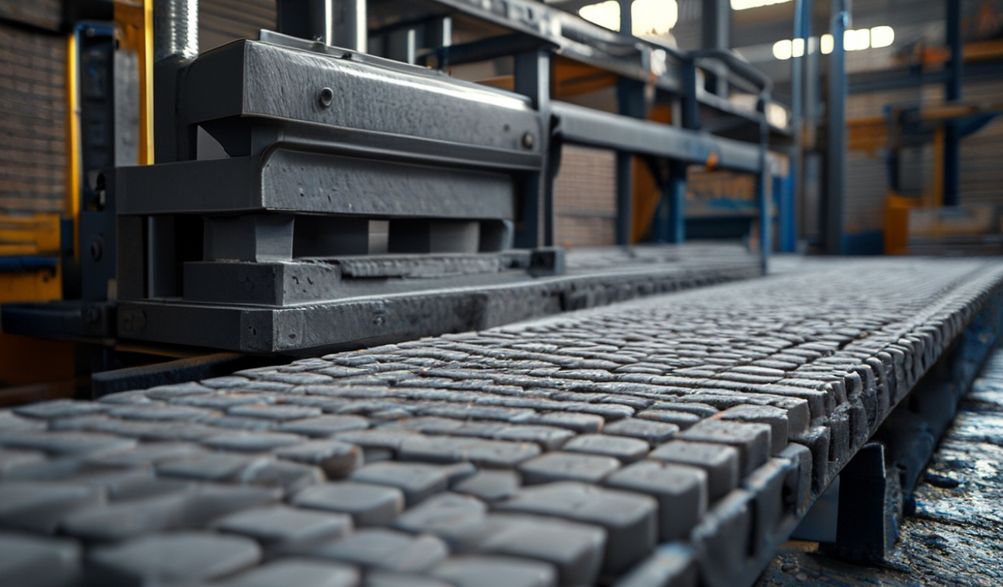
Cement Bricks Manufacturing Machine Price: A 2026 Buyer’s Guide & Cost Analysis
If you’re reading this, you’re likely a business owner, entrepreneur, or project manager standing at a critical juncture. You’ve identified the opportunity in construction materials and are now researching the pivotal piece of equipment: the cement brick manufacturing machine. Your search for a clear price tag has probably led you through a maze of conflicting figures and technical jargon.
We understand. Investing in this machinery is a significant capital decision, and the stakes are high. The core purpose of this guide is to cut through the noise. We will provide you with a transparent, detailed, and expert breakdown of the factors that determine cement brick machine prices. Our goal is to empower you to move beyond a simple sticker shock and make a confident, cost-effective investment that aligns with your business vision.
One truth must be established from the outset: there is no universal price. A machine’s cost is a direct reflection of production scale, automation level, build quality, and intended output. From hand-operated units for community projects to fully robotic production lines for industrial plants, the spectrum is vast. This guide will serve as your comprehensive roadmap, analyzing manual, semi-automatic, and fully automatic systems to give you the clarity you need to proceed.
Understanding the Core Factors That Influence Machine Price
Viewing the price tag in isolation is the first mistake a buyer can make. The cost of a cement brick manufacturing machine is not arbitrary; it is a function of deliberate engineering, material choices, and operational capabilities. Understanding these variables is the key to evaluating value and making a smart purchase.
1. Level of Automation: Manual vs. Semi-Automatic vs. Fully Automatic
The degree of automation is the single largest determinant of price, directly impacting labor needs, output speed, and consistency.
-
Máquinas Manuais: These are the most basic, hand-operated presses. Laborers fill the mold, apply manual pressure (often via a lever), and strip the brick by hand.
- Implicação de Preço: They represent the lowest upfront capital cost.
- Broad Price Range: $1,000 – $5,000.
- Compensação: Highest labor intensity and lowest output (typically 300-500 bricks per day).
-
Máquinas Semiautomáticas: This category strikes a balance, introducing mechanization for key processes. Operations like vibration for compaction, hydraulic pressure for forming, or pallet feeding are powered, but brick handling, mold filling, or stacking may still require manual intervention.
- Implicação de Preço: A significant step up in price due to added motors, hydraulics, and control systems.
- Broad Price Range: $8,000 – $40,000.
- Compensação: Moderate labor requirement with substantially higher and more consistent output than manual machines.
-
Máquinas Totalmente Automáticas: These are complete production lines. They feature Programmable Logic Controller (PLC) systems that orchestrate the entire process: automatic raw material feeding, precise mixing, molding, curing, stacking, and palletizing. Human intervention is primarily for monitoring and maintenance.
- Implicação de Preço: The highest capital investment, reflecting complex engineering and high-grade components.
- Broad Price Range: $50,000 – $300,000+ for complete lines.
- Compensação: Highest upfront cost but the lowest operational cost and labor requirement per brick, enabling massive scale.
2. Production Capacity (Output per Hour/Day)
Output capacity is the engine of your business model, and you pay for its size. Price scales directly with the number of bricks a machine can produce per cycle (per hour or per 8-hour shift).
- Correlação Direta: A machine designed to produce 2,000 bricks per hour will be fundamentally different—and more expensive—than one built for 500 bricks per hour.
- Scale Segmentation:
- Pequena Escala: 1,000 – 5,000 bricks per day. Ideal for local suppliers, startups.
- Escala Média 5,000 – 20,000 bricks per day. For established businesses supplying regional demand.
- Industrial em Grande Escala: 20,000 – 100,000+ bricks per day. For major plants supplying large construction projects or distributors.
- Dica Pro: Match capacity to realistic, phased business projections. Overbuying leads to idle capital; underbuying caps your growth. Plan for 20-30% above your current demand to allow for growth.
3. Machine Type and Brick Size/Shape Capability
The machine’s design dictates where and how it operates, and what products it can create.
- Máquinas para Fabricação de Blocos Estáticos: Fixed in place, often used with a concrete mixer. Best for standard hollow/solid blocks at a dedicated site.
- Egg-Laying or Mobile Block Machines: Self-contained and movable on-site. They produce and cure bricks directly on the ground, eliminating the need for pallets. Excellent for project-based work.
- Stationary Fully Automatic Lines: Fixed-plant systems with conveyor belts, automatic feeders, and high-pressure systems. The pinnacle of volume production for a wide product range.
- Product Versatility Cost: The ability to produce different brick types (4-inch, 6-inch, solid, hollow, paver blocks, interlocks) requires interchangeable molds. Each mold set is an additional cost ($200 – $2,000+ each). Machines with quick-change mold systems offer greater flexibility but at a higher initial price.
4. Key Components and Build Quality
This factor separates a short-term asset from a long-term workhorse. The quality of components dictates reliability, maintenance frequency, and ultimately, your Total Cost of Ownership (TCO).
- Componentes Críticos para Examinar:
- Sistema Hidráulico: The heart of pressure. Look for reputable pump and valve brands.
- Motores de Vibração: High-frequency, durable motors ensure proper compaction and brick strength.
- Estrutura e Esqueleto de Aço: Heavy-duty, welded frames resist the immense stresses of operation.
- Painel de Controle & PLC: User-friendly interfaces and reliable automation controllers (e.g., Siemens, Mitsubishi) minimize downtime.
- Mold Steel: Hardened, precision-engineered steel molds last longer and produce bricks with consistent dimensions and smooth faces.
- The TCO Argument: A machine that costs 20% more but uses components with twice the lifespan and half the failure rate is a far better investment. It translates to higher uptime, lower repair costs, and consistent production—the true metrics of profitability.
2026 Price Ranges for Cement Brick Making Machines
The following tables provide estimated price brackets to frame your budgeting. Aviso Crítico: These are guide ranges for 2026. Final quotes will vary significantly based on manufacturer brand, specific configuration, country of origin, and regional market conditions. Always get detailed, itemized quotations.
Price Breakdown by Automation Level
| Machine Type | Key Features | Estimated Price Range (USD) | Best For |
| :— | :— | :— | :— |
| Manual | Hand-operated, simple design, no power required. | $1,000 – $5,000 | Micro-enterprises, startups, very low-volume projects, rural development with limited infrastructure. |
| Semiautomático | Hydraulic and/or vibration systems, some automated processes (e.g., pallet feed), requires 2-4 operators. | $8,000 – $40,000 | Small to medium-sized businesses (SMEs), entrepreneurs with growing demand, regional construction material suppliers. |
| Totalmente Automático | PLC computer control, automatic material batching, molding, curing, and stacking/palletizing. Minimal labor. | $50,000 – $300,000+ | Large-scale commercial production plants, industrial suppliers, businesses aiming for high-volume output with maximum efficiency. |
Additional Cost Considerations Beyond the Sticker Price
The machine’s price is only part of the financial picture. Failing to budget for these ancillary costs can derail your project.
- Shipping, Logistics, and Installation: For international orders, sea freight, insurance, and local transport can add 15-30% to the machine cost. Installation and commissioning by a technician may also be a separate fee.
- Impostos e Taxas de Importação: These vary drastically by country. Consult with a local customs broker to understand the exact levy (e.g., 5-20% of CIF value) to avoid budget shortfalls.
- Spare Parts Kit and Initial Molds: Your initial purchase should include a basic spare parts kit (seals, gaskets, wear parts). Remember, the cost of additional molds for different brick types is usually extra.
- Foundation and Setup Costs: Large stationary and automatic machines require a solid, level concrete foundation, which is a separate civil work cost.
- Training and After-Sales Support: Reputable suppliers include basic operator training. Verify what’s included and the cost of extended support packages.
How to Get the Best Value for Your Investment
Value is not the cheapest price; it’s the optimal balance of cost, performance, and reliability over the machine’s lifetime.
Researching and Vetting Reputable Manufacturers
Do not be lured by the lowest online quote without due diligence.
- Look for Proven Track Record: Seek companies with 10+ years of experience and a portfolio of successful installations.
- Check Credentials: Prefer manufacturers with international quality certifications like ISO 9001. In-house R&D capability is a strong positive indicator.
- Verify Actively:Peça porcustomer references in a region similar to yours. If feasible, visit a working plant using their equipment.
- Scrutinize Communication: A professional supplier will ask detailed questions about your needs before quoting and provide comprehensive technical specifications.
The Critical Role of After-Sales Service & Warranty
The relationship with your supplier begins depois the sale. This is paramount.
- Warranty Terms: A standard warranty is 12 months on parts, excluding wear items. Understand exactly what is covered.
- Disponibilidade de Peças de Reposição: How quickly can they ship critical spare parts? Do they maintain a local inventory in your region?
- Suporte Técnico: Is support available via phone, video call, or on-site? What are the typical response times and associated costs for service visits?
- Questions to Ask: “What is your process for handling a breakdown?” “Can you provide a list of commonly required spare parts and their prices?”
Calculating Your Return on Investment (ROI)
A simplified framework to justify the investment:
ROI = (Projected Annual Profit from Brick Sales) / (Total Initial Investment)
- Projected Annual Profit: (Number of Bricks Sold per Year x Selling Price per Brick) minus (Raw Material Cost + Labor + Electricity + Maintenance + Overheads).
- Total Initial Investment: Machine Cost + Shipping + Taxes + Foundation + Initial Molds & Spares.
Key Levers for ROI:
1. Machine Uptime: A reliable machine produces more sellable bricks.
2. Local Market Price: Research the selling price of bricks in your target area.
3. Eficiência de Produção: Automated machines reduce waste and labor cost per brick.
4. Aquisição de Matérias-Primas: Securing affordable, consistent-quality cement and aggregates is crucial.
Perguntas Frequentes (FAQ)
Q1: What is the cheapest type of cement brick making machine?
A: Manual machines have the lowest upfront cost. However, they have the highest operational cost per brick due to intensive labor and very low output, making them less “cheap” in the long run for any significant volume.
Q2: Can one machine produce different types of bricks (e.g., hollow blocks and pavers)?
A: Yes, most semi-automatic and automatic machines are designed for this versatility. However, you must purchase separate, interchangeable mold sets for each brick type and size. Confirm the mold-changing process is efficient for your needs.
Q3: How much does it cost to run a semi-automatic brick machine per day?
A: Daily running costs include: 1) Raw Materials (cement, sand, aggregate)—your largest variable cost; 2) Labor for 2-4 operators; 3) Eletricidade for the hydraulic pump and vibrators; 4) Minor Maintenance. A precise figure requires your local rates for these inputs.
Q4: Is financing available for these machines?
A: Yes. Many established manufacturers have partnerships with financial institutions or offer in-house installment plans. Regional equipment dealers also often provide financing options. Always inquire about available payment structures.
Q5: Where can I find reliable suppliers?
A: Start with industry-specific B2B platforms (like Alibaba, but vet thoroughly), attend international construction machinery exhibitions, and search for trade associations in your country. Prioritize suppliers with transparent communication, detailed websites, and verifiable client testimonials.
Conclusão
Navigating the “price” of a cement bricks manufacturing machine requires looking at a complex equation where automation, capacity, quality, and hidden costs are the variables. The best investment is never the absolute cheapest or the most expensive—it is the one that aligns perfectly with your specific production goals, budget, and vision for growth, while accounting for the Total Cost of Ownership.
Use this guide as your framework. Before contacting suppliers, prepare a clear brief: your desired daily output, the types of bricks you need to produce, your available space and power, and your budget range. Then, approach 3-5 shortlisted, reputable manufacturers for detailed quotations and technical consultations. Armed with the right questions and a clear understanding of value, you are now equipped to make the most informed and confident decision for your business’s future.
<