
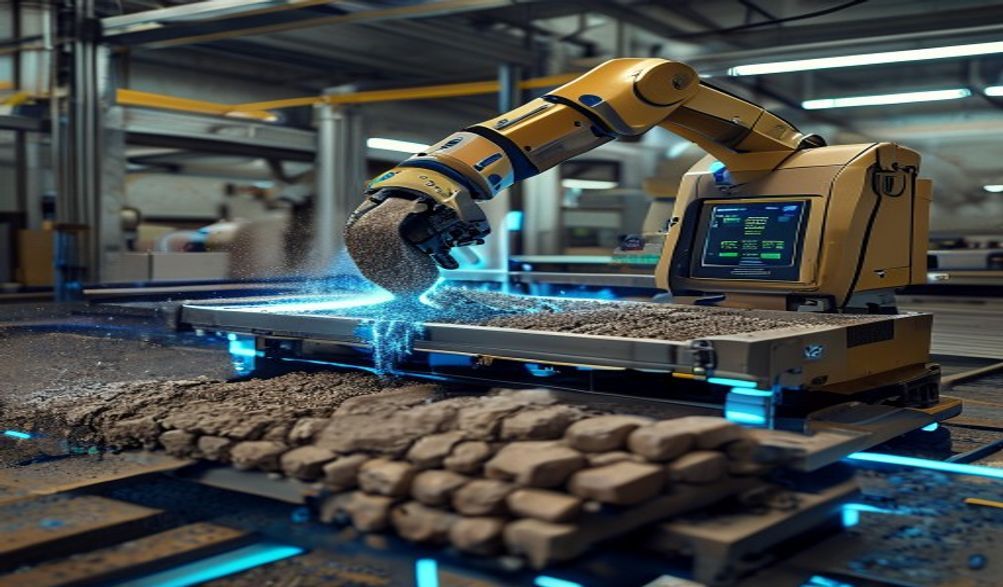
How to Choose an Automatic Hydraulic Fly Ash Brick Making Machine: A Complete Price & Buyer’s Guide
Introdução
The global construction industry is undergoing a green revolution. With a pressing need for sustainable, cost-effective, and durable building materials, fly ash bricks have emerged as a frontrunner. These bricks, made from a byproduct of coal power plants, offer superior strength, thermal insulation, and environmental benefits over traditional clay bricks. However, the success of a fly ash brick manufacturing venture hinges on one critical decision: choosing the right production machinery.
If you’re searching for “automatic hydraulic fly ash brick making machine price,” your journey is about much more than a number. You are seeking valor—a machine that represents a sound investment, maximizes your return, and becomes the reliable engine of your business for years to come. This guide is crafted from deep industry analysis, technical specifications, and the practical realities of running a brick plant. We’ll move beyond the price tag to explore the selection criteria, hidden costs, and long-term strategies that separate a profitable investment from a costly mistake. Our recommendations are rooted in mechanical performance, durability, and total cost of ownership, ensuring you have the trustworthy information needed to make a confident decision.
Entendendo Máquinas Hidráulicas Automáticas de Tijolos de Cinza de Carvão
Before diving into features and costs, it’s essential to understand what you’re evaluating. An automatic hydraulic fly ash brick machine is a sophisticated piece of industrial equipment designed to transform raw materials—fly ash, cement, sand, and water—into precisely formed, high-density bricks with minimal human intervention.
Componentes Principais e Como Eles Funcionam
The efficiency of these machines lies in their integrated systems:
- Unidade de Potência Hidráulica e Cilindros: The heart of the machine. It generates immense pressure (measured in tons) to compact the raw material mix within the mold, ensuring optimal brick density and strength.
- Unidade de Mistura: Often a pan mixer, it uniformly blends all raw materials to create a consistent mix, which is crucial for brick quality.
- Material Conveyor & Feeder: Automatically transports the prepared mix from the mixer to the machine’s mold cavity, regulating the amount for each brick cycle.
- Molde (Matriz): The custom-designed cavity that gives the brick its shape (solid, hollow, paver, interlocking). Made from hardened steel for longevity.
- Control Panel (Often PLC-based): The brain of the operation. A Programmable Logic Controller (PLC) allows you to set parameters like pressure, vibration time, and cycle time, automating the entire process for consistent output.
Principais Vantagens em Relação a Máquinas Manuais ou Semiautomáticas
Why invest in a fully automatic hydraulic system? The benefits directly impact your bottom line:
- Qualidade Superior de Tijolos High, consistent hydraulic pressure creates bricks with excellent compressive strength (often exceeding 100 kg/cm²) and low water absorption, meeting and exceeding building standards.
- Alta Capacidade de Produção: Automation enables non-stop cycling. Capacities can range from 8,000 to 24,000+ bricks per 8-hour shift, depending on the model.
- Economia Significativa de Mão de Obra: One or two operators can manage the entire production line, compared to 10-15 workers for similar output on manual machines.
- Redução de Resíduos Operacionais: Precise material feeding and consistent compaction minimize raw material spillage and reject bricks.
Critical Factors to Consider Before Looking at Price
Focusing solely on the initial price is the most common mistake buyers make. Industry practice shows that a well-considered purchase based on the following factors prevents costly downtime and ensures profitability.
Avaliando Seus Requisitos de Produção
Your business plan should dictate the machine, not the other way around.
- Output Needs: Calculate your daily and annual brick requirement based on market demand. A machine running below capacity is inefficient, while one that’s over-specified strains your capital.
- Brick Types and Sizes: Will you produce standard solid blocks, hollow blocks for insulation, or pavers for landscaping? Ensure the manufacturer offers the specific molds you need and can easily change them.
- Plant Setup: Do you have adequate space for the machine, raw material storage, and curing area? Check the power supply requirements (e.g., 3-phase electricity) and ensure your facility can support it.
Machine Specifications and Build Quality
These technical details are the true determinants of performance and lifespan.
- Hydraulic Pressure (Tonnage): This is critical. Higher tonnage (e.g., 80 tons vs. 120 tons) means greater compaction force, leading to denser, stronger bricks. Match the tonnage to the type of brick you intend to produce.
- Material & Construction: Inspect the quality of the frame (should be heavy-duty steel), cylinders, and especially the molds. Hardened, chromium-plated steel molds resist wear and last for millions of cycles, maintaining brick dimensional accuracy.
- Nível de Automação: A basic automatic machine may have relay logic, while a more advanced one uses a PLC and touchscreen HMI. The PLC offers precision, easier troubleshooting, and the ability to store recipes for different brick types.
Supplier Reputation and After-Sales Service (A Key Trust Factor)
The machine is only as good as the company behind it. This is where trust is built or broken.
- Manufacturer Experience: Prefer suppliers with a proven track record of 10+ years. Ask for their client list and, if possible, visit an existing plant to see the machine in operation.
- Technical Support & Training: Does the supplier provide installation supervision, operator training, and local service engineers? Prompt support is invaluable when you face an unexpected breakdown.
- Warranty and Spare Parts: A comprehensive warranty (typically 1 year on core parts) is a must. Inquire about the availability and cost of common spare parts like seals, hoses, and mold liners.
Decoding the Price Range: What You’re Really Paying For
Now, let’s address the core keyword: preço. The cost of an automatic hydraulic fly ash brick machine is not a single figure but a spectrum determined by its capabilities and your choices.
Price Breakdown: From Economy to Premium Models
- Entry-Level Machines ($25,000 – $45,000): Suitable for small-scale startups. These may have lower production capacities (1,000-1,500 bricks/hour), basic automation, and simpler frames. Ideal for testing the market.
- Mid-Range Workhorses ($45,000 – $80,000): The most popular category for serious businesses. They offer a robust balance of output (1,500-2,500 bricks/hour), reliable PLC control, good build quality, and better after-sales support. This range represents the best value for most.
- High-Capacity Automated Plants ($80,000 – $150,000+): These are complete production lines with integrated automatic material handling, pallet feeders, and brick stackers. Designed for large-scale industrial output (3,000+ bricks/hour) with minimal labor.
Note: These are indicative international price ranges. Final quotes vary based on configuration, shipping destination, and customs duties.
Hidden Costs and Long-Term Value
The invoice price is just the beginning. A savvy buyer budgets for the total cost of ownership.
- Envio, Instalação e Comissionamento: Freight, insurance, and on-site installation by a technician can add 5-15% to the cost.
- Equipamento Auxiliar: Don’t forget the essential supporting machinery: a misturador de panela, conveyor systems, and a brick curing rack or stacker. These are often quoted separately.
- Custos Operacionais: Factor in ongoing expenses like electricity consumption (hydraulic systems are power-hungry), skilled operator wages, and routine maintenance supplies (hydraulic oil, grease).
- The Expertise Angle: A machine that costs 20% more upfront but comes with a 5-year service plan, uses 15% less power, and has a 30% lower failure rate will save you substantial money over a decade. Always calculate for the long term.
Step-by-Step Selection Guide
Follow this actionable, experience-based process to navigate your purchase confidently.
Step 1: Define Your Needs and Budget
Document your required output, brick types, available budget (including a 15-20% buffer for ancillary costs), and factory constraints.
Step 2: Research and Shortlist Reputable Manufacturers
Use B2B platforms, industry directories, and trade shows. Shortlist 3-5 suppliers with strong online presence, client testimonials, and clear technical documentation. Verify their business licenses and factory addresses.
Step 3: Evaluate Technical Proposals and Compare
Request detailed proposals from your shortlist. Create a comparison chart:
| Feature | Supplier A | Supplier B | Supplier C |
| :— | :— | :— | :— |
| Model & Price | | | |
| Production Capacity (Bricks/8hr) | | | |
| Hydraulic Pressure (Tons) | | | |
| Power Consumption | | | |
| Control System (PLC/Relay) | | | |
| Warranty Period & Coverage | | | |
| Key Client References | | | |
Step 4: Insist on a Factory Test or Live Demonstration
This is non-negotiable. Visit the factory or an existing client site. Run the machine with your own raw material mix (or a similar one) to assess brick quality, cycle time, noise levels, and build quality firsthand.
Step 5: Finalize Commercial Terms and Service Agreement
Negotiate clear terms for payment milestones (e.g., 30% advance, 60% before shipment, 10% after commissioning), delivery timeline, and a detailed Service Level Agreement (SLA) outlining response times for technical support.
Perguntas Frequentes (FAQ)
What is the typical price range for a good automatic hydraulic fly ash brick machine?
For a reliable machine that balances quality and output for a medium-scale business, expect to invest between $45,000 and $80,000. This should get you a robust PLC-controlled machine capable of producing 1,800-2,500 high-quality bricks per hour, with a reputable supplier’s support.
Can I get a cheaper machine from a lesser-known supplier?
While possible, it carries significant risk. Common feedback from plant owners highlights issues like poor after-sales service, lack of technical documentation, and difficulty sourcing spare parts. The savings on the purchase price can be quickly erased by weeks of production downtime. Opting for an established supplier is a risk-mitigation strategy.
How important is the PLC system, and is it worth the extra cost?
For an automatic machine, a PLC is highly recommended. It ensures precise control over every production parameter, leading to consistent brick quality. It simplifies operation through a user-friendly interface, reduces human error, and often includes diagnostic features that make maintenance easier. The extra cost (typically $2,000-$5,000) is justified by reduced waste and operational efficiency.
What is the average payback period on this investment?
The payback period depends on your local brick selling price, production costs, and plant utilization. A general framework: If your machine costs $60,000 and your net profit per brick is $0.05, you need to sell 1.2 million bricks to break even. At a production rate of 2,000 bricks/hour over 250 working days, this could be achieved in approximately 12-18 months.
What are the most common maintenance issues, and how can I avoid them?
- Hydraulic Oil Issues: Contamination or overheating. Use the recommended oil grade, change it periodically, and keep the system clean.
- Mold Wear & Tear: Leading to dimensional inaccuracies. Clean the mold after every shift and inspect regularly for damage.
- Cylinder Seal Leaks: Caused by dirt or wear. Implement a daily greasing schedule for all moving parts.
- Electrical Faults: Loose connections in the control panel. Ensure a dust-free environment for the electrical cabinet and schedule routine checks.
Conclusão
Choosing the right automatic hydraulic fly ash brick making machine is a strategic decision that will define your business’s productivity and profitability for over a decade. The path to success lies in balancing technical performance, machine durability, unwavering supplier support, and a clear understanding of the total cost of ownership—not just the initial price tag.
Invest time in thorough due diligence. Treat this purchase as acquiring a long-term business partner. For large investments, consider consulting with an independent industry expert or connecting with construction material manufacturing associations for unbiased advice.
Pronto para dar o próximo passo? If you have specific production capacity requirements or technical questions, we encourage you to reach out for a tailored discussion. Download our detailed Machine Specification Checklist to ensure you cover all critical points during your supplier evaluations.
<