
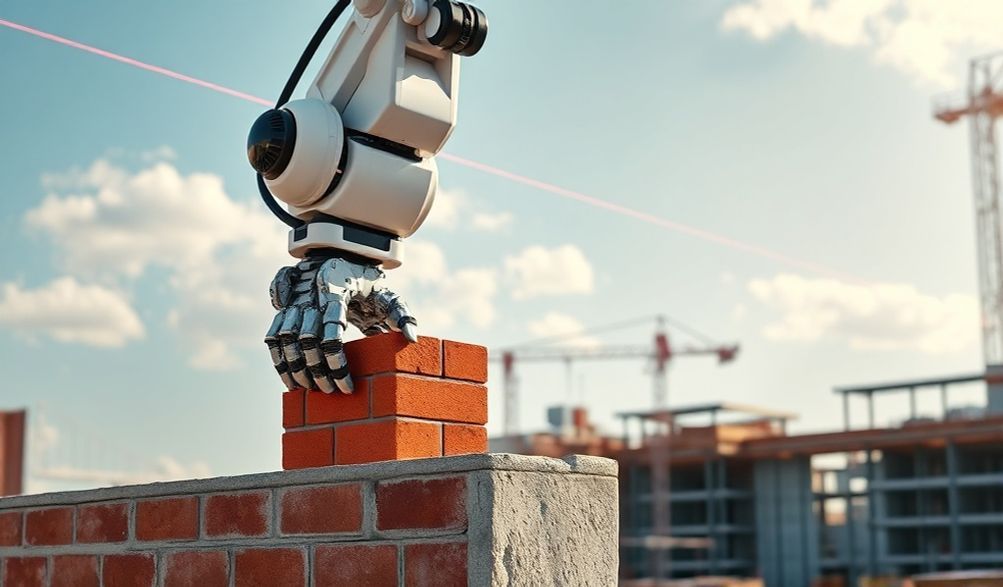
O Guia Definitivo para Máquinas de Assentamento de Tijolos: Revolucionando a Construção Moderna
A indústria global da construção está sob imensa pressão. Com o mundo precisando construir aproximadamente 13.000 edifícios por dia até 2050 para acomodar o crescimento urbano, o ritmo e a escala necessários são sem precedentes. No entanto, por séculos, o processo fundamental de assentar tijolos permaneceu teimosamente manual — um ofício habilidoso, mas fisicamente exigente. Compare isso com uma única estatística surpreendente: um pedreiro humano, trabalhando com eficiência máxima, pode assentar 500-600 tijolos em um dia. Agora, imagine uma máquina que pode colocar mais de 3.000 tijolos no mesmo período, com precisão implacável. Esta não é uma visão de um futuro distante; é a realidade oferecida pelas modernas máquinas de assentar tijolos.
O setor enfrenta uma tempestade perfeita de desafios: uma escassez crônica de pedreiros qualificados, custos de mão de obra e materiais disparados, prazos de projeto cada vez mais apertados e demandas intransigentes por qualidade e consistência. Esses pontos de dor ameaçam a rentabilidade, os cronogramas e a própria capacidade de atender à demanda do mercado. É aqui que entra a máquina de assentamento de tijolos — uma classe transformadora de tecnologia pronta para redefinir o cenário da alvenaria. Este guia serve como seu recurso especializado e abrangente. Vamos além do hype para fornecer a empreiteiros, construtores e gerentes de projeto uma análise imparcial de como a alvenaria automatizada funciona, seus benefícios tangíveis, considerações críticas de investimento e o que ela realmente significa para o futuro da construção.
O que é uma Máquina de Assentar Tijolos? Definindo a Automação na Alvenaria
Em sua essência, uma máquina de assentar tijolos é um dispositivo que automatiza parte ou todo o processo de posicionar tijolos ou blocos e aplicar argamassa para construir uma parede. Ela substitui ou amplia significativamente as tarefas manuais de pegar, untar, posicionar e alinhar cada unidade. O objetivo é superar as limitações físicas humanas, proporcionando ganhos em velocidade, consistência e eficiência.
Do Conceito à Realidade: Uma Breve História da Automação da Alvenaria
O sonho de automatizar a colocação de tijolos não é novo. Patentes e conceitos iniciais remontam a décadas, mas eram frequentemente mecanicamente complexos e impraticáveis. A verdadeira revolução começou no final do século XX e início do século XXI, impulsionada por avanços paralelos em três áreas-chave:
* Robotics: More affordable, precise, and durable robotic arms.
* Software & Digital Design: The proliferation of Computer-Aided Design (CAD) and Building Information Modeling (BIM).
* Sensor Technology: The development of affordable, high-accuracy lasers and machine vision systems.
These converging technologies moved automation from clunky prototypes to viable commercial systems, turning a centuries-old craft into a digitally-driven manufacturing process.
Core Components and How It Works: The Anatomy of a Machine
While designs vary, most fully automated systems share a common “anatomy”:
1. Material Handling System: This is the “supply chain.” It includes a feeder (like a conveyor or magazine) that presents bricks or blocks to the machine in the correct orientation. A separate mortar pump and delivery system applies a precise amount of adhesive.
2. Robotic Placement Arm: The “heart” of the machine. This multi-axis robotic arm, equipped with a custom end-effector (gripper), picks up each brick, applies mortar if not pre-applied, and places it in the programmed location.
3. Control System & Software: The “brain.” The machine operates from a digital model (often a CAD file or BIM export converted into G-code—the language of machines). This file contains the exact 3D coordinates for every brick in the structure.
4. Alignment & Guidance System: The “eyes.” Laser guidance systems and sometimes real-time sensors ensure each brick is placed with sub-millimeter accuracy, constantly checking and correcting the machine’s position relative to the building site.
Types of Brick Laying Machines: Choosing the Right Tool for the Job
Not all automation is created equal. The technology spectrum ranges from tools that assist masons to fully autonomous robotic builders. Understanding the categories is crucial for selecting the right solution.
Semi-Automatic Mortar Spraying and Placement Aids
These systems enhance productivity without removing the mason from the process. They are a lower-cost entry point into automation.
* Exemplos: Mortar spraying machines that automatically butter bricks on multiple sides, or adjustable rigs that hold a course of bricks in perfect alignment for a mason to secure.
* Melhor Para: Small to mid-sized contractors looking to boost the output of their existing crews, reduce fatigue, and improve joint consistency on more straightforward projects.
Fully Automated Robotic Bricklaying Systems
These are the flagship autonomous systems that capture the imagination. They require minimal human intervention once set up and fed with materials.
* Exemplos:ASAM (Semi-Automated Mason) by Construction Robotics is an on-site collaborative robot that works alongside masons to place bricks, which the humans then finish. The Hadrian X by FBR (Fastbrick Robotics) is a truck-mounted system that uses a dynamic stabilization mechanism to lay blocks directly from a 3D model at remarkable speeds.
* Melhor Para: Large-scale, high-volume projects with significant repetitive elements, such as suburban housing developments, apartment complexes, and commercial exteriors.
On-Site Mobile Robots vs. Prefabrication Station Systems
This is a critical distinction in deployment strategy:
* On-Site Mobile Robots: Like the Hadrian X, these machines are brought to the dynamic, often messy construction site. They must contend with weather, uneven ground, and ongoing site activity. Their advantage is building the structure in its final location.
* Prefabrication Station Systems: These are fixed robots inside a controlled factory environment. They fabricate entire wall panels—brick veneers, structural insulated panels (SIPs) with masonry—which are then shipped to the site for installation. This allows for 24/7 production in optimal conditions and extremely high precision.
Key Benefits and Advantages: Why Automate Bricklaying?
The investment in a brick laying machine is strategic. The advantages extend far beyond simple speed, impacting the fundamental economics and quality standards of a project.
Unmatched Speed and Increased Project Throughput
This is the most cited benefit. While dependent on the machine and project, the numbers are compelling:
* A human crew might lay 500-1,000 bricks per day.
* A semi-automatic system can help a crew double or triple that output.
* A fully robotic system like the Hadrian X has demonstrated a sustained rate of over 200 blocks per hour, potentially laying the shell of a house in just a few days. This drastic compression of the critical path allows for faster project completion and quicker return on investment.
Enhanced Precision, Consistency, and Reduced Material Waste
Machines don’t get tired, distracted, or have bad days. Every brick is placed according to a perfect digital plan.
* Precisão: Laser-guided systems achieve tolerances within 1-2 millimeters, ensuring perfectly plumb, level, and straight walls.
* Consistência: Mortar joints are uniform in width and depth, creating a flawless aesthetic and structurally optimal bond.
* Redução de Resíduos: Precise mortar application (often using specialized thin-bed adhesives) and accurate brick placement can reduce mortar waste by up to 50% and brick waste due to breakage or cuts.
Addressing Labor Shortages and Reducing Physical Strain
The masonry workforce is aging, and attracting new talent is difficult. Automation provides a two-fold solution:
1. It mitigates dependency on a large crew of highly skilled bricklayers for repetitive laying tasks.
2. It transforms the mason’s role from one of intense, repetitive physical labor to that of a machine operator, technician, or supervisor—positions that are less strenuous, safer, and can attract a new, tech-savvy generation to the trade.
Long-Term Cost Efficiency and Predictable Project Scheduling
While the initial capital outlay is high, the total cost analysis often favors automation for the right contractor.
* Custos Previsíveis: Machine operating costs (maintenance, power) are more stable and predictable than volatile labor markets and overtime.
* Schedule Certainty: Weather delays and crew availability have less impact. Projects are completed faster, reducing financing costs and enabling the firm to take on more work.
* Reduced Rework: The exceptional accuracy of machines virtually eliminates costly tear-downs and corrections due to alignment errors.
Important Considerations Before Investing
Adopting this technology is a significant business decision, not just a equipment purchase. A clear-eyed assessment of these factors is essential.
Initial Capital Investment and Calculating Your ROI
The cost spectrum is wide: from tens of thousands for semi-automatic aids to $500,000 to over $2 million for a top-tier robotic system. Your ROI calculation must include:
* Total Machine Cost: Purchase/lease, shipping, setup, and commissioning.
* Custos Operacionais: Specialized mortar/adhesives, routine maintenance, software licenses, and energy.
* Offsetting Savings: Labor cost reduction (number of masons, hours worked), material waste savings, reduced insurance/liability costs, and the financial value of completing projects faster (earlier occupancy/revenue).
For a high-volume contractor, a well-utilized machine can achieve a payback period of 2 to 5 years.
Project Suitability: Scale, Design, and Brick Type
Automation excels in specific scenarios and faces limitations in others.
* Ideal Projects: Large-scale developments with repetitive layouts, long straight walls, and standard brick/block sizes. Commercial buildings, warehouses, and tract housing are prime candidates.
* Challenging Projects: Highly custom, ornate designs with complex curves, numerous corners, and varied materials. Small, one-off custom homes may not provide the volume to justify the investment.
* Material Compatibility: Most systems are designed for standard modular clay or concrete masonry units (CMUs). Using special shapes, stone, or irregular handmade bricks requires consultation with the manufacturer and potentially custom end-effectors.
Integration with Existing Workflows and Crew Training
The machine is just one piece. Successful integration requires:
* Digital Workflow: You must have or develop the capability to create precise, machine-readable 3D models (BIM). The “GIGO” principle (Garbage In, Garbage Out) applies absolutely.
* Crew Transformation: You will need to train or hire machine operatorsemaintenance technicians. Your existing foremen and project managers will need to understand how to schedule and sequence automated work.
* Site Logistics: Material delivery (bricks, mortar/adhesive) must be perfectly synchronized to keep the machine running. The site layout must accommodate the machine’s footprint and movement.
The Future of Construction: Trends in Robotic Masonry
The current technology is just the beginning. Several converging trends will make robotic masonry smarter, more integrated, and more sustainable.
Integration with Building Information Modeling (BIM)
The future is a seamless, closed-loop digital workflow. The BIM model won’t just be a design tool; it will be the single source of truth that directly drives the machine, tracks progress in real-time, and updates as-built documentation automatically. This “BIM-to-Fabrication” pipeline eliminates translation errors and maximizes efficiency.
Advancements in AI, Machine Vision, and Adaptive Robotics
Next-generation machines will move beyond simply following a pre-set program. They will be able to:
* “See” and Adapt: Using machine vision cameras and LiDAR, robots will scan their environment, verify the position of previously laid bricks, and make micro-adjustments for perfect alignment, compensating for minor material variations or substrate imperfections.
* Handle Complexity: AI-powered path planning will allow robots to navigate and build more complex geometries without extensive re-programming.
Sustainable Construction: Reducing Waste and Improving Efficiency
Automation aligns powerfully with green building goals:
* Eficiência de Materiais: As noted, precise application drastically reduces mortar and brick waste.
* Energy Performance: Perfectly constructed walls with uniform joints minimize thermal bridging and air infiltration, leading to more energy-efficient building envelopes.
* Optimized Logistics: Factory-based prefabrication reduces on-site vehicle traffic, noise, and dust pollution.
Perguntas Frequentes (FAQ)
Q: How many bricks can a bricklaying machine lay per day?
A: There’s a wide range. A semi-automatic aid might help a crew lay 2,000-3,000. A fully robotic system like the Hadrian X can lay 3,000 to 5,000 standard blocks in a 24-hour period under ideal conditions. This is 5-10 times the output of a human crew, but speed is highly dependent on project design, material supply, and site logistics.
Q: Can bricklaying robots work with any type of brick or block?
A: Not universally. Most commercial systems are engineered for standard, modular clay bricks or concrete blocks. Using specialty shapes, stone, or irregular units typically requires custom tooling and programming. Always consult the manufacturer’s specifications for material compatibility before investing.
Q: What is the typical payback period for a brick laying machine?
A: The payback period is highly variable, depending on machine cost, local labor rates, and annual bricklaying volume. For a high-volume contractor consistently utilizing the machine, a period of 2 to 5 years is a common industry estimate. It’s a strategic, long-term investment, not a short-term fix.
Q: Do bricklaying machines eliminate the need for masons?
A: This is a critical nuance. No, they transform the role. They eliminate the need for large crews to perform the repetitive, physical task of laying each brick. However, they create a pressing need for skilled machine operators, robotics technicians, maintenance specialists, and supervisors. The technology augments the workforce, elevating it towards more technical, less physically taxing roles. Master masons remain invaluable for complex detailing, corners, and finishing work.
Q: How accurate are robotic bricklaying machines?
A: They are exceptionally accurate. Guided by laser systems and robotic control, these machines commonly achieve placement accuracy within ±1 millimeter. This level of precision far exceeds typical manual tolerances and ensures structurally optimal and aesthetically perfect walls.
Conclusão
The brick laying machine represents a fundamental shift in how we build. It is a direct response to the construction industry’s most persistent challenges: the need for greater speed, unwavering quality, predictable costs, and a sustainable workforce model. This technology is not a fleeting trend but a cornerstone of the industry’s inevitable march towards digitization and industrial efficiency.
However, success requires a balanced perspective. Automation is a powerful tool for augmentation, not a magic bullet or a wholesale replacement of human skill. Its effective implementation demands careful strategic planning, a willingness to invest in new digital workflows, and a commitment to upskilling the workforce. The decision to adopt should be driven by a clear analysis of your project pipeline, a rigorous calculation of ROI, and a vision for the future of your company.
For contractors and builders ready to future-proof their operations, the path forward involves engaging directly with equipment manufacturers, seeking out detailed case studies, and perhaps most importantly, viewing this technology not as a threat to a traditional craft, but as the next evolution of that craft—one built on a foundation of precision, efficiency, and innovation.
<