
The Ultimate Guide to Hydraulic Press Block Making Machines: Efficiency, Types & Selection
Introdução
For over fifteen years, I’ve walked factory floors and construction sites, witnessing firsthand the immense pressure—both literal and figurative—faced by block manufacturers. The old ways are familiar: labor-intensive processes, inconsistent curing, and the constant battle to meet demand with manual or outdated vibrating machines. The result? Inefficiency, variable quality, and a ceiling on profitability.
Today, the landscape has been fundamentally reshaped by one powerful piece of technology: the hydraulic press block making machine. This isn’t just an incremental upgrade; it’s a revolution in how we produce bricks, pavers, hollow blocks, and curbstones. Whether you’re a small contractor looking to gain an edge or a large-scale plant manager aiming to dominate the market, understanding this machine is key to unlocking new levels of performance.
This guide is born from that decade-and-a-half of experience. My goal is to cut through the technical sales jargon and provide you with clear, expert-backed insights. We’ll explore how these machines work, their undeniable benefits, the different types available, and, most importantly, how to select the perfect model for your specific needs. Consider this your roadmap to making a smart, profitable, and future-proof investment in your business’s core productivity.
What is a Hydraulic Press Block Making Machine?
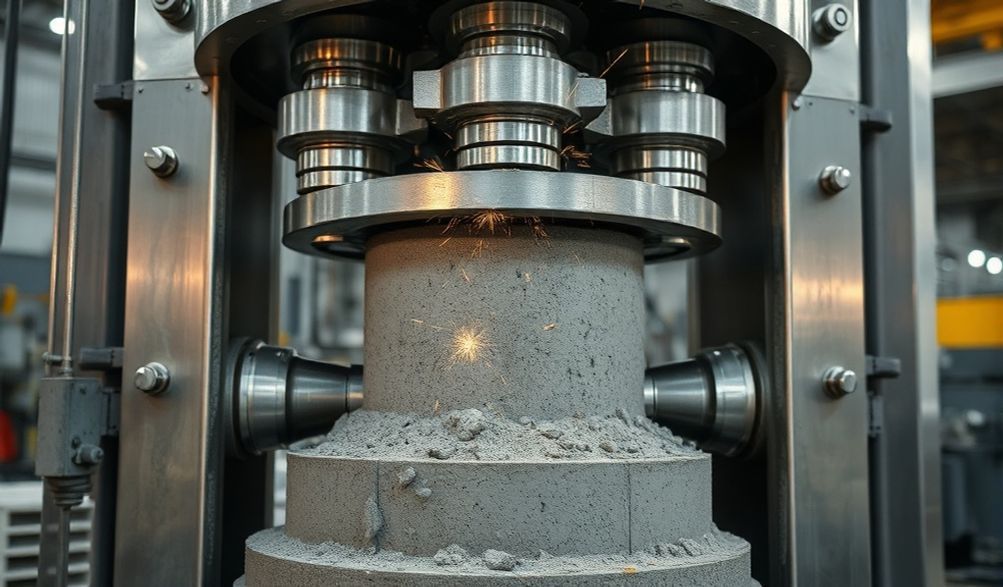
At its core, a hydraulic press block making machine is a device that uses immense, controlled hydraulic force to compact raw concrete mix (or other materials) into dense, high-strength building blocks. It replaces the reliance on vibration and impact with steady, uniform pressure, producing a superior product with remarkable consistency.
Core Working Principle: Power Through Hydraulics
The magic lies in its namesake: hydraulicsAqui está uma simplificação do processo:
- The Pump & Fluid: An electric motor drives a hydraulic pump, which pressurizes specialized hydraulic oil.
- Transfer of Force: This pressurized oil is directed through valves and hoses into powerful hydraulic cylinders.
- Controlled Compaction: The cylinders extend, applying immense, evenly distributed pressure (measured in tons) to the mold cavity filled with raw material.
- Static Pressure: Unlike vibrating machines, the pressure is applied and held statically for a moment. This ensures every particle in the mix is compacted uniformly, eliminating voids and achieving maximum density.
Este método destatic high-pressure compaction is what sets hydraulic presses apart. It directly translates to blocks with higher compressive strength, better dimensional accuracy, and a smoother surface finish compared to those made with vibration-only methods.
Componentes Principais e Suas Funções
Entender as partes principais desmistifica a máquina:
- Unidade de Potência Hidráulica: The “heart.” Contains the pump, motor, oil tank, valves, and cooling system. Its quality dictates the machine’s reliability and pressure consistency.
- Molde/Matriz: The “personality.” This interchangeable component defines the block’s shape, size, and design (e.g., hollow block, paver, interlocking brick).
- Control Panel (Often PLC-based): The “brain.” A programmable logic controller allows operators to set pressure, cycle time, and sequences, enabling semi or fully automatic operation.
- Sistema de Alimentação: Can be a simple manual hopper or an automated conveyor belt that delivers a precise amount of raw mix to the mold.
- Alimentador de Paletes/Sistema de Circulação: Supplies empty pallets (steel plates) for the blocks to be formed on and moves them through the machine.
- Sistema de Ejeção: Gently pushes the freshly pressed block out of the mold and onto a transfer system for curing.
Top 5 Advantages of Using a Hydraulic Block Press
Switching to a hydraulic press isn’t just about buying new equipment; it’s about upgrading your entire production philosophy. Here are the tangible benefits you can expect.
Unmatched Product Quality & Strength
This is the paramount advantage. The high-tonnage pressure creates an incredibly dense product.
* Alta Resistência à Compressão: Blocks can easily meet and exceed international standards (e.g., ASTM, IS), making them suitable for load-bearing applications.
* Baixa Absorção de Água: Denser blocks absorb less water, leading to better frost resistance and longevity, especially in harsh climates.
* Precisão e Consistência: Every block is identical in dimension, ensuring easier, faster laying and a professional final appearance.
Remarkable Production Efficiency & Output
Hydraulic presses are built for speed and endurance.
* Fast Cycle Times: Modern machines can complete a press cycle (fill, compress, eject) in 15-30 seconds.
* High Volume Output:Dependendo do modelo, a produção pode variar de1,000 to over 10,000 blocks per 8-hour shift.
* Operação Contínua: Robust design allows for 24/7 production with minimal downtime, maximizing your return on investment.
Exceptional Versatility in Product Range
One machine, multiple revenue streams. The key is the quick-change mold system.
* Switch from producing solid blocks to decorative pavers to interlocking bricks in a matter of hours.
* This flexibility allows you to respond quickly to market demands and customer requests without investing in separate machines.
Cost-Effectiveness & Lower Operational Costs
The savings are realized over the long term:
* Mão de Obra Reduzida: Automation drastically cuts the number of workers needed per shift.
* Manutenção Reduzida: Hydraulic systems, when maintained properly, have fewer wearing parts than complex mechanical vibration systems.
* Minimal Waste: Precise feeding and compression result in less raw material spillage and fewer rejected blocks.
Enhanced Operational Safety & Ease of Use
Modern machines are designed with the operator in mind.
* Safety Features: Include physical guards, light curtains, and emergency stop buttons on all sides.
* User-Friendly Controls: PLC touchscreens with intuitive interfaces make operation and troubleshooting accessible, reducing the skill barrier for operators.
Types of Hydraulic Press Block Making Machines
The market offers a variety of configurations to suit different scales and applications. Choosing the right type is critical.
Manual, Semi-Automatic, and Fully Automatic Models
- Manual: Requires an operator for most steps (filling, initiating press, removing block). Lowest investment, suitable for very small-scale or start-up projects. Output is limited by human speed.
- Semiautomático: The operator loads the mix and initiates the cycle, but the pressing, ejection, and pallet feeding are automated. An excellent balance of cost, control, and increased output for small to medium businesses.
- Totalmente Automático: The entire process from raw material feeding to block stacking is automated via PLC and mechanical handling systems. Requires the highest investment but delivers maximum output with minimal labor. Ideal for large-scale plants.
Stationary vs. Mobile Block Making Plants
- Plantas Estacionárias: These are large, fixed installations designed for factory production. They are often fully automatic and integrated with batching plants, mixer conveyors, and block stackers. They represent the pinnacle of volume and efficiency.
- Mobile Machines (Often “Egg-Laying” Type): These are smaller, self-contained units on wheels or tracks. They produce blocks and deposit them directly onto a prepared ground slab for curing on-site. Their primary advantage is eliminating block transport costs for large, localized construction projects like housing colonies or road projects.
Specialized Machines for Specific Blocks
While versatile, some machines are optimized for particular products:
* Máquinas de Tijolos Intertravados: Designed with specific mold and pressure profiles to create the precise shear keys and shapes needed for dry-stack, mortarless construction.
* Concrete Paver & Kerbstone Machines: Often feature multi-cavity molds and high-frequency vibration in addition to hydraulic pressure to achieve the fine surface finish and tight tolerances required for paving.
* Máquinas para Blocos Vazados: Equipped with core rods within the mold to create the hollow chambers, focusing on achieving uniform wall density.
How to Choose the Right Machine: A Buyer’s Checklist
Making the wrong choice can be a costly mistake. Use this checklist to guide your evaluation.
Assess Your Production Requirements
Start by asking the fundamental questions:
* What is my target output? (Blocks per hour/day/shift)
* What block types will I produce most? (List them in order of priority)
* What is my available factory space? (Length, width, height, door access)
* What power supply is available? (Voltage, Phase, amperage)
* What is my raw material source? (Aggregate size, moisture content)
Evaluate Machine Specifications Critically
Don’t just look at the price tag; scrutinize the specs:
* Pressure Capacity (Tons): More tons generally mean denser, stronger blocks. For standard hollow blocks, 150-300 tons is common. For pavers or solid blocks, you may need more.
* Tempo de Ciclo: The time for one complete press cycle. Faster cycles mean higher potential output.
* Mold Size & Compatibility: Ensure the machine can accommodate the mold sizes for your desired products and that molds are readily available.
* Potência do Motor: Correlates with the machine’s capability and energy consumption.
* Nível de Automação: Match this to your labor availability and budget.
Prioritize Build Quality & Supplier Reputation
The machine is only as good as the company behind it.
* Construção: Look for heavy-duty, welded steel frames, not bolted assemblies. Stress points should be reinforced.
* Hydraulic Components: Ask about brands. Reputable suppliers use known brands like Bosch Rexroth, Parker, Yuken, or Kawasaki. This is non-negotiable for reliability.
* Serviço Pós-Venda: This is paramount. A reliable supplier must offer:
* Comprehensive operator and maintenance training.
* A clear warranty (at least 1 year on critical parts).
* A readily available inventory of spare parts.
* Access to technical support—phone, remote, and preferably on-site.
Understand Total Cost of Ownership (TCO)
The purchase price is just the beginning. Factor in:
* Installation & Foundation costs.
* Shipping and import duties (if applicable).
* Cost of initial spare parts and tools.
* Estimated energy consumption.
* Long-term maintenance costs.
Essential Maintenance Tips for Longevity
A hydraulic press is a robust investment, but its lifespan depends on diligent care. Here’s a practical maintenance roadmap.
Daily and Weekly Maintenance Routines
Daily (Before/After Shift):
* Check hydraulic oil level and temperature. Look for leaks at hoses, fittings, and cylinders.
* Clean the mold, pallets, and feeding system thoroughly to prevent concrete buildup.
* Visually inspect all safety guards and emergency stop functions.
Semanal:
* Check and tighten any loose bolts or nuts on the frame and mold.
* Lubricate all guide rods, bearings, and moving parts as per the manual.
* Inspect hydraulic hoses for cracks, bulges, or abrasion.
Common Troubleshooting Issues
- Low Block Strength: This is most often a raw material issue. Check your mix design (cement ratio, aggregate gradation, moisture content). Secondarily, verify the machine is reaching its set pressure.
- Hydraulic Oil Leaks: Identify the source (seal, hose, fitting). Never operate with a major leak. Use only the recommended oil grade.
- Slow Cycle Times: Could be caused by low hydraulic oil, a worn pump, or incorrect pressure/valve settings.
- Uneven Block Height: Usually indicates an uneven feeding of raw material into the mold or a worn/improperly aligned mold.
Perguntas Frequentes (FAQ)
Q1: What is the average production capacity of a standard hydraulic block machine?
A: There’s no single “standard,” as capacity varies wildly. A small semi-automatic machine might produce 1,000-2,000 blocks per 8-hour shift, while a large fully automatic plant can produce 8,000-12,000+ blocks in the same time. The key factors are block type, machine size, and automation level.
Q2: Can I use local raw materials like soil or fly ash with these machines?
A: Absolutely. One of their strengths is material versatility. They can work with mixes containing fly ash, crushed stone, sand, and even certain stabilized soils. However, the mix design is critical. You must develop and test a specific recipe that works with your machine’s pressure to achieve the required block strength and quality.
Q3: What is the typical lead time for delivery and installation?
A: This depends heavily on the manufacturer, machine complexity, and customization. For a standard model from a stockist, it could be 4-8 weeks. For a custom-configured plant, it may take 12-20 weeks. A trustworthy supplier will provide a detailed timeline covering factory acceptance testing, shipping, and installation support.
Q4: How does a hydraulic press machine differ from an egg-laying or vibrating type machine?
A:
* Prensa Hidráulica: Uses static high pressure (tons of force). Pros: Superior block strength, density, smooth finish, versatility, and high automation. Cons: Higher initial investment.
* Vibrating Machine: Uses vibration and some mechanical pressure. Pros: Lower purchase cost. Cons: Generally lower block density/strength, more noise, more mechanical wear, less suitable for complex shapes.
* “Egg-Laying” Machine: This refers to a mobile machine type that deposits blocks on the ground. It can be either hydraulic or vibration-based. Its main advantage is on-site production.
Q5: What kind of after-sales service should I expect from a reliable manufacturer?
A: You should expect and demand a comprehensive package:
1. On-site Installation & Commissioning by a factory engineer.
2. Thorough Training for your operators and maintenance staff.
3. Detailed Manuals in your language (parts list, electrical diagrams, maintenance schedule).
4. A Clear Warranty (typically 12 months on machinery, often less on wear parts like molds).
5. A Genuine Spare Parts Inventory that is accessible and can be shipped promptly.
6. Responsive Technical Support via phone, email, or remote desktop assistance.
Conclusão
The decision to invest in a hydraulic press block making machine is a strategic move toward building a more profitable, efficient, and quality-driven business. This technology offers a clear path away from the limitations of traditional methods, delivering unmatched strength, consistency, and versatility in your product line.
Remember, the “best” machine is not the most expensive one, but the one that perfectly aligns with your specific production goals, raw materials, and operational capacity. Your due diligence in selection is as important as the machine itself.
Final Expert Advice: Before you sign any contract, take these three steps:
1. Request a Live Demonstration: See the machine run, preferably with a raw material similar to yours.
2. Ask for Client References: Speak directly to other buyers, especially those in a similar business.
3. Get Detailed, Itemized Quotations: Compare not just price, but specifications, warranty terms, and service offerings.
View this purchase not merely as acquiring equipment, but as partnering with a technology provider for your long-term growth in the competitive construction industry. Choose wisely, and your hydraulic press will become the reliable, profit-generating cornerstone of your operation for years to come.
Written by [Author Name], a mechanical engineer with over 15 years of direct experience in the design, application, and technical support of concrete machinery and hydraulic press block making plants. He has collaborated with manufacturers and contractors worldwide to optimize production efficiency and product quality.
<