
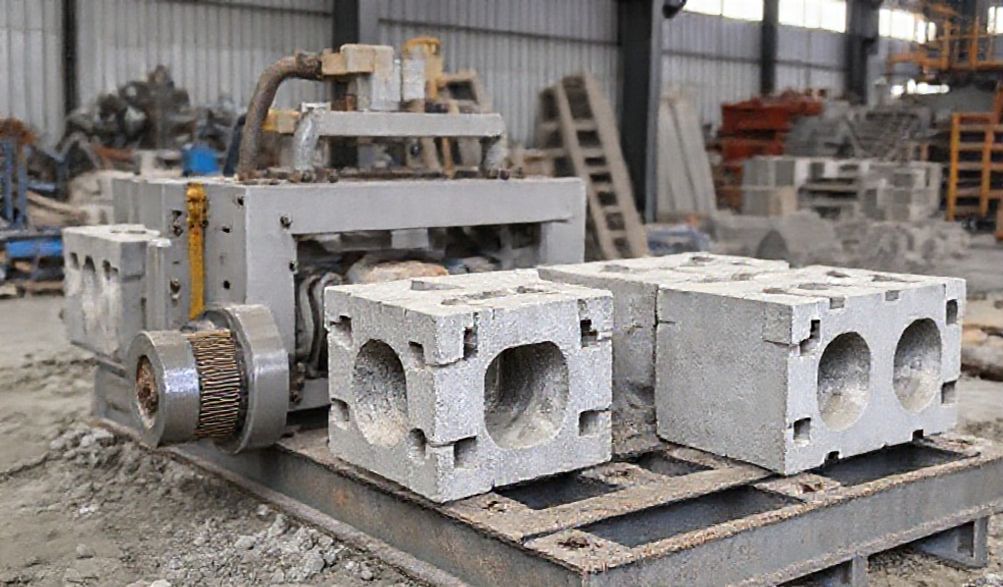
The Ultimate Guide to Cement Hollow Block Machinery: Types, Costs, and How to Choose
Introdução
Cement hollow blocks are the unsung heroes of modern construction. From residential homes to large-scale infrastructure, these versatile building materials offer an unmatched combination of strength, thermal insulation, and cost-efficiency. For manufacturers and entrepreneurs, the engine behind this essential product is cement hollow block machinery. Choosing the right machine isn’t just an equipment purchase; it’s the foundational decision that will dictate your product quality, production capacity, and long-term business profitability.
With over a decade of experience in the construction equipment sector, our team has consulted on hundreds of block-making plant setups across different markets. We’ve seen the triumphs of well-planned investments and the costly pitfalls of rushed decisions. This guide distills that hands-on experiênciae técnica profundaespecialização into a single, comprehensive resource.
We aim to cut through the industry jargon and sales hype. You’ll get a trustworthy, detailed analysis of machinery types, transparent cost breakdowns, and a practical step-by-step framework for selection. Whether you’re a seasoned contractor diversifying into manufacturing or a new entrepreneur entering the construction materials market, this guide will equip you to make a confident, informed investment.
Understanding Cement Hollow Block Machinery: Core Concepts and Benefits
Before diving into machine specifications, it’s crucial to understand what this machinery does and why the blocks it produces are so valuable.
What is a Cement Hollow Block Machine?
A cement hollow block machine is a specialized piece of equipment designed to manufacture hollow concrete blocks through a process of compaction and vibration. It automates the mixing, molding, and curing stages of block production.
Basic Working Principle:
1. Loteamento & Mistura: Raw materials (cement, sand, aggregate, water) are combined in specific ratios.
2. Alimentação: The prepared concrete mix is fed into the machine’s mold box.
3. Compactação e Vibração: The machine subjects the mix to intense vibration. This removes air pockets, consolidates the material, and ensures it flows into every corner of the mold, creating a dense, strong block.
4. Moldagem: The mold, which defines the block’s shape and hollow cavities, gives the block its final form.
5. Ejeção e Cura: The freshly formed (or “green”) block is ejected onto a pallet or the ground to begin the critical curing process, where it gains strength over time.
This machinery is the cornerstone of modern, efficient construction material production, enabling consistent, high-volume output that manual methods cannot match.
Principais Vantagens do Uso de Blocos Vazados na Construção
Why has the hollow block become a global standard? The benefits are multi-faceted:
- Structural Benefits:
- High Load-Bearing Capacity: The design distributes weight efficiently, making them excellent for load-bearing walls.
- Seismic Resistance: Their lighter weight (compared to solid blocks) reduces the mass of a structure, which can improve performance during earthquakes.
- Practical Benefits:
- Isolamento Térmico: The hollow cores create air pockets that provide natural insulation, keeping buildings cooler in summer and warmer in winter.
- Isolamento acústico: The mass and cavities help dampen sound transmission.
- Leve: Easier and faster for masons to handle, reducing construction time and labor strain.
- Economic Benefits:
- Material Savings: The hollow cores use less concrete per block, significantly reducing material costs.
- Construção Mais Rápida: Their larger size and lighter weight allow for quicker wall erection.
- Espaço de Conduíte de Utilidades Electrical wiring and plumbing can be routed through the cavities, saving on chasing and finishing work.
Why Your Choice of Machinery Directly Impacts Your Business
Your machine is not just a producer; it’s your primary business partner. Its quality dictates your entire operation:
- Block Consistency & Strength: A machine with poor or inconsistent vibration will produce blocks of varying density and strength (measured in MPa). This can lead to structural rejections, failed tests, and a damaged reputation.
- Eficiência de Produção: The right machine for your target volume minimizes downtime and maximizes output. An underpowered machine creates bottlenecks; an oversized one drains capital.
- Custos de Mão de Obra: Automation level directly correlates to the number of workers required. A smart investment can reduce long-term payroll expenses.
- Escalabilidade: Choosing a machine from a reputable brand with model upgrades or add-ons can make future expansion seamless and cost-effective.
Types of Cement Hollow Block Making Machines
The market offers a spectrum of automation to suit different scales of operation. Understanding these types is your first major decision point.
Máquinas Manuais para Fabricação de Blocos
These are the simplest and most labor-intensive type of machines.
- Operação: Workers manually fill the mold with concrete, engage a lever to apply vibration (often via a small motor), and then use a lever or handle to lift the mold and release the block onto the ground.
- Casos de Uso Ideais: Very small-scale projects, rural or remote locations with limited electricity, and ultra-low-budget startups where labor cost is minimal.
- Prós:
- Investimento inicial muito baixo.
- Simple mechanics, easy to repair locally.
- No need for a sophisticated power supply.
- Contras:
- Very low output (300-800 blocks per 8-hour shift).
- Altamente intensivo em mão de obra e fisicamente exigente.
- Inconsistent block quality due to human-dependent compaction.
- Não adequado para produção comercial.
Máquinas Semi-Automáticas para Fabricação de Blocos
This category offers the best balance for most small to medium enterprises (SMEs). The core compaction process is automated, but material handling and block removal often require manual intervention.
- Operação: The machine features an integrated vibrator and hydraulic or mechanical press. An operator feeds the mix, and the machine automatically compacts it. Workers then remove the pallet with the fresh block, transporting it to the curing area. Many models include a mechanical pallet feeder/return system.
- Capacidade de Produção: Typically ranges from 1,000 to 3,500 blocks per 8-hour shift, depending on model and block size.
- Melhor Para: Small to medium-sized businesses, entrepreneurs entering the market, and contractors producing for their own projects. It balances affordable capital cost with respectable, scalable output.
- Prós:
- Good balance of cost and production rate.
- Consistent block quality due to automated vibration.
- More energy-efficient than full automation.
- Allows for hands-on process control.
- Contras:
- Still requires a crew of 3-5 people.
- Lower output than fully automatic systems.
Máquinas de Fabricação de Blocos Totalmente Automáticas
These are complete production lines designed for high-volume, commercial manufacturing with minimal manual labor.
- Operação: The system is fully integrated. A conveyor feeds raw material from a mixer directly into the machine. The machine automatically fills, compacts, and ejects blocks onto a pallet. A stacker or robot then collects and organizes the blocks for curing. Many feature a closed-loop pallet return system.
- Integração: They often come with or are designed to connect seamlessly with pan mixers, belt conveyors, and block stackers.
- Prós:
- Very high output (5,000 to 15,000+ blocks per shift).
- Consistência e controle de qualidade excepcionais.
- Drastically reduced labor costs (often just 1-2 supervisors).
- High efficiency and lower per-unit production cost at scale.
- Contras:
- Investimento inicial de capital muito alto.
- Requires significant space and a robust power supply.
- Complex maintenance requiring skilled technicians.
- Less flexibility for very small, custom batches.
Subtypes: Stationary vs. Mobile
* Estacionário: The industry standard, installed on a solid foundation in a factory setting for maximum stability and output.
* Celular: Mounted on a trailer, these can be towed to different job sites. They are excellent for large construction projects producing blocks on-site but generally have lower capacity than stationary plants.
Critical Technical Specifications and Features to Evaluate
Looking beyond the basic type, these technical details separate adequate machines from exceptional ones.
Production Capacity: Matching Output to Your Market
Don’t just look at the “max blocks per hour” in ideal conditions.
* Calcule as Necessidades Reais: Estimate your current and 2-year future market demand. A machine running at 70-80% of its capacity is more sustainable than one constantly at 100% or one sitting idle.
* Entenda o Tempo de Ciclo: This is the total time to produce one block (fill, vibrate, mold lift, eject). A faster cycle time means higher potential output.
Block Size and Mold Customization
Versatility protects your business from market shifts.
* Tamanhos Padrão: Ensure the machine can produce the most common sizes in your region (e.g., 4″, 6″, 8″ thick hollow blocks).
* Moldes Intercambiáveis: The ability to quickly switch molds is critical. Can you also produce:
* Solid blocks for foundations?
* Paving stones or interlocking bricks for landscaping?
* Curbs and garden edgers?
A machine that offers multiple product lines from one investment is far more valuable.
Power Source and Consumption
This is a major operational cost factor.
* Modelos Elétricos: Most common, cleaner, and quieter. Require stable grid power or a large generator.
* Modelos a Diesel: Used in areas with unreliable electricity or for mobile plants. Higher fuel cost and maintenance.
* Modelos Híbridos: Offer a choice of power sources for flexibility.
* Calculate Costs: Request the motor’s kW rating. Estimate daily running hours and multiply by your local electricity or diesel cost to understand your ongoing expense.
Vibration System and Compaction Force
Isto é oheart of the machine, directly responsible for block strength.
* Tipos: Geared vibrators (robust), eccentric shaft vibrators (common), and hydraulic vibrators (highly controllable).
* Intensity Matters: A powerful, well-distributed vibration system ensures the concrete mix is fully compacted, resulting in higher density and compressive strength (MPa). Ask about the vibration frequency and amplitude.
Durability and Key Components
Inspect the quality of these parts—they determine lifespan.
* Quadro: Should be made from heavy-duty, reinforced steel plate, not light-gauge metal.
* Mold Box & Liners: Look for hardened steel. The precision of the machining here defines the precision of your blocks.
* Vibrator Shafts & Bearings: Must be sealed and protected from concrete and water ingress. Premature failure here is a common issue in cheap machines.
* Hydraulics & PLC: For automatic machines, the quality of the hydraulic pumps/cylinders and the Programmable Logic Controller (the machine’s “brain”) is paramount. Reputable global brands (e.g., Siemens, Mitsubishi) are a good sign.
The Real Cost of Cement Hollow Block Machinery
A transparent look at the financial commitment beyond the sticker price.
Initial Investment: Purchase Price Ranges
Prices vary wildly based on capacity, automation, and origin. Use these as very general brackets:
* Máquinas Manuais: $1,000 – $5,000 USD
* Máquinas Semiautomáticas: $8,000 – $30,000 USD
* Plantas Totalmente Automáticas: $50,000 – $300,000+ USD
Price Variation Factors: Brand reputation (European/American brands command a premium over Asian manufacturers), local dealer markup, shipping costs, and included features/accessories.
Hidden and Operational Costs You Must Budget For
The machine price is only 50-70% of your total startup cost.
1. Installation: Foundation construction, electrical hookup, and assembly labor.
2. Equipamento Auxiliar: You will likely need a concrete pan mixer ($3k-$15k), a conveyor system ($2k-$10k), pallets ($10-$50 each, you need hundreds), and a forklift or trolley for handling.
3. Matérias-primas: Your ongoing inventory cost for cement, aggregates (sand, gravel), and water.
4. Utilitários: Monthly electricity/fuel bills.
5. Maintenance & Spares: Budget 3-5% of the machine’s purchase price annually for routine maintenance, lubrication, and replacement parts (springs, seals, liners).
ROI Analysis: When Will Your Machine Pay for Itself?
A simplified framework for your business plan:
1. Calculate Total Investment: Machine + Auxiliary + Installation + Initial Raw Material Stock.
2. Estimate Gross Profit per Block: (Selling Price per Block) – (Direct Material Cost per Block).
3. Calculate Daily Gross Profit: (Gross Profit per Block) x (Realistic Daily Production).
4. Subtract Daily Fixed Costs: Labor, utilities, rent.
5. Determine Net Daily Profit.
6. Divide Total Investment by Net Daily Profit to find your approximate break-even point in days.
Exemplo: If your net daily profit is $200 and your total investment was $30,000, your break-even point is around 150 working days (or roughly 7-8 months). This is a simplified model—always build in a buffer.
Step-by-Step Guide to Choosing the Right Machine
Follow this experience-based process to narrow your options confidently.
Step 1: Assess Your Local Market Demand
- Research Construction Activity: Are residential, commercial, or public works projects booming?
- Analyze Competitors: How many block yards exist? What are their prices, and what quality do they offer? Is there a gap you can fill?
- Talk to Builders: What block sizes and strengths do they typically specify? What are their pain points with current suppliers?
Step 2: Define Your Production Goals and Budget
- Set Output Targets: Be realistic. “We need to produce 2,000 blocks per day to supply 3 local contractors” is a better goal than “as many as possible.”
- Budget Honestly: Distinguish between your machine budget and your total project budget (including all hidden costs from Section 4). Secure financing for the total amount.
Step 3: Research and Shortlist Reputable Manufacturers
- Vet Suppliers: Look for companies with a long track record. Always ask for and contact client references, especially ones in a similar climate to yours.
- Key Questions: What is the warranty period and what does it cover? Is there a local service agent or technician? How quickly can you get spare parts?
- Factory Visit: If feasible, visit the manufacturing facility. The cleanliness and organization of the factory often reflect the quality of the machinery.
Step 4: Request a Live Demonstration or Trial
- Observe the Demo: Don’t just watch a sales video. See the machine run. Note the noise level, ease of operation, and the finish quality of the ejected blocks.
- Test Your Materials: If possible, provide a sample of your local sand and aggregate. The true test is how the machine performs with seu mix.
Installation, Operation, and Maintenance Best Practices
Your responsibility begins once the machine arrives.
Site Preparation and Machine Installation
- Fundação Follow the manufacturer’s drawings exactly. A weak or uneven foundation will cause misalignment, excessive wear, and vibration issues.
- Planejamento de Espaço Allocate ample space for raw material storage (protected from rain), the production area, a curing yard (covered and shaded), and storage for finished blocks.
Raw Material Preparation: The Key to Quality Blocks
- Dosagem de Concreto: A common starting ratio is 1 part cement : 3 parts sand : 2 parts coarse aggregate (by volume). However, this must be optimized for your local materials and target block strength. Consult a concrete technologist if needed.
- Consistência é Rei: Aggregate size should be uniform (typically 5-10mm). Moisture content in the sand must be accounted for to maintain the correct water-cement ratio, which is critical for strength.
Daily Operation and Safety Protocols
- Develop SOPs: Create clear checklists for startup, operation, and shutdown.
- Safety First: Mandate safety glasses, hearing protection, steel-toe boots, and gloves. Ensure all machine guards are in place. Never allow cleaning or adjustment while the machine is running.
Preventive Maintenance Schedule
Adherence to this schedule is the single biggest factor in machine longevity.
* Diário: Clean the mold box and pallets thoroughly after each shift. Check hydraulic oil levels and for leaks. Lubricate all moving points as per the manual.
* Semanal: Check and tighten all bolts and nuts (vibration loosens them). Inspect mold liners for wear.
* Mensalmente: Inspect vibrator motors and bearings. Check electrical connections. Change hydraulic oil filters as recommended.
Troubleshooting Common Issues:
* Poor Block Strength: Usually incorrect mix design (too much water/sand), insufficient vibration time, or weak cement.
* Surface Cracks: Often due to improper curing (drying too fast in sun/wind) or excessive vibration.
* Sticking Molds: Caused by worn mold liners, insufficient release agent, or a concrete mix that is too wet.
FAQ Section
Q1: What is the average production capacity of a standard hollow block machine?
A: There is no “standard.” Capacities vary dramatically. A manual machine may produce 300-500 blocks per 8-hour shift, a semi-automatic 1,000-2,500, and a fully automatic system 5,000-15,000+ blocks. The right capacity depends entirely on your validated sales projections.
Q2: Can one machine produce different types of blocks?
A: Yes, this is a key feature to look for. Most quality machines are designed with quick-change, interchangeable mold systems. You can produce hollow blocks, solid blocks, paving slabs, and interlocking bricks by changing the mold box, allowing you to diversify your product line and respond to market demand.
Q3: What is the lifespan of a cement block making machine?
A: With proper operation and rigorous maintenance, a well-built machine from a reputable manufacturer can last 10-20 years. The lifespan is directly tied to the quality of steel used, the protection of the vibration system from concrete slurry, and strict adherence to the maintenance schedule.
Q4: How much manpower is required to operate a semi-automatic machine?
A: Typically, a crew of 3-5 workers: one for feeding/operating the mixer, one for operating the machine controls, and 1-3 for handling the fresh blocks (moving pallets to the curing area, stacking). Fully automatic systems may require only 1-2 operators for supervision and monitoring.
Q5: What after-sales support should I expect from the supplier?
A: You should expect and contract for: detailed installation drawings and guidance, comprehensive on-site or video-based operator training, a full parts manual with diagrams, and a clear warranty (at least 1 year on core