
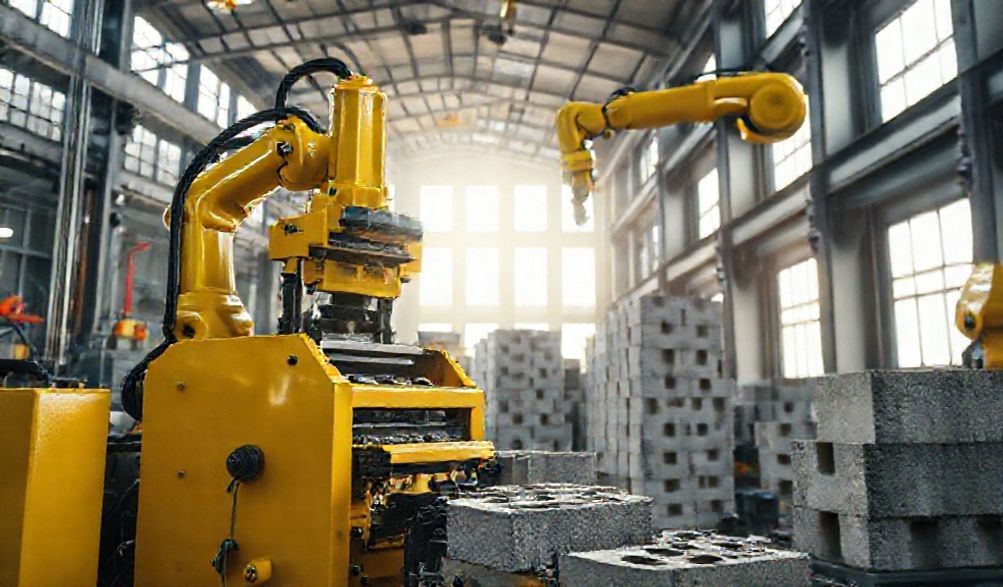
Your Ultimate Guide to Choosing a Block Bricks Making Machine Factory: Spotlight on FUDA
The global construction industry is a relentless engine of growth, demanding efficient, sustainable, and cost-effective materials. At the heart of this demand lies the humble block brick—a fundamental building block for modern infrastructure. The transition from manual, labor-intensive production to automated, high-volume manufacturing is not just a trend; it’s a strategic imperative for businesses aiming to scale and compete. However, sourcing the machinery that powers this transition presents a significant challenge. Entrepreneurs and construction firms often grapple with concerns about machine quality, inconsistent technical support, and the daunting uncertainty of achieving a solid return on investment.
This is where the choice of your block bricks making machine factory becomes the most critical decision you will make. A factory is not merely a supplier; it is a long-term partner in your venture’s success. In this landscape, Fábrica de máquinas de fazer tijolos FUDA has established itself as a prominent and expert solution, recognized for its engineering focus and industrial footprint. The purpose of this guide is to provide an expert, unbiased framework for evaluating any block bricks making machine factory. We will use FUDA as a detailed, real-world case study to illustrate the key criteria that separate a transactional vendor from a true manufacturing partner. By integrating technical insights, current industry trends, and actionable advice, this article will equip you with the knowledge to make an informed, confident purchasing decision that safeguards your investment and fuels your growth for years to come.
The Role of a Professional Block Bricks Making Machine Factory
Choosing a factory goes far beyond comparing price lists. A professional manufacturer is an integral partner that contributes to your operational stability, product quality, and long-term profitability. Understanding their full scope of value is the first step in a wise selection process.
Beyond Manufacturing: How a True Factory Partner Adds Value
A leading factory distinguishes itself through capabilities that extend well past the assembly line:
- Pesquisa e Desenvolvimento (P&D): Continuous investment in R&D leads to machines with better energy efficiency, higher durability, and more intelligent controls. This translates to lower operating costs and a future-proof investment for you.
- Custom Engineering Solutions: No two projects are identical. A true partner offers engineering support to customize machine parameters, mold designs, and production line layouts to suit your specific raw materials (like local soil or fly ash) and target product mix.
- Continuous Product Improvement: Based on field data and client feedback, expert factories iteratively improve their designs, addressing wear points and enhancing user-friendliness in subsequent models.
Key Components of a Modern Brick Making Machine
Understanding core systems builds your technical literacy for evaluating any machine. Key components include:
- Sistema Hidráulico: The powerhouse. It provides the immense pressure needed for compaction. Look for robust pumps, valves, and cylinders from reputable brands.
- Sistema de Vibração: Critical for density and strength. High-frequency, amplitude-adjustable vibration tables ensure air pockets are eliminated from the mix.
- Sistema de Controle: The brain of the operation. Modern machines feature Programmable Logic Controller (PLC) panels with touchscreen interfaces for precise control over cycle times, pressure, and vibration.
- Sistema de Moldes e Paletes The defining element for your product. High-wear, precision-engineered molds made from hardened steel determine block accuracy and longevity. A reliable pallet circulation system is vital for automated production.
Industry Standards and Certifications to Look For
Certifications are non-negotiable trust signals. They provide independent verification of a factory’s commitment to safety, quality, and international norms.
- Marcação CE: Indicates conformity with health, safety, and environmental protection standards for products sold within the European Economic Area. It’s a strong signal of a machine’s foundational safety.
- ISO Certification (e.g., ISO 9001): Demonstrates that the factory has a certified Quality Management System (QMS) in place, ensuring consistent processes and continuous improvement.
- Other Relevant Certifications: Depending on your region, look for local safety or quality standards. Factories that proactively seek these certifications show a commitment to global market excellence.
Deep Dive: Evaluating the FUDA Brick Making Machine Factory
Applying our evaluation framework to a specific entity like FUDA allows us to move from abstract principles to concrete analysis, demonstrating what expertise and authoritativeness look like in practice.
Legacy and Market Presence: FUDA’s Journey in the Industry
Establishing Autoridade begins with a proven track record. FUDA has built its reputation over years of specialization in brick making machinery. Their journey is marked by:
- Scaled Manufacturing: Operating from dedicated production facilities equipped with advanced CNC machining centers, laser cutters, and automated welding lines, indicating industrial-scale capability.
- Global Project Footprint: A history of supplying machines to diverse international markets, from large-scale infrastructure projects to small and medium-sized enterprises (SMEs) across continents. This exposure equips them with practical knowledge of varying local conditions and requirements.
- Industry Recognition: Longevity and a growing portfolio of completed projects serve as de facto industry endorsements, positioning them as an established player.
Core Technology and Innovation at FUDA
Aqui é ondeEspecialização becomes tangible. FUDA’s machines typically incorporate several key technological features:
- Tecnologia Avançada de Vibração: Utilizing high-efficiency vibration motors arranged in a synchronized matrix to ensure uniform compaction force across the entire mold, resulting in blocks with consistent high density.
- Energy-Efficient Hydraulics: Employing variable-displacement piston pumps and optimized circuit designs to reduce power consumption during idle and working cycles, a critical factor for lowering Total Cost of Ownership (TCO).
- High-Level Automation: From automatic raw material batching and mixing to block stacking and pallet return, their fully automatic lines minimize manual intervention, boosting output and reducing labor costs and human error.
The FUDA Product Portfolio: From Solid Blocks to Pavers
A comprehensive portfolio suggests engineering depth and flexibility. FUDA’s range typically caters to a spectrum of business needs:
- Máquinas de Blocos Totalmente Automáticas: High-output lines for large-scale production of hollow blocks, solid blocks, interlocking pavers, and curbstones.
- Máquinas Semiautomáticas: Ideal for medium-scale operations or businesses with more varied, smaller-batch production needs, offering a balance between automation and cost.
- Máquinas de Blocos Móveis: Versatile machines suitable for on-site production, reducing transportation costs for bricks.
- Specialized Product Range: The ability to produce a wide array of end products—from standard construction blocks to decorative landscaping pavers and permeable eco-bricks—demonstrates mold-making proficiency and machine versatility.
Quality Assurance and Manufacturing Process
The foundation of Confiabilidade is built on the factory floor. A reliable factory like FUDA will have transparent and rigorous processes:
- Aquisição de Materiais: Use of high-grade steel plates (e.g., Q235 or better) for frames and international-brand components (for hydraulics, electronics) where it counts.
- Structured Manufacturing: A workshop organized into logical stations—fabrication, machining, assembly, painting, and testing—ensures workflow efficiency and quality control at each stage.
- Multi-Stage Quality Control: This includes dimensional checks of machined parts, pressure testing of hydraulic assemblies, and, most importantly, a full-load production test run before dispatch. This final test, where the machine produces sample blocks, is a crucial step that buyers should always request evidence of.
Critical Factors When Selecting Your Machine Factory
Industry experience shows that the most successful buyers look beyond glossy brochures. They conduct due diligence based on a balanced set of operational and strategic factors.
Assessing Production Capacity and Machine Output
Match the machine to your business plan, not the other way around.
* Calcule Suas Necessidades: Project your daily/weekly brick requirement based on market demand.
* Entenda o Tempo de Ciclo: A machine’s output (blocks/hour) is determined by its cycle time. A faster cycle time means higher output but may come at a higher initial cost.
* Plano para Crescimento: Consider a machine with 20-30% more capacity than your current need to accommodate future business growth without immediate reinvestment.
After-Sales Support: The Make-or-Break Factor
This is arguably the most critical differentiator. A machine is a long-term asset, and support is its maintenance plan.
* Instalação e Comissionamento: Will factory engineers supervise installation and ensure the machine runs to specification at your site?
* Treinamento Abrangente: Operators and maintenance staff must be thoroughly trained on daily operation, routine maintenance, and basic troubleshooting.
* Warranty Terms: Scrutinize the warranty—what is covered (parts, labor?), for how long, and what are the response time guarantees?
* Disponibilidade de Peças de Reposição: A reputable factory maintains a well-organized spare parts inventory and can guarantee swift shipping of critical components to minimize your downtime.
Total Cost of Ownership vs. Initial Price
The cheapest machine can become the most expensive asset you own. Experienced buyers recommend a TCO analysis:
* Preço de Compra Inicial: Just the starting point.
* Operating Costs: Factor in energy consumption per cycle and labor requirements.
* Custos de Manutenção e Reparo: Durable machines with quality components have lower long-term maintenance costs. Inquire about the expected service intervals and cost of common wear parts.
* Durability & Lifespan: A machine built with heavier steel and better components may last 15-20 years versus 5-7 for a lighter model, dramatically improving ROI.
The Importance of Customer Testimonials and Case Studies
Seek verifiable, third-party proof.
* Request References: Ask the factory for contact information of 2-3 clients in a region or business model similar to yours.
* Analyze Case Studies: Look for detailed project stories that discuss the client’s challenge, the solution provided, and the quantifiable results (output increase, cost savings).
* Site Visits: If possible, visiting an existing customer’s plant is the most valuable research you can do. You see the machine in action, hear unfiltered feedback, and observe its real-world condition.
Trends Shaping the Future of Brick Production
A forward-looking factory is aligned with these evolving market demands, demonstrating thought leadership.
The Rise of Eco-Friendly and Fly Ash Brick Machines
Sustainability is a powerful driver. Machines capable of utilizing industrial waste like fly ash, slag, or construction debris are in high demand. These “green” bricks offer cost advantages on raw materials, appeal to eco-conscious markets, and often benefit from government incentives. Factories innovating in this area are leading the market.
Automation and Smart Factory Integration
The future is connected and data-driven.
* IoT Sensors: Machines equipped with sensors can monitor performance, predict maintenance needs (predictive maintenance), and alert operators to issues via smartphone.
* Remote Monitoring: Factory engineers can sometimes diagnose software or minor issues remotely, drastically reducing resolution time.
* Redução da Dependência de Mão de Obra Fully automated lines with robotic stackers and palletizers are becoming the standard for high-volume, competitive operations.
Customization for Niche Construction Markets
Beyond standard blocks, there is growing demand for specialized products.
* Architectural & Decorative Facades: Machines that can produce textured, colored, or specially shaped bricks for aesthetic applications.
* Landscaping Products: Interlocking pavers, garden edging, and permeable grass pavers.
* Specialized Infrastructure Blocks: Such as blocks for drainage systems or sound-barrier walls.
Perguntas Frequentes (FAQ)
Q1: What is the typical lead time for a machine from a factory like FUDA?
Lead times vary significantly based on the model complexity and factory order backlog. For standard models, it can range from 30-60 days after order confirmation. For fully customized or large automatic lines, it may extend to 90-120 days. Always get a written delivery schedule.
Q2: Can a factory customize a brick making machine for a specific raw material (e.g., soil, fly ash, concrete)?
Yes, a competent factory should offer customization. This can involve adjusting the vibration frequency and pressure, modifying the mixer design, or providing specific mold designs to optimally compact and form your unique raw material mix.
Q3: What kind of training is provided for operating and maintaining the machine?
Reputable factories provide comprehensive training, usually on-site during commissioning. This covers safe operation, daily checklists, routine maintenance (like greasing, filter changes), basic troubleshooting, and mold changing procedures. Training manuals and video guides are standard.
Q4: How do I evaluate the durability and expected lifespan of a block making machine?
Examine the construction: thickness of structural steel, quality of welding, and brands of core components (hydraulic pumps, PLCs). Ask for the expected service life of major assemblies. A well-maintained machine from a quality factory should have a lifespan of 15+ years.
Q5: What are the key differences between a fully automatic and a semi-automatic block making machine?
Totalmente Automático: Handles the entire process from feeding raw material to stacking finished blocks with minimal human intervention. Higher output, higher initial cost, lower labor cost. Semiautomático: Requires manual feeding of the mix into the machine and often manual removal or stacking of blocks. Lower output and initial cost, higher labor dependency. Ideal for starting or smaller-scale operations.
Q6: What post-purchase support should I expect from a reputable factory?
Expect a clear warranty (typically 12 months), readily available spare parts with a published price list, access to technical support via phone/email, and the availability of service engineers for on-site repairs if needed. Some factories offer annual maintenance contracts.
Conclusão
Selecting your block bricks making machine factory is a strategic decision that will resonate throughout the lifespan of your business. It influences your product quality, operational efficiency, maintenance costs, and ultimately, your profitability. As we’ve outlined, this choice should be guided by a rigorous framework that prioritizes technological expertise, robust after-sales support, transparent quality assurance, and a clear-eyed analysis of total cost of ownership.
An informed buyer is an empowered buyer. By prioritizing proven Especialização and demonstrated Experiência—qualities we’ve examined in the context of the Fábrica de máquinas de fazer tijolos FUDA—you move beyond price comparisons to value assessment. We strongly encourage you to use this guide as a checklist. Visit factories, demand live demonstrations, scrutinize component brands, and insist on speaking with existing customers. Your due diligence today is the foundation of your success tomorrow. Begin your journey by requesting detailed catalogs and project-specific quotations from factories that meet these critical criteria.
<