
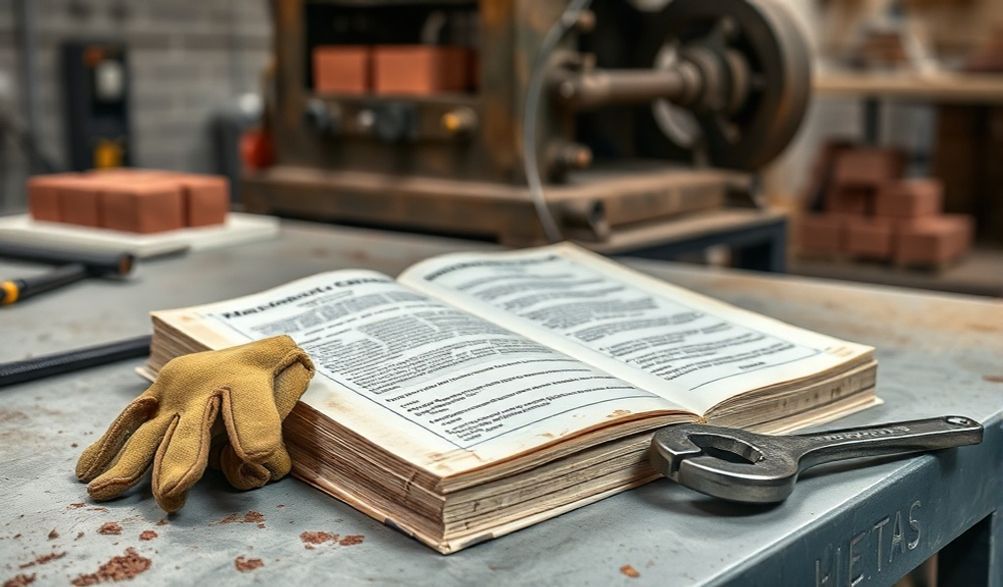
O Guia Definitivo para Manuais de Máquinas de Fabricação de Tijolos: Operação, Manutenção e Solução de Problemas
Imagine isso: É segunda-feira de manhã no seu pequeno pátio de construção. Um grande pedido de blocos de concreto vence na quarta-feira. Sua máquina de fazer tijolos, o coração da sua operação, de repente começa a produzir tijolos rachados e inutilizáveis. Você a desliga, esperando que seja um conserto rápido. Você pega o manual, só para descobrir que é uma fotocópia desbotada, mal traduzida e com metade das páginas faltando—ou pior, ele desapareceu completamente. Começam horas de inatividade custosa e ligações telefônicas frenéticas.
Este cenário é mais comum do que se imagina e destaca um ativo crítico e frequentemente negligenciado: o manual da máquina de fabricação de tijolos. Longe de ser um mero folheto jogado em uma gaveta, um manual abrangente é o seu projeto para segurança, produtividade e rentabilidade. Ele codifica a expertise do fabricante, guiando você desde a instalação até o desligamento e cada passo crucial no meio do caminho.
Compilado a partir das melhores práticas do setor, padrões de documentação técnica e insights de técnicos experientes, este guia definitivo o ajudará a compreender, localizar e dominar o manual de sua máquina de fabricação de tijolos. Seja você um operador iniciante, um supervisor experiente ou um proprietário de empresa protegendo um investimento significativo, considere este o seu companheiro essencial para o documento mais importante do seu pátio.
Por que o Manual da Sua Máquina de Tijolos é Não Negociável
Pense no seu manual como o DNA da sua máquina. Ele não é uma papelada opcional; é o documento fundamental que garante que seu equipamento funcione conforme o planejado. Ignorá-lo é uma aposta com a segurança, a qualidade e o seu resultado final.
Segurança em Primeiro Lugar: Prevenindo Acidentes e Lesões
A fabricação de tijolos envolve maquinário que utiliza força significativa, altas pressões, peças móveis e, frequentemente, sistemas elétricos. A seção de segurança do manual é lei.
- Procedimentos de Bloqueio e Etiquetagem (LOTO - Lock-out/Tag-out)Esta é a regra inegociável para qualquer manutenção ou desobstrução de engarrafamentos. O manual especifica os pontos exatos de isolamento de energia (elétrica, hidráulica) para garantir que a máquina não possa ser ativada acidentalmente. Operadores experientes observam que seguir rigorosamente o LOTO é a maneira mais eficaz de prevenir lesões catastróficas.
- Equipamento de Proteção Individual (EPI):Vai além de capacetes e botas. Seu manual especificará o EPI necessário para tarefas específicas, como óculos de segurança ao limpar a área do molde ou proteção auditiva para exposição prolongada à mesa vibratória.
- Identificando Perigos:Diagramas claros identificarão os pontos de aperto da máquina, zonas de esmagamento, superfícies de alta temperatura e áreas de potencial recuo. Conhecer estes antes de iniciar o trabalho é fundamental.
Maximizando a Eficiência e a Qualidade do Produto
Uma máquina funcionando corretamente é uma máquina lucrativa. O manual fornece a receita precisa para o desempenho ideal.
- Configuração Correta para Consistência:Até mesmo um desalinhamento de um milímetro no molde ou na esteira transportadora pode levar a tijolos dimensionalmente inconsistentes. O manual fornece procedimentos passo a passo para nivelamento e alinhamento.
- Proporções de Mistura de Materiais:A qualidade do seu tijolo começa com a mistura. Os manuais oferecem diretrizes detalhadas para a proporção de cimento, agregado e água, frequentemente ajustadas para diferentes climas ou tipos de tijolo (por exemplo, maciço versus pavimento intertravado).
- Guias de Calibração:A chave para a densidade e resistência perfeitas dos tijolos são as configurações de pressão de compressão e amplitude da mesa vibratória. O manual fornece dados de calibração de base, que são o ponto de partida para ajustes finos com base em seus materiais específicos.
Protegendo Seu Investimento: Longevidade e Garantia
Routine care prevents major repairs. Your manual is the scheduled maintenance plan that protects your capital.
- Preventing Major Breakdowns: Small, scheduled tasks prevent big, expensive failures. A common piece of feedback from workshops is that over 50% of major hydraulic failures can be traced back to inadequate or incorrect lubrication—a simple manual-prescribed task.
- Lubrication Schedules: The manual’s lubrication chart is gold. It tells you exactly what type of grease or oil to use, on which fitting, and how often (e.g., every 8 hours, weekly, monthly). Using the wrong lubricant can be as damaging as using none at all.
- Warranty Preservation: Manufacturers require proof of scheduled maintenance as per the manual to honor warranty claims. A well-logged manual is your evidence of responsible ownership and can save thousands in denied claims.
Decoding Your Manual: A Section-by-Section Breakdown
A good manual is logically structured. Knowing what’s in each section helps you find information quickly when you need it most.
Technical Specifications and Machine Overview
This is your machine’s ID card. Before you even plug it in, understand its capabilities and limits.
- Understanding Specs: Know your machine’s production capacity (bricks per hour), power requirements (voltage, phase, amperage), and physical dimensions. This prevents electrical overloads and ensures you have adequate space.
- Identifying Components: Familiarize yourself with the names of all major parts: the feed hopper, the mixing chamber, the mould or die, the compression head (hydraulic or mechanical), the vibration table, the conveyor system, and the control panel. Clear communication with a technician starts here.
Step-by-Step Operational Instructions
This is the core workflow. Do not rely on “how the last guy did it.”
- Startup and Shutdown Sequences: These are checklists designed to ensure the machine is in a safe state. They often include checking oil levels, ensuring the mould is clean and clear, and running initial tests.
- Workflow for Different Bricks: Switching from solid blocks to hollow blocks usually requires adjustments. The manual will detail steps for changing moulds, adjusting feed rates, and altering compression settings for each product type.
The Maintenance Bible: Schedules and Checklists
This section turns reactive repairs into proactive care.
- Task Frequency: Tasks are typically broken into:
- Diário: Cleaning the mould, checking for loose bolts, visual inspection of hoses and belts.
- Semanal: Lubricating all specified points, checking hydraulic fluid levels, inspecting electrical connections.
- Monthly/Seasonal: More in-depth checks of wear parts like mould liners, compression seals, and vibration motor mounts.
- Visual Aids: Look for lubrication diagrams (often a numbered diagram of the machine with a corresponding chart) and exploded views that show how components fit together.
Troubleshooting Guide: Diagnosing Common Issues
This is your first line of defense when something goes wrong. A well-structured guide uses a logical flow:
- Symptom: (e.g., “Bricks have poor surface finish or are crumbling”).
- Possible Cause: (e.g., “Insufficient vibration time,” “Low moisture content in mix,” “Worn mould faces”).
- Solution: (e.g., “Increase vibration timer setting,” “Adjust water ratio,” “Inspect and replace mould wear plates”).
Common issues covered include: poor compaction, cracking (from demoulding too early or incorrect mix), machine jams, and hydraulic pressure loss.
Parts Catalog and Exploded Diagrams
This is essential for efficient repairs and ordering.
- Identifying Parts: Every component has a part number. When ordering, always use this number, not just a description. A “hydraulic seal” is generic; part number “HS-2047-A” is exact.
- Using Exploded Diagrams: These diagrams show how an assembly (like the entire compression unit) fits together, which is invaluable during reassembly after a repair.
What to Do If You’ve Lost Your Manual (And How to Find Any Manual)
Don’t operate in the dark. A missing manual is a solvable problem.
Contacting the Manufacturer or Dealer Directly
This is the most reliable and safest method.
- Why It’s Best: You get the original, up-to-date document specific to your machine’s serial number, which may include important technical updates or safety bulletins.
- Information to Have Ready: Locate the machine’s model and serial number plate (usually on the main frame). Have your purchase date and dealer information handy. Manufacturers often keep digital records and can email a PDF.
Reputable Online Resources and Digital Archives
Use caution, but know that some resources exist.
- Exercise Caution: Never use a manual for a different model, even from the same brand. A slight difference in the hydraulic system or control logic can lead to unsafe operation or damage.
- Vetting Online PDFs: If you find a manual online, cross-check the model number, revision date, and publisher. Look for uploads from official dealer websites or recognized industry portals over anonymous file-sharing sites.
Creating Your Own Supplemental Operational Guide
Become an expert on your specific machine.
- Document Quirks: Does Machine #3 need an extra 5 seconds of vibration for perfect paving bricks? Note it down. This builds invaluable institutional knowledge.
- Maintenance and Repair Log: Use a logbook or digital spreadsheet to record every service, oil change, part replacement, and unusual event. This history is priceless for diagnosing recurring issues and proving maintenance for warranty or resale.
Expert Tips for Using Manuals Effectively
Knowledge is only powerful when applied. Here’s how to make your manual work for you.
Beyond the Book: Practical Operator Wisdom
- Keep It Accessible: Store the physical manual in a clear, weatherproof binder near the machine control station. Sempre keep a digital backup (PDF) on a yard computer and in the cloud. Laminating frequently used pages, like the lubrication chart, is a pro move.
- Train Your Team: The manual shouldn’t be one person’s secret. Conduct regular training sessions on basic safety procedures, startup/shutdown checklists, and simple troubleshooting. A team that understands the “why” behind the rules is a safer, more efficient team.
When to Call a Professional
The manual empowers you, but it also has limits. Recognizing them is a sign of expertise, not weakness.
- Know the Limits: The manual is designed for use by qualified personnel. If a problem involves complex electrical diagnostics, major hydraulic system overhauls, structural welding, or any issue you don’t feel 100% confident addressing, stop.
- Sourcing Technicians: For major issues, contact your dealer or the manufacturer. They can dispatch factory-trained technicians with the right tools, software, and genuine parts. When hiring an independent technician, ensure they have experience with your specific brand and model, and provide them with your manual.
Perguntas Frequentes (FAQ)
Q1: My manual is in a foreign language. What are my options?
A: First, contact the manufacturer or your local dealer; they may have an official translated version. For critical safety and operational sections, consider using a professional technical translation service. Avoid relying solely on automated online translators for technical terms, as they often make dangerous errors.
Q2: Are manual instructions for similar models from the same brand interchangeable?
A: No. This is a critical point. Even small variations in model numbers can indicate differences in hydraulic pressure ratings, electrical controls, or safety interlocks. Using the wrong manual can lead to incorrect settings, unsafe operation, and voided warranties. Always use the manual specific to your machine’s model e serial number.
Q3: How often should I refer to the manual if I use the machine daily?
A: Think of it as a living document. Refer to it daily for the startup/shutdown checklist, weekly for lubrication tasks, and any time you change the product type, hear an unfamiliar noise, or see a warning sign. Regular consultation prevents drift from standard procedures.
Q4: Can I perform major repairs myself using just the manual?
A: The manual provides guidance, but major repairs (e.g., rebuilding a hydraulic pump, replacing a main bearing, rewiring a control panel) require specific technical skills and tools. For these tasks, the manual should be used byouin direct consultation with a certified technician to guarantee safety and correct repair.
Q5: The troubleshooting guide doesn’t list my specific problem. What’s next?
A: 1) Safely power down and lock out the machine. 2) Review your maintenance log for any related issues. 3) Contact your dealer or the manufacturer’s technical support. Have your model number, serial number, and a detailed description of the symptom (including any error codes) ready. Do not attempt forced or improvised fixes.
Conclusão
Your brick making machinery manual is far more than a booklet—it is the single most important tool for ensuring safe, efficient, and profitable operation. It is the culmination of the manufacturer’s expertise, a guide for daily routines, a shield for your warranty, and your first responder in a breakdown.
Responsible machinery ownership hinges on respecting the knowledge encoded in those pages and knowing when to supplement it with professional experience. Don’t let it gather dust in an office.
Your call to action is simple: Locate your manual today. Review the safety and maintenance sections. Ensure it is clean, accessible, and part of your team’s daily ritual. Bookmark this guide as your companion resource for understanding and leveraging that vital document to its fullest. Your safety, your machine’s longevity, and your bottom line will thank you.
<