
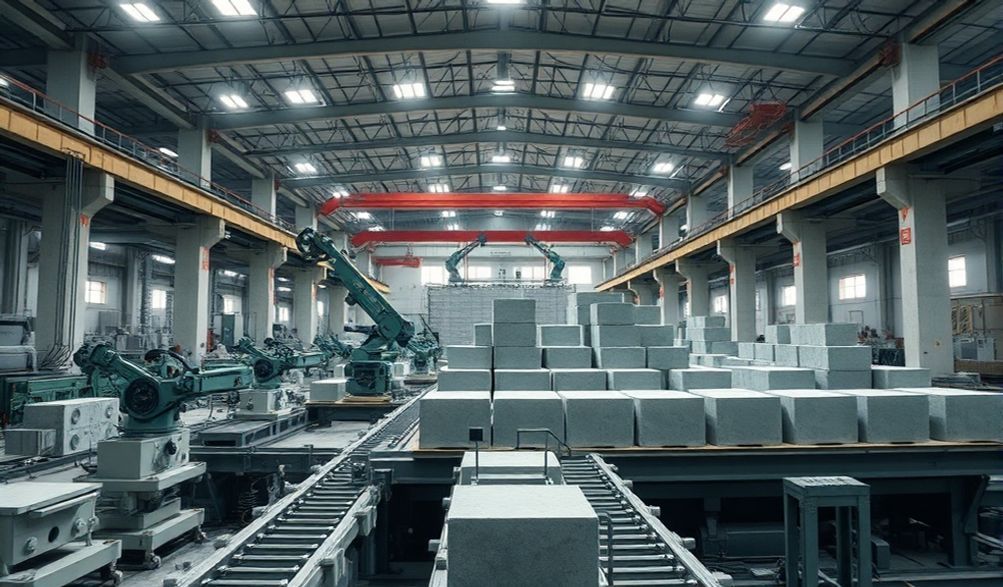
O Guia Definitivo para as Máquinas de Blocos Automáticas da China: Qualidade, Inovação e Valor
O cenário global da construção está passando por uma mudança sísmica. Conforme a demanda por habitação e infraestrutura dispara em todo o mundo, o setor está se voltando decisivamente para a automação para atingir metas de velocidade, escala e sustentabilidade. No epicentro dessa transformação está uma potência de manufatura e inovação: a China. Para empresas que buscam modernizar sua produção de blocos, o mercado chinês de máquinas automáticas para blocos apresenta uma fronteira de oportunidades atraente, porém complexa.
No entanto, navegar por este vasto mercado está repleto de desafios. Como discernir a qualidade genuína em meio a um mar de fornecedores? Você pode confiar nas especificações técnicas à distância? E quanto ao suporte pós-venda, à logística e à garantia de que a máquina funcionará com seus materiais locais? Os riscos são altos — um investimento de capital significativo depende de acertar nessas respostas.
Este guia serve como seu recurso definitivo e imparcial. Baseando-se em anos de análise do setor, envolvimento direto com fabricantes e um profundo entendimento de aquisições internacionais, nós cortamos o ruído. Nosso objetivo é munir você com o conhecimento e a estrutura crítica necessários para tomar uma decisão confiante e informada, transformando a tarefa intimidadora de comprar da China em uma vantagem estratégica para o seu negócio.
Compreendendo as Máquinas de Blocos Automáticas: Conceitos Fundamentais e Aplicações
Antes de mergulhar na jornada de fornecimento, é crucial entender a máquina no centro do seu investimento. Uma máquina automática de blocos é mais do que apenas equipamento; é o núcleo de uma planta de produção de blocos moderna e lucrativa.
O que é uma Máquina de Blocos Automática?
Uma máquina automática de blocos é um sistema sofisticado e controlado por computador, projetado para a fabricação em alto volume de unidades de alvenaria de concreto (CMUs) com intervenção manual mínima. Ela integra vários processos — desde a dosagem de matérias-primas até o empilhamento dos blocos — em uma linha automatizada e contínua.
Para apreciar seu valor, considere as alternativas:
* Máquinas Manuais:Trabalho intensivo, baixa produção e qualidade inconsistente. Apenas adequado para projetos minúsculos e hiperlocais.
* Máquinas Semiautomáticas:Exigem envolvimento significativo do operador para alimentação, moldagem e remoção. Oferecem maior produção do que as máquinas manuais, mas são limitadas em eficiência e consistência.
A máquina totalmente automática elimina esses gargalos, oferecendo velocidade de produção inigualável, precisão repetível e menores custos de mão de obra a longo prazo.
Componentes Principais e Como Eles Funcionam
Uma fábrica automática de blocos é um ecossistema integrado. Compreender seus componentes desmistifica o processo:
- Loteamento & Mistura:Quantidades precisas de cimento, agregados, areia e água são dosadas e misturadas em uma mistura homogênea de concreto.
- Transporte de Materiais:O concreto fresco é transferido por meio de esteira transportadora ou elevador de caçamba para o funil de alimentação da máquina.
- Moldagem & Compactação:O núcleo da máquina. O concreto é alimentado em uma cavidade de molde sobre um palete. Uma combinação de alta pressão hidráulica e vibração poderosa compacta o material até sua forma e densidade finais.
- Cura e Empilhamento:O bloco verde (recém-moldado), ainda no palete, é ejetado e transferido para uma prateleira ou câmara de cura. Uma vez curados, os blocos são automaticamente empilhados e preparados para transporte.
Este ciclo contínuo opera 24 horas por dia, 7 dias por semana, transformando matérias-primas em produtos acabados e prontos para o mercado com eficiência notável.
Aplicações Primárias na Construção Moderna
A versatilidade dessas máquinas é um ponto de venda fundamental. Elas podem ser configuradas com moldes diferentes para produzir uma vasta gama de produtos:
* Blocos Maciços e Vazados:A espinha dorsal da construção de paredes para edifícios residenciais e comerciais.
* Pedras de Pavimentação e Tijolos de Intertravamento:Para entradas de veículos, calçadas e praças públicas.
* Meios-fios, Meios-fios e Produtos para Paisagismo:Essencial para construção de estradas e paisagismo estético.
* Formatos Especiais:Incluindo pavers de grama, blocos de proteção de taludes e formas de concreto isoladas (FCI).
Essa adaptabilidade permite que uma única linha de produção atenda a múltiplos segmentos de mercado, desde projetos de infraestrutura de grande escala até aplicações arquitetônicas de nicho.
Por que importar máquinas de blocos automáticas da China?
A decisão de adquirir maquinário pesado do exterior é significativa. A China se tornou o destino padrão para uma infinidade de compradores globais, por várias razões convincentes que vão muito além do preço inicial.
Custo-Benefício e Valor Inigualáveis
The term “cheap” is misleading and often dangerous in this context. The advantage is better described as exceptional value. China’s manufacturing sector achieves this through:
* Economias de Escala: Vast production volumes drive down the cost of components and assembly.
* Mature, Localized Supply Chains: Everything from steel and hydraulics to PLC controllers is sourced within an efficient, integrated network, reducing procurement delays and costs.
* Competitive Market Dynamics: A high concentration of manufacturers fosters competition, which drives innovation and fair pricing for the buyer.
You are not just buying a machine; you are accessing a decades-deep ecosystem of industrial production.
Avanço Tecnológico e Inovação
Gone are the days of China being seen as a copycat manufacturer. Today, leading Chinese machinery producers are at the forefront of innovation:
* Eficiência Energética: Modern machines increasingly use servo-motor systems, which drastically reduce electricity consumption compared to traditional hydraulic systems.
* Smart Integration: Many models now feature IoT (Internet of Things) connectivity for remote monitoring, production data analytics, and predictive maintenance alerts.
* International Compliance: Reputable manufacturers rigorously design machines to meet international safety and quality standards, evidenced by certifications like CE (Europe) and ISO 9001.
Scale and Manufacturing Diversity
Whether you are a startup looking for a compact, fully automatic plant or a national corporation needing a high-capacity production line, China has a supplier. The market includes:
* Large, Integrated Exporters: Companies with massive factories, in-house R&D, and global dealer networks.
* Specialized Niche Producers: Experts in specific machine types, like high-pressure paver machines or fully robotic plants.
* Component Specialists: Firms that produce superior key parts (e.g., hydraulic systems, molds), often used by assemblers.
This diversity means you can find a partner whose scale and expertise align perfectly with your specific business needs.
A Buyer’s Guide: How to Choose the Right Chinese Supplier
This is the most critical phase of your journey. Diligent supplier vetting separates a successful investment from a costly mistake.
Critical Technical Specifications to Evaluate
Move beyond the sales pitch and focus on hard data. Your request for quotation (RFQ) must detail:
* Capacidade de Produção: Measured in blocks per 8-hour shift (e.g., 15,000 standard hollow blocks). Be realistic about your market needs.
* Pressão (Tonelagem): Higher tonnage (e.g., 1,800 tons) typically produces denser, stronger blocks suitable for load-bearing applications.
* Nível de Automação: Does it include automatic pallet return, color feeder, and stacker? Or are these add-ons?
* Versatilidade do Molde: How quickly can molds be changed? Does the supplier offer custom mold design?
* Requisitos de Energia: Voltage (380V/415V/440V), phase, and total connected load.
* Pegada da Máquina: Ensure your factory layout can accommodate the entire production line.
Verifying Manufacturer Credentials & Quality
Trust must be earned, especially from a distance. Implement this credibility checklist:
- Verificação de Fábrica: Insist on a live video factory tour via video call. Look for organization, welding quality, and assembly practices.
- Certificações: Valid ISO 9001 (Quality Management) and CE (for machinery safety) are baseline expectations. SGS inspection reports on finished machines add another layer of assurance.
- Business Legitimacy: Request a business license and verify export history. How long have they been in business?
- Client References: Ask for contact information for 2-3 international clients in a region similar to yours. Follow up with them.
- Warranty & Service Blueprint: A clear, written warranty (typically 12-24 months on core components) and a detailed after-sales service plan are non-negotiable.
Navigating Communication and Logistics
Clear processes prevent future headaches:
* Communication: Use detailed technical drawings, videos, and samples. Confirm all agreements in writing. Consider hiring a bilingual technical liaison if needed.
* Incoterms: Understand your responsibilities. FOB (Livre a Bordo) means you own the goods and control shipping once they leave the Chinese port. CIF (Custo, Seguro e Frete) means the supplier arranges shipping to your port. FOB often offers more control and cost transparency.
* Logística: Factor in sea freight costs, insurance, and local port clearance. Reliable suppliers will assist with export documentation and crate the machine professionally for ocean transport.
Key Considerations for Investment and Operation
Looking beyond the purchase price is what separates savvy investors from disappointed buyers.
Análise do Custo Total de Propriedade
The machine’s sticker price is just the beginning. A realistic budget must include:
* Instalação e Comissionamento: Costs for foundation work, electrical hookup, and potentially flying in a technician.
* Treinamento: For your operators and maintenance team.
* Spare Parts Inventory: An initial kit of common wear parts (seals, vibration motors, filter elements).
* Consumo de Energia Calculate the daily power cost based on the machine’s kW rating and your local electricity tariff.
* Manutenção Preventiva: Regular upkeep costs to ensure longevity and avoid downtime.
Raw Material Compatibility and Recipe Formulation
A machine is only as good as the blocks it produces. This hinges on your local materials.
* Sample Testing: A top-tier supplier will request samples of your cement, aggregates, and sand to test in their lab.
* Mix Design Provision: They should provide you with a proven, optimized concrete mix recipe for your specific materials to achieve the required block strength and finish.
* Flexibilidade do Material Discuss if the machine can handle alternative materials like fly ash, slag, or recycled aggregates, which can lower costs and support sustainability goals.
After-Sales Support: The Make-or-Break Factor
This is the ultimate test of a supplier’s integrity and your long-term success.
* Documentação: Demand comprehensive, clearly translated operation and maintenance manuals, electrical diagrams, and parts lists.
* Support Structure: How will you get help? Look for suppliers offering:
* A dedicated service contact/WeChat.
* Remote troubleshooting via video call.
* Guaranteed response times for technical queries.
* Availability of on-site engineer dispatch (with clear cost structure).
* Parts Supply: Confirm spare parts availability, pricing, and guaranteed shipping timelines (e.g., “critical parts shipped within 48 hours”).
Future Trends in Block Making Technology
Investing in an automatic block machine is a long-term decision. Understanding emerging trends ensures your new asset remains competitive for years to come.
Green Manufacturing and Sustainable Practices
The industry is moving towards a lower carbon footprint:
* Inovação em Materiais: Machines are being adapted to use higher percentages of industrial by-products (fly ash, slag) and even recycled concrete.
* Eficiência de Recursos: New designs focus on reducing water consumption in the mix and energy use during production and curing.
* Eco-Products: There is growing demand for machines that can produce permeable pavers, lightweight insulating blocks, and other sustainable building products.
AI and Industry 4.0 Integration
The smart factory is arriving in block production:
* Manutenção Preditiva: Sensors monitor component health (vibration, temperature, pressure), predicting failures before they cause downtime.
* Production Optimization: AI algorithms analyze production data to optimize cycle times, reduce waste, and ensure consistent quality.
* Full-Line Automation: Integration with automated robotic palletizing, packaging, and guided vehicle (AGV) systems for a true “lights-out” factory.
The Rise of Specialized and Customizable Solutions
As architectural demands grow, so does the need for versatility:
* Architectural Blocks: Machines capable of producing complex, textured, or colored blocks for aesthetic facades.
* Bespoke Solutions: Leading manufacturers are increasingly working with clients to engineer custom solutions for unique block designs or specific production challenges.
Perguntas Frequentes (FAQ)
Q1: What is the average price range for an automatic block machine from China?
A: Prices vary dramatically based on specifications. A small-scale automatic line can start around $30,000 – $50,000, while large, fully integrated high-capacity plants with robots can exceed $200,000. The only way to get an accurate price is to provide detailed requirements and get itemized quotations.
Q2: How do I ensure the machine quality without visiting the factory?
A: Leverage technology and third parties. Demand a live video tour of the factory and a video of a similar machine running. Hire a reputable third-party inspection company (like SGS, BV) to perform a pre-shipment inspection. Most importantly, speak directly to their existing international clients.
Q3: What is the typical lead time from order to delivery?
A: After order confirmation and deposit, standard lead times range from 30 to 90 days. Customized machines or those ordered during peak seasons will take longer. Ensure your contract includes clear production and shipping milestones.
Q4: Can Chinese machines adapt to our local raw materials and standards?
A: Absolutely. Reputable manufacturers expect this. They will test your material samples and often customize the mixer design, vibration parameters, and even the mold to ensure the machine produces blocks that meet your local ASTM, BS, EN, or other regional standards for strength and dimensions.
Q5: What kind of after-sales service can I realistically expect?
A: At a minimum, you should receive detailed manuals, online support, and a warranty. The best suppliers provide much more: a dedicated service engineer on call, readily available spare parts with fast shipping options, and comprehensive training programs—either at their factory or via a technician sent to your site.
Conclusão
Sourcing an automatic block machine from China represents a strategic opportunity to acquire world-class technology at exceptional value, directly fueling your business’s growth and competitiveness. The journey, however, demands careful navigation. Success hinges not on finding the lowest price, but on identifying the most credible, capable, and supportive partner.
Let this guide be your framework. Use it to ask the right questions, verify claims, and prioritize long-term operational support over short-term savings. The goal is to build a partnership, not just complete a transaction.
Your Next Step: Begin by clearly defining your project requirements—capacity, block types, budget, and local conditions. Then, approach a shortlist of vetted manufacturers with this knowledge in hand. Initiate conversations, request detailed proposals and client references, and take the first step toward transforming your block production with confidence.
<