Are There Any Brick Machines That Reduce Energy Consumption?
1. The Energy Consumption Paradigm in Brick Manufacturing
To appreciate the innovations, one must first understand the traditional energy sinks. The process is bifurcated into direct energy (fuel for kilns, electricity for drives) and indirect energy (embedded in raw material extraction and transport). The most significant targets for machinery innovation are:
- The Kiln Firing Process: The largest consumer, primarily thermal energy.
- The Raw Material Preparation Stage: Electrical energy for crushing, grinding, and mixing.
- The Drying Stage: Thermal and sometimes electrical energy for removing moisture from green bricks.
- Auxiliary Systems: Energy for material handling, ventilation, and lighting.
2. Machinery Innovations Targeting the Firing Process
The kiln is the heart of the energy challenge, and modern machines have reimagined its function.
2.1. High-Efficiency, Insulated Tunnel Kilns with Heat Recovery
Modern tunnel kilns are a feat of thermodynamic engineering, far removed from their predecessors.
- Advanced Insulation and Design: The use of ceramic fibre modules and high-performance refractory materials minimizes radiant heat loss. Improved sealing systems on kiln cars and doors prevent uncontrolled air ingress and exhaust, stabilizing the internal atmosphere.
- Integrated Heat Recovery Systems: This is a transformative feature. Sophisticated machinery captures waste heat from the cooling zone of the kiln—where fired bricks are at extremely high temperatures—and redirects it.
- Pre-heating Combustion Air: The recovered heat is used to pre-heat the air supplied to the kiln burners, drastically improving combustion efficiency and reducing fuel demand.
- Powering the Dryer: The same waste heat stream is ducted to the drying chamber, effectively providing free thermal energy for drying green bricks, often eliminating the need for a separate, fuel-fired dryer.
2.2. Hybrid Hoffman Kilns with Vertical Shaft Technology
Innovations in continuous kiln design have merged principles for superior efficiency.
- Process and Advantage: These systems combine the continuous production of a Hoffman-type circuit with vertical shaft pre-heating and cooling zones. Gravity assists the movement of bricks, reducing mechanical handling. The stacked design creates a highly effective counter-current heat exchange: cold air entering the cooling shaft is heated by descending fired bricks, and this hot air is then used in the firing zone. This intrinsic design minimizes heat escape and maximizes thermal recycling within a single, compact machine structure.
2.3. Automated Kiln Car Management Systems
Precision in kiln operation is as important as the kiln design itself.
- Optimized Firing Curves: Computer-controlled systems continuously monitor and adjust temperature, pressure, and atmosphere in each kiln zone. By maintaining the exact minimum required temperature profile and residence time, these systems prevent over-firing—a common source of energy waste.
- Optimal Car Scheduling: Automated software plans the firing schedule to ensure kiln cars are loaded to their maximum, well-organized capacity, avoiding the energy inefficiency of firing a partially full kiln.
3. Innovations in Forming and Pre-Firing Stages
Energy savings begin long before the brick enters the kiln.
3.1. High-Pressure Extrusion and Vacuum De-Airing Machines
- Principle of Efficiency: These advanced extruders subject the clay body to extremely high pressure and employ a vacuum chamber to remove air pockets. This produces a denser, more homogeneous green brick.
- Energy Impact: A denser, uniformly de-aired brick has lower residual moisture and greater structural integrity. This translates to:
- Reduced Drying Energy: Less water to remove.
- Reduced Firing Energy: More predictable thermal mass and often the potential for slightly lower firing temperatures or shorter cycles due to better heat transfer within a uniform body.
3.2. Automated, Enclosed Dryer Systems
Moving from open-air drying to controlled systems is a major energy-saving step.
- Humidity and Temperature Control: Automated dryers precisely manage the drying curve. By preventing too-rapid drying (which causes cracks and waste) and optimizing air flow, they ensure the fastest possible, defect-free drying cycle, reducing the energy per unit.
- Integration with Kiln Waste Heat: As mentioned, the most efficient systems are not standalone but are mechanically and electronically integrated to operate solely on recovered kiln heat, decoupling the drying process from primary fuel consumption.
4. Systemic and Ancillary Machinery for Holistic Savings
Energy reduction extends to the entire production ecosystem.
4.1. Variable Frequency Drive (VFD) Technology on Motors
- Aplicação: Installed on motors powering extruders, mixers, crushers, fans, and conveyor systems.
- Mechanism: VFDs allow the motor speed to be precisely matched to the instantaneous load demand, rather than running at constant full speed. For example, a fan motor in a drying system can slow down when less airflow is needed.
- Impacto: This can reduce electrical energy consumption in motor-driven systems by 25% to 60%, representing massive savings in a plant with dozens of large motors.
4.2. Precision Raw Material Preparation and Recycling Loops
- Granulation and Screening Machines: Preparing raw materials to a more consistent and optimal particle size distribution improves extrudability and reduces the energy needed for mixing and forming.
- In-Line Scrap Recycling Systems: These systems automatically collect, crush, and re-introduce unfired scrap (e.g., from cutting) and even certain fired waste back into the production mix. This closes the material loop, reducing the energy expended on quarrying, transporting, and processing virgin raw materials for every batch.
5. The Role of Alternative Curing Technologies
The most radical energy reduction comes from machines that eliminate firing altogether.
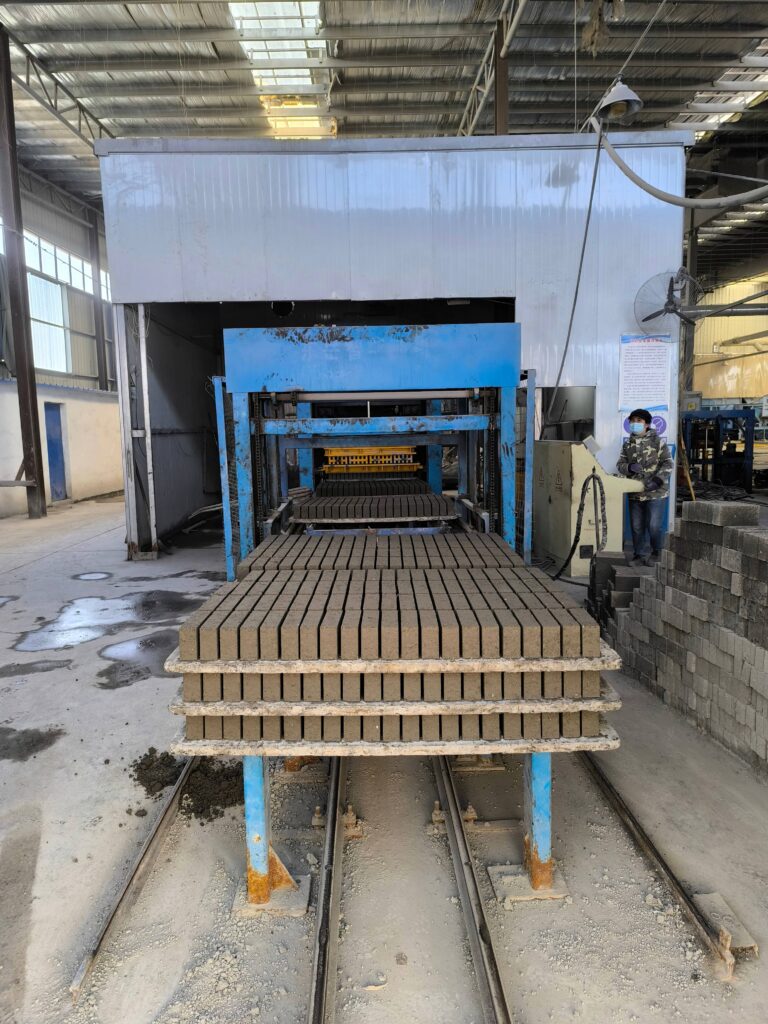
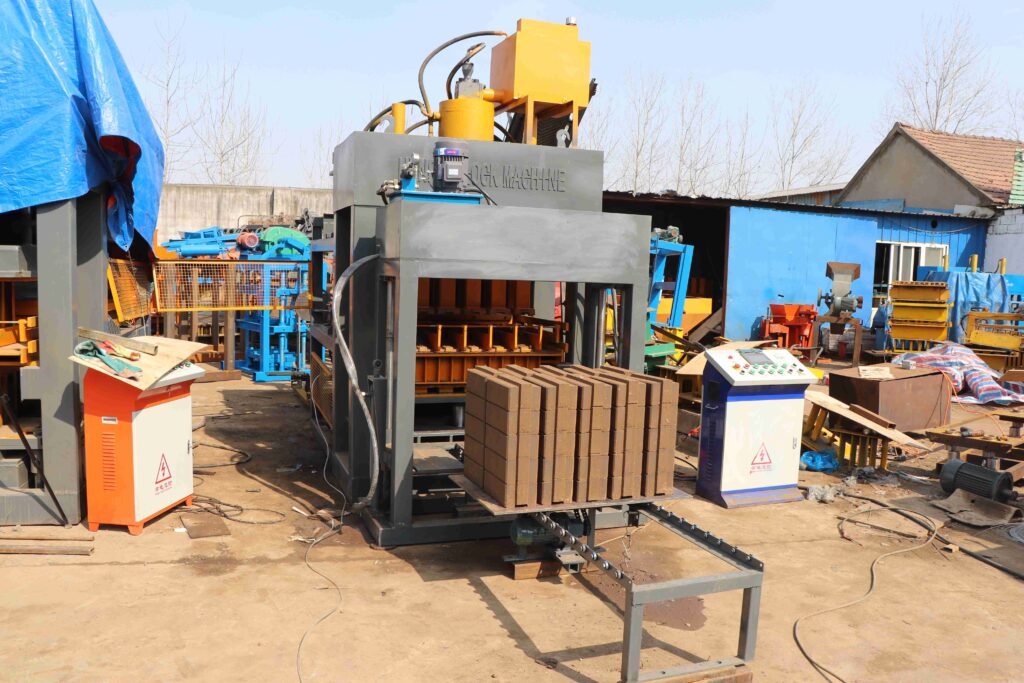
5.1. Hydraulic Presses for Stabilized Blocks
- Processo: These machines use immense hydraulic pressure to compact a mix of soil/aggregate and a stabilizer (e.g., cement) into a dense block. Curing is through hydration, not heat.
- Energy Saving: They completely eliminate the thermal energy load for firing, reducing total production energy consumption by over 80% compared to a traditional fired brick plant.
5.2. Autoclaved Aerated Concrete (AAC) Plant Machinery
- Processo: While not a clay brick, AAC is a competing masonry unit. Its machinery uses steam curing in pressurized autoclaves.
- Comparative Energy: The steam-curing process, though energy-intensive, typically operates at lower temperatures and can be more efficient than sintering clay, especially when the autoclave is well-insulated and heat recovery is employed.
6. Implications for the Supply Chain and Procurement
For distributors and buyers, these technologies have concrete implications.
6.1. Evaluating Manufacturer Stability and Cost Trajectory
- Risk Mitigation: A manufacturer invested in energy-reducing machinery is heavily insulated against future energy price shocks and carbon taxation, representing a lower-risk, more stable supply partner.
- Pricing Predictability: Their operational cost base is more controlled and predictable, leading to more stable long-term pricing, even if the initial product cost carries a premium for technology.
6.2. Market Differentiation and Green Credentials
- Data-Driven Sales: Distributors can market bricks with a certified lower “embodied energy” or carbon footprint, a key selling point for projects targeting green building certifications (LEED, BREEAM, etc.).
- Future-Proofing the Portfolio: Aligning with technologically advanced producers ensures your product range remains compliant with increasingly strict environmental regulations in the construction sector.
Conclusion
The pursuit of energy efficiency has catalyzed a revolution in brick-making machinery, moving far beyond simple component upgrades to a holistic re-engineering of the production continuum. From hyper-efficient kilns that recycle their own waste heat, to forming machines that optimize the raw product for lower thermal input, to systemic innovations like VFDs that slash parasitic electrical loads, the technology to dramatically reduce energy consumption not only exists but is becoming the hallmark of a modern, competitive plant. For the astute distributor or procurement professional, understanding these technologies provides a critical lens for vendor assessment. Partnering with manufacturers who have embraced this engineering evolution is a strategic imperative. It ensures supply chain resilience, aligns with the sustainability demands of the end market, and positions your business at the forefront of an industry that is fundamentally transforming itself from an energy-intensive past toward a efficient, sustainable future. The energy-efficient brick machine is no longer a novelty; it is the new benchmark for industrial viability.
FAQ
Q1: Do these high-efficiency machines require a higher skill level to operate and maintain?
A: Yes, generally. Operating a plant with integrated heat recovery, automated kiln controls, and VFD systems requires technicians with skills in mechatronics, process control software, and thermodynamics. Maintenance is more predictive and less manual. This shift often means manufacturers have a smaller, more highly trained, and better-compensated workforce, which contributes to operational consistency and lower labor turnover.
Q2: Is the energy saving significant enough to justify the typically higher capital cost of such machinery?
A: The financial justification is based on the Retorno sobre o Investimento (ROI) period. While capital costs are higher, the operational savings are substantial and ongoing. With rising global energy prices and potential carbon taxes, the payback period for these investments is shortening significantly—often to within 3-7 years. For a manufacturer, it is an investment in long-term cost control and regulatory survival.
Q3: Can these technologies be retrofitted into existing older plants, or are they only for new builds?
A: Many components can be retrofitted, but with varying degrees of effectiveness. For example, VFDs can be added to existing motors. Advanced insulation can be applied to an old kiln. However, a fully integrated heat recovery system between the kiln and dryer often requires substantial re-engineering of the plant layout and may not be feasible in a constrained space. A complete retrofit can be almost as capital-intensive as a new line but is a common path for established manufacturers to upgrade.
Q4: How can I, as a distributor, verify a manufacturer’s claims about energy-efficient production?
A: Request specific data and evidence. Reputable manufacturers should be able to provide:
- Métricas de Consumo de Energia: Key Performance Indicators (KPIs) like gigajoules of energy per ton of fired brick.
- Technology Descriptions: Details of their kiln type, heat recovery system, and automation level.
- Third-Party Audits: Some may have energy efficiency audits or certifications.
- Plant Tour Observation: During a visit, look for control rooms, insulated kiln surfaces, and ask pointed questions about their heat recovery process.
Q5: Does a focus on energy-efficient machinery compromise the product’s aesthetic quality or variety?
A: Not at all. In fact, the precise control offered by modern automated, efficient kilns often enhances aesthetic quality and consistency. Better temperature uniformity leads to more consistent color and texture across the batch. Furthermore, the energy savings are achieved in the process, not the product design. Manufacturers can still produce a wide variety of faces, sizes, and colors using these efficient systems.