An In-Depth Look at Hydraulic Block Machine Operation
Core Principles and Subsystem Overview
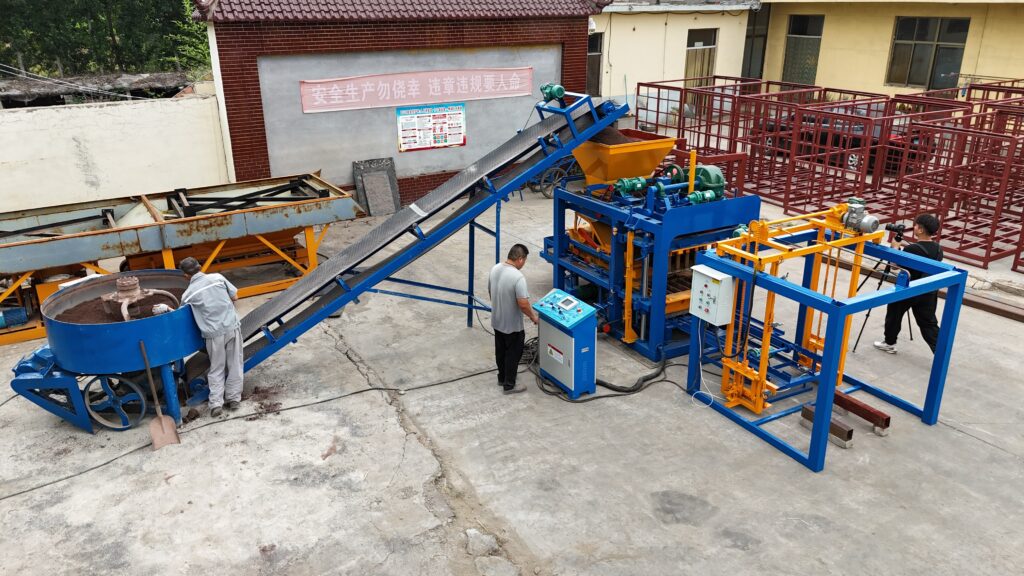
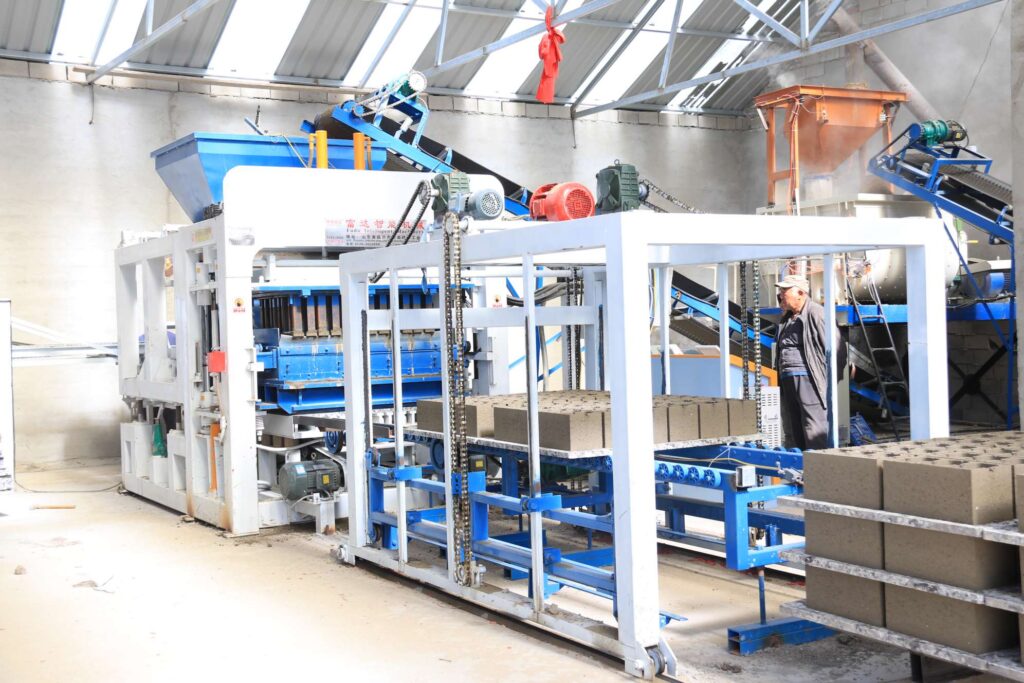
At its essence, a hydraulic block machine is a press. It utilizes pressurized hydraulic fluid to generate immense, controllable force, which is applied to compact a semi-dry concrete mix within a mold cavity. This process is augmented by vibration to ensure complete filling and de-aeration. The machine’s operation can be understood by examining its four interdependent subsystems:
- The Structural Frame: The robust skeleton, typically fabricated from high-tensile steel plate, provides the foundation. It must resist immense cyclic loads from both the hydraulic press and the vibration system without deflection, ensuring consistent alignment and product dimensions.
- The Hydraulic Power Unit (HPU): The machine’s heart. It consists of an electric motor, hydraulic pumps, valves, actuators (cylinders), an oil reservoir, filters, and cooling systems. It converts electrical energy into controlled fluid power.
- The Mold and Vibration System: The tooling and dynamic core. This includes the mold box (with wear liners and core rods for hollow blocks) mounted on a heavy-duty vibration table, which is driven by high-frequency electric vibrator motors.
- The Electronic Control System: The machine’s brain. A Programmable Logic Controller (PLC) receives input from sensors and operator commands, then executes a programmed sequence to actuate hydraulic valves and control vibration timing, managing the entire production cycle with precision.
The Production Cycle: A Step-by-Step Breakdown
The machine operates in a repeating, automated cycle. Each stage is a precisely choreographed interplay between the subsystems.
Phase 1: Mold Preparation and Feeding
- Processo: The empty mold box, mounted on the vibration table, is positioned under the feed hopper. A pallet (wooden or steel) is simultaneously conveyed into place beneath the mold cavity. A precisely measured volume of semi-dry concrete mix is dispensed from the hopper into the mold. This is typically done by a feed drawer that sweeps across the mold opening or a rotating feeder drum.
- Subsystem Roles:
- Hidráulica: A small hydraulic cylinder actuates the feed mechanism.
- Controls: The PLC ensures the pallet is in position and triggers the feed sequence for a predetermined duration or number of cycles to achieve correct mix volume.
Phase 2: Primary Compaction and Vibration
- Processo: This is the most critical phase for achieving block density and strength. The feed mechanism retracts, and the mold, now filled with mix, moves to the pressing station (or the pressing head moves over the mold). Two actions occur simultaneously:
- The vibration table activates, sending high-frequency, low-amplitude vibrations through the mold. This “fluidizes” the concrete mix, causing particles to settle densely and expel trapped air.
- The main hydraulic compaction cylinder begins its downward stroke. The compaction head (or ram) enters the mold cavity and applies immense pressure—often measured in hundreds of tons—onto the vibrating mix.
- Subsystem Roles:
- Hidráulica: The main pump delivers high-pressure oil to the large-diameter compaction cylinder. Pressure relief and control valves regulate the force to a pre-set value crucial for consistent product density.
- Sistema de Vibração: Vibrator motors, often with adjustable frequency, are energized.
- Controls: The PLC synchronizes the start of vibration and press descent. It maintains the high pressure for a set “dwell time” (e.g., 2-5 seconds) to ensure full compaction.
Phase 3: Mold Stripping and Block Ejection
- Processo: After the dwell time, the compaction head retracts. The mold box is then lifted vertically by hydraulic stripping cylinders. As the mold rises, the now fully compacted block, which adheres to the pallet, is revealed and remains stationary on the pallet. Precision-engineered “stripper shoes” may gently hold the block’s top surface to ensure a clean release from the mold, especially for complex shapes with deep cores.
- Subsystem Roles:
- Hidráulica: The main cylinder retracts. Separate stripping cylinders lift the entire mold assembly.
- Controls: The PLC sequences the retraction and stripping actions, often with pressure monitoring to ensure smooth release.
Phase 4: Pallet Ejection and Reset
- Processo: The pallet carrying the fresh “green” block is conveyed out of the machine, typically onto a roller conveyor leading to a curing area. Simultaneously, a new empty pallet is fed into position from a pallet magazine or stack. The mold box lowers back onto the vibration table, resetting the machine for the next cycle.
- Subsystem Roles:
- Hidráulica: Small cylinders or hydraulic motors may drive the pallet conveyor system.
- Controls: The PLC manages the pallet indexing, ensuring precise positioning for the next feed cycle.
Advanced Functional Capabilities
Modern hydraulic block machines incorporate features that enhance their versatility and efficiency beyond this basic cycle.
- Multi-Stage Pressing: For optimal density, some machines use a multi-stage pressing profile. An initial pre-pressing at lower pressure organizes the mix, followed by a final high-pressure compaction. This can improve strength and surface finish, especially for deep or complex molds.
- Proportional Hydraulics and Pressure Control: Advanced machines use proportional valves that allow for infinitely variable control of cylinder speed and pressure during the stroke. This enables smoother acceleration and deceleration, reducing shock loads and enabling complex press profiles for different products.
- Closed-Loop Vibration Control: Sophisticated systems monitor vibration frequency and amplitude in real-time, making automatic adjustments to account for changes in load (mix weight) or component wear, ensuring consistent compaction energy in every cycle.
Strategic Advantages for Manufacturers
Understanding the como illuminates the por que—the tangible benefits this technology delivers to the end-user, which form the core of the sales narrative.
- Densidade e Resistência Superiores do Produto: The combination of high static pressure and vibration produces blocks with exceptionally low void content, translating directly to higher compressive strength, better durability, and lower water absorption.
- Exceptional Dimensional Accuracy and Surface Finish: The rigid frame and controlled, linear action of the hydraulic press produce blocks with tight tolerances and smooth, well-defined surfaces, critical for architectural applications and precise masonry work.
- Flexibilidade do Material The immense pressing force can effectively compact a wider range of mix designs than other methods, including those with lower cement content, marginal aggregates, or high percentages of recycled materials (e.g., fly ash, crushed concrete).
- Process Control and Consistency: Every parameter—pressure, dwell time, vibration duration—is digitally set and replicated exactly for every cycle. This eliminates operator-dependent variability, guaranteeing uniform product quality from the first block to the ten-thousandth.
- Operational Durability: When properly maintained, hydraulic systems are incredibly robust and capable of millions of cycles. The separation of the power generation (HPU) from the work site (cylinders) also allows for protective enclosures, boosting longevity in harsh industrial environments.
Conclusion
The operation of a hydraulic block machine is a masterclass in applied industrial engineering, where brute force is meticulously directed by precision control. It is not simply a matter of “squashing” concrete into a shape, but a carefully calibrated process that imparts essential physical properties to the final product. For professionals in the equipment supply chain, this deep technical understanding is transformative. It allows you to move beyond feature listings to explain cause and effect: how the closed-loop pressure control ensures every block meets strength specification; how the synchronized vibration eliminates voids; how the robust construction guarantees a decade of reliable service.
This knowledge empowers you to justify investment, troubleshoot operational challenges authoritatively, and ultimately, become a trusted advisor rather than a transactional supplier. In a market where quality and consistency are paramount, the hydraulic block machine stands as a proven technology, and your expertise in its operation becomes a critical component of your client’s success. The machine works by transforming fluid power and vibration into precision building blocks; you, in turn, transform technical insight into commercial trust and long-term partnership.
FAQ
Q1: Why is the “dwell time” under full pressure so important?
A: Dwell time is critical for stress relaxation within the compacted concrete. When pressure is first applied, the mix particles rearrange and compress. Maintaining the pressure for a few seconds allows internal friction to be overcome and any remaining air to be expelled, resulting in a more homogeneous, stable, and stronger final product. Insufficient dwell time can lead to lower strength and potential lamination or cracking.
Q2: How does the hydraulic system manage the tremendous force without damaging itself?
A: It is designed with significant safety margins and protective features. Key elements include:
- Pressure Relief Valves: These are set to a maximum safe pressure and will open to divert fluid back to the tank if this limit is exceeded, preventing component failure.
- Overload (Cushioning) Designs: Cylinders often have built-in cushioning at the end of their stroke to decelerate the massive moving parts smoothly, preventing damaging impact.
- Robust Components: Tubes, hoses, fittings, and cylinders are rated for pressures far exceeding normal operating ranges. Regular maintenance of fluid cleanliness and seal integrity is vital to preserve this safety margin.
Q3: What are the most common maintenance requirements specific to the hydraulic system?
A: Hydraulic system reliability hinges on proactive maintenance:
- Fluid Condition: Regular checks and changes of hydraulic oil per the manufacturer’s schedule are paramount. Oil degrades from heat, contamination, and oxidation.
- Filtration: Regularly replacing inlet and pressure filter elements prevents abrasive particles from damaging pumps, valves, and cylinder seals.
- Seal Inspection: Monitoring for external leaks and investigating drops in system pressure can indicate worn seals that need replacement before they fail catastrophically.
- Cooling: Ensuring the oil cooler (air or water) is functioning to prevent overheating, which accelerates oil degradation.
Q4: Can the machine’s pressure be adjusted for different products, and what is the effect?
A: Yes, and this is a fundamental advantage. The compaction pressure is a key parameter stored in the PLC’s product “recipe.” For example:
- High-Street Pavers: Require very high pressure (e.g., 180-220 bar) for maximum density and wear resistance.
- Lightweight Horticultural Blocks: Require lower pressure (e.g., 100-130 bar) to achieve the required shape without crushing lightweight aggregates.
Adjusting pressure directly controls the block’s density and, consequently, its compressive strength and weight.
Q5: How does a hydraulic machine compare energy-wise to a strong vibro-compression machine?
A: Traditionally, hydraulic machines had higher energy consumption due to the continuous operation of the hydraulic pump against pressure. However, modern designs have closed this gap significantly through:
- Variable Displacement Pumps: These only deliver the flow and pressure needed for the current action, idling at low power during pauses.
- Energy-Saving Circuits: Systems that recover energy during cylinder retraction or use accumulators to store energy.
- Efficient Motor & Pump Packages.
While a top-tier hydraulic machine may still consume more than a basic vibro-compressor, the difference is much smaller than before, and the payoff is in superior product quality, material flexibility, and control. The energy cost per block is often competitive when total output and quality are factored in.