
Guia Completo sobre Máquinas de Blocos: Tipos, Preços e Como Escolher
Introdução
Você é um construtor analisando um orçamento de projeto, ou um empreendedor de olho no setor de construção em expansão. O ponto em comum? A necessidade implacável de blocos de construção acessíveis e de alta qualidade. Adquiri-los pode ser uma dor de cabeça logística e financeira, comprometendo suas margens e prazos. E se você pudesse assumir o controle da produção, garantindo suprimento, qualidade e eficiência de custos nos seus próprios termos? É aqui que entramáquina de fazer blocosentra em cena — não apenas como um equipamento, mas como um potencial divisor de águas para o seu projeto ou negócio.
Após analisar dezenas de modelos, conversar com fabricantes ao redor do mundo e observar operações que vão de pequenos pátios a plantas industriais, elaboramos este guia. Seu objetivo não é vender uma máquina para você, mas ser seu recurso completo e imparcial. Vamos cortar o jargão de marketing para fornecer o conhecimento do setor que você precisa para tomar uma decisão confiante e informada.
Este guia oferece uma análise clara e factual. Exploraremos como essas máquinas funcionam, dissecaremos cada tipo principal, abordaremos os custos reais e destacaremos os fatores críticos que você deve considerar antes de investir. Considere este o seu roteiro, cobrindo tudo, desdeProdução de blocos de concreto basics to navigating the choice between an automatic vs. manual system, understanding the real cost factors, and evaluating long-term profitability.
What is a Block Maker Machine? Core Function and Applications
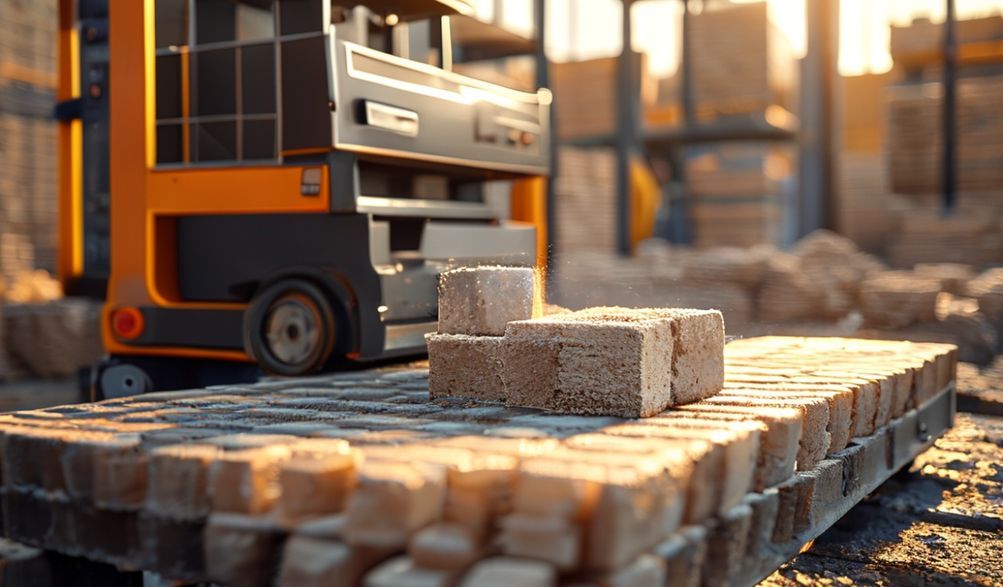
At its core, a block maker machine is a device that automates the process of manufacturing construction blocks. It transforms raw materials—primarily cement, aggregates, and water—into precisely shaped, dense, and durable building units through a process of compaction and vibration. It’s the engine behind the production of the very bricks and blocks that form our infrastructure.
How a Block Maker Machine Works: The Basic Process
While sophistication varies, the fundamental process remains consistent across most machines:
- Mistura: Raw materials (cement, sand, gravel, fly ash) are combined with water in a concrete mixer to form a homogeneous, semi-dry mix. The consistency is crucial—too wet, and the block won’t hold its shape; too dry, and it won’t compact properly.
- Alimentação: This mix is fed into the machine’s hopper. In manual machines, this is done with shovels. In automatic systems, conveyors handle this task.
- Compactação e Moldagem: The mix is dropped into a mold (the shape of the desired block). Here, a combination of high mechanical pressure (often measured in tons) and vibration compacts the mix, removing air pockets and ensuring maximum density and strength.
- Ejeção: The newly formed, but still “green,” block is ejected from the mold onto a pallet or directly onto a curing rack.
- Cura: This is the critical final step. The blocks are stored in a controlled environment (often a curing chamber) where they gain strength over days through hydration. Steam curing can accelerate this process to within 24 hours.
Key Applications: From Construction to Landscaping
The versatility of a block maker machine lies in its molds. By simply changing the mold, a single machine can produce a wide array of products:
- Blocos Estruturais: Hollow blocks, solid blocks, and interlocking blocks for walls and foundations.
- Paving Products: Paving bricks, cobblestones, and patio slabs for hardscaping.
- Specialty Elements: Curb stones, grass pavers, and landscaping retainers.
This makes the technology essential for diverse user segments:
* Large-Scale Construction Firms: For on-site production to supply major projects.
* Small & Medium Builders/Contractors: To reduce material costs and ensure supply for housing projects.
* Block Manufacturing Businesses: Entrepreneurs focused solely on producing and selling blocks.
* Landscaping & Hardscaping Companies: For creating custom paving solutions.
* DIY Enthusiasts & Community Projects: For small-scale, manual production.
Types of Block Maker Machines: Finding the Right Fit
Choosing the right type of machine is your most critical decision. It balances your budget, labor availability, and production goals. Here’s a breakdown of the main categories.
Máquinas Manuais para Fabricação de Blocos
- Descrição: These are the simplest and most affordable type. Operation is entirely human-powered: manual feeding of mix, manual lever-pulling for compaction, and manual removal of the finished block.
- Prós:
- Very low initial investment and operating cost.
- Minimal maintenance with no complex parts.
- Highly portable; can be used anywhere.
- Contras:
- Extremely labor-intensive and slow.
- Low and inconsistent output (typically 100-500 blocks per day).
- Product quality can vary based on operator skill.
- Ideal Para: Very small projects, startups with severe capital constraints, remote locations with no power, or niche, low-volume specialty products.
Máquinas Semi-Automáticas para Fabricação de Blocos
- Descrição: This is the “sweet spot” for many small to medium businesses. These machines use electrical or hydraulic systems to provide the compaction and vibration, automating the most strenuous part. Feeding and block removal are often still manual.
- Prós:
- Excellent balance between cost, output, and automation.
- Significantly higher and more consistent output than manual machines (e.g., 800-2,000 blocks per 8-hour shift).
- Better block quality due to consistent, machine-applied pressure.
- Contras:
- Requer uma fonte de energia (eletricidade ou diesel).
- Higher upfront cost than manual machines.
- Still requires a steady labor crew for feeding and handling.
- Ideal Para: Growing block manufacturing businesses, contractors undertaking multiple projects, and municipalities producing blocks for local use.
Máquinas de Fabricação de Blocos Totalmente Automáticas
- Descrição: These are complete production plants. They feature computerized controls, automatic material batching and feeding via conveyors, robotic pallet handling, and sometimes integrated curing systems. The human role shifts from operator to supervisor and maintenance technician.
- Prós:
- Very high, consistent output (e.g., 5,000 to 20,000+ blocks per shift).
- Minimal manual labor, reducing long-term labor costs and fatigue.
- Exceptional product consistency and quality control.
- Contras:
- Investimento inicial de capital muito alto.
- Complex installation, operation, and maintenance requiring skilled technicians.
- Significant space and infrastructure (power, foundation) needed.
- Ideal Para: Large-scale commercial block production plants supplying regional markets, major infrastructure projects, and high-volume industrial users.
Móveis vs. Estacionárias: Fábricas de Blocos
This is another key distinction:
* Máquinas de Blocos Móveis: Mounted on a trailer, these are designed for on-site production. They eliminate transport costs for finished blocks and are perfect for large, remote projects like road construction (for curbs) or rural housing developments. They are typically semi-automatic.
* Plantas Estacionárias: These are fixed installations in a factory or yard. They are the foundation for a permanent business and can be scaled from semi-automatic to fully automatic lines. They benefit from established infrastructure like curing sheds and storage.
Critical Factors to Consider Before Buying
Beyond the machine type, dive deep into these practical considerations. Your answers here will point you to the exact specifications you need.
Assessing Your Production Needs: Output Capacity (Blocks Per Hour)
Don’t just buy the biggest machine you can afford. Calculate your real needs:
1. Project Demand: How many blocks do you need per day/week to complete your project on time?
2. Modelo de Negócios: What are your sales targets? Consider local demand, competition, and growth plans.
3. Shift Planning: Will you run one 8-hour shift or two? A smaller machine running longer hours can sometimes be more economical than a larger, underutilized one.
Always look at the machine’s realista output, not the theoretical maximum under perfect conditions.
Raw Material Compatibility: Cement, Aggregates, and Fly Ash
The machine must work with the materials you have.
* Tamanho do Agregado: The machine’s feed system and mold design have limits on the maximum stone or gravel size.
* Dosagem de Concreto: Some machines are optimized for specific mixes, like those high in fly ash or other industrial by-products. Confirm compatibility.
* Teor de Umidade: The ideal “semi-dry” mix consistency is vital. Test if your local materials can achieve this.
Especificações Principais da Máquina para Examinar
- Pressão (Tonelagem): Higher compaction pressure generally produces stronger, denser blocks. For standard hollow blocks, 100-150 tons is common. For paving stones or solid blocks, you may need more.
- Sistema de Moldagem: How easy is it to change molds? Are molds included, or are they expensive extras? A quick-change system is valuable if you plan to produce multiple products.
- Potência do Motor: Indicates the machine’s capability and energy consumption.
- Tempo de Ciclo: How many seconds does it take to produce one block or one mold of blocks? This directly determines hourly output.
Power Requirements: Electrical, Hydraulic, or Manual Operation
- Elétrica: Most common. Requires a stable power supply of specified voltage (e.g., 380V/3-phase for industrial machines).
- Hidráulico Often powered by an electric motor driving a hydraulic pump. Provides smooth, high pressure.
- Diesel: Used for mobile or semi-automatic machines in areas with unreliable electricity.
- Manual: No power needed, but limited to the smallest machines.
Understanding the Investment: Block Maker Machine Price Breakdown
Let’s talk numbers transparently. Prices vary wildly based on type, brand, and location, but these brackets provide a realistic framework.
Faixa de Preço por Tipo de Máquina
- Máquinas Manuais para Fabricação de Blocos: $1,000 – $5,000 USD. This is for basic, lever-operated machines. Prices scale with build quality and included features/molds.
- Máquinas Semi-Automáticas para Fabricação de Blocos: $8,000 – $50,000+ USD. The wide range accounts for output capacity (from small to large), brand, and level of automation (e.g., with automatic feeder).
- Fábricas de Blocos Totalmente Automáticas: $50,000 – $500,000+ USD. Entry-level automatic lines start around $50k, but large-scale, high-output plants with complete handling systems are a major capital investment.
Factors That Influence the Final Cost
- Brand & Origin: Established European or North American brands command a premium over Asian manufacturers, though quality can be excellent from both.
- Nível de Automação: Every step automated (feeding, stacking, curing) adds cost.
- Capacidade de Saída: A machine rated for 2,000 blocks/hour costs more than one for 1,000 blocks/hour.
- Serviço Pós-Venda: A supplier offering installation, training, and a strong warranty may have a higher price but provides immense long-term value.
- Shipping & Installation: For large machines, these costs can be significant, especially for international orders.
Beyond the Machine: Additional Costs to Budget For
The machine invoice is just the start. Factor in:
* Moldes: Each block type requires a specific mold, which can cost hundreds to thousands of dollars each.
* Paletes: Steel or wooden pallets for block curing. You’ll need hundreds.
* Raw Material Storage & Handling: Silos, hoppers, and a concrete mixer.
* Curing Area: A sheltered, organized space for blocks to gain strength.
* Trabalho: Even automatic plants need supervisors and maintenance staff.
* Maintenance Spares: A budget for wear parts like springs, seals, and vibration motors.
Operating and Maintaining Your Machine for Longevity
A machine is a long-term asset. Proper care is non-negotiable for safety, output, and lifespan.
Essential Safety Procedures for Operators
- Always wear personal protective equipment (PPE): safety glasses, gloves, and steel-toe boots.
- Never place hands in the mold area or under the compression head during operation.
- Ensure all safety guards and emergency stop buttons are functional.
- Lock-out/Tag-out procedures must be followed during maintenance.
Daily and Weekly Maintenance Checklist
- Diário: Clean the machine thoroughly at the end of each shift, especially removing hardened concrete from the mold, hopper, and feed system. Check hydraulic oil levels and for leaks. Lubricate all moving parts as per the manual.
- Semanal: Inspect molds for wear or damage. Check vibration motor mounts and bolts for tightness. Inspect electrical connections.
Solução de Problemas Comuns
- Poor Compression/Weak Blocks: Often caused by incorrect mix (too wet/dry), insufficient vibration time, or low compaction pressure. Check material ratios and machine settings.
- Surface Defects (Rough, Chipped): Can be due to a worn mold, insufficient release agent, or overly sticky mix. Inspect and clean the mold; adjust the mix design.
- Block Sticking in Mold: Usually indicates a lack of release agent, a damaged mold liner, or a mix that is too wet.
Perguntas Frequentes (FAQ)
Q1: What is the average production output of a standard block making machine?
There is no single “standard.” Output ranges from 100-500 blocks per day for a manual machine, 1,000-3,000 per shift for a semi-automatic, and 5,000-20,000+ per shift for a fully automatic plant. Always define “standard” by your specific needs.
Q2: Can one machine produce different types of blocks and bricks?
Yes, absolutely. This is a key advantage. By changing the mold, a single machine can produce hollow blocks, solid blocks, paving bricks, and more. The ease and cost of changing molds vary by machine design.
Q3: How much profit can I make from a block making business?
Profitability is highly variable and depends on your local market demand, competition, raw material costs, operational efficiency, and pricing strategy. A well-run small to medium operation can see healthy margins, but it requires careful business planning, cost control, and sales effort. It is not a passive income stream.
Q4: What is the typical lifespan of a block maker machine?
With proper maintenance and operation, a quality machine can last 10 to 20 years or more. Critical components like motors and hydraulic systems may need overhaul or replacement during this time. The longevity is directly tied to the care it receives.
Q5: How do I choose a reputable block machine manufacturer or supplier?
* Check Credentials: Look for business licenses, industry certifications, and membership in trade associations.
* Visit the Factory: If possible, see the production facility and quality control processes.
* Review Client Portfolio: Ask for references and contact existing customers, especially those in your region.
* Evaluate After-Sales Support: This is crucial. Do they provide installation guidance, operator training, detailed manuals, and a reliable supply of spare parts? A supplier with strong support is worth a premium.
Conclusão
Choosing the right máquina de fazer blocos is a significant decision that hinges on a clear-eyed assessment of your production needs, budget, and operational capabilities. We’ve navigated the landscape from simple manual presses to sophisticated totalmente automático plants, unpacked the true cost factors beyond the sticker price, and highlighted the critical role of maintenance and supplier choice.
Remember, the most expensive machine isn’t necessarily the best for you, and the cheapest option can be a false economy. The right choice is the one that aligns perfectly with your specific goals—whether it’s supplying a single construction project or launching a full-scale block making business.
Your next steps should be practical: refine your production calculations, contact multiple reputable suppliers with your detailed specifications, and request product videos or, better yet, live demonstrations. Always start with a solid business or project plan. Armed with the knowledge from this guide, you’re now equipped to ask the right questions and invest with confidence.
Have a specific scenario or question we didn’t cover? Feel free to share your thoughts in the comments below.
<